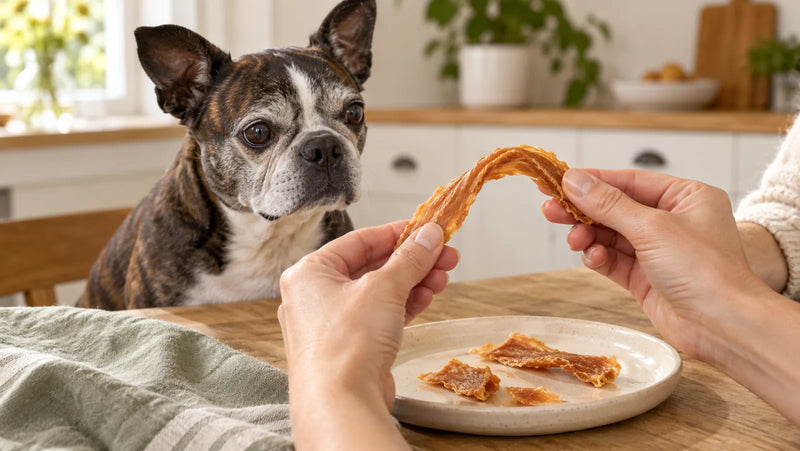

Dog treats for pet friendly hotels should be sealed, clearly identified, deliberately small, and offered only after the owner chooses to accept them. The property should know the exact product, ingredients, intended species, calorie information when supplied, storage rule, lot or date identity, and supplier contact. A decorative bowl of loose biscuits cannot provide that control.
American Paws starts wholesale and private-label projects at 10 lb per product, with bulk pricing from $14 per lb in the current catalog. For private label, the customer supplies approved pouches; American Paws fills the selected treat, adds an oxygen absorber, and heat-seals the bag. Product, fill weight, pouch, label, quantity, destination, and timing still have to be confirmed for the individual hotel or rental program.
Dog Treats for Pet Friendly Hotels: The Short Answer
| Decision | Safer operating choice |
|---|---|
| Guest permission | Ask the owner before handing over any food; make declining easy and normal |
| Package | Use one sealed, intact, fully identified pouch rather than a loose treat or anonymous repack |
| Portion | Keep the amenity small and let the owner decide whether, when, and how much to offer |
| Storage | Follow the selected product's current directions and rotate stock by its lot or date identity |
| Staff instruction | Use one check-in script, one approved stock location, and one damaged-pack hold rule |
| Branding | Pilot the exact product and fill before printing customer-supplied private-label pouches |
A short ingredient list can make a treat easier to review, but it does not make the item allergy-safe or appropriate for every dog. The owner knows the animal's diet and veterinary plan; hotel and rental staff control the handoff, packaging, records, and storage.
Start With Owner Permission, Not a Treat Bowl
A welcome amenity becomes safer when the guest remains in control. Do not place an edible item within reach before the property knows that a dog is present and the owner wants the offer. A dog may have a food reaction, prescription or elimination diet, calorie restriction, swallowing concern, dental limitation, sensitive stomach, or a household rule against unfamiliar food.
Ask at check-in before offering food
A useful staff line is simple: “We have a sealed dog-treat welcome pack. Would you like one, or should we skip food amenities?” The employee does not need to diagnose suitability or recommend a serving. If the owner accepts, staff can point to the ingredient panel and suggest reviewing the complete package before feeding.
Record only what the property needs to deliver the amenity consistently: room or reservation, accepted or declined, and the approved product issued. Sensitive medical details do not belong in an improvised front-desk note. If the guest asks whether the treat fits a disease, allergy, or therapeutic diet, the answer is to use the package information and ask the dog's veterinarian.
Keep unattended treats out of the guest room
An edible welcome pack should not wait loose on a low table, bed, or floor. A dog may arrive before the owner notices it, another pet may enter the room, a child may handle it, or the stay may not include a dog at all. Hand the sealed pack to the adult guest, or keep it at the desk until requested.
The same rule helps in vacation rentals. A host can disclose the optional amenity before arrival and place the unopened pack in an adult-height cabinet only after the guest opts in. Do not use an open jar, reusable scoop, or refillable bowl that separates the treat from its label and lot identity.
What a Safe Welcome Pack Must Tell the Guest
The FDA animal-food labeling overview identifies core federal label elements such as proper product identification, net quantity, the name and place of the manufacturer or distributor, and an ingredient list. It also notes that state requirements can apply. A hotel logo never replaces the product facts needed to identify what is in the bag.
For receiving and guest handoff, confirm these fields on the current package or approved label:
- Product and intended species: the exact dog treat, not a general description such as “natural snack.”
- Complete ingredients: the current formula in the order shown on the package.
- Net quantity: the amount in that specific welcome pouch.
- Responsible company: the business name, address, and contact route printed for the item.
- Calories and feeding role: use the product's supplied statement and keep the treat separate from complete food.
- Storage and date identity: the directions, best-by information, and lot or production identity used for the shipment.
Keep an original case label, packing record, or receiving record that connects guest packs to the incoming product. If a complaint or recall question appears, staff should be able to identify the item and isolate matching stock. A kraft pouch with attractive artwork but no usable product identity is not a finished hospitality program.
Choose the Format for the Hospitality Job
| Format | Where it fits | Main control |
|---|---|---|
| Sealed retail or private-label pouch | Front-desk handoff, welcome kit, or approved in-room placement | Current label, intact seal, measured fill, lot/date link, and owner opt-in |
| Bulk back-of-house stock | Controlled packing or staff-managed amenity preparation | Food-safe storage, exact product identity, measured issue, sanitation, and traceability |
| Loose bowl or anonymous bag | Not recommended for guest self-service | Ingredient, portion, contamination, and traceability controls are lost |
The current American Paws dog-treat assortment shows live formats and formulas. Review the selected product rather than applying one claim to the whole collection. Different recipes, textures, piece profiles, calorie statements, and intended uses require separate approval.
For a portfolio, the same product and pack can simplify staff training, but standardization should follow a real property test. Climate, receiving space, guest profile, room setup, housekeeping flow, and delivery distance can change how a pouch performs.
Portion the Amenity as a Welcome, Not a Feeding Plan
A hotel treat is a courtesy, not a daily ration or complete meal. Keep the pouch modest and let the owner decide whether any amount fits the dog's existing plan. Staff should never tell every guest to feed the whole package, and the package should not imply that a piece count is a veterinary recommendation.
Natural meat treats can vary in shape and weight. Choose a target net fill only after the exact item has been tested with the proposed pouch. Measure how the product fits, whether pieces break during transport, how the seal area stays clean, and whether the guest can reseal the bag. The approved weight—not an assumed number of pieces—should drive finished-unit planning.

Build the Front-Desk and Housekeeping SOP
Receiving and stock rotation
At delivery, record the exact product, quantity, package condition, date received, and lot or best-by information supplied with the shipment. Store it according to the current label in one clean, dry, controlled area. Rotate earlier dated stock first, and do not combine different lots in an unmarked bin.
The FDA safe-handling guidance for pet food and treats advises buying intact packages, washing hands with soap and hot water for at least 20 seconds before and after handling, and cleaning bowls and utensils after use. A property should translate those basics into its receiving and amenity-preparation routine.
Check-in handoff and record
Place only intact packs at the desk. Ask permission, issue one approved pack, and make the package available for the owner to inspect. If the guest declines, return the unopened pack to approved stock only when it remained under staff control and the seal and package are undamaged.
Housekeeping, spills, and unopened returns
Housekeeping should not move open treats back into circulation. Discard food left open in a room under the property's waste policy, clean contacted surfaces, and report unusual odor, moisture, damaged seals, pests, or guest concerns. Quarantine matching unopened stock when product condition is in question, preserve the package identity, and contact the supplier.
A compact seven-step procedure is enough for a pilot:
- Approve one exact product and pouch. Keep the current specification and label with the receiving file.
- Inspect delivery. Record quantity, condition, date, and lot or best-by identity.
- Store as directed. Use one controlled location and rotate dated stock.
- Ask before offering. Make acceptance optional and keep food out of reach until handoff.
- Issue the intact pack. Let the owner review the label and control feeding.
- Handle exceptions. Hold damaged, wet, open, unlabeled, or unusual product away from active stock.
- Reconcile inventory. Compare packs received, issued, declined, returned unopened, damaged, and remaining.
Pilot One Property Before Printing Branded Bags
Begin with one property, one approved product, one fill weight, one pouch, one handoff script, and one storage point. Use a short defined period and record operational evidence: accepted and declined offers, unopened returns, damaged packs, staff questions, guest questions, preparation time, and inventory used. Do not invent a success target before the property sees its own workflow.
The physical questions resemble those faced by curated boxes: package dimensions, seal strength, remaining shelf life, assembly timing, shipping wear, and landed cost all matter. The subscription-box supplier guide provides a useful checklist for testing a sealed insert before a larger campaign.
After the pilot, decide whether the amenity should remain in current American Paws packaging, move into a branded customer-supplied pouch, change fill weight, or stop. A private-label print run should follow evidence that the selected product and package work together.
Private-Label Dog Treats for Hotels and Rentals
American Paws operates in Highland, California and lists FDA Food Facility Registration No. 13526766664. That number identifies a facility registration; it is not FDA approval of a finished treat, hotel amenity, label, or private-label brand.
The current wholesale and private-label minimum is 10 lb per product, and bulk pricing starts at $14 per lb; see the current catalog and request a project quote. Different products are separate minimums. Freight, packaging, fill weight, availability, destination, and timing affect the final scope.
For a private-label project, the hotel, management group, or brand supplies the approved pouches. American Paws fills the selected product, adds an oxygen absorber, and heat-seals the bag within the confirmed plan. The finished count depends on product pounds and approved net fill, with allowance for the measured packing process; it should not be promised from a rough piece count.
The private-label dog treat packaging guide explains the bag opening, dimensions, material, zipper, seal zone, artwork version, and fill-weight questions to settle before printing. The broader private-label dog treat manufacturer guide covers supplier review, minimums, packaging responsibilities, and fulfillment planning.
Use the American Paws wholesale program when the property wants current American Paws packaging. Use the American Paws private-label inquiry when the customer will supply approved branded pouches for filling and sealing.
An Eight-Question Supplier Brief for a Hotel or Rental Group
- Where will the amenity run? Name the property, portfolio size, destination, and rollout sequence.
- How will it be handed over? Front desk, concierge, welcome desk, or owner-approved room placement requires a defined flow.
- Which exact product is proposed? Identify the item, protein, ingredients, texture, intended species, and current availability.
- How many pounds per product? Compare the pilot forecast with the 10 lb-per-product minimum.
- What is the target net fill? Base it on measured product and package testing, not a guessed piece count.
- What pouch will be supplied? Give dimensions, material, opening, closure, seal zone, artwork status, and quantity.
- What records will the property keep? Define receiving, lot/date identity, storage, issue, damage, complaint, and stock-rotation records.
- When and where is delivery needed? Provide destination, target date, receiving limits, and freight questions for confirmation.
Frequently Asked Questions
Can a hotel leave dog treats in the room?
Only after the guest opts in and the property has a controlled placement method. Keep the sealed pack out of reach until the owner knows it is present, and never leave loose treats or an anonymous repack. The owner should review the label and decide whether to offer any.
What information should be on a hotel dog-treat welcome pack?
Use the approved current label with the exact product identity, intended species, net quantity, ingredients, responsible company information, and other applicable statements. Preserve storage directions and lot or date identity in the property's receiving records.
Are single-ingredient treats safe for every guest dog?
No. A short ingredient list can simplify review, but the named protein can still conflict with an allergy, elimination trial, prescription diet, calorie plan, chewing ability, or individual tolerance. Staff should offer the intact pack and let the owner and veterinary team decide.
What is the minimum for private-label hotel dog treats?
The American Paws minimum is 10 lb per product. It is not one mixed 10 lb minimum across several products, and it does not guarantee a pouch count. Finished units depend on the selected product, confirmed pounds, approved net fill, pouch, and measured packing plan.
Can a vacation-rental host use the same approach?
Yes. Ask before arrival, use one sealed and fully identified dog-treat pack, keep it out of reach until the guest opts in, follow the package storage directions, and keep a record connecting the pack to the incoming product and lot or date identity.
How should staff handle damaged or returned packs?
Do not issue a wet, torn, open, swollen, unlabeled, or unusually odorous pack. Hold it away from active stock, preserve its identity, inspect related inventory, and contact the supplier. An unopened return can go back only when it stayed under staff control and remains intact.
Start With One Sealed, Documented Welcome Pack
A strong dog welcome does not need a complicated display. It needs one exact product, one intact labeled pouch, one owner opt-in, one staff script, one storage point, and one traceable receiving record. Test that lane at one property before expanding the assortment or printing a large quantity of branded bags.
Ready to scope the amenity? Send the property or portfolio, intended use, selected product or protein, pounds per product, target net fill, customer-supplied pouch and artwork status, destination, target date, and storage plan through the private-label inquiry. For current American Paws packaging, begin with the wholesale inquiry.