Can cats eat bacon? If an otherwise healthy adult cat steals one tiny crumb of plain, fully cooked bacon and stays normal, that small taste is usually not an emergency. Bacon is still a poor planned cat treat: it is salty, fatty, calorie-dense, and often smoked, sweetened, or seasoned. A strip is not a cat-sized portion, and raw bacon, bacon grease, onion or garlic seasoning, a larger amount, or symptoms changes the response.
Do not use that narrow crumb scenario as a universal guarantee. A kitten, a cat with kidney, heart, digestive, or pancreatic disease, or a cat eating a prescription diet needs an individual answer from the veterinary team. The exact package or recipe, maximum missing amount, cooking status, time, and the cat's condition matter more than the word “bacon” alone.
The practical rule is simple: secure bacon as people food and choose measured cat treats for routine rewards. If a theft already happened, identify the form and ingredients before deciding whether observation or a prompt veterinary call is appropriate.
Can Cats Eat Bacon? The Short Answer by Form
| Bacon form or event | Practical decision | Why |
|---|---|---|
| One tiny plain, fully cooked crumb | Remove the rest and observe an otherwise healthy adult cat | A crumb is not a useful treat, but it is different from a meal-size or seasoned exposure |
| A strip, several pieces, or an unknown amount | Call the veterinarian for case-specific advice | The sodium, fat, calories, cat size, health history, and time since ingestion all matter |
| Raw or undercooked bacon | Do not feed; call after a meaningful or uncertain ingestion | Raw animal protein adds bacterial food-safety risk without removing the salt or fat |
| Bacon grease, drippings, or cooking liquid | Skip; call if more than a lick is possible or symptoms develop | Concentrated fat and recipe ingredients are easy to underestimate |
| Onion- or garlic-seasoned bacon | Call promptly | Allium ingredients can damage feline red blood cells, including in powdered forms |
| Maple, candied, peppered, smoked, or restaurant bacon | Do not offer intentionally; inspect the exact label or recipe after a theft | Sugar, brine, smoke flavor, spices, and other ingredients vary |
| “Bacon-flavored” cat product | Judge the entire feline label, calories, texture, and feeding directions | A flavor name does not tell you whether the product contains bacon or fits the individual cat |
This table is triage guidance, not a toxic-dose chart. Two packages can differ in sodium and seasonings, and two cats can differ in body size, medical history, and prescribed diet. When the amount or recipe is uncertain, the veterinarian can make a safer decision from the actual exposure details.
Why Bacon Is a Poor Cat Treat
Bacon starts as animal protein, but curing and preparation turn it into a human food rather than a balanced feline reward. The nutritional question is not simply whether cats eat meat. It is whether this specific salty, fatty food earns space in a small treat allowance without disrupting the cat's complete diet.
Salt Is an Everyday Portion Problem Before It Is a Poisoning Diagnosis
A tiny bacon crumb does not automatically cause salt poisoning. The everyday concern is that cured meat contributes avoidable sodium, and the concentration varies by cut, brand, cure, and recipe. A cat that stole one speck is a different case from a cat that ate several strips, drank briny drippings, had no access to water, or already has a condition managed through diet.
The Merck Veterinary Manual's salt-toxicosis review explains that excessive sodium can cause hypernatremia and that restricted access to fresh water can increase risk. That supports a measured response: leave normal fresh water available, but do not force water or attempt an electrolyte correction at home. A substantial or uncertain exposure deserves veterinary assessment rather than an internet bacon threshold.
Fat and Calories Add Up Quickly in a Small Animal
The crisp edge, soft fat, and pan grease are not bonus parts for a cat. They concentrate calories, can trigger vomiting or diarrhea, and may conflict with a veterinarian's plan for a cat with gastrointestinal disease, a pancreatitis history, obesity, diabetes, or a prescribed low-fat diet. It is not accurate to say every bacon bite causes pancreatitis; it is accurate to say a rich fatty food is an avoidable choice and that a symptomatic or medically restricted cat needs professional guidance.
The WSAVA guide to feeding treats to cats recommends keeping treats at no more than 10% of daily calories and notes that human table scraps can be unhealthy or dangerous. That allowance includes every extra—training rewards, dental products, pill food, toppers, and tastes from the plate. Bacon does not receive a separate budget because it smells appealing.
Complete Cat Food Still Has the Main Job
The Cornell Feline Health Center's feeding guidance centers a complete and balanced commercial cat food and limits occasional treats to a small share of total intake. Repeatedly topping meals with bacon can add salt and fat, encourage selective eating, and displace food designed to meet feline nutrient needs.
This is especially important for kittens and cats on therapeutic diets. A kitten needs complete growth nutrition, while a prescription diet may be controlling a specific nutrient, ingredient, or calorie target. “Just meat” does not override either plan.
Cooked Bacon, Raw Bacon, and Grease Are Different Decisions
Fully cooked bacon: Cooking reduces the raw-meat concern but does not remove the cure, sodium, fat, calories, smoke flavor, sugar, or seasoning. Blotting a strip does not turn it into a balanced cat treat. If one tiny plain crumb was stolen, remove the plate and observe; do not serve another piece to test tolerance.
Raw or undercooked bacon: Do not offer it. The CDC's pet-food safety guidance explains that raw animal proteins can carry germs such as Salmonella and Listeria and does not recommend raw pet food or treats. Cornell likewise advises against raw meat because of infectious-disease risk. Bacon's cure is not proof that a cook-before-eating product is safe to serve raw.
Raw meat can also spread contamination beyond the cat. Wash hands, dishes, utensils, and contacted surfaces after handling it, and keep the package and absorbent pad away from pets. If the cat ate raw bacon, tell the veterinarian the product, amount, date, storage history, and whether anyone in the household is pregnant, very young, older, or immunocompromised so the household can follow appropriate medical advice.
Bacon grease and drippings: These are concentrated cooking fat, not broth and not a hydration aid. They may also contain salt, pepper, onion, garlic, butter, oil, syrup, or residues from other foods cooked in the same pan. Secure the skillet, grease jar, trash, foil, paper towels, and food packaging; the nonfood material can create a separate obstruction risk.

Seasonings and Recipes Can Change the Risk
“Cooked bacon” is not a complete ingredient description. Maple bacon, candied bacon, brown-sugar bacon, peppered bacon, flavored bacon, bacon from a restaurant dish, and homemade recipes may contain ingredients not obvious on the finished strip. Smoke flavor and sugar mainly make an already unsuitable treat more complex; onion and garlic create a more urgent toxin question.
The Merck Veterinary Manual's Allium toxicosis guidance says cats are especially susceptible to onion, garlic, chives, leeks, and related plants. Raw, cooked, dehydrated, and granulated forms can cause illness, and concentrated powders can matter. Red-blood-cell damage may produce delayed signs, so a normal-looking cat immediately after exposure is not a reason to ignore a known onion or garlic ingredient.
After a theft, keep the retail package, restaurant ingredient information, or home recipe. Look beyond the bacon itself: beans, gravy, quiche, pasta, burgers, salads, dips, and wrapped appetizers contain their own ingredients and possible foreign objects. Do not scrape off a coating and assume the underlying food remained plain.
There Is No Universal Bacon Serving for Cats
There is no useful strip, teaspoon, or fraction-of-a-slice recommendation that fits every cat and every bacon. Product sodium and fat differ, strip sizes differ, and a cat's weight, daily calories, health, and main diet differ. A routine serving recommendation would also turn an unnecessary human food into a habit.
If a healthy adult cat already stole one tiny plain, fully cooked crumb, count that as the day's extra, remove access, keep the normal food and water routine, and watch the cat. Do not add more bacon because the first crumb caused no immediate sign. For planned rewards, use the cat's individualized calorie plan and the shared daily cat-treat allowance rather than creating a bacon allowance.
Cats with kidney or heart disease, high blood pressure, urinary concerns, diabetes, obesity, food reactions, gastrointestinal disease, pancreatitis history, or any prescribed diet should not be given an internet serving estimate. Ask the veterinary team what, if any, reward fits the condition and the complete diet.
What to Do if Your Cat Ate Bacon
Start with evidence, not panic. Remove the remaining food and nonfood material, leave the cat's normal fresh water available, and collect the information a veterinary professional will use:
- the exact brand, product name, Nutrition Facts, ingredient list, restaurant item, or home recipe;
- whether it was fully cooked, undercooked, raw, spoiled, or bacon grease;
- the maximum amount missing, including strips, crumbs, pan liquid, and food wrapped in bacon;
- the earliest and latest possible time of ingestion;
- whether onion, garlic, chives, leeks, shallots, maple, sugar, pepper, sauce, alcohol, skewer, toothpick, foil, plastic, string, or absorbent packaging was involved;
- the cat's weight, age, health conditions, medications, and prescribed diet;
- any vomiting, diarrhea, abdominal discomfort, unusual thirst or urination, poor appetite, lethargy, weakness, pale gums, rapid breathing, tremor, incoordination, collapse, or seizure.
For one tiny plain, fully cooked crumb in an otherwise healthy adult cat that remains normal, removing access and observing may be reasonable. Call the veterinarian if symptoms appear, if the cat's health makes the exception uncertain, or if you cannot verify that the bacon was plain and fully cooked.
Call promptly for several pieces or an unknown amount; a very salty product; raw bacon; grease; onion or garlic; an unknown mixed recipe; swallowed packaging or a skewer; a kitten; or a cat with a medical condition or therapeutic diet. The veterinarian may advise home observation, an examination, or emergency care based on the exposure—not merely the food name.
Seek urgent care for collapse, seizure, breathing difficulty, marked weakness, severe incoordination, repeated vomiting, or profound distress. Do not induce vomiting, give human medicine, force water, withhold water, or try to “balance” salt with a home remedy. Those actions can create a second problem or delay appropriate care.
If the regular veterinarian is unavailable, the ASPCA Animal Poison Control Center is available at 888-426-4435; a consultation fee may apply. Keep the package or recipe beside you during the call.
Bacon Versus Ham for Cats
Bacon and ham are both cured people foods, so both require attention to sodium, portion, seasonings, and the individual cat. Bacon is commonly fattier and is often served with rendered grease; ham may create a different portion problem because a deli or carved slice looks thin but is large for a cat. Neither label can stand in for the other.
The cat-specific ham guide handles deli, country, smoked, glazed, fatty-edge, and bone decisions. For a dog that ate bacon, use the separate dog bacon guide; dog-size portions and canine health questions do not establish a safe amount for a cat.
Better Cat Treats Are Easier to Measure
A useful cat treat comes with a label, calorie information when available, feeding directions, an appropriate texture, and a portion that can be counted. It also needs to fit the individual cat's life stage, chewing ability, food sensitivities, body condition, and veterinary plan. “Human food the cat wants” is not the same test.
The strong aroma of bacon is not evidence of nutritional fit. The same is true of another common people-food reward: the cat and peanut-butter guide explains why a dense, sticky human food is easy to over-portion and offers little reason to compete with a feline-specific choice.
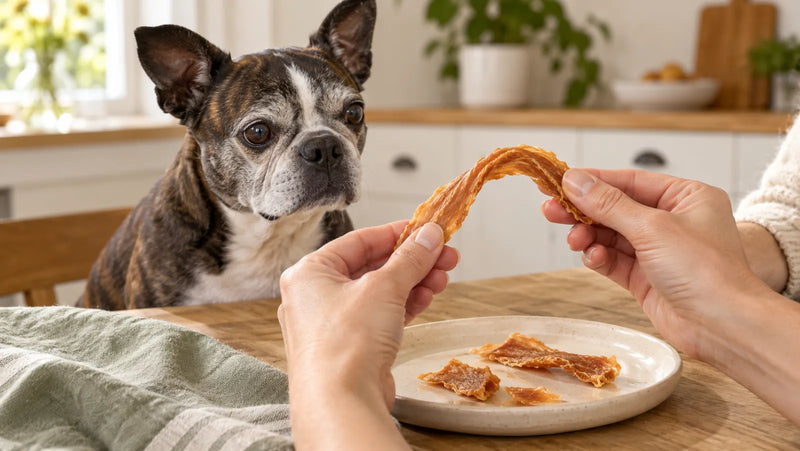
For a cat whose veterinary plan already allows chicken, the current American Paws freeze-dried chicken breast page describes a 4 oz, single-ingredient treat made with 100% USA chicken, with no additives and naturally small crunchy pieces for cats and dogs. Break a piece to suit the individual cat and count it within the treat budget. Those product facts do not make it a therapeutic diet or suitable for every allergy, dental condition, or prescription plan.
Use the cat-treat buying framework to compare an exact product's ingredients, calories, texture, and purpose. Then review the American Paws dog-and-cat treat collection one item at a time; products in a collection have different ingredients and formats, so the selected label—not the collection name—controls the decision.
Frequently Asked Questions
Can cats eat cooked bacon?
Do not plan cooked bacon as a cat treat. If an otherwise healthy adult cat steals one tiny crumb of plain, fully cooked bacon and remains normal, remove the rest and observe. Cooking does not remove bacon's sodium, fat, calories, smoke flavor, sugar, or seasoning.
Can cats eat raw bacon?
No. Raw bacon retains the salt and fat concerns and adds bacterial food-safety risk. CDC does not recommend raw pet food or treats because raw animal proteins can carry germs such as Salmonella and Listeria. Call the veterinarian after a meaningful or uncertain raw-bacon exposure.
Can cats eat bacon grease?
Skip bacon grease. It is concentrated cooking fat, not broth, and it may contain salt or other ingredients from the pan. Call if the possible amount is more than a lick, the recipe included a risky ingredient, the cat has a medical restriction, or symptoms develop.
How much bacon can a cat eat?
There is no recommended bacon serving for cats. One stolen crumb and several strips are different exposures, but brand, amount, cat size, health, timing, and seasonings all affect the response. Use a labeled cat treat for planned rewards and call the veterinarian about a larger or uncertain ingestion.
Can kittens eat bacon?
Keep complete kitten food in charge and do not introduce bacon as a treat. Kittens have small calorie allowances and specific growth needs. Call the veterinarian after more than a tiny taste, an unknown amount, raw or seasoned bacon, nonfood-material ingestion, or any symptoms.
Is bacon toxic to cats?
Plain bacon is not usefully described as a poison where every crumb creates an emergency. It is an unsuitable salty, fatty human food, while onion or garlic seasoning, a large sodium exposure, raw meat, packaging, and the cat's medical status create separate risks. Assess the actual product and event.
Are bacon-flavored cat treats safe?
The flavor name is not enough to decide. Choose a product labeled for cats, read the complete ingredient and calorie information, check texture and feeding directions, and fit the portion into the cat's plan. Ask the veterinary team before giving any extra to a cat with allergies or a therapeutic diet.
What symptoms after bacon mean I should call a veterinarian?
Call for vomiting, diarrhea, abdominal discomfort, appetite change, unusual thirst or urination, lethargy, weakness, pale gums, rapid breathing, tremor, or incoordination. Collapse, seizure, breathing difficulty, marked weakness, repeated vomiting, or profound distress needs urgent care. Known onion or garlic exposure warrants a prompt call even before signs appear because effects may be delayed.
Keep Bacon on the Human Plate
A stolen plain cooked crumb in a healthy adult cat is not the same event as a strip, raw bacon, grease, or a seasoned dish. That distinction prevents both panic and casual overfeeding. Bacon still has no useful routine role in a cat's complete diet.
Choose a reward you can verify and measure. Start with the cat-treat checklist, count every extra together, and ask the veterinary team to approve treats for a kitten, a cat with symptoms, or any cat on a medical diet.