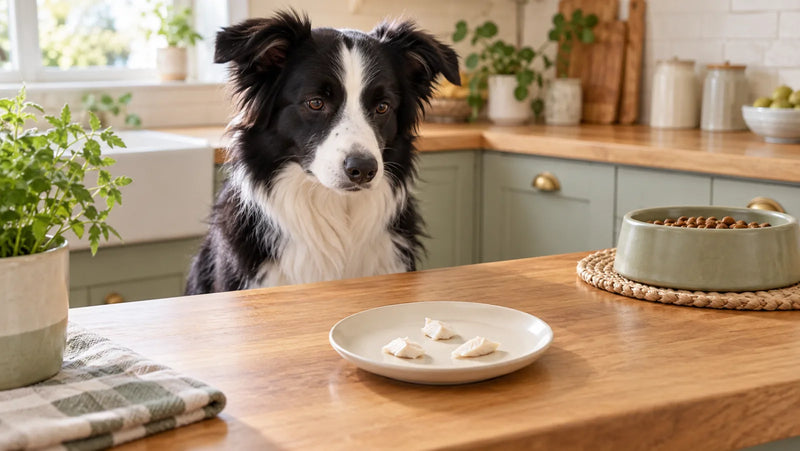

Can dogs eat almonds? No—not as an intentional snack. Ordinary sweet almonds sold as human food in the United States are not considered toxic to dogs, but a whole nut can choke or obstruct, its fat can cause digestive upset and may contribute to pancreatitis, and salt, flavorings, chocolate, xylitol, or mold can create separate hazards.
If your dog is choking, struggling to breathe, repeatedly vomiting, painful, weak, trembling, uncoordinated, or has eaten a large or unknown amount or a mixed almond product, contact your veterinarian, an emergency clinic, or ASPCA Animal Poison Control at (888) 426-4435 now. ASPCA Poison Control is available 24 hours a day, and a consultation fee may apply. Take the package with you or photograph every side of it.
Do not induce vomiting or give hydrogen peroxide, salt, oil, milk, bread, charcoal, food, or another home remedy unless the veterinarian or poison professional handling this exact case tells you to do so. A hard whole almond, a chocolate-coated almond, sugar-free almond butter, and spoiled nuts are four different exposures; the safest response depends on which one your dog actually reached.
Can Dogs Eat Almonds? The Accurate Answer Is “Not Toxic, Still Avoid”
The most useful answer separates toxicity from suitability. The ASPCA Animal Poison Control Center's almond guidance says the ordinary sweet almonds sold for consumption in the United States are not toxic to pets. That corrects the common claim that every almond is a canine poison.
It does not make almonds a sensible dog treat. “Not toxic” only means the plain sweet almond does not cause a recognized poisoning syndrome in the way macadamia nuts do. It says nothing about a nut lodged in an airway or intestine, a high-fat meal, a heavy salt coating, a dangerous ingredient in a mixed product, or mold growing on old food.
ASPCA distinguishes sweet almonds from bitter almonds, which contain a cyanide compound and are considered toxic. Bitter almonds are not typically sold as ordinary food in the United States, but they may appear in specialty channels. If a package says “bitter almonds,” the product is homemade or imported and cannot be identified, or the dog reached an unknown seed or nut, do not guess from appearance—call a veterinarian or poison-control professional with the label and source.
Our complete toxic-food guide for dogs places true toxins, physical hazards, and high-fat foods in the right lanes. This page owns the almond-specific decision: ordinary sweet almonds are not a canine toxin, yet the practical risks are enough to leave them off the reward menu.
Why Almonds Are Risky for Dogs
Choking and esophageal or intestinal obstruction
A whole almond is hard, smooth, and sized so that a dog may gulp it instead of chewing. The AKC's veterinary-reviewed almond guidance warns that almonds can obstruct the windpipe, esophagus, or intestines, with small dogs at particular risk. The danger comes from the nut's shape and the dog's swallowing behavior, not from a toxin.
Trouble breathing, blue or gray gums, collapse, frantic pawing at the mouth, or an inability to move air is an immediate emergency. Do not spend time searching for an online dose chart. Leave for emergency care and call during transport if another adult can do so safely. Do not blindly sweep deep in the mouth; that can push an object farther back or cause a bite.
An intestinal blockage may appear later. VCA's veterinarian-authored guide to foreign bodies in dogs lists vomiting, abdominal pain or tenderness, reduced appetite, straining or passing only small amounts of stool, lethargy, and behavior changes when the abdomen is handled among the possible signs. Those signs are not specific to almonds and cannot confirm a blockage at home, but they are reasons to seek veterinary assessment promptly.
High fat, digestive upset, and pancreatitis concern
Almonds concentrate oil and fat. ASPCA's people-food safety guide says nuts including almonds can cause vomiting and diarrhea and potentially pancreatitis in some pets. A dog may also develop gas, loss of appetite, discomfort, or lethargy after eating food outside the normal diet. The same fat caution applies to coconut; our can dogs eat coconut guide explains the portions.
Risk is not determined by one universal nut count. The dog's size, the amount and form eaten, the rest of the meal, prior pancreatitis, prescribed diet, and current symptoms all matter. A single accidental almond in a large symptom-free dog is not the same case as a toy dog emptying a family-size bag or a dog with a history of pancreatitis eating almond butter.
Repeated vomiting, a painful or tense abdomen, a hunched or “prayer” posture, refusal to eat, marked lethargy, or worsening diarrhea deserves a veterinary call. Do not label those signs “just an upset stomach” or diagnose pancreatitis yourself; obstruction and other illnesses can look similar.
Salt, spices, smoke flavor, chocolate, and xylitol
Flavored almonds must be assessed as a complete product. Salt, garlic or onion powder, hot spices, cocoa, coffee flavoring, raisins, alcohol-based flavorings, and sugar-free sweeteners each create a different question. The amount of a hazardous ingredient in one coating can differ greatly from another, so “one flavored almond” is not a dose description.
Chocolate-covered almonds require a chocolate assessment as well as an almond assessment. Sugar-free almond butter, protein snacks, bakery items, and confectionery may contain xylitol; never assume they do, but check the ingredient list immediately. If xylitol is listed—or the label is unavailable—call rather than waiting for weakness, vomiting, poor coordination, or seizures.
Excessively salty food can also cause harm, especially after a larger exposure or in a dog with a condition managed through sodium restriction. Do not try to “flush out” salt by forcing water. Provide the exact product, package size, amount missing, and dog details to the professional who can judge the full exposure.
Moldy or spoiled nuts and tremorgenic mycotoxins
Discard almonds that smell stale, look discolored, feel damp, or show visible mold, and keep dogs away from compost and old snack bowls. This is not because every spoiled almond contains toxin. It is because some molds on foods—including nuts—can produce neurologic toxins, and appearance alone cannot establish which toxin or concentration is present.
The Merck Veterinary Manual's review of tremorgenic neuromycotoxicosis describes exposure through moldy food or waste and signs that can include vomiting, tremors, marked sensitivity, incoordination, high body temperature, rapid heart rate, and seizures. If a dog ate visibly spoiled nuts or compost, save a sample safely without handling mold unnecessarily, photograph the source, prevent further access, and call promptly. Trembling, collapse, severe agitation, overheating, or seizures requires emergency transport.
Plain, Salted, Chocolate-Covered, Butter, Flour, and Milk Are Different Cases
The product form changes what can go wrong. Use this table to collect information for a veterinary call; it is not a permission chart.
| Almond product | Main concerns | What to check or report |
|---|---|---|
| Plain sweet almonds | Choking or obstruction, fat, digestive upset | Whole or chopped, maximum number or package amount missing, time, dog weight, symptoms |
| Salted, smoked, or seasoned almonds | All plain-almond risks plus salt, onion/garlic powder, hot spices, or other coating | Full ingredient panel, seasoning, package size, maximum amount missing |
| Chocolate-covered almonds | Chocolate toxicity assessment plus the hard nut, fat, and possible wrapper | Chocolate type or cacao percentage, product weight, amount missing, packaging |
| Almond butter | Concentrated fat; possible salt, sugar, chocolate, or xylitol; jar lid or seal | Ingredient list, sweetener, volume missing, whether any plastic, foil, or lid is gone |
| Almond flour or meal | No whole-nut choking shape, but still fatty and often part of a recipe with other hazards | Finished recipe, every ingredient, amount eaten, raw dough or packaging exposure |
| Almond milk | Added sugar or sweetener, digestive upset, and quantity; little reason to offer it | Sweetened or unsweetened, ingredient list, amount, container or cap exposure |
| Moldy, damp, or unknown nuts | Possible mycotoxins in addition to the ordinary physical and fat risks | Photo, safely contained sample, source such as compost, time, symptoms |
Homemade food needs the full recipe. Almond-flour brownies, marzipan, cookies, granola, trail mix, and energy bites can contain chocolate, raisins, macadamias, coffee, alcohol, xylitol, or missing wrappers. Report the largest plausible amount of the whole item, not a hopeful estimate of the almond portion alone.

What to Do If Your Dog Ate Almonds
1. Check breathing and remove access
If your dog cannot breathe normally, has blue or gray gums, collapses, or appears to have an object blocking the airway, go to an emergency hospital immediately. For a dog breathing normally, calmly secure the remaining food and packaging. Do not chase, force the jaw open, or push fingers deep into the throat.
2. Identify the exact product and maximum amount
Keep the bag, jar, recipe, wrapper, and ingredient panel. Record the earliest and latest possible time, the maximum number or volume missing, whether the nuts were whole, and whether a wrapper, lid, seal, or desiccant packet is also missing. Note the dog's weight, age, medical conditions, prescribed diet, current medications, and every symptom.
3. Call for a large or uncertain amount, a small dog, symptoms, or a hazardous co-ingredient
Call your veterinarian, emergency clinic, or ASPCA Animal Poison Control at (888) 426-4435 when the amount is large or unknown, the dog is small, the dog has a pancreatitis or diet-related medical history, the product is bitter, moldy, chocolate-coated, sugar-free, heavily seasoned, or mixed with another hazard, packaging may be missing, or any symptom develops. Call before signs appear when chocolate, xylitol, a bitter or unknown nut, or moldy food is possible.
4. Do not induce vomiting or give a home remedy unless directed
Whether vomiting is appropriate depends on timing, what was swallowed, the dog's alertness, airway protection, symptoms, and medical history. A choking dog, a dog with an obstruction, and a trembling or poorly coordinated dog do not need the same intervention. Do not improvise with peroxide, salt, mustard, fingers, charcoal, oil, milk, bread, or a forced meal.
5. Monitor only under case-specific professional guidance
If a veterinarian says home observation is appropriate, write down the monitoring window and exact return precautions. Do not assume that seeing one nut pass rules out all remaining nuts, or that one normal stool excludes a partial obstruction. Re-contact the clinic for vomiting, appetite loss, abdominal discomfort, straining, lethargy, coughing, gagging, tremors, incoordination, or any change from the plan.
Symptoms That Need Veterinary Attention
| Pattern | What an owner may notice | Action |
|---|---|---|
| Airway emergency | Difficulty moving air, blue/gray gums, collapse, frantic distress | Immediate emergency transport |
| Possible blockage | Repeated vomiting, abdominal pain, appetite loss, straining or little stool, lethargy | Prompt veterinary assessment; do not wait for every sign |
| GI or pancreatitis concern | Vomiting, diarrhea, marked lethargy, painful abdomen, refusal to eat | Call the veterinarian, especially if persistent, worsening, or the dog has prior disease |
| Possible mold-toxin exposure | Tremors, severe sensitivity, wobbling, overheating, agitation, seizures | Emergency care and poison-control guidance |
| Mixed-product exposure | Any sign after chocolate, xylitol, bitter/unknown nuts, raisins, or missing packaging | Call immediately with the label; do not wait for a complete syndrome |
These patterns overlap. Vomiting can follow simple dietary upset, pancreatitis, an obstruction, chocolate, xylitol, mold toxin, or an unrelated illness. The goal of the list is to trigger the right call, not to let an owner diagnose the cause from a screen.
Almonds vs. Macadamia Nuts: One Is Not a Canine Toxin, One Is
Ordinary sweet almonds and macadamia nuts should not be grouped under one vague statement that “all nuts are poisonous.” Sweet almonds are not classified as toxic to dogs. Macadamias, by contrast, cause a dog-specific reported toxicosis characterized by signs such as hind-leg weakness, poor coordination, vomiting, tremors, depression, and increased body temperature.
Our dog-specific macadamia nut safety guide explains that separate syndrome, its usual onset, mixed-cookie risks, and immediate response. The comparison improves accuracy without turning almonds into a recommendation: one is a recognized toxin; the other still brings meaningful choking, obstruction, fat, seasoning, and spoilage risks.
Better Everyday Rewards Than Almonds
Dogs do not need almonds to complete a balanced diet. For training or enrichment, use an appropriately sized reward with a readable ingredient label, a texture your dog can handle, and calories that fit the dog's main diet and veterinary plan. Tiny dogs and fast gulpers need special attention to piece size even when the food itself is canine-appropriate.
Pre-portion rewards before a training session instead of sharing from the snack bowl. If you are comparing purpose-made options, browse current American Paws dog treats and choose a product that fits your dog's size, chewing style, allergies, medical needs, and veterinarian's advice. A predictable dog treat also makes it easier to separate the dog's supply from salted nuts, candy, and party mixes.
Frequently Asked Questions
Are almonds poisonous to dogs?
Ordinary sweet almonds sold as food in the United States are not considered toxic to dogs, according to ASPCA Animal Poison Control. They are still a poor planned snack because whole almonds can choke or obstruct, their fat can cause digestive problems and may contribute to pancreatitis, and coatings or spoilage can add other hazards. Bitter almonds are a distinct product and are considered toxic.
What happens if a dog eats one almond?
One plain sweet almond does not create a predictable poisoning dose, and many dogs may remain well, but there is no universal “safe nut count.” Check breathing, identify the product, and consider the dog's size, swallowing behavior, health history, and symptoms. Call promptly for a small dog, choking or gagging, symptoms, an uncertain product, or a hazardous coating; otherwise follow your veterinarian's case-specific monitoring advice.
Can dogs eat salted or smoked almonds?
No. The whole-nut, fat, and digestive risks remain, while salt and seasonings add new variables. Garlic or onion powder, hot spices, smoke-flavor ingredients, chocolate, or other coatings may change the response. Save the label and report the maximum amount rather than trying to estimate how much seasoning the dog licked off.
Can dogs eat almond butter?
It is not a useful routine reward. Almond butter concentrates fat and may contain salt, sugar, chocolate, or a sugar-free sweetener. Check for xylitol immediately and call if it is listed or the label is unknown. Also account for a missing lid, foil seal, spoon, packet, or piece of the jar rather than assessing the spread alone.
Can dogs drink almond milk?
A small lick of ordinary almond milk is a different physical exposure from swallowing a whole nut, but almond milk is unnecessary for dogs and may contain added sugar, flavoring, or sweetener. Check the ingredient list and amount. Call if xylitol is listed, the product contains another hazardous ingredient, the container was chewed, or the dog develops symptoms.
What if the almonds look moldy?
Call a veterinarian or poison-control professional promptly, even if the dog looks normal. Some molds on food waste and nuts can produce toxins associated with vomiting, tremors, incoordination, overheating, and seizures, but visible appearance cannot identify the toxin or dose. Secure a sample and photograph the source; go to emergency care for neurologic signs.
Skip Almonds and Use a Predictable Dog Treat
The accurate conclusion is neither “almonds are deadly” nor “almonds are safe.” Ordinary sweet almonds are not a canine toxin, but a hard whole nut, concentrated fat, seasoning, chocolate or xylitol, and mold each create preventable risk. Store human snack nuts in a closed cabinet, keep party bowls and compost out of reach, and make sure every caregiver knows which rewards belong to the dog.
After an accidental exposure, check breathing, preserve the package, estimate the maximum amount, and call for a large or unknown amount, a small dog, any symptoms, missing packaging, or a hazardous co-ingredient. Once the case is professionally closed, return to measured, appropriately sized dog treats instead of testing whether the next almond will pass safely.