
Can dogs eat black-eyed peas? Yes—an otherwise healthy adult dog may try one or two plain black-eyed peas that have been fully cooked in water until soft, cooled, and lightly mashed. They are an optional taste, not a bowlful and not a replacement for complete dog food.
Salted canned black-eyed peas and Hoppin' John are different decisions. The family pot may contain ham hock, a bone, bacon fat, onion, garlic, salt, pepper, stock, hot sauce, or another ingredient that does not belong in a dog's serving. Evaluate the complete recipe instead of assuming every bean in it remains plain.
Despite their name, black-eyed peas belong in the bean and legume conversation rather than the green-pea topic. That distinction helps prevent two mistakes: borrowing the wrong preparation advice and treating a traditional New Year's dish as though its name lists every ingredient.
Can Dogs Eat Black-Eyed Peas? Yes, Plain and Fully Cooked
Plain cooked beans can be an occasional extra for an eligible dog, but the format matters. The ASPCA's vegetable garden safety guidance includes beans among produce that may be given as moderate snacks while separately warning owners to avoid toxic Allium vegetables such as onion, garlic, and chives.
That does not make black-eyed peas necessary or therapeutic. They add calories and fiber without providing a complete canine diet. The safe answer is narrow: fully cooked, water-only, soft, cooled, easy to swallow, and served in a tiny amount to a dog whose current diet allows it.
Dry, hard, raw, or undercooked black-eyed peas do not meet that definition. Neither do beans scooped from a seasoned can or picked out of a pot after they have simmered with pork, aromatics, stock, and spices.
Use a Five-Part Black-Eyed-Pea Check
1. The dog is eligible
The dog should be healthy, eating a stable complete diet, and free of a veterinary instruction that excludes legumes, unfamiliar foods, table scraps, added sodium, or unmeasured treats. Dogs on prescription diets, elimination trials, gastrointestinal plans, kidney or heart diets, or weight-loss programs need the veterinarian's answer first.
2. The beans are fully cooked and soft
A bean should crush easily under a fork. If the center is firm or chalky, keep cooking it for the people at the table and do not use it as a dog taste. Hard dry beans are also an avoidable choking and digestive challenge.
3. The recipe is water-only and unseasoned
Plain means no salt, broth, bouillon, oil, butter, bacon, ham, smoke flavor, onion, garlic, chili, hot sauce, seasoning packet, or pan drippings. A recipe that is mild to a person is not automatically plain for a dog.
4. The piece size is easy to swallow
Cool the beans, then mash one or two with a fork. Mashing makes the first taste easier to inspect and less likely to be gulped as a small round object. It also prevents the serving from quietly becoming a spoonful.
5. The portion fits the shared treat budget
Count the beans with every training reward, chew, topper, pill pocket, table taste, and other extra given that day. The fact that a food is a vegetable or legume does not make its calories disappear.
How to Prepare One or Two Black-Eyed Peas for a Dog
Use a separate water-only batch. You do not need to make a dog recipe; you need to keep two beans out of the family recipe.
- Sort and rinse. Remove debris or damaged beans and rinse according to the package directions.
- Cook in fresh water. Follow the package's soak and cook directions, using no broth, salt, oil, onion, garlic, meat, or seasoning.
- Reach a fork-soft texture. The beans should crush without resistance and have no hard or chalky center.
- Cool completely. Move one or two beans to a clean plate away from the seasoned pot.
- Mash lightly. Press the beans with a clean fork into two small soft portions.
- Serve beside the normal diet. Offer them as one optional taste, not as a substitute for a meal.
The FDA's guide to complete and balanced pet food explains that too many table scraps can unbalance a pet's diet and that treats and snacks are not typically intended to be the sole diet. Black-eyed peas may contain nutrients, but a human-food nutrient list does not turn them into complete dog food.

Canned Black-Eyed Peas Need a Label Check
A can can save time, but it can also add sodium and ingredients that are easy to miss. Start with the full ingredient list, not the picture on the front. The simplest option is a no-salt-added product containing black-eyed peas and water.
Drain and rinse the beans before taking one or two for an eligible dog. Rinsing removes some liquid from the surface; it does not erase ingredients that cooked into the beans. If the label lists onion, garlic, pork flavor, smoke flavor, sweetener, chili, a seasoning blend, or an ingredient you cannot verify, skip it.
“Reduced sodium” is not the same as “no salt added,” and a human serving may still be far larger than a dog taste. Do not pour the can's brine into the dog bowl. If the only available can is heavily salted or seasoned, use another treat rather than trying to rescue it with repeated rinsing.
Why the Hoppin' John Pot Is Not the Same Food
Hoppin' John recipes vary by household and region. Many combine black-eyed peas and rice with onion, garlic, bacon, ham hock, pork fat, stock, salt, pepper, hot sauce, or other seasoning. The dish name cannot tell you which ingredients or amounts are in the pot.
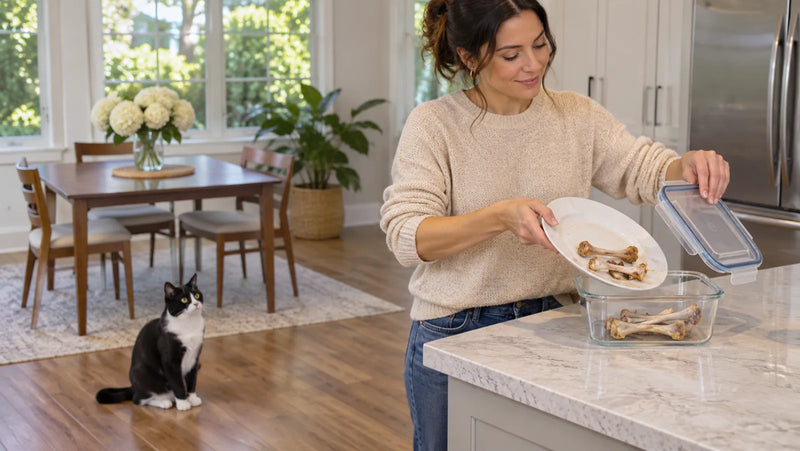
Ham hocks and bones create physical risk
A ham hock may contribute a bone as well as salty, fatty meat. The FDA's holiday pet-safety guidance explains that bones can choke, break into sharp pieces, injure or perforate the digestive tract, and cause blockages. Do not hand over the hock, and do not assume every small fragment stayed out of the beans.
Bacon, pork fat, and drippings make a rich dish
Rendered fat and cured pork change a water-cooked bean into a rich table food. They also make the amount eaten harder to estimate because fat can coat the rice and beans throughout the pot. Dogs with a history of pancreatitis, gastrointestinal disease, hyperlipidemia, or a prescribed low-fat plan should not receive an improvised taste.
Onion and garlic can damage red blood cells
The ASPCA's people-food safety list states that onion, garlic, and chives can cause gastrointestinal irritation and red-blood-cell damage that may lead to anemia. Powdered or cooked forms do not become harmless just because they disappear into the pot.
Salt, stock, pepper, and hot sauce add more uncertainty
Stock and seasoning packets can contain sodium and hidden onion or garlic. Pepper and hot sauce may irritate the mouth and digestive tract, while a sauce can contain additional sweeteners or alcohol. The practical rule is simple: do not pick “safe” beans out of a seasoned Hoppin' John pot. Reserve plain beans before the recipe begins.
Black-Eyed Peas, Gas and Digestive Upset
Beans contain carbohydrates and fermentable fiber that intestinal microbes can break down. The Merck Veterinary Manual's small-animal nutrition review explains that fermentation can produce gas and that highly fermentable fiber or an overload of poorly digested carbohydrate may contribute to flatulence, cramping, or diarrhea.
That is one reason the first exposure is one or two mashed beans, not a side dish. A dog that tolerates the taste today does not need a larger portion tomorrow. Stop if vomiting, loose stool, repeated gas, discomfort, poor appetite, or another change appears.
Do not label every swollen abdomen as ordinary bean gas. A distended or painful abdomen, repeated unproductive retching, restlessness, heavy drooling, weakness, collapse, pale gums, or breathing difficulty needs urgent or emergency veterinary care. This warning does not mean black-eyed peas cause gastric dilatation-volvulus; it means severe abdominal signs should never be watched at home under a casual explanation.
How Many Black-Eyed Peas Can a Dog Eat?
For the first taste, use one or two fully cooked, cooled, lightly mashed beans. That is an observation step, not a universal daily serving. It gives you a clear ingredient and a small enough exposure to stop without turning a New Year's tradition into a feeding plan.
There is no responsible cup or tablespoon allowance for every dog. Body size, normal diet, activity, body condition, medical history, the bean recipe, and every other treat given that day all affect the decision. For any repeat use, ask the veterinarian how the beans fit the dog's actual calorie plan.
The WSAVA Nutrition Committee's dog-treat guide says all treats together should remain below 10% of daily calories. That is a ceiling, not a target and not permission to fill 10% with beans. Complete food still does the nutritional work.
What to Do If Your Dog Ate Black-Eyed Peas or Hoppin' John
Secure the dish, packaging, bones, and trash. Then collect the facts a veterinarian or poison specialist will need:
- the exact recipe or canned ingredient list;
- the largest possible amount eaten;
- whether a ham hock or bone is missing or chewed;
- whether onion, garlic, chives, stock, cured pork, hot sauce, or alcohol was present;
- the earliest and latest possible time;
- the dog's weight, age, medical conditions, medicines, and current symptoms.
One or two plain fully cooked beans: for a healthy dog acting normally, remove access, offer water, and observe. Do not add more during the observation period.
A larger plain serving: watch closely for vomiting, diarrhea, gas, abdominal discomfort, or poor appetite. Call the veterinarian if the dog is symptomatic, medically vulnerable, very small, or the amount is uncertain.
Hoppin' John, onion, garlic, or an unknown mixed dish: call the veterinarian or ASPCA Animal Poison Control at 888-426-4435 with the recipe, amount, timing, and dog details. Do not wait for pale gums or weakness and do not induce vomiting unless the veterinary professional handling the case directs it.
A missing bone or choking and abdominal signs: seek urgent veterinary help. Do not reach blindly into the throat, force food, or use a home remedy to push a bone through.
Keep the Bean, Pea and Vegetable Pages in Their Lanes
Black-eyed peas are one legume with a specific New Year's recipe problem. The broader bean safety guide covers other bean types, preparation formats, raw kidney-bean concerns, and general seasoned-dish boundaries. Use it when the question is black beans, kidney beans, chickpeas, or another bean rather than black-eyed peas.
Green peas, snow peas, snap peas, frozen peas, and the diet-formulation discussion belong in our green, snow, and snap pea guide. The comprehensive vegetable safety guide for dogs helps compare preparation, pieces, portions, and mixed dishes across the wider produce category.
For a mixed New Year's or holiday table, review the full list of toxic foods for dogs before deciding which scraps are harmless. Another plain winter vegetable may have its own format rules; our plain parsnip safety guide separates a fork-soft unseasoned root from hard raw pieces and seasoned roasts.
Frequently Asked Questions
Can dogs eat cooked black-eyed peas?
Some healthy adult dogs may try one or two black-eyed peas cooked in plain water until completely soft, cooled, and lightly mashed. Keep complete dog food primary and stop if digestive upset or another reaction appears.
Can dogs eat canned black-eyed peas?
Choose a no-salt-added can with only black-eyed peas and water, drain and rinse, and use one or two beans. Skip cans containing onion, garlic, pork flavor, smoke flavor, sweetener, spice blends, or other seasonings. Rinsing cannot turn a mixed recipe into a plain one.
Can dogs eat Hoppin' John?
Do not plan to feed Hoppin' John. Recipes often include ham or bacon, a hock or bone, onion, garlic, salt, stock, pepper, hot sauce, or rich drippings. Retrieve the exact recipe after an accidental exposure and call for case-specific advice when a toxic or physical hazard may be present.
Can dogs eat black-eyed peas with ham?
Keep the dog's beans separate from ham. Ham is cured and salty, a hock can contain a dangerous bone, and the pot may also contain onion, garlic, fat, stock, or seasoning. Use water-only beans instead.
Do black-eyed peas cause gas in dogs?
They can. Fermentable fiber and unfamiliar carbohydrate may produce gas or loose stool, especially in a larger portion. Begin with one or two mashed beans, stop if signs appear, and treat severe distension, unproductive retching, collapse, or pain as an emergency rather than ordinary gas.
Can puppies eat black-eyed peas?
A puppy's complete growth diet comes first, and small bodies leave less room for unbalanced extras. Ask the puppy's veterinarian before adding beans, especially during weaning, a sensitive-stomach period, or any prescribed diet. Never give a puppy a ham bone.
Are black-eyed peas a substitute for dog food?
No. They are not a complete and balanced canine diet and should not replace a meal or a meaningful share of one. At most, one or two plain soft beans can be an occasional taste for an eligible dog.
Keep the New Year's Taste Plain and Tiny
The safe answer is deliberately small: cook black-eyed peas in water until soft, cool them, mash one or two, and keep them separate from the family pot. Salted cans, Hoppin' John, ham bones, bacon fat, onion, garlic, hot seasoning, and a large helping are different exposures that need their own assessment.
If you would rather use a predictable reward with a current ingredient label, browse the collection of current American Paws dog treats and choose only a product that fits the individual dog's allowed ingredients and veterinary plan. A New Year's tradition should remain a tiny optional moment, not a reason to replace complete food.