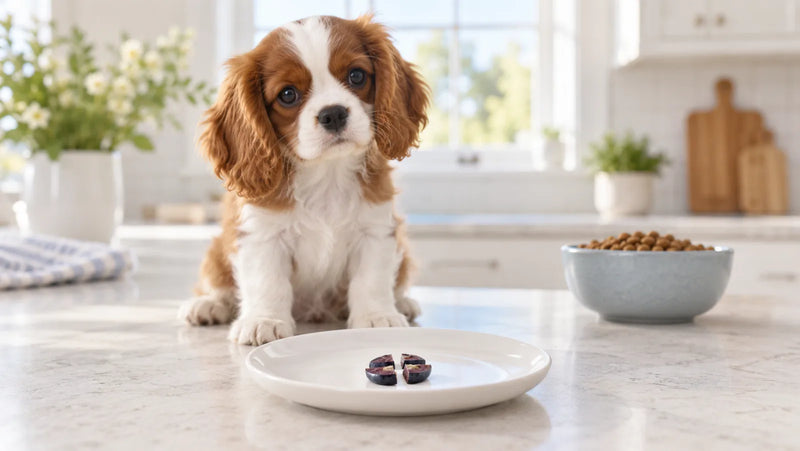

Can dogs eat grapes? No—dogs should not eat fresh grapes, raisins, Zante currants, or foods that contain them. These fruits can cause acute kidney injury, and no amount has been proven safe. If your dog may have eaten any, remove access and make a professional call now, even if your dog looks completely normal.
Call your veterinarian, an emergency veterinary clinic, or ASPCA Animal Poison Control at (888) 426-4435 immediately. ASPCA Poison Control is available 24 hours a day, and a consultation fee may apply. If your dog is collapsing, seizing, struggling to breathe, bleeding, or unresponsive, begin transport to an emergency clinic while another adult calls if possible.
Do not wait for vomiting, reduced urine, or another symptom. Do not try to make your dog vomit or give hydrogen peroxide, salt, milk, oil, bread, charcoal, or forced water unless a veterinarian or poison-control professional gives instructions for this specific dog and exposure.
Can Dogs Eat Grapes? No—Treat Any Exposure as an Emergency
The safe answer is simple even though the toxicology is not: grapes are off-limits to dogs. Red, green, seedless, homegrown, and store-bought grapes all count. Raisins and Zante currants are dried grapes, so their small size does not make them harmless. Raisin bread, fruitcake, trail mix, cereal, snack bars, and mixed dishes can create the same urgent question.
“No amount has been proven safe” does not mean one grape inevitably kills every dog. Not every exposed dog develops kidney failure, and dogs appear to vary greatly in susceptibility. The problem is that a pet parent cannot identify the susceptible dog at home, and neither the number of grapes nor the dog's size reliably clears the exposure. Serious illness has followed small amounts, so any known or suspected ingestion warrants an immediate call.
This page owns the grape-specific decision. For a wider list of kitchen hazards and one response framework, use our complete guide to toxic foods for dogs. Do not use either article as a reason to delay case-specific veterinary advice.
Why Grapes and Raisins Can Damage a Dog’s Kidneys
Grape and raisin toxicosis can damage kidney tubules and lead to acute kidney injury. When kidney function deteriorates, waste products and fluid balance become harder to control. A severely affected dog may produce very little urine or stop producing urine, which is a critical emergency sign.
The full toxic mechanism and the reason one dog becomes ill while another does not are not completely settled. Tartaric acid is currently the leading proposed—or suspected—toxic principle. The ASPCA's people-food hazard guide describes tartaric acid as the suspected toxic component, while the Merck Veterinary Manual's grape and raisin review calls it one proposed toxic principle and explains that grape composition varies.
That is more precise than either extreme—“scientists have no idea” or “tartaric acid definitively explains every case.” Grapes can differ in tartaric-acid content, and individual canine susceptibility also varies. Those uncertainties prevent a dependable home dose calculation; they do not create a safe loophole.
Which Grape Products Count as an Exposure?
Report the exact food and every ingredient. A professional needs to know whether the dog ate fresh fruit, a concentrated dried form, or a mixed product with additional hazards.
| Product | Why it counts | What to report |
|---|---|---|
| Fresh red, green, or black grapes | Color, variety, and the presence or absence of seeds do not make grapes safe for dogs | Maximum number missing, bunch or container size, and exposure time |
| Seedless grapes | The toxin concern is not the seed, so “seedless” does not remove the kidney risk | Variety if known, package, and worst-case amount |
| Raisins and sultanas | These are dried grapes; their compact size makes it easy for a dog to consume several before anyone notices | Package, recipe, and maximum amount missing |
| Zante currants | These tiny dried Black Corinth grapes belong to the same Vitis exposure category | Use the full name “Zante currants” or “dried Black Corinth grapes” |
| Raisin bread, cakes, cookies, cereal, oatmeal, or snack bars | The grape ingredient still counts, and the recipe may add xylitol, chocolate, macadamias, alcohol, or swallowed packaging | Full ingredient list, recipe, serving size, wrappers, and amount missing |
| Trail mix, stuffing, or another mixed dish | Raisins can be overlooked among nuts, chocolate, seasoning, onion, or garlic | Every component—not only the ingredient you first noticed |
True currants from the Ribes genus are botanically different from Zante currants. Merck reports that true Ribes currants have not been associated with the same acute kidney injury in dogs. Because packaging may use the word “currant” loosely, do not guess from the label front: read the ingredient list, preserve the package, and tell the veterinarian exactly what it says.
Fresh grapes and dried grapes both require urgent advice. It is reasonable to note that raisins are smaller and can be eaten in larger numbers unnoticed, but it is not accurate to promise that raisins are always more toxic than fresh grapes. The response is the same: call about either form.

There Is No Reliable Safe Amount of Grapes for Dogs
Internet tables that promise a safe number of grapes can create a dangerous wait. The American Kennel Club's fruit guide says no amount has been proven safe, and its dedicated grape-toxicity guidance treats suspected ingestion as a veterinary emergency.
Body size matters to many toxic exposures, but it does not make a home grape-count threshold reliable. A large dog is not automatically protected, and a small dog is not the only one at risk. The fruit's composition varies, the true missing amount may be uncertain, and dogs respond differently. That combination is why the correct owner-level rule is “call about any amount,” not “wait below this number.”
Give the professional a useful worst-case estimate instead:
- How many grapes, raisins, or servings could be missing?
- What was the earliest and latest possible exposure time?
- What is the dog's weight, age, and current health status?
- Does the dog have kidney disease or another medical condition?
- What medicines or supplements does the dog take?
- Was a wrapper, bag, skewer, stem, or other object swallowed?
- What symptoms are present, and when did each begin?
If a detail is unknown, say that plainly. A truthful range is safer than a comforting guess.
Grape Poisoning Symptoms and the 6–72 Hour Timeline
Symptoms do not follow one perfect schedule, and their absence does not clear an exposure. The time windows below describe patterns reported in affected dogs, not milestones an owner should wait to see.
| Typical window | Possible signs | What it means for the owner |
|---|---|---|
| Often within 6–12 hours | Vomiting or diarrhea; pieces of grape or raisin may appear in vomit or stool | Call before these signs; their absence is not clearance |
| Over the next several hours to a day | Poor appetite, lethargy, abdominal discomfort, weakness, dehydration, unusual thirst, or tremors | Update the clinic about every change and follow its transport plan |
| Within about 24–72 hours | Kidney values may worsen; urine production may decline or stop | Little or no urine is a critical emergency sign, not a symptom to wait for |
Merck describes vomiting and diarrhea as common within 6–12 hours and reports that oliguric or anuric kidney failure can develop within 24–72 hours. AKC lists the same early gastrointestinal pattern and later acute kidney-injury period. A dog may also show lethargy, appetite loss, abdominal pain, weakness, dehydration, extreme thirst, or tremors.
The progression from vomiting to depression to reduced urine is important to recognize, but it is not a required sequence. Some dogs may have subtle early signs, and an owner cannot assess kidney filtration by appearance. A dog that still plays, eats, drinks, or urinates shortly after exposure still needs the immediate call.
Start emergency transport immediately for collapse, seizures, trouble breathing, bleeding, unresponsiveness, profound weakness, or little to no urine. If possible, another adult can call the clinic during transport. Keep the dog secure and prevent falls; bring the food package or recipe.
What to Do If Your Dog Ate Grapes or Raisins
1. Remove access and preserve the evidence
Move the fruit, mixed food, wrappers, stems, and remaining servings away from every pet. Do not discard the package or recipe. Photograph the ingredient panel and serving information if the original container cannot travel with you.
2. Call a veterinarian, emergency clinic, or ASPCA now
Make the call immediately after any known or suspected exposure. ASPCA Animal Poison Control is available at (888) 426-4435. The ASPCA's poisoning-response guidance tells owners not to wait for signs and to collect the container or label for professional review.
3. Report the worst plausible amount and time
Tell the professional the dog's weight, age, medical conditions, medicines, current symptoms, product form, complete ingredient list, maximum amount that could be missing, and earliest and latest exposure time. Mention any object that may also have been swallowed. If more than one dog had access, say so.
4. Do not induce vomiting or give a home remedy
Do not give hydrogen peroxide at home unless a veterinarian or poison-control professional specifically directs it for this case. Making the wrong dog vomit can cause aspiration and serious lung injury, and it may be unsafe after neurologic signs or certain swallowed objects. Do not substitute salt, oil, milk, bread, charcoal, a large meal, or forced water.
A veterinarian may decide that professional decontamination is appropriate based on timing and the dog's condition. That is different from turning a professional procedure into a do-it-yourself instruction. Follow the exact directions you receive.
5. Follow the clinic’s transport and monitoring plan
Ask where to go, what to bring, whether the dog may eat or drink on the way, and what changes should trigger immediate transport if the clinic has not already directed it. Do not let a temporary improvement cancel follow-up. Kidney injury can become evident after early stomach signs settle.
What a Veterinarian May Evaluate
Veterinary care is individualized. Depending on the timing and the dog's status, the team may review whether professional decontamination is still appropriate, examine hydration and circulation, obtain baseline laboratory values, provide supportive fluid therapy, and monitor kidney values and urine production over time. A single normal-looking moment is not the same as completing that evaluation.
This article cannot tell an owner which procedure, fluid rate, test interval, or duration is right for an individual dog. Those decisions change with the exposure window, examination, laboratory findings, urine output, existing disease, and response to care. Activated charcoal is not a proven home solution for grape toxicity, and no supplement or food detoxifies the kidneys after an exposure.
When you call, ask what the team wants you to monitor and when results need to be rechecked. Keep discharge instructions, lab reports, and the poison-control case number together so every clinician can see the same timeline.
Prevent Grape and Raisin Exposures
Most prevention is simple environment design rather than perfect supervision:
- Store grapes and raisins in a closed refrigerator or high secured cupboard, not an open fruit bowl.
- Keep trail mix, cereal, oatmeal packets, lunchboxes, snack bars, and baked goods behind a closed door.
- Check bread and bakery labels before leaving a loaf or cake within reach. Our dog-and-bread safety guide separates plain baked bread from raisin bread, xylitol-containing products, and raw yeast dough.
- Ask children and visitors never to share grapes, and clean dropped food before the dog enters the area.
- Secure trash, compost, grocery bags, purses, and backpacks.
- Count portions before a picnic or party so a missing snack is noticed quickly.
- Teach “leave it” and “drop it,” but do not rely on training as the only barrier.
Broader fruit advice can be confusing because many fruits are safe only after removing pits, cores, seeds, or rind, while grapes and raisins stay in the no category. Our complete fruit guide for dogs organizes those choices; this page remains the authority for grape-specific urgency.
Safer Treat Choices Come After the Emergency Call
American Paws does not sell an antidote for grapes, and no food or dog treat can prevent kidney injury after an exposure. If grapes or raisins may have been eaten, call first and follow professional directions.
For ordinary future rewards—after the exposure has been professionally resolved—choose a product with a complete ingredient label, an appropriate size and texture, and a measured place in the dog's diet. You can review all current American Paws dog treats and check the actual ingredients and feeding directions on each product page. A veterinarian should guide treats for a dog with kidney disease, pancreatitis, diabetes, allergies, or a prescription diet.
Frequently Asked Questions
Can one grape hurt a dog?
It can. One grape does not inevitably poison every dog, but small exposures have been associated with severe illness and no amount has been proven safe. Because individual susceptibility is unpredictable, call a veterinarian or ASPCA Animal Poison Control at (888) 426-4435 about even one suspected grape.
Are seedless grapes safe for dogs?
No. The kidney risk is not caused by grape seeds, so seedless, red, green, and other table-grape varieties are all unsafe for dogs. Treat any suspected ingestion as an emergency.
Are raisins worse than grapes for dogs?
Both require the same immediate response. Raisins are dried and compact, so a dog can consume several before an owner notices, but it is not accurate to promise that every raisin is more toxic than every fresh grape. Call with the exact product and maximum amount missing.
How soon do dogs get sick after eating grapes?
Many affected dogs develop vomiting or diarrhea within 6–12 hours. Lethargy, appetite loss, abdominal pain, weakness, dehydration, or marked thirst may follow, and acute kidney injury can become evident over the next 24–72 hours. A dog with no early signs is not cleared, so do not use the timeline as a wait-and-see schedule.
Should I make my dog vomit after eating grapes?
Not on your own. Call a veterinarian or poison-control professional immediately and follow case-specific directions. Home hydrogen peroxide can cause aspiration and serious injury, while a clinic can decide whether and how professional decontamination should be performed safely.
Can dogs eat currants?
The name needs clarification. Zante currants are tiny dried Black Corinth grapes and should be treated like raisins. True currants from the Ribes genus are botanically different and have not been associated with the same canine kidney injury, according to Merck. Save the package and ask a professional to identify an ambiguous product instead of guessing.
Call Now—Do Not Wait for Kidney Symptoms
If your dog ate or may have eaten grapes, raisins, Zante currants, or a food containing them, call your veterinarian, an emergency clinic, or ASPCA Animal Poison Control at (888) 426-4435 now. Save the package, report the maximum possible amount and time, and do not induce vomiting or give a home remedy unless a professional specifically instructs you.
Once the dog is safe and the exposure has been professionally closed, prevent a repeat by securing fruit and mixed snacks, reading every ingredient label, and reserving clearly labeled, appropriately portioned dog treats for routine rewards.