
Can dogs eat peanuts? Yes—many healthy dogs can have one or a few plain, fresh, shelled, unsalted peanuts as an occasional taste. Choose dry-roasted and unflavored kernels, break them to suit the dog's size, supervise chewing, and count roughly 6 calories per kernel with every other extra.
Do not serve the shell, a handful, salted or boiled peanuts, honey-roasted or spicy coatings, trail mix, candy, stale or suspect peanuts, or an unknown product. Dogs with a history of pancreatitis, a fat- or sodium-restricted plan, a prescription diet, swallowing trouble, or a known reaction should skip peanuts unless their veterinarian approves the exact form and amount.
Can Dogs Eat Peanuts? The Quick Answer
| Peanut form | Offer deliberately? | Main decision |
|---|---|---|
| Fresh, commercially packaged, dry-roasted, unsalted, unflavored, shelled kernel | Possibly, in a tiny occasional portion | Break it for the dog's size, introduce one piece, count the calories, and supervise. |
| Raw, plain, shelled peanut | Not the preferred choice | It is not automatically toxic, but a fresh dry-roasted product is easier to select and store as an intentional taste. |
| Salted, boiled in brine, oil-roasted, honey-roasted, barbecue, chili, or other flavored peanut | No | Salt, sugar, added fat, spices, and variable seasonings make it a poor and less predictable choice. |
| Peanut in its shell | No | The shell is fibrous, difficult to digest, and a choking or swallowed-material concern. |
| Stale, damp, visibly moldy, discolored, recalled, improperly stored, or bird-feed peanut | No | Discard and prevent access; contaminated peanuts can carry aflatoxins, and contamination is not always visible. |
| Trail mix, brittle, candy, bakery item, or coated snack | No | Check immediately for chocolate, raisins or currants, macadamia nuts, xylitol, salt, spices, and wrappers. |
A qualified “yes” applies only to the first row. It is not a statement that every peanut product is safe, that peanuts improve a complete diet, or that a dog's enthusiasm predicts tolerance.
What Counts as a Plain Peanut for a Dog?
For an intentional taste, “plain” should mean all of the following:
- Shelled: both the outer pod and loose shell fragments are removed.
- Unsalted: no salt dust, brine, salted butter, or salty seasoning blend.
- Unflavored: no honey glaze, sugar, chocolate, smoke flavor, chili, barbecue powder, garlic, onion, or sweetener.
- Dry-roasted: preferably roasted without added oil rather than fried or heavily oil-roasted.
- Fresh and traceable: commercially packaged, within date, correctly stored, and not damp, stale-smelling, rancid, discolored, recalled, or gathered from bird feed or outdoors.
- Small and prepared: one kernel means one shelled piece—not one pod, one scoop, or one handful—and it is broken smaller when the dog's mouth or chewing style requires it.
The AKC's peanut guidance similarly limits the acceptable form to plain raw or dry-roasted unsalted peanuts, recommends only a few, and calls out flavored nuts and shells. This article goes one step more conservative by preferring a fresh dry-roasted product for deliberate sharing and beginning with a single broken kernel.
Why Shells, Salt, Honey Roasting, and Flavors Change the Answer
Peanut shells are not part of the serving
The dry pod is fibrous and not useful nutrition for a dog. It can lodge in the mouth or throat, particularly when a small dog or fast eater swallows without chewing. A larger quantity of shells or the bag itself also adds indigestible material that may irritate or obstruct the gastrointestinal tract.
One swallowed shell does not guarantee a blockage. Remove the rest and watch closely, but seek urgent help for choking, breathing trouble, repeated unproductive retching, collapse, or blue/gray gums. Call the veterinarian for repeated vomiting, a painful or swollen abdomen, appetite loss, inability to keep water down, difficulty passing stool, or a known quantity of shells or packaging.
Salted and boiled peanuts add sodium the dog did not need
Commercial salted peanuts may carry fine salt on every surface; boiled peanuts can absorb salty brine. A healthy dog that steals one or two ordinary salted peanuts will not automatically develop salt poisoning, but that accident is not a reason to make them routine. Remove access, keep fresh water available, and identify how much was eaten.
A large amount, very small body size, restricted-sodium plan, heart or kidney condition, limited access to water, vomiting, marked thirst, disorientation, tremors, or another neurologic change deserves prompt veterinary advice. Do not use salt to make a dog vomit.
Honey-roasted and flavored peanuts are variable recipes
Honey-roasted commonly means added sugar, salt, and oil—not simply a thin coat of honey. Savory coatings may contain garlic or onion powder; hot versions can contain chili and other irritants; barbecue and snack mixes can combine several seasonings. Formula names do not reveal quantities, so read the complete label.
One stolen flavored peanut may lead to no sign or only mild digestive upset, depending on the recipe and dog. A missing bowl or unknown amount requires a different assessment. Save the package rather than brushing off the coating and treating the kernel as plain.
Trail mix and candy can add a separate hazard
Mixed snacks should be inventoried ingredient by ingredient. Chocolate, raisins or currants, and macadamia nuts require their own toxicology assessment. Sugar-free candy or coating may contain xylitol. Foil, plastic, oxygen absorbers, and resealable-bag pieces create foreign-body concerns.
Do not wait for symptoms when a known or possible toxic co-ingredient is involved. Note the dog’s weight, product, time, maximum missing amount, and current behavior, then call a veterinarian, emergency clinic, or animal poison-control service.

Peanut Calories and a Conservative Portion Table
Peanuts are compact and calorie-dense. USDA FoodData Central reference entry 173806 lists dry-roasted unsalted peanuts at about 587 kcal per 100 grams and approximately 6 kcal for a roughly 1-gram kernel. Natural size variation, halves, and coatings make that an estimate rather than a label guarantee.
The table below is an editorially conservative first-taste guide for a healthy adult dog whose veterinarian has not restricted peanuts. It is not a toxic threshold, daily entitlement, or maximum. “One” means one shelled kernel; cut or crush it into blunt pieces appropriate for the dog.
| Dog's current weight | Conservative first taste | Approximate peanut calories | Preparation |
|---|---|---|---|
| Under 10 lb (4.5 kg) | 1/2 kernel | About 3 kcal | Crush or cut finely; do not offer a whole round piece. |
| 10–25 lb (4.5–11 kg) | 1 kernel | About 6 kcal | Split into smaller pieces and offer one at a time. |
| 26–50 lb (12–23 kg) | 1–2 kernels | About 6–12 kcal | Break at least the first kernel and watch chewing. |
| 51–75 lb (23–34 kg) | 2–3 kernels | About 12–18 kcal | Keep it a counted portion, not a hand scoop. |
| Over 75 lb (34 kg) | 3–4 kernels | About 18–24 kcal | Large body size does not make a handful appropriate. |
The WSAVA feeding guide says extras should make up no more than 10% of a dog's daily calorie intake and notes that conventional extras may not fit a medical or prescription diet. Ten percent is a ceiling shared by every reward, chew, topper, pill food, and table taste—not a target to fill with peanuts.
For example, four kernels can already contribute roughly 24 kcal. That is a meaningful fraction of the WSAVA example ceiling for a small dog. Use the dog's veterinarian-set daily energy need and the current product's weight or label; our daily treat-calorie guide owns the full budget calculation.
Fat, Digestion, and Dogs Who Should Skip Peanuts
The same USDA reference places dry-roasted peanuts near 50% fat by weight. That does not make one kernel poisonous, and it does not prove that a few peanuts will cause pancreatitis. It does explain why the portion stays tiny and why peanuts are a poor choice for a dog that needs a low-fat plan.
Too much can cause vomiting, loose stool, abdominal discomfort, or appetite change. Repeated calorie-dense extras can also undermine a weight plan. Stop offering peanuts after digestive upset rather than trying a larger amount to “build tolerance.”
Skip peanuts or obtain specific veterinary approval when the dog has:
- a current or previous episode of pancreatitis, hyperlipidemia, or a prescribed fat limit;
- obesity or an active weight-loss plan with little discretionary energy;
- heart or kidney disease, a sodium restriction, or another therapeutic diet;
- a chewing or swallowing problem, missing painful teeth, or a history of gulping;
- known peanut allergy, a prior unexplained reaction, or an elimination-diet trial;
- recurrent gastrointestinal disease or medication whose food instructions matter.
A complete and balanced food should provide the nutrition. Peanuts are optional human food, not a protein supplement that the dog needs.
Mold, Aflatoxin, and Storage
Aflatoxins are toxins produced by molds including Aspergillus flavus. The FDA's aflatoxin guidance for pet owners says contaminated corn, grains, peanuts, and other foods can cause illness and liver damage in pets at unsafe levels. It also warns that aflatoxins may be present even when no mold is visible.
That does not mean a fresh packaged peanut is commonly poisonous. It means sight and smell cannot certify a suspect lot, and “I picked off the fuzzy one” is not a safety method. Do not offer peanuts that are damp, stale, musty, rancid, badly discolored, insect-damaged, improperly stored, part of a recall, or taken from old bird feed or an outdoor cache.
Store the human package tightly closed in a cool, dry place according to its directions. Keep the lot code, best-by date, and receipt until the food is used. Do not combine new peanuts with old leftovers because that erases traceability and can carry moisture or contamination into the new batch.
If a dog may have eaten suspect or moldy peanuts, stop access and preserve the original package and remaining sample where other animals cannot reach it. Call the veterinarian. FDA lists sluggishness, appetite loss, vomiting, diarrhea, jaundice, and unexplained bruising or bleeding among possible aflatoxicosis signs and notes that early liver damage may occur without obvious signs. Suspected exposure should not become a home wait-and-see experiment.
Can Dogs Be Allergic to Peanuts?
Yes, an individual dog can react to a food protein, but peanut should not be presented as one of the most common canine food allergens. A new food deserves a one-at-a-time trial precisely because individual response cannot be predicted from a popular-food list.
An immediate reaction can include facial or muzzle swelling, hives, sudden intense itching, repeated vomiting or diarrhea, trouble breathing, marked weakness, pale gums, or collapse. Breathing difficulty, collapse, rapidly increasing swelling, or a severe multi-system reaction is an emergency. Do not offer another peanut to confirm the cause.
Chronic adverse food reactions look different. Recurrent nonseasonal itch, licking feet, ear inflammation or infections, skin infections, vomiting, loose stool, increased stool frequency, or gas may have many causes. The Merck Veterinary Manual's food-allergy review says the reliable diagnostic method is a controlled dietary elimination trial followed by a controlled challenge. That process belongs with a veterinarian; a mail-order panel or casual kitchen re-test does not establish a peanut allergy.
If the dog is already on an elimination or hydrolyzed diet, even half a peanut can invalidate the trial by introducing another protein. Use only rewards approved as part of that exact protocol.
Peanuts Are Not the Same as Peanut Butter
A whole plain kernel has a short identity. Peanut butter is a formulated spread that may add salt, sugar, oil, stabilizers, flavoring, or sweetener, and a spoonful delivers a different texture and quantity. A safe answer for one does not automatically transfer to the other.
Our xylitol-free peanut-butter label guide owns spread selection, ingredient screening, and recipe use. If a spread or sugar-free peanut product contains xylitol—or its sweetener is unknown—use our xylitol emergency guide and call immediately. Xylitol is a formulated-product and label issue here, not a reason to claim that an additive-free peanut kernel naturally contains the dangerous sweetener dose.
My Dog Ate Peanuts: What Should I Do?
- Remove access. Secure the bowl, bag, shells, wrappers, spill, trash, and other ingredients.
- Identify the format. Record plain versus salted, boiled, honey-roasted, spicy, chocolate-coated, candy, trail mix, peanut butter, bird feed, stale/moldy material, shell-on, or unknown.
- Read every ingredient. Look specifically for chocolate, raisins/currants, macadamia nuts, xylitol or an unknown sugar-free sweetener, onion, garlic, caffeine, and alcohol.
- Estimate the maximum amount. Note the dog's current weight, time of access, kernels or package quantity missing, shells and packaging missing, and current signs.
- Call when the case is not a few known plain kernels. Toxic co-ingredient, mold/suspected contamination, a large or unknown amount, many shells, packaging, a medical condition, or symptoms deserves veterinary or poison-control guidance.
- Do not improvise treatment. Do not induce vomiting or give salt, hydrogen peroxide, oil, milk, bread, charcoal, or a forced meal unless the veterinarian or poison-control professional directs it for this dog and exposure.
For a healthy dog that stole only one or two known plain shelled peanuts and remains normal, remove the rest and monitor for digestive or allergic signs. If any detail is uncertain, the dog is very small, or the dog has a relevant medical history, call rather than assuming the low-risk lane applies.
How to Offer a Plain Peanut Safely
- Confirm that the dog has no fat, sodium, allergy, swallowing, calorie, or prescription-diet restriction.
- Select a fresh commercially packaged dry-roasted product with no shell, salt, oil, coating, flavor, or sweetener.
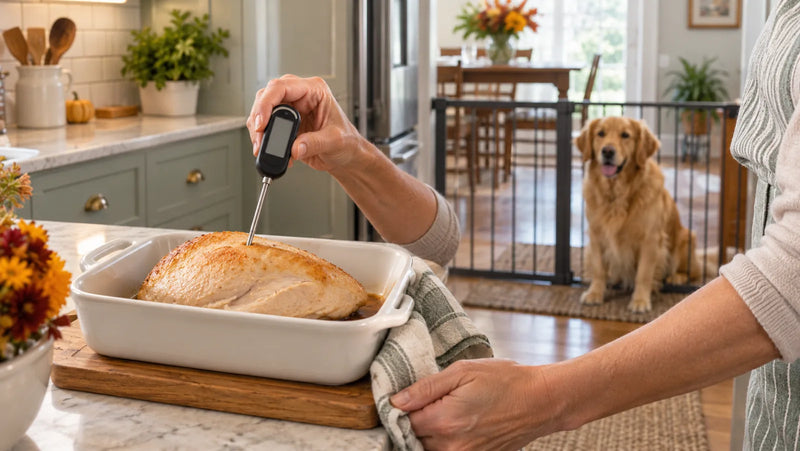
- Wash your hands and inspect the kernel for shell fragments, dampness, discoloration, insects, or an off odor. Inspection cannot rule out aflatoxin; discard any suspect package.
- Set aside only the table amount and put the container away before the dog enters the serving area.
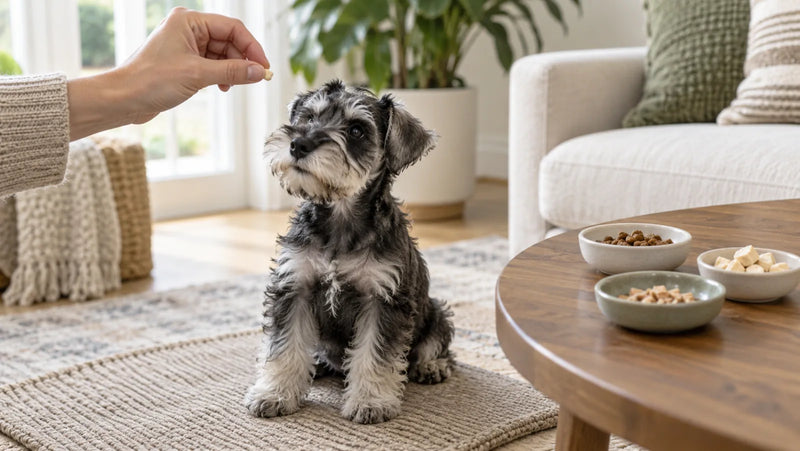
- Break or crush the kernel into blunt pieces suited to the dog's size and chewing behavior.
- Offer one small piece while the dog is calm and upright. Do not toss round kernels for a gulper to catch.
- Introduce no other new food that day, and stop after the measured portion.
- Watch for choking, vomiting, diarrhea, itching, facial swelling, ear/skin flare, lethargy, or another unusual change.
If a predictable purpose-made reward fits better than a fatty human snack, browse all current American Paws dog treats and use the exact product label and calorie information. The collection is an alternative, not a claim that every item suits every medical diet.
Frequently Asked Questions
Can dogs eat raw peanuts?
Plain raw shelled peanuts are not automatically toxic, but they are not the preferred intentional choice here. A fresh, commercially packaged, dry-roasted, unsalted, unflavored kernel is easier to select as a tiny occasional taste. Never use damp, stale, outdoor, bird-feed, or suspect peanuts.
Can dogs eat roasted peanuts?
Only when “roasted” still means plain: dry-roasted, shelled, unsalted, unflavored, fresh, and given in a counted tiny portion. Oil-roasted, buttered, honey-roasted, salted, spicy, and coated versions do not qualify.
Can dogs eat salted peanuts?
Do not offer them. One or two stolen salted peanuts will not automatically cause salt poisoning in a healthy dog, but a larger amount, a small or medically restricted dog, lack of water, or signs such as vomiting, marked thirst, disorientation, or tremors deserves prompt veterinary advice.
Can dogs eat peanut shells?
No. Shells add no useful serving benefit and can choke or contribute indigestible material. Seek emergency help for breathing trouble or active choking, and call the veterinarian after a quantity of shells, packaging, repeated vomiting, abdominal pain, appetite loss, or difficulty passing stool.
How many peanuts can a small dog eat?
For a healthy adult under 10 pounds with no restriction, the conservative first taste in this guide is half of one plain shelled kernel, crushed or finely cut, at about 3 calories. That is not a daily allowance. Ask the veterinarian for a dog with medical, calorie, dental, or swallowing needs.
Are peanuts toxic to dogs?
Fresh plain peanut kernels are not classified like macadamia nuts, grapes, or xylitol, but product and condition matter. Mold-contaminated peanuts can carry aflatoxins, mixed snacks can contain toxic ingredients, and shells, salt, fat, coatings, calories, and allergy create separate risks.
Can puppies eat peanuts?
There is no nutritional need to introduce peanuts to a puppy. Growth food must carry the diet, small round kernels are a poor texture for an eager gulper, and calorie room is limited. Use part of the puppy's complete food for training or ask the veterinarian which tiny reward fits its age, size, and health.
Keep the Portion Small and the Label Boring
The workable peanut is deliberately uninteresting: fresh, dry-roasted, shelled, unsalted, unflavored, broken into a size-appropriate piece, and counted at roughly 6 calories per kernel. Start with less than a few, not a handful, and stop if the dog reacts or the diet does not have room.
Everything else requires a new decision. Shells change the physical risk; salt and coatings change the recipe; a spread changes the label; mixed snacks add other ingredients; and stale or contaminated peanuts raise the aflatoxin question. Identify what was actually eaten before deciding whether to monitor or call.