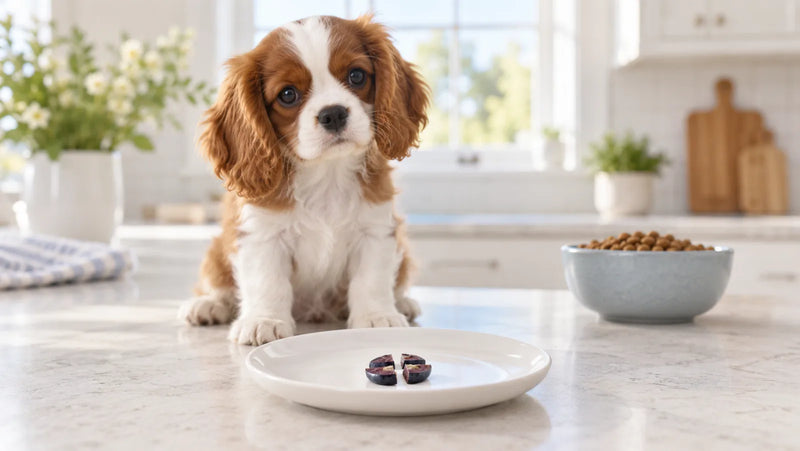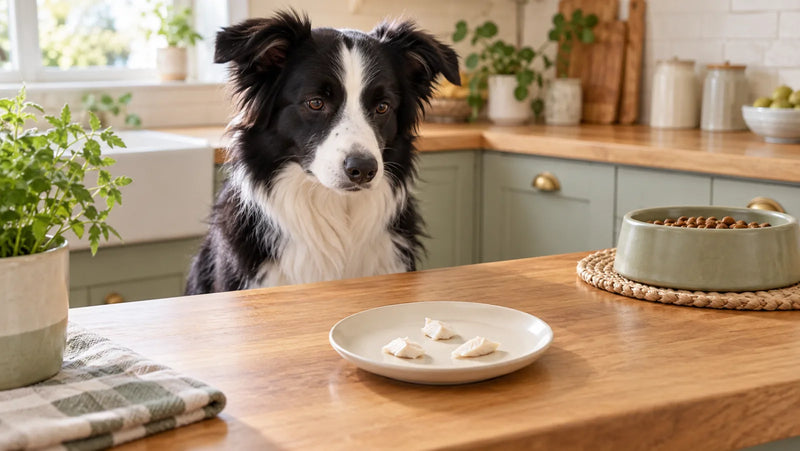

Peanut butter dog treats can be safe for many dogs only when the peanut butter is completely free of xylitol. Read the ingredient list every time, including the names birch sugar, wood sugar, and birch bark extract. Then choose the simplest unsweetened, unsalted peanut butter and keep each treat small because peanut butter is calorie-dense.
The front of a jar cannot answer the safety question. “Natural,” “no added sugar,” and even “peanut spread” are marketing descriptions, while the ingredient panel tells you what the dog would actually eat. This guide gives you a repeatable label check, an emergency plan, two simple recipes, and portion rules that keep peanut butter in its proper role: an occasional extra, not a meal.
Peanut butter dog treats: the nonnegotiable safety rule
Never use a peanut butter, nut butter, baking mix, or finished treat until you have confirmed that its ingredient list contains no xylitol and no alternate name for xylitol. Do not assume that a familiar brand, a previously safe jar, or a product labeled “natural” is still safe. Formulas and product varieties can change, so check the exact container in your hand.
The easiest choice is usually a peanut butter with one ingredient: peanuts. It should have no xylitol, other sweetener, added sugar, salt, chocolate, cocoa, or flavored mix-ins. Natural oil separation is normal in a peanuts-only product; stir it thoroughly so one spoonful is not much oilier than another.
If the label is missing, damaged, difficult to interpret, or written in a language you cannot confidently read, do not use that jar for a dog. A recipe is never urgent enough to guess.
Why xylitol is dangerous to dogs
What xylitol can do
Xylitol is a sweetener used in some products made for people. The FDA's xylitol warning for dog owners specifically lists some peanut and nut butters among products that may contain it. In dogs, xylitol can be absorbed rapidly and trigger a powerful insulin release, causing a dangerous drop in blood sugar. Severe exposure can also be associated with liver injury, collapse, seizures, and death.
Signs can include vomiting, reduced activity, weakness, an unsteady gait, collapse, shaking, or seizures. The absence of signs is not reassurance: serious effects may begin quickly, and some may be delayed. There is no safe “wait and see” period after a suspected exposure.
What to do after a possible exposure
If a dog may have eaten xylitol, call your veterinarian, an emergency veterinary clinic, or an animal poison-control center immediately. Bring or photograph the package, ingredient list, nutrition panel, product name, and an estimate of how much is missing. Note the dog's weight and the earliest possible exposure time.
The ASPCA Animal Poison Control Center can be reached at 888-426-4435; a consultation fee may apply. Follow professional instructions rather than trying a home remedy. Do not induce vomiting or give food, syrup, or medication unless the veterinary professional handling the case tells you to do so.
The xylitol aliases to check on every label
Look for the exact word xylitol. Also check for the alternate names in the FDA's current xylitol safety poster:
- Wood sugar
- Birch sugar
- Birch bark extract
Do not confuse “from a natural source” with safe for dogs. A substance can come from plants and still be dangerous to another species. Likewise, a “sugar-free” claim is a reason to inspect the ingredient list more closely, not a reason to buy the product for a dog.
Manufacturers can use different formulas across creamy, crunchy, low-sugar, protein-enhanced, flavored, and seasonal versions under one brand. Read every line on the exact variety, every time.
How to choose dog-safe peanut butter
A practical dog-safe peanut butter has a short, boring label. Use this order of preference:
- Best simple option: the ingredient list says only “peanuts.”
- Mandatory screen: no xylitol, wood sugar, birch sugar, or birch bark extract.
- Skip sweetened varieties: no added sugar, honey, syrups, chocolate, cocoa, or candy pieces.
- Skip added salt when possible: dogs do not need a salty reward, and a peanuts-only jar makes portions easier to understand.
- Avoid mystery blends: if “natural flavors,” protein blends, or unfamiliar sweeteners make the source unclear, choose a simpler product.
This is a selection rule, not a brand list. Product recipes change, and two jars with nearly identical fronts can have different ingredients. Our dog-treat label-reading guide explains how to separate front-label promises from the legally useful ingredient and calorie information.
A five-second peanut butter label check
| Check | What you want to see | When to stop |
|---|---|---|
| Ingredient list | Peanuts only | Xylitol, an alias, chocolate, added sweetener, or an unclear blend |
| Front claim | Treated only as a clue | Relying on “natural” or “sugar-free” without reading ingredients |
| Jar identity | Original package and readable label | Unlabeled pantry container or damaged label |
| Calories | Known serving calories so you can scale down | A large spoonful used as though it were calorie-free |
| Dog's plan | Fits the dog's normal diet and veterinary guidance | Conflicts with an allergy trial, low-fat plan, or other prescribed diet |
Ingredients to skip or limit besides xylitol
Xylitol is the emergency-level concern, but it is not the only reason to keep the recipe simple. Chocolate and cocoa do not belong in dog treats. Added sugar, honey, syrups, and candy pieces add calories without making the treat safer. Added salt is unnecessary for a homemade reward. For the full list of ingredients that are dangerous rather than merely unnecessary, see our toxic foods for dogs guide.
Palm oil is not another name for xylitol, and it should not be presented as the same poisoning risk. Still, added fats make an already energy-dense food richer and may not fit a dog with a prescribed low-fat diet. The cleanest decision is still a peanuts-only jar used in a measured amount.
Do not substitute a random nut butter without checking the actual nut and every ingredient. Different nuts have different safety and fat considerations; “nut butter” is not one interchangeable dog-food category.

Recipe 1: frozen peanut butter banana dots
This two-ingredient recipe makes tiny warm-weather rewards. It is separate from our existing pumpkin peanut butter dog-treat recipe, which owns the pumpkin-and-peanut-butter combination.
Ingredients:
- 1/2 ripe banana, peeled
- 1 tablespoon peanuts-only, xylitol-free peanut butter
Method:
- Mash the banana until smooth, then stir in the measured peanut butter.
- Drop portions no larger than 1/2 teaspoon onto a parchment-lined tray.
- Freeze until firm, then move the dots to a labeled freezer-safe container.
- Offer one appropriately sized dot under supervision. Let it soften first for a very small dog, a senior, or a dog that tends to swallow frozen pieces whole.
Banana contributes natural sugar and peanut butter contributes substantial calories, so “two ingredients” does not mean unlimited. For a first exposure, offer an even smaller taste and keep the rest of the day's diet familiar.
Recipe 2: three-ingredient peanut butter oat bites
These baked bites can be cut small for occasional rewards. Water adjusts the dough and is not counted as a food ingredient.
Ingredients:
- 1 cup oat flour made from finely ground plain rolled oats
- 1/4 cup peanuts-only, xylitol-free peanut butter
- 1 egg
- 2 to 4 tablespoons water, as needed
Method:
- Heat the oven to 325°F and line a baking sheet with parchment.
- Mix the oat flour, peanut butter, and egg. Add water one tablespoon at a time until a firm, workable dough forms.
- Roll the dough thin and cut it into small pieces sized for your dog. Avoid thick, oversized biscuits.
- Bake for about 12 to 16 minutes, until the pieces are set and lightly dry at the edges. Timing varies with thickness.
- Cool completely before offering one. Refrigerate a small working batch and freeze extras rather than assuming homemade treats are shelf-stable.
Skip this recipe if oats, egg, or peanuts conflict with a known intolerance, allergy plan, or veterinary diet. Use clean utensils and never reuse a spoon that touched a xylitol-containing human product.
How much peanut butter can a dog have?
There is no responsible one-spoon-fits-all answer. Peanut butter packs many calories into a small volume, and the recipe also contains banana, oats, or egg. Count the finished treat, not only the peanut butter, within the dog's daily extras.
A common starting framework is to keep all treats, chews, toppers, table food, and recipe extras together near or below 10% of daily calories, while complete and balanced food supplies the rest. Our daily dog-treat calorie guide shows how to work backward from the dog's actual calorie target.
Start with the smallest practical portion, especially for a puppy, toy breed, dog new to peanuts, or dog prone to stomach upset. Training rewards can be tiny; the dog values the timing and repetition, not a heaping spoonful. Whole peanuts raise separate shell and salt questions; see our guide to whether dogs can eat peanuts.
Who should ask a veterinarian first?
Get veterinary approval before serving peanut butter treats to a dog with a history of pancreatitis, prescribed fat restriction, obesity treatment, diabetes, chronic digestive disease, a food-elimination trial, or another therapeutic diet. A safe ingredient can still be wrong for a specific medical plan.
Peanut reactions are possible. Stop the food and seek urgent veterinary help for facial swelling, hives, breathing difficulty, collapse, or rapidly worsening signs. Repeated vomiting, diarrhea, itching, or ear trouble also deserves veterinary guidance rather than repeated home testing.
Puppies have small calorie allowances and depend on complete growth food. If the veterinarian allows peanut butter, use a tiny, soft portion and supervise closely.
Storage and kitchen cross-contact rules
- Keep the original peanut-butter jar so the ingredient list and lot information remain available.
- Label the dog-treat container with the recipe and date; do not leave plain brown bites in an unmarked family container.
- Use clean measuring tools that have not touched sugar-free gum, xylitol baking sweetener, flavored spreads, or chocolate.
- Refrigerate a small amount and freeze the rest. Homemade treats do not have a commercial shelf-life study.
- Discard treats that develop mold, an off odor, unusual moisture, or a rancid smell.
- Store the jar and finished treats where counter-surfing dogs cannot reach them.
Frequently asked questions
Is natural peanut butter always safe for dogs?
No. “Natural” does not certify that a product is xylitol-free, unsalted, or suitable for a particular dog. Read the complete ingredient list on the exact jar and prefer peanuts only.
Can dogs eat crunchy peanut butter?
The xylitol rule is identical for crunchy and smooth products. Smooth peanut butter is easier to measure and mix evenly, while nut pieces can make a large spoonful harder for a small dog to manage. Whichever texture you use, serve a measured amount rather than letting the dog eat from the jar.
Can puppies have peanut butter dog treats?
Some weaned puppies can have a tiny xylitol-free portion if their veterinarian approves it, but growth food must remain the priority. Choose a soft, very small piece, introduce one new recipe at a time, and count it in the puppy's limited calorie allowance.
Is palm oil the same as xylitol?
No. Palm oil is a fat; xylitol is a sweetener that can cause an acute poisoning emergency in dogs. Added oil can make a peanut butter richer and less suitable for some dogs, but it should not be described as another name for xylitol.
Can I use sugar-free peanut butter?
Do not use a sugar-free product unless you have read the entire ingredient list and confirmed there is no xylitol or alias. Since a peanuts-only jar is simpler and readily understood, there is no benefit to choosing a sweetener-heavy spread for dog treats.
Make the label check before the treat
Safe peanut butter dog treats begin with one habit: read the ingredient list before opening the jar, every time. Reject xylitol, wood sugar, birch sugar, and birch bark extract; choose peanuts only; measure the recipe; and keep the finished portion inside the dog's total treat budget.
If exposure is possible, call a veterinary professional immediately rather than waiting for symptoms. If the label is safe and peanut butter fits your dog's individual plan, the frozen banana dots or baked oat bites can be occasional homemade rewards. For non-peanut-butter options, browse the current American Paws dog treats and read each product's own label—our catalog does not currently include a peanut-butter treat.