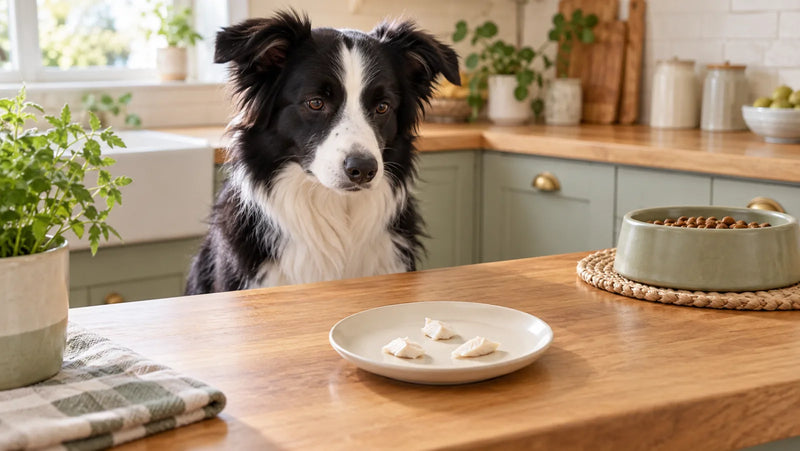

Can dogs eat stuffing? No—dogs should not be served traditional stuffing. The bread is usually not the main problem. Stuffing recipes commonly combine onion or garlic, salty stock, butter or sausage, and sometimes raisins or nuts. Because it is a mixed dish, the exact recipe, amount, dog, timing, and symptoms determine the response.
If a dog ate stuffing, identify every ingredient immediately. Call a veterinarian or poison service now for any raisin, grape, or Zante-currant exposure; a known toxic ingredient; concentrated onion or garlic; swallowed bone, skewer, string, foil, or packaging; a large or unknown amount; or any symptoms. Do not induce vomiting or give a home antidote unless a veterinary professional specifically directs it for this dog and exposure.
24/7 poison help: ASPCA Poison Control at 888-426-4435, or Pet Poison Helpline at 855-764-7661. Consultation fees may apply. If the dog is collapsing, having trouble breathing, seizing, or showing another life-threatening sign, go to an emergency veterinary hospital while calling ahead.
Can Dogs Eat Stuffing? The Fast Answer
Skip the planned serving. “Stuffing” or “dressing” can mean boxed mix, cornbread dressing, sausage stuffing, oyster dressing, a rice recipe, or a family dish with fruit and nuts. No single portion rule can cover those formulas.
Use this response ladder:
- Known raisin, grape, Zante currant, xylitol, alcohol, or macadamia exposure: call promptly, even if the dog looks normal.
- Onion, garlic, leek, chive, shallot, scallion, powder, soup mix, or unknown seasoning: call with the complete formula, amount estimate, dog weight, and time. Concentrated forms and repeated exposures matter.
- Bone, toothpick, skewer, cooking string, foil, or plastic may be missing: call a veterinarian because this is a physical injury or obstruction question, not just food toxicity.
- Rich but toxin-free recipe: monitor only according to professional advice; repeated vomiting, abdominal pain, weakness, or inability to keep water down needs veterinary care.
- Tiny lick of a fully known, plain recipe: it may be lower concern, but do not guess about an unknown dish and do not make stuffing a dog treat.
For a broader emergency framework, save our toxic foods for dogs guide. It explains what details poison professionals need and why a normal-looking dog may still need prompt assessment after a known exposure.
Why Stuffing Is a Recipe Problem, Not a Bread Question
Two bowls of stuffing can have completely different risk profiles. One may be baked bread cubes with water. Another may contain sautéed onion and garlic, sausage fat, turkey drippings, salty broth, raisins, pecans, wine, or seasoning mix. A restaurant portion can be impossible to reconstruct from appearance alone.
| Ingredient or object | Main concern | Response |
|---|---|---|
| Onion, garlic, leek, chive, shallot, scallion; fresh, cooked, dried, or powdered | Gastrointestinal irritation and possible oxidative red-blood-cell damage | Call with exact form, amount, dog, and timing; delayed signs are possible |
| Raisins, grapes, or Zante currants | Unpredictable risk of acute kidney injury in dogs | Prompt professional assessment; do not wait for signs |
| Macadamias | Canine weakness, incoordination, vomiting, tremors, and temperature increase | Call promptly |
| Other nuts | Fat, gastrointestinal upset, choking or obstruction; mold adds another risk | Identify the nut, amount, freshness, and symptoms |
| Butter, sausage, drippings, rich gravy | Gastrointestinal upset and pancreatitis risk in susceptible dogs | Call for meaningful/unknown amounts or symptoms; do not assume one bite causes pancreatitis |
| Broth, stock, seasoning packet | Hidden alliums, concentrated seasoning, or excess salt | Read the full label or recipe; brand name alone is not enough |
| Bone, skewer, toothpick, twine, foil, plastic | Mouth or gastrointestinal injury, choking, or obstruction | Contact a veterinarian; do not pull protruding string or induce vomiting on your own |
Fully baked plain bread has a different safety question from a holiday casserole. Our guide to plain baked bread versus raw dough owns that distinction. Stuffing safety depends on everything mixed into and cooked with the bread.

Onions, Garlic, Leeks, Chives, and Powders
Onion and garlic belong to the Allium group, along with leeks, chives, shallots, and scallions. Cooking does not make the concern disappear. The Merck Veterinary Manual's Allium toxicosis review reports that raw, cooked, and concentrated forms can cause oxidative damage to red blood cells and hemolytic anemia in dogs and cats.
Stuffing often hides alliums in more than one place: chopped onion in the pan, garlic in sausage, onion powder in a seasoning packet, or onion and garlic in broth. Powders and soup mixes can be concentrated, so “I removed the visible onion pieces” does not establish that the dish is clear.
Early exposure may cause drooling, vomiting, diarrhea, or appetite changes, but anemia signs can take days to appear. Warning signs include weakness, pale or yellow gums, fast breathing or heart rate, exercise intolerance, dark or reddish urine, and collapse. Do not use the lack of immediate symptoms as proof that a concerning exposure is over.
The right response depends on the form, concentration, amount, body weight, timing, repeated exposure, and the dog's health. This article publishes no universal safe dose. Use our dedicated guide on what to do after a dog eats onion for the detailed allium handoff, then call with the actual recipe.
Raisins, Grapes, and Zante Currants Need a Prompt Call
Some stuffing recipes add raisins, dried grapes, or “currants.” Zante currants are small dried grapes and belong in the grape/raisin risk category. True currants are a different fruit, but a recipe card that says only “currants” is not enough to identify the ingredient safely.
The Merck Veterinary Manual's grape and raisin review explains that tartaric-acid content varies and affected dogs can develop vomiting, diarrhea, lethargy, appetite loss, increased thirst, dehydration, and acute kidney injury. Individual response is not predictable from the dog's previous experience with grapes or raisins.
If any known raisin, grape, or Zante-currant amount was eaten, contact a veterinarian or poison service promptly. Do not wait for vomiting or changes in urination, and do not use an online threshold to decide that one dog's exposure is harmless. Early case-specific assessment matters.
Nuts Are Not One Risk Category
Do not treat “contains nuts” as one diagnosis. Macadamia nuts can cause a distinctive syndrome in dogs that may include vomiting, weakness, incoordination, depression, tremors, and increased body temperature. A known macadamia exposure deserves a prompt call.
Pecans, walnuts, almonds, chestnuts, and other nuts have different profiles. The ASPCA's people-food safety list separates macadamias from the broader concern that many nuts are high in oils and fat. Rich nuts can contribute to vomiting, diarrhea, and pancreatitis risk in some pets. Whole or large pieces can also create choking or obstruction concerns, particularly in a small dog or a dog that gulps.
Moldy nuts or old stuffing add another toxicology question, and shells create additional physical hazards. Identify the exact nut, whether shells were present, storage condition, amount, and dog rather than relying on the word “nut-free” or “just one piece” without context.
Butter, Sausage, Drippings, and Rich Stock
Holiday stuffing is often rich even when it contains no classic toxin. Butter, sausage, bacon, poultry skin, drippings, cheese, cream, and gravy can produce vomiting or diarrhea. Dietary indiscretion is recognized as a canine pancreatitis risk factor in the Merck Veterinary Manual's pancreatitis review.
That does not mean one lick inevitably causes pancreatitis. Susceptibility, recipe, amount, body size, prior disease, and other factors matter, and signs such as vomiting or abdominal pain are not specific enough to diagnose it at home. Repeated vomiting, marked lethargy, refusal to eat, abdominal pain, a tense or distended belly, or a “prayer” posture warrants veterinary assessment.
Broth and stock deserve the same ingredient-level review. “Bone broth” does not automatically mean plain or dog-safe; it may contain onion, garlic, salt, seasoning, or rich fat. Boxed stuffing can combine a seasoning packet with salted broth, so check both. Excess salt is a different issue from ordinary dietary sodium, and this article does not provide a home calculation for an unknown casserole.
Bread, Herbs, Bones, and Packaging
Once bread is fully baked, the holiday risk usually comes from the recipe around it. Raw yeast dough is different: it can expand and produce alcohol in the stomach. If uncooked dough was eaten during preparation, use the raw-dough section of the bread guide and contact a professional promptly.
Culinary herbs also need context. A small amount of a named herb in cooked food is not the same exposure as an essential oil, concentrated extract, unknown seasoning blend, or potpourri. The ingredient list—not the smell—should drive the call.
Physical hazards can be easy to miss after the meal. Stuffing prepared inside or beside poultry may be served near cooked bones. Skewers, toothpicks, trussing or cooking string, foil, plastic wrap, and absorbent pads can disappear with scraps. These objects can injure the mouth or digestive tract or cause an obstruction. Do not induce vomiting when a sharp object, string, or other foreign material may have been swallowed, and never pull visible string from the mouth or rectum without veterinary instruction.
My Dog Ate Stuffing—What Should I Do?
- Remove access. Move the dish, trash, table scraps, and other pets away so the exposure stops.
- Check the dog. Trouble breathing, collapse, seizure, severe weakness, repeated unproductive retching, or a painfully distended abdomen is an emergency.
- Save evidence. Keep the recipe, box, seasoning packet, broth label, restaurant receipt, photo, leftovers, and any damaged or missing packaging.
- Record the case. Note the time, best amount estimate, dog's weight, age, health conditions, medications, and current signs. Do not delay the call to make the estimate perfect.
- Call based on exposure. Promptly call for raisins/grapes/Zante currants, alliums in a concerning or unknown amount, macadamia, xylitol, alcohol, bones or foreign material, a large or unknown serving, or any symptoms.
- Follow professional directions. Pet Poison Helpline specifically advises against home antidotes or inducing vomiting without consultation. The safest next step can differ by ingredient, timing, symptoms, and medical history.
Do not give hydrogen peroxide, salt, milk, oil, charcoal, bread, or another internet remedy on your own. A remedy that is unnecessary, incorrectly dosed, or wrong for a sharp object or symptomatic dog can add harm.
Signs Can Follow Different Timelines
| Exposure group | Possible early signs | Later or urgent warning signs |
|---|---|---|
| Onion or garlic | Drooling, vomiting, diarrhea, appetite change | Delayed weakness, pale/yellow gums, fast breathing, dark urine, collapse |
| Raisin or grape | Vomiting, diarrhea, lethargy, appetite loss | Dehydration, altered thirst or urination, weakness, kidney injury |
| Macadamia | Vomiting, lethargy | Weakness, incoordination, tremors, increased temperature |
| Rich fat or dietary indiscretion | Vomiting, diarrhea, reduced appetite | Repeated vomiting, abdominal pain, profound lethargy, dehydration |
| Bone or foreign material | Gagging, drooling, retching, discomfort | Persistent vomiting, abdominal pain/distention, inability to keep food or water down, weakness |
These signs overlap and cannot diagnose the ingredient at home. The timing also varies. A dog that looks normal right after a known toxic exposure should still be assessed based on the exposure, not cleared by appearance.
Is a Tiny Lick of Plain Stuffing an Emergency?
A tiny lick of fully cooked stuffing that is positively confirmed to contain no alliums, raisins or grape products, macadamias, xylitol, alcohol, rich add-ins, excessive seasoning, bones, or foreign material may be lower concern than a serving of an unknown holiday recipe. That does not make stuffing a useful dog treat, and it is not a guarantee for every dog.
If the recipe is unknown, the amount is uncertain, the dog is very small or medically vulnerable, or signs develop, call. The ASPCA Poison Control number and Pet Poison Helpline exist to make case-specific decisions; guessing from a photo or waiting for symptoms loses useful information and time.
A Safer Thanksgiving Bowl for Dogs
Keep the dog's regular complete food in charge and place human stuffing out of reach. Our guide to Thanksgiving foods dogs can eat separates plain ingredient options from seasoned dishes and provides a full holiday-table checklist.
If chicken already fits the dog's diet, the American Paws 100% USA freeze-dried chicken-breast topper offers a measured, clearly labeled way to add aroma to the normal meal. It is a single-ingredient claim for this specific product only, and it is intended for intermittent or supplemental feeding—not as a complete meal, a medical treatment, or a recreation of stuffing. Count it with all other extras.
You can browse the current American Paws dog treats, but verify each item's own ingredients and feeding information. A simple label cannot make chicken appropriate for a dog whose diet excludes chicken.
Frequently Asked Questions
Can dogs eat stuffing without onions or garlic?
Removing alliums eliminates one major hazard, not every one. Check for raisins or grape products, macadamias and other nuts, xylitol, alcohol, rich fat, salty stock, bones, and foreign material. A fully known plain recipe may be lower concern, but traditional stuffing is still not a recommended dog treat.
What if my dog ate one bite of stuffing?
One bite is not a complete risk description. Identify the full recipe, bite size, dog's weight and health, time, and symptoms. Call promptly if the bite contained a known toxic ingredient, the recipe or amount is unknown, a foreign object may be missing, or the dog is unwell.
How long after eating onion stuffing could a dog get sick?
Gastrointestinal signs can occur earlier, while red-blood-cell damage and anemia signs may take several days to become apparent. Do not wait for pale gums, weakness, fast breathing, dark urine, or collapse before seeking advice about a concerning exposure.
Are raisins in stuffing an emergency for dogs?
Treat any known raisin, grape, or Zante-currant exposure as a reason for prompt veterinary or poison-service assessment. Effects can vary and may include acute kidney injury. A dog appearing normal immediately afterward does not remove the concern.
Can dogs eat boxed stuffing?
Do not assume a boxed mix is plain. Seasoning packets commonly contain onion or garlic powder and substantial sodium, and preparation may add butter, broth, sausage, or drippings. Read the ingredient list and the ingredients used at home.
Can dogs eat cornbread stuffing?
Cornbread does not make the mixed dish safe. Cornbread stuffing may still contain onion, garlic, sausage, butter, broth, raisins, nuts, or other hazards. Judge the complete recipe and do not serve it as a dog treat.
Is plain bread stuffing safe for dogs?
Only a positively identified, fully cooked, minimally seasoned bread mixture without toxic ingredients, rich add-ins, or foreign material is the lower-concern scenario. Even then, it adds calories without improving a complete diet, so a dog's normal food or a measured labeled treat is the clearer choice.
Keep the Stuffing on the Human Table
Prevent the problem by moving serving bowls back from the table edge, using a lidded trash container, clearing plates before guests wander away, and telling everyone not to feed scraps. After the meal, account for skewers, string, foil, and bones as carefully as the food.
Want a simple holiday aroma boost without the stuffing recipe? If chicken is appropriate for your dog, review the current label and feeding guidance for the American Paws chicken meal topper and measure it over the regular meal. If any stuffing exposure has already happened, skip the substitute decision for now and call with the exact recipe, amount, dog, and timing.