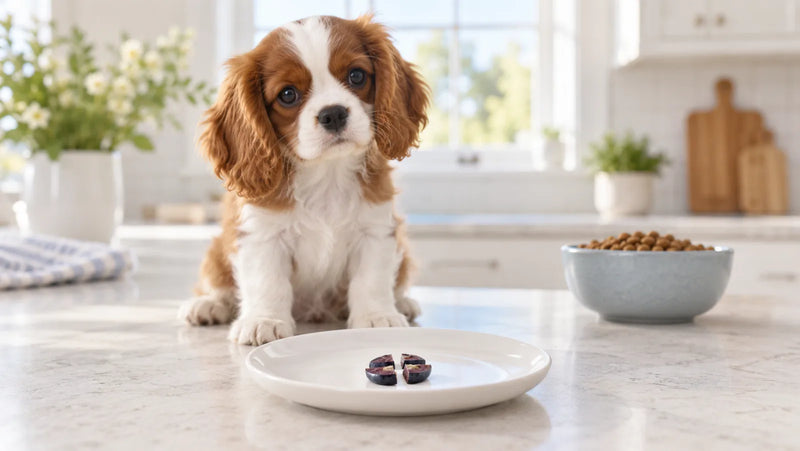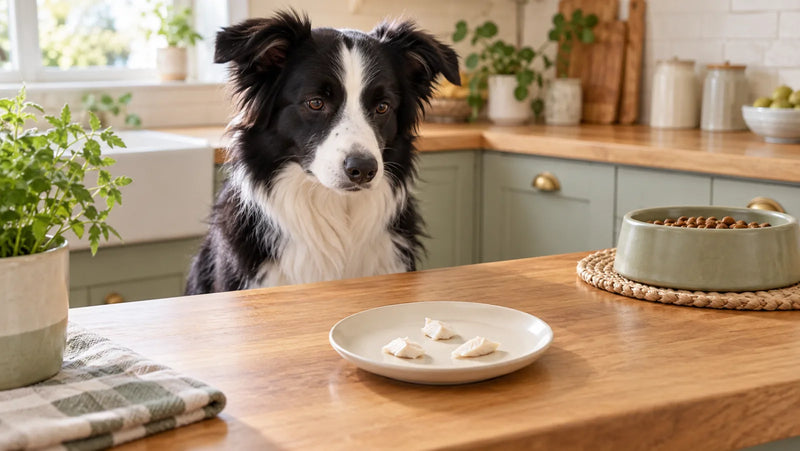

Can dogs eat onions? No—dogs should not eat onion in any form. Raw, cooked, fried, dehydrated, granulated, juiced, and powdered onion can damage red blood cells, and food cooked with onion does not become safe when the visible pieces are removed. If your dog ate or may have eaten onion, call now even if your dog looks normal.
Contact your veterinarian, an emergency veterinary clinic, or ASPCA Animal Poison Control at (888) 426-4435. ASPCA Poison Control is available 24 hours a day, 365 days a year, and a consultation fee may apply. Pale gums, trouble breathing, extreme weakness, fainting, collapse, or red-to-brown urine warrants immediate emergency transport.
Do not wait for anemia signs, which may be delayed for days. Do not induce vomiting or give hydrogen peroxide, charcoal, salt, food, milk, oil, or another home remedy unless a veterinarian or poison-control professional gives instructions for this specific dog and exposure.
Can Dogs Eat Onions? No—Every Form Is Unsafe
Every part and preparation of onion belongs in the “do not feed” category: the bulb, flesh, leaves, juice, fresh pieces, cooked pieces, fried onion, dried flakes, granules, and powder. Yellow, white, red, sweet, and green onion varieties are not safe workarounds. Cooking changes the texture and flavor; it does not neutralize the compounds that injure canine red blood cells.
That does not mean every invisible speck inevitably makes every dog critically ill. Clinical risk changes with the form, concentration, maximum possible amount, timing, dog size and health, and whether access happened more than once. Those variables belong in a professional assessment. The owner-level rule is simpler: report any known or suspected exposure rather than using a home threshold to decide that it is safe.
For a wider inventory of kitchen poisons and one emergency workflow, use our complete toxic-food guide for dogs. This page owns the onion-specific forms, delayed anemia, and response.
How Onion Damages a Dog’s Red Blood Cells
Onions contain sulfur-containing oxidants, including a compound called N-propyl disulfide. After these compounds are absorbed, they can oxidatively damage red blood cells. The Merck Veterinary Manual's Allium toxicosis review says sulfur-containing oxidants are thought to drive the hemolysis seen after ingestion.
Oxidative injury can alter hemoglobin and the red-cell membrane. Damaged hemoglobin can clump into structures called Heinz bodies, and some hemoglobin can be changed into a form that does not carry oxygen normally, called methemoglobin. The body then removes or destroys affected red blood cells. That destruction is hemolysis; when too few functional red cells remain, the result is hemolytic anemia.
This is why the most important signs involve oxygen delivery: pale gums, weakness, exercise intolerance, rapid breathing, a fast heart rate, fainting, or collapse. Hemoglobin released from damaged cells may pass into urine, producing red, brown, or unusually dark urine. The color is not always simple urinary bleeding, and an owner cannot diagnose the cause by sight.
The ASPCA's onion toxicology page lists N-propyl disulfide as a toxic principle and names vomiting, red-cell breakdown, blood-colored urine, weakness, rapid heart rate, and panting among the clinical signs. Other diseases can cause the same findings, so history, examination, and veterinary testing matter.
Which Onion Forms Are Dangerous to Dogs?
When you call, identify the exact form and every ingredient in the finished food. “It was cooked” or “it was only seasoning” is not enough information.
| Onion form or food | Why it still counts | What to report |
|---|---|---|
| Raw onion, scraps, juice, or plant parts | The flesh, juice, leaves, and other plant material contain harmful Allium compounds | Variety if known, whole-versus-chopped form, maximum amount missing, and time |
| Cooked, sautéed, roasted, or caramelized onion | Heat does not make onion dog-safe; compounds can remain throughout the dish | Full recipe, serving size, and whether more than one portion is missing |
| Fried onion and onion rings | The onion remains unsafe, while oil, batter, salt, dip, and packaging can add separate concerns | Food label, number possibly eaten, sauce ingredients, wrappers, and time |
| Powder, granules, or dehydrated flakes | These are concentrated forms, so less product can represent a significant exposure than fresh onion | Ingredient panel, concentration or recipe measure if known, package size, and maximum missing |
| Soup, broth, stock, gravy, sauce, or dry seasoning mix | Onion may be dissolved, powdered, or too small to remove after cooking | Package or recipe, every seasoning packet, and total amount the dog could access |
| Canned prepared food, baby food, stuffing, dip, meat rub, or restaurant leftovers | Some—not all—products contain onion or onion powder, so the complete label decides | Save the container, receipt, menu description, or ingredient photo |
The American Kennel Club's onion guide identifies raw, cooked, fried, juiced, and powdered forms as unsafe and emphasizes that food cooked with onion or onion powder stays unsafe even after visible pieces are removed. Merck reports that concentrated forms such as dehydrated flakes, powders, and dry onion soup mixes are common toxicosis sources.
Concentration is the accurate reason to pay special attention to powder and dried flakes. Do not translate “concentrated” into an invented potency multiple, and do not assume a small-looking dusting is irrelevant. Preserve the label and let a professional evaluate the actual product.

There Is No Reliable Home “Safe Amount”
Published veterinary references discuss amounts associated with illness, but those figures are not a permission line for an owner to watch at home. The real amount may be uncertain, dried and powdered products are more concentrated, mixed-food recipes vary, and dog-specific factors change the assessment. The weekly safety rule for this guide is therefore conservative: call about any known or suspected amount.
Calling about a crumb does not mean a clinician will declare every crumb fatal. It means the decision is based on the correct form, a worst-case estimate, exposure timing, dog weight, medical history, and any repeat access—not on a number copied from a different product or dog. The professional may decide that the event needs treatment, testing, monitoring, or only case-specific observation.
Prepare these facts before or during the call:
- The exact food, brand or recipe, complete ingredient list, and onion form
- The greatest amount that could be missing, not the smallest comforting guess
- The earliest and latest possible exposure time
- The dog's weight, age, health conditions, medicines, and prescription diet
- Whether onion-containing food was available on more than one occasion
- Any missing wrapper, skewer, foil, string, lid, or other object
- Every current symptom and when it began
Say “unknown” when a detail is unknown. An honest range is more useful than false precision.
Onion Poisoning Symptoms Can Be Delayed for Days
A normal-looking first day is not a clearance test. The time course reflects developing red-cell damage, so the most serious visible signs may not appear until the meal has been forgotten.
| Common toxicology window | What may be happening or visible | Owner action |
|---|---|---|
| Early after ingestion | Gastrointestinal irritation may cause vomiting, diarrhea, poor appetite, or abdominal discomfort; there is no reliable home onset clock | Call before signs and update the clinic if any begin |
| Within about 24 hours | Oxidative red-cell changes, Heinz-body formation, and methemoglobinemia can begin | A dog may still look normal; follow the professional monitoring plan |
| Around 72 hours | Those red-cell changes may peak even if external signs remain subtle | Do not cancel follow-up because the stomach seems settled |
| Often 3–5 days after exposure | Hemolysis and visible anemia signs may develop | Pale gums, marked weakness, rapid breathing, collapse, or dark urine needs urgent care |
Merck reports that Heinz bodies and methemoglobinemia can begin within 24 hours and peak at roughly 72 hours, while hemolysis commonly occurs 3–5 days after exposure. Clinical signs are often not noticed until substantial red-cell destruction has occurred. These windows describe common patterns, not required checkpoints.
Early gastrointestinal signs can occur
Onions can irritate the gastrointestinal tract. Vomiting, diarrhea, nausea-like behavior, abdominal discomfort, drooling, or poor appetite may occur, but official references do not give a dependable “vomiting must start by” deadline. The presence, absence, or resolution of stomach upset does not predict whether delayed anemia will develop.
Watch for anemia and poor oxygen delivery
- Pale or unusually yellow gums
- Lethargy, weakness, reluctance to walk, or poor exercise tolerance
- Rapid breathing, panting at rest, or a fast heartbeat
- Reduced appetite, dizziness-like behavior, fainting, or collapse
- Red, brown, or unusually dark urine
Do not wait for a complete list. Pale gums, breathing difficulty, profound weakness, fainting, collapse, or red-to-brown urine after a possible exposure should prompt immediate emergency transport.
What to Do If Your Dog Ate Onion
1. Remove access and preserve the package or recipe
Move the onion, dish, seasoning packets, trash, wrappers, and remaining servings away from every pet. Do not discard the evidence. Photograph the ingredient panel and serving information if the original container cannot travel with you.
2. Call a veterinarian, emergency clinic, or ASPCA now
Call immediately after known or suspected exposure, even without symptoms. ASPCA Animal Poison Control is available at (888) 426-4435. The ASPCA's people-food hazard guide says Alliums can irritate the gut and damage red blood cells, while directing owners to note the amount and contact a veterinarian or poison control.
3. Report form, maximum amount, time, and dog details
Give the professional the dog's weight, age, health conditions, medicines, symptoms, exact onion form, full recipe or label, greatest possible amount, and earliest and latest exposure time. Mention repeated access and any swallowed packaging. If more than one pet had access, report that too.
4. Do not induce vomiting or give a home remedy
Do not give hydrogen peroxide or try to make the dog vomit unless a veterinarian or poison-control professional specifically directs it for this case. A veterinary team may choose professional decontamination after considering timing and the dog's condition; that does not make an online emetic dose safe to use at home. Do not give charcoal, salt, oil, milk, food, forced water, or another supposed antidote.
The ASPCA's poisoning-response guidance tells owners to consult a professional before taking any action or giving a pet anything. Activated charcoal is not a proven home fix for Allium exposure; Merck notes uncertainty about whether it adsorbs or prevents production of Allium-derived sulfides.
5. Go straight to emergency care for red flags
Begin transport for pale gums, difficult or rapid breathing, inability to stand, extreme weakness, fainting, collapse, yellow gums or skin, red-to-brown urine, uncontrolled vomiting, seizures, bleeding, or unresponsiveness. Keep the dog secure and prevent falls. Bring the package, recipe, poison-control case number, and symptom timeline.
What a Veterinarian May Evaluate
Veterinary assessment may include the exposure history, physical examination, hydration and circulation, gum color, heart and breathing rates, a complete blood count, and a blood smear that can reveal red-cell changes such as Heinz bodies. The team may follow red-cell values over time because delayed hemolysis can make one early snapshot incomplete.
Depending on timing and findings, a veterinarian may consider professional decontamination, supportive fluids, oxygen support, or a blood transfusion in a severely anemic patient. These are clinical possibilities, not instructions or guarantees. The correct plan depends on the individual dog, and another disease can produce similar signs.
Ask what changes require emergency return, which tests need repetition, and how long the professional wants follow-up to continue. Do not replace laboratory monitoring with photographs of the gums or a home urine-color check.
Onion, Garlic, Chives, and Leeks Are All Alliums
Onion is part of the Allium group, which also includes garlic, chives, leeks, and shallots. The shared safety point is that these plants can expose dogs to sulfur-containing oxidants and cause red-cell injury. They may appear fresh, cooked, dried, or powdered.
This article stays with onion intent. Garlic deserves its own safety and flea-myth guide because its concentration, common supplement claims, and “natural flea cure” myth create different search questions. For a mixed Allium dish, report every ingredient directly to the veterinarian or poison-control professional rather than trying to judge which Allium mattered most.
Prevent Hidden Onion Exposures
Onion is often easier to miss as an ingredient than as a whole vegetable. Check:
- Soup, broth, stock, bouillon, gravy, and dry soup mix
- Seasoning packets, meat rubs, spice blends, sauces, dips, and marinades
- Stuffing, casseroles, mashed potatoes, meatloaf, burgers, hot dogs, and restaurant leftovers
- Chips, crackers, flavored snacks, fried toppings, onion rings, and dipping sauce
- Baby food and canned prepared foods
- Compost, trash, grocery bags, meal-prep scraps, and garden plants
Not every item in those categories contains onion. Read the full ingredient list rather than banning a package by appearance—or approving it because the front label does not show an onion. “Natural flavors,” an unclear restaurant recipe, or a missing label means the product needs clarification before it is offered.
Fried side dishes can combine more than one issue: onion powder in seasoning, the onion itself, salt, fat, sauce, and swallowed wrappers. Our French-fry safety guide handles potato, frying oil, salt, and seasoning context; this page remains the authority on onion exposure.
Safer Vegetables Come After the Emergency Question
No vegetable, meal, or dog treat can dilute onion or prevent red-cell damage after exposure. Call first and follow professional instructions. Once the incident has been assessed and closed, ordinary vegetable choices can return to the familiar rules: identify the exact vegetable, prepare it plainly, size it for the dog, and count it as an extra rather than replacing complete food.
Our complete vegetable guide for dogs separates ordinary options such as plain carrot, cucumber, or green bean from toxic Alliums and other preparation hazards. A dog with a prescription diet, food allergy, digestive disease, diabetes, kidney disease, or another medical condition needs individual guidance before new extras.
Frequently Asked Questions
Can dogs eat cooked onions?
No. Sautéing, roasting, boiling, caramelizing, or frying does not neutralize onion's red-cell-damaging compounds. A food cooked with onion remains unsafe even if every visible piece is picked out.
Is onion powder toxic to dogs?
Yes. Onion powder is a concentrated form and can be hidden in soup mix, broth, gravy, seasoning, snacks, canned food, and restaurant dishes. Call about any known or suspected exposure and preserve the ingredient label; do not estimate safety from the small volume alone.
What if my dog ate one onion ring?
Remove the remaining food and call a veterinarian or ASPCA Animal Poison Control at (888) 426-4435. Report the ring size, number missing, time, dog weight and health, batter and seasoning, dipping sauce, and any packaging. One ring does not guarantee anemia, but it is not a safe planned food and deserves professional triage.
How long after eating onion do dogs get sick?
Stomach upset may occur earlier without a fixed deadline. Oxidative red-cell changes can begin within 24 hours and peak around 72 hours, while hemolysis often develops 3–5 days after exposure. A symptom-free dog on the first day is not cleared.
What color are a dog’s gums and urine with onion poisoning?
Hemolytic anemia can make gums pale, while jaundice can make tissues look yellow. Urine may become red, brown, or unusually dark when hemoglobin from damaged red cells is excreted. Color alone cannot diagnose onion poisoning; these findings require urgent veterinary care.
Should I make my dog vomit after eating onion?
No—not unless a veterinarian or poison-control professional specifically instructs you for this exposure. Home vomiting can be unsafe and can delay the evaluation the dog needs. Call immediately and follow the professional's directions.
Call Now, Then Secure Every Onion Form
If your dog ate or may have eaten raw, cooked, fried, dried, granulated, juiced, or powdered onion, call your veterinarian, an emergency clinic, or ASPCA Animal Poison Control at (888) 426-4435 now. Save the package or recipe, give a worst-case amount and time, and do not wait for pale gums, weakness, dark urine, or collapse.
After a professional has closed the exposure, secure every onion form and read labels before sharing food. For routine rewards only—not treatment—browse all current American Paws dog treats, review the actual ingredients and feeding directions, and choose an appropriately sized option that fits the individual dog's diet.