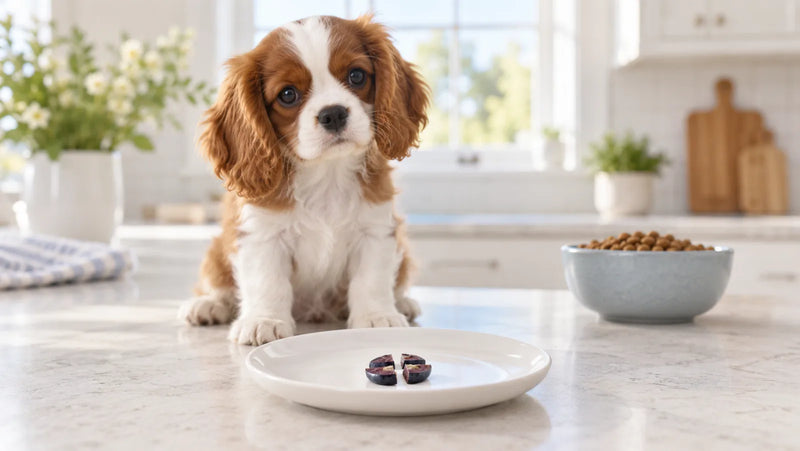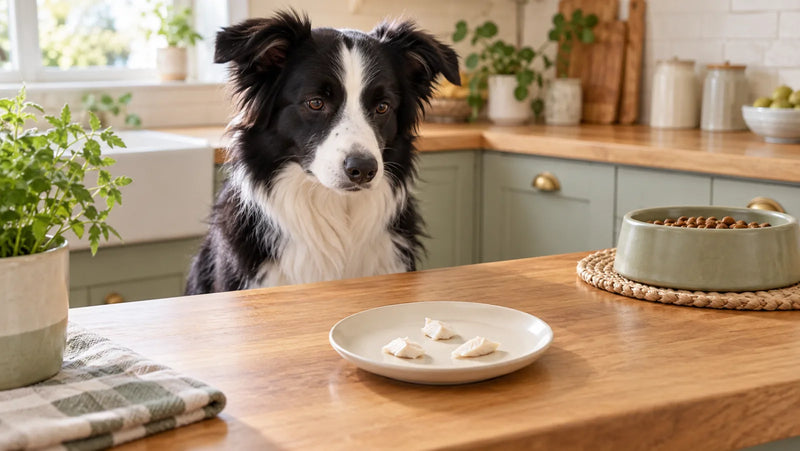

Can dogs eat french fries? They should not be given fries as a regular treat. One plain, unseasoned fry stolen by an otherwise healthy dog is unlikely to cause serious harm, but fries add unnecessary fat and sodium, may carry onion or garlic seasoning, and can be a bigger concern for dogs with digestive or medical restrictions.
The potato is not the whole problem. A small amount of plain, fully cooked, non-green potato can be suitable for many dogs. Frying, salting, seasoning, oversized portions, and repeated sharing turn that simple food into a poor choice. If your dog just raided the takeout bag, first identify the type, seasoning, amount, and timing rather than assuming every exposure has the same risk.
Can dogs eat french fries? The short answer
No—do not deliberately use ordinary french fries as dog treats. They are calorie-dense, usually high in fat and salt, and may contain ingredients that matter more than the potato itself. Dogs do not need fries to obtain nutrients, and complete-and-balanced food should remain the foundation of the diet.
That recommendation is different from saying one stolen fry is automatically an emergency. For a healthy dog that ate one plain fry, remove the rest, provide normal access to fresh water, and watch for digestive upset. Call your veterinarian if the amount was large, the seasoning is unknown, the fries contained onion or garlic, the dog has a relevant health condition, or any concerning signs develop.
For the ingredient-level question—including raw potatoes, green skin, sprouts, cooking, and portions—read our complete guide to plain potatoes for dogs. This page stays focused on fries as a fatty, salty prepared food.
Why french fries are poor dog treats
Frying oil adds a high-fat digestive load
Oil raises the fat and calorie content without making the potato more useful to a dog. Even when the oil itself is not toxic, a greasy serving can lead to vomiting, diarrhea, gas, or abdominal discomfort. A pattern of sharing fries can also make calorie control harder and displace better-planned food.
A high-fat meal may trigger pancreatitis in a susceptible dog, but it would be inaccurate to claim that a single fry inevitably causes the disease. Pancreatitis is painful inflammation of the pancreas, and many cases do not have one identifiable cause. Dogs with a previous episode or a veterinarian-prescribed low-fat diet need especially strict avoidance. The VCA guidance on nutrition and pancreatic disease explains why dietary fat restriction matters for affected dogs.
Salt can become dangerous in larger exposures
A restaurant or frozen fry may carry far more salt than a dog needs from an occasional extra. One lightly salted fry is not the same exposure as a small dog eating a full carton, but there is no reason to add that sodium on purpose. Excess salt can cause marked thirst, increased urination, vomiting, diarrhea, weakness, or abnormal neurologic signs in serious cases.
Do not try to calculate a home “safe dose” from how salty the fries taste. Risk depends on the amount eaten, the dog's size and health, access to water, and other factors. If a large quantity disappeared—or a dog with kidney, heart, fluid-balance, or prescribed-diet concerns ate fries—call the veterinarian for individualized advice.
Onion, garlic, sauces, and other seasonings change the risk
Fast-food seasoning blends, seasoned frozen fries, loaded fries, and dipping sauces may contain onion, garlic, garlic salt, or onion powder. Members of the allium family can damage canine red blood cells, and dried or powdered forms are concentrated. Signs may not be immediate, so the absence of vomiting in the first hour does not prove that a meaningful exposure is harmless.
The Merck Veterinary Manual's onion and garlic toxicology guidance describes the oxidative red-blood-cell injury and delayed signs. Fries covered with cheese, bacon, gravy, chili, spicy coating, or rich sauce add still more fat, salt, and ingredients. When the flavoring is unknown, save the package or ingredient list and call rather than guessing.

My dog ate french fries: what should I do?
Start with facts. Move the remaining food out of reach, check the label or restaurant ingredient information when possible, and note the dog's approximate weight, the number of fries, seasonings or sauces, and when the exposure occurred. Do not induce vomiting or give a home remedy unless a veterinarian specifically tells you to do so.
One plain fry in an otherwise healthy dog
One plain, unseasoned fry is unlikely to cause serious harm to an otherwise healthy dog. Continue the normal complete diet, skip extra rich foods, leave fresh water available, and monitor. Mild loose stool or a single vomit can follow a greasy snack, but repeated symptoms or a dog that seems painful or unwell deserves a veterinary call.
This is reassurance after an accident, not permission to build a fry-sharing habit. A small dog receives a much larger fat-and-salt exposure per pound than a large dog from the same handful, and repeated “just one” extras add up.
A large serving, seasoned fries, or a dog with health restrictions
Call your veterinarian promptly if the dog ate a large serving, the fries were heavily salted, the seasoning contained onion or garlic, the ingredients are unknown, or the dog has a history of pancreatitis or another condition that limits fat, sodium, starch, or calories. Puppies, very small dogs, seniors with medical conditions, and dogs on therapeutic diets also deserve a lower threshold for professional advice.
Provide the product name, ingredient list, amount, and time. That lets the clinic judge the actual exposure instead of responding to the word “fries” alone. Do not wait for delayed weakness or pale gums after a meaningful onion or garlic exposure before asking what to do.
Symptoms that warrant veterinary advice
Contact a veterinarian if you see repeated vomiting or diarrhea, loss of appetite, marked lethargy, weakness, a painful or tense abdomen, a hunched or “praying” posture, pale gums, unusually fast breathing, or dark urine. Tremors, seizures, collapse, breathing difficulty, repeated retching, or inability to keep water down warrants urgent care.
These signs are not a diagnosis of salt toxicity, pancreatitis, or allium poisoning. They are reasons to stop monitoring at home and let a professional assess the dog.
Are fast-food, frozen, air-fried, or sweet potato fries different?
- Fast-food fries: usually fried, salted, and prepared where seasonings and sauces are common. They are not a recommended share.
- Frozen fries: “baked at home” does not make them plain. Many arrive pre-fried or coated with oil, salt, dextrose, starches, or seasoning. Read the label.
- Air-fried fries: the appliance changes cooking mechanics, not the ingredient list. Fries tossed in oil and salt remain oily and salty.
- Loaded or seasoned fries: cheese, garlic, onion, spicy blends, bacon, and rich sauces increase the concern.
- Sweet potato fries: they are not automatically dog-safe. Oil, salt, and seasonings still matter. Our separate guide answers whether dogs can eat sweet potato fries without confusing the two ingredients.
The useful distinction is not restaurant versus homemade or white versus sweet potato. It is fully cooked and plain versus fried, salted, seasoned, or served in a large portion.
Make plain baked potato strips instead
If your veterinarian has not restricted potato, starch, or extras, you can turn a non-green potato into a simpler occasional bite. The AKC's potato guidance recommends cooking potatoes thoroughly and serving them plain. Raw potatoes, green skin, sprouts, and undercooked pieces are not suitable substitutes.
Ingredients and preparation
- Choose a firm potato with no green areas or sprouts. Wash it, peel it, and remove any discolored portion.
- Cut a small part into narrow, dog-sized strips so the center can cook evenly.
- Place the strips on plain parchment. Add no oil, butter, salt, garlic, onion, cheese, dip, or seasoning.
- Bake at 400°F (about 205°C) for roughly 20–30 minutes, turning once, until the pieces are fully cooked and soft through the center. Thickness and ovens vary, so texture—not the clock—is the final test.
- Cool completely before offering one small piece. Refrigerate leftovers promptly and discard them if their freshness is uncertain.
This produces a plain baked potato strip, not a nutritionally necessary “healthy fry.” It is still a starchy extra and should not replace complete food.
How to serve a small cooled piece
Cut the cooled strip into a size the dog can comfortably chew, offer one piece, and supervise. Start smaller if potato is new to the dog. Stop if it causes vomiting, diarrhea, itching, or another unexpected reaction, and ask the veterinarian before trying it again.
Dogs with diabetes, weight-management needs, food sensitivity, kidney or heart disease, previous pancreatitis, or a prescribed diet should receive only extras approved for their individual plan. “Plain” removes oil and seasonings; it does not override a medical restriction.
Keep potatoes and other extras inside the treat budget
Veterinary nutrition guidance commonly limits treats and other non-complete extras to about 10% of a dog's daily calories, with at least 90% coming from complete-and-balanced food. That is a ceiling, not a goal, and an individual veterinarian may set a lower allowance.
Use our daily treat-calorie guide to plan the whole day's extras rather than evaluating one bite in isolation. A potato strip, training rewards, table scraps, dental chews, and supplements with calories all draw from the same small budget.
Frequently asked questions
Can dogs eat one french fry?
One plain, unseasoned fry is unlikely to cause serious harm to an otherwise healthy dog, but it is still not a recommended treat. Remove the rest, offer normal access to water, and monitor for digestive upset. Call the veterinarian if the fry was heavily seasoned or the dog has dietary restrictions.
Can dogs eat fries without salt?
Removing salt reduces one concern but does not remove frying oil, calories, or possible seasoning. A fully cooked, oil-free, unseasoned potato strip is a better occasional option than an unsalted fried potato.
Can dogs eat air-fryer fries?
Only the ingredients and preparation answer that question. Air-fryer potatoes coated in oil, salt, garlic, or onion are not suitable. A plain strip cooked without oil or seasoning and cooled completely can be an occasional small extra for a dog without dietary restrictions.
Are sweet potato fries safer for dogs?
Not when they are fried, salted, or seasoned. Plain cooked sweet potato and plain cooked white potato are separate ingredient questions, but ordinary fries made from either one remain a poor choice.
What should I do if the fries had garlic or onion powder?
Remove the food, save the ingredient information, estimate how much was eaten, and call your veterinarian. Powdered onion and garlic are concentrated, and signs can be delayed. Do not induce vomiting unless a professional directs you.
Choose the potato, not the fry
French fries offer no benefit that requires accepting extra oil, salt, and uncertain seasoning. One stolen plain fry is usually a monitoring situation for a healthy dog; a large, seasoned, or medically complicated exposure deserves a veterinary call. For safer produce choices, see our overview of which vegetables dogs can eat.
If you want to share potato, make one fully cooked, oil-free, salt-free strip and count it inside the daily treat allowance. If you would rather skip kitchen experiments, browse all American Paws dog treats by ingredient and texture, choose a size that fits your dog, and follow the product label and your veterinarian's calorie plan.