Can dogs eat sweet potato pie? No—dogs should not have it as a planned treat. Plain, fully cooked sweet-potato flesh may fit some dogs in a small measured amount, but pie adds sugar, butter or dairy, eggs, crust and often nutmeg. The finished dessert is richer and harder to evaluate than the plain vegetable.
A tiny taste of a known ordinary recipe is not automatically a poisoning emergency. The answer changes if the pie contains xylitol, raisins, macadamia nuts or another toxic ingredient; if the dog reached concentrated nutmeg; if the amount is large or unknown; if the dog has a medically restricted diet; or if symptoms begin. Save the recipe or package before deciding what to do.
For an accidental exposure, identify the filling, crust and toppings separately. Estimate the maximum amount eaten, note the time and call the veterinarian or an animal poison service when any high-risk fact is present. Do not induce vomiting or give a home remedy unless a professional gives case-specific directions.
Can Dogs Eat Sweet Potato Pie? The Short Answer
Sweet potato pie is a human dessert, not a useful dog treat. The sweet potato is only one part of the recipe. Sugar, butter, milk or cream, eggs, salt, spices and pastry change its calorie density, digestive effect and exposure questions.
| What the dog had | Practical response |
|---|---|
| A tiny taste of a known ordinary baked pie, with no high-risk addition | Remove access, verify the recipe and contact the veterinarian if the dog is very small, medically restricted or develops symptoms |
| A slice, several bites or an unknown amount | Call promptly with the recipe, maximum estimate, time, dog weight and health history |
| Pie with xylitol, raisins, macadamias or another known toxin | Call a veterinarian, emergency hospital or animal poison service immediately; do not wait for symptoms |
| Direct access to ground nutmeg or a concentrated spice product | Seek prompt toxicology guidance because this is not comparable to a trace amount spread through a pie |
| Repeated vomiting, weakness, tremors, collapse, abnormal gait or seizure | Go to an emergency veterinary hospital |
No table can turn an unknown recipe into a safe exposure. If the ingredients cannot be confirmed, describe what is unknown when you call instead of assuming the pie was conventional.
Sweet Potato and Sweet Potato Pie Are Different Foods
Plain sweet potato and pie answer different questions. The guide to sweet potatoes for dogs covers the potential benefits and limits of fully cooked, unseasoned flesh. It also explains why a composition reference or a human portion is not a dog serving.
Pie filling is a recipe. It can include mashed sweet potato, sugar or syrup, butter, milk, cream, eggs, salt, vanilla and a spice blend. The crust adds flour, shortening or butter, salt and sometimes sugar. Toppings can add whipped cream, caramel, chocolate, nuts or another sweetener. The dog did not eat sweet potato in isolation.
That distinction matters after an accident. An owner should preserve the exact recipe, package label or bakery information rather than reporting only that the dog ate sweet potato. The veterinarian needs the complete product and a reasonable maximum amount.

Audit the Exact Filling and Crust
Sugar, butter, milk and eggs
Sugar does not make the pie useful for a dog, and butter, cream or milk add fat and may cause digestive trouble in dogs that do not tolerate rich food or dairy. Eggs in a fully baked pie are not the main concern, but they are part of a calorie-dense mixture rather than a reason to serve the dessert.
A dog with previous pancreatitis, diabetes, chronic digestive disease, obesity, kidney disease or a prescribed diet should remain under its veterinary plan. Even a recipe without a classic toxin may be a poor fit for that dog. Call the veterinary team at the threshold it has already set for table-food accidents.
Crust and toppings
A plain baked crust crumb is not automatically poisonous, but crust is commonly rich in butter or shortening and may contain salt and sugar. A large amount can cause digestive upset, and a foil pan, plastic wrap, paper liner or other packaging introduces a foreign-object concern separate from the food.
Check toppings independently. Chocolate, raisins, macadamia nuts and sugar-free sauces change the response. Whipped topping or ice cream adds more dairy, fat and sugar. A bakery pie may need a call to the bakery because its visible slice does not disclose every sweetener or mix-in.
Nutmeg
Nutmeg contains compounds that can cause toxic effects at sufficient exposure. The ASPCA Animal Poison Control Center's fall-spice guidance explains that large nutmeg ingestions may cause vomiting, dry mouth, agitation, pupil changes, a fast heart rate, difficulty walking or standing and hallucination-like behavior.
Keep the scale honest. The small quantity distributed through an ordinary pie recipe is different from a dog eating ground nutmeg directly or reaching a concentrated spice product. One tiny known taste does not justify declaring severe nutmeg poisoning, but pie still should not be offered. Call when the amount or recipe is uncertain, a spice container was involved or abnormal signs appear.
Xylitol or birch sugar
Xylitol is a conditional but urgent concern. It is not present in every sweet-potato pie, yet some sugar-free, reduced-sugar or homemade recipes may use it. The ingredient may also be described as birch sugar. Read the package or recipe rather than relying on the words natural, keto or low carb.
The FDA warns that xylitol is toxic to dogs and can cause a dangerous drop in blood sugar, with possible liver injury at higher exposures. If xylitol is listed, possibly used or impossible to rule out, call a veterinarian, emergency hospital or the ASPCA Animal Poison Control Center at 888-426-4435 immediately. A dog can require assessment before obvious signs develop.
Raisins, macadamias and other recipe additions
Some holiday recipes add raisins, dried-fruit garnishes or nuts. The ASPCA people-food safety list identifies grapes and raisins as a kidney-injury risk for dogs and macadamia nuts as a cause of weakness, poor coordination, vomiting, tremors and overheating. Call promptly when either ingredient is confirmed or possible.
Pecans and walnuts are not interchangeable with macadamias, but a nut-heavy topping remains fatty and may include mold, chocolate, raisins or other additions. Identify the exact nut and every companion ingredient instead of using one answer for all nuts.
Sweet Potato Pie and Pumpkin Pie Need Their Own Recipe Checks
Both desserts combine a plain plant ingredient with sugar, fat, crust and spice, but they are not one recipe. The guide to pumpkin pie and dogs handles pumpkin filling, pumpkin-pie spice and the plain-pumpkin alternative. Use that page when pumpkin pie is the exposure.
For sweet-potato pie, preserve the sweet-potato filling recipe and its toppings. Do not assume that a family recipe matches a bakery version or that two pies on the same table use the same sweetener. The product actually eaten controls the call.
What to Do If a Dog Ate Sweet Potato Pie
- Remove access. Move the remaining pie, spice jars, topping containers and packaging out of reach. Keep every relevant label.
- Identify the complete recipe. Check filling, crust, topping and sweetener. Ask the baker or host when needed.
- Estimate the maximum exposure. Note the largest amount that could be missing, the time, the dog's current weight and any packaging that may also have been swallowed.
- Call at the right threshold. Call immediately for xylitol, raisins, macadamias, direct nutmeg access, a large or unknown amount, concerning symptoms or a medically vulnerable dog.
- Follow case-specific directions. Do not induce vomiting or give hydrogen peroxide, salt, oil, milk, bread, charcoal or a forced meal unless the veterinarian or poison professional directs it for this dog and exposure.
The toxic-food emergency guide for dogs provides the wider call-first framework for holiday food accidents. Give the professional facts, not a reassuring guess: exact product, ingredient list, maximum amount, time, dog weight, current signs and relevant health history.
Signs That Need Prompt Veterinary Help
Seek immediate care for collapse, seizure, severe weakness, marked agitation, tremors, inability to walk normally, trouble breathing, a painful or swollen abdomen or repeated vomiting. Call for persistent diarrhea, unusual lethargy, appetite loss or behavior that is abnormal for the dog.
These signs do not identify the responsible ingredient at home. A normal-looking dog also does not clear a known xylitol exposure. Follow the monitoring window and recheck instructions provided by the veterinarian or poison service.
Is One Bite of Sweet Potato Pie an Emergency?
A tiny bite of a known ordinary recipe in an otherwise healthy dog is more likely to cause no sign or short-lived digestive upset than severe poisoning. That lower-concern description is not a universal clearance. A bite from a serving fork and half a miniature pie are both called one bite in casual conversation.
Verify the ingredients and estimate the maximum amount. The call threshold is lower for a very small dog, a dog with a relevant medical history, an unknown bakery recipe, a missing slice, a damaged spice container or any symptoms. When the facts are uncertain, call with the uncertainty rather than waiting for a dramatic change.
Offer Plain Cooked Sweet Potato Instead, If It Fits the Dog
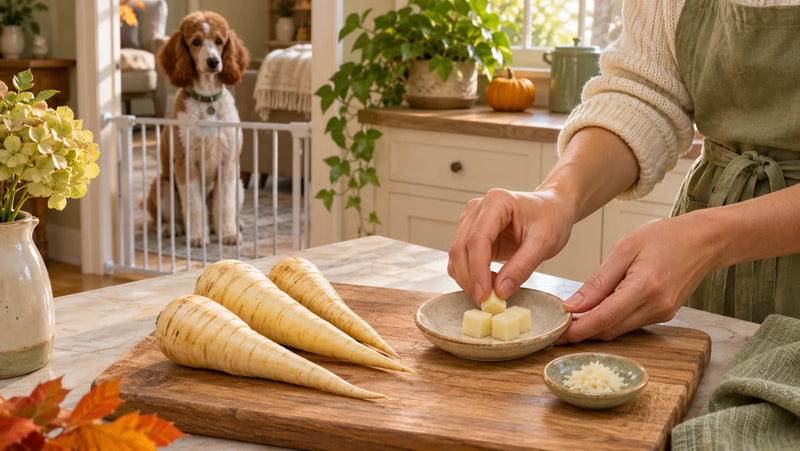
For a healthy dog already cleared to have it, use a small measured amount of fully cooked, plain, peeled sweet-potato flesh. Do not add butter, sugar, salt, milk, syrup, marshmallow, spice or crust. Let it cool and count it with every other extra offered that day.
The WSAVA Nutrition Committee's dog-treat guidance says treats should provide no more than 10% of a dog's daily calories and advises veterinary guidance for medical conditions, dietary sensitivities or veterinary-prescribed diets. Ten percent is a ceiling for all extras together, not a serving recommendation for sweet potato.
Dogs with diabetes, pancreatitis, kidney disease, chronic digestive disease, obesity or a therapeutic diet need their veterinary team's advice before a new table-food extra. Plain sweet potato is optional; it is not a treatment or a substitute for complete dog food.
Keep Thanksgiving Desserts and Dog Treats Separate
The Thanksgiving food guide for dogs shows how to reserve a plain bite before the family recipe gains butter, salt, gravy, bones or dessert ingredients. The same kitchen rule works here: set aside an eligible plain food before baking the pie, or skip the table food entirely.
Quick breads bring their own recipe questions. The guide to pumpkin bread and dogs covers raisins, xylitol, chocolate, macadamias and nutmeg in that separate baked format.
For a planned reward, compare American Paws dog treats with exact live labels and choose one that fits the individual dog's ingredient, texture and calorie plan. A labeled dog treat is easier to identify and portion than a holiday dessert with an uncertain recipe.
Frequently Asked Questions
Is sweet potato pie toxic to dogs?
Sweet-potato pie is not one uniform toxin, but it should not be fed. The rich filling and crust can cause digestive trouble, and some recipes contain urgent hazards such as xylitol, raisins or macadamia nuts. Large or concentrated nutmeg exposures also need prompt assessment.
What if my dog ate one small bite?
Remove the pie and verify the complete recipe. A tiny taste of a known ordinary pie in a healthy dog is generally lower concern than a slice or unknown amount, but call if a high-risk ingredient is present, the dog is medically restricted or symptoms develop.
Is nutmeg in sweet potato pie poisonous to dogs?
Nutmeg can cause toxic effects when enough is ingested. A trace distributed through an ordinary pie is not comparable to eating ground nutmeg directly. Call for a large or unknown amount, direct access to the spice container or abnormal neurologic or heart-rate signs.
Can dogs eat sweet potato pie crust?
Do not offer it. A small plain baked crumb is not usually a toxin exposure, but crust adds fat, salt and calories and may carry toppings or packaging. A large amount or a dog with a fat-restricted medical history warrants a call.
What if the pie is sugar-free?
Check the exact sweetener immediately. If the recipe contains xylitol, may contain it or uses an unknown sugar substitute, call a veterinarian, emergency hospital or animal poison service right away and do not wait for signs.
Can dogs eat plain cooked sweet potato?
Some healthy dogs can have a small measured amount of fully cooked, plain, peeled flesh. Keep all extras within the dog's calorie plan and ask the veterinarian first for a medical condition, dietary sensitivity or prescribed diet.
Should I make my dog vomit after eating pie?
No—not unless a veterinarian or poison professional specifically directs it for this dog and exposure. The right action depends on the ingredient, amount, timing, symptoms and health history, and an inappropriate home method can cause additional harm.
Keep the Pie for People
Sweet potato pie combines a potentially shareable plain ingredient with a rich filling, crust and recipe-specific hazards. Do not serve the finished dessert. After an accident, preserve the evidence, identify every ingredient and call promptly for toxic additions, direct spice access, a large or unknown amount, medical vulnerability or symptoms.
Choose an exact-label reward from the American Paws collection or use a veterinarian-approved plain extra. Keep the choice measured, count it with every other treat and leave the Thanksgiving pie on the human table.