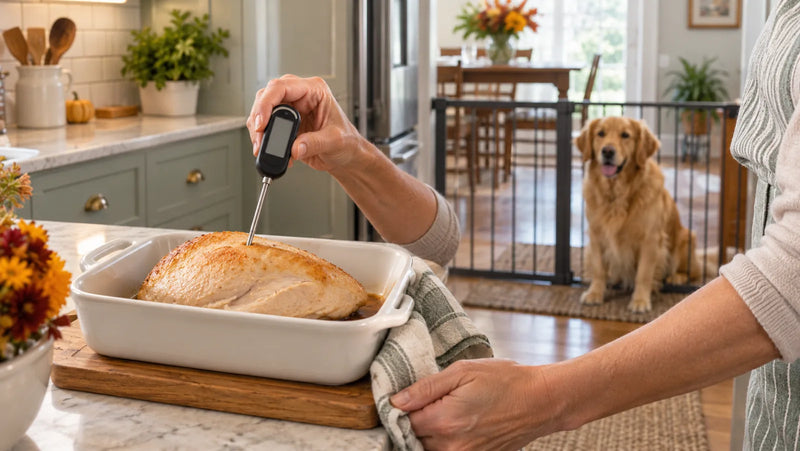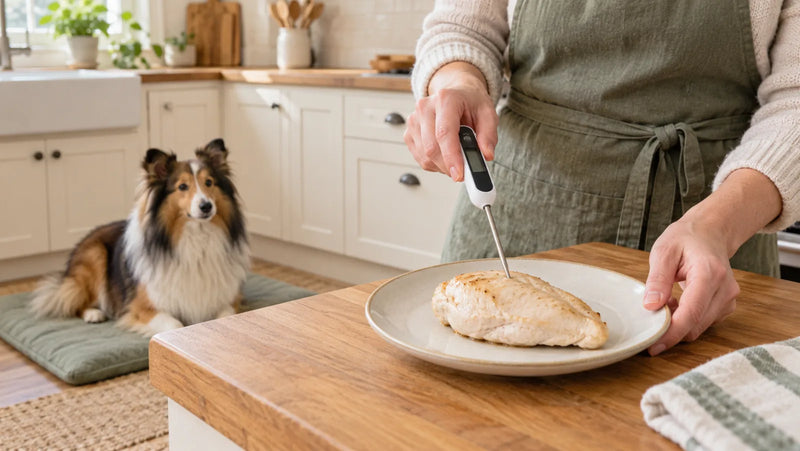

Can dogs eat turkey? Yes—many healthy dogs can have a small amount of fully cooked, boneless, skinless, unseasoned lean turkey meat. The safe bite should be set aside before butter, oil, gravy, stuffing, seasoning, marinade, cure, or brine is added.
Do not give cooked turkey bones, skin, drippings, gravy, or heavily salted and seasoned meat. Those are not all the same risk: bones can choke, injure, or obstruct; skin and excess fat can upset the digestive system and contribute to pancreatitis risk; and ingredients such as onion, garlic, or excess salt create separate exposure concerns.
Can Dogs Eat Turkey? The Short Answer
Turkey itself is not inherently toxic to dogs. The preparation, portion, and individual dog decide whether a piece belongs in the bowl. The American Kennel Club’s turkey guidance permits plain cooked turkey without added salt, fat, or seasoning and tells owners to remove the skin and every cooked bone.
| A tiny taste may fit | Skip it |
|---|---|
|
|
“May fit” does not mean every dog needs turkey. Complete dog food should remain the meal, and a plain taste is optional. If your dog already has a sensitive stomach, a history of pancreatitis, a food reaction, swallowing difficulty, or a medically managed diet, skipping table turkey may be the safest plan.
The Three Turkey Risks to Keep Separate
Cooked turkey bones can splinter or obstruct
Cooking makes poultry bones brittle. A sharp fragment can damage the mouth, throat, esophagus, stomach, or intestine; a larger piece can lodge in the airway or digestive tract. The same “no cooked poultry bones” rule applies whether the fragment came from a wing, leg, neck, rib cage, or picked-over carcass. If your dog already swallowed one, our turkey bones emergency guide covers what to watch for and when to call.
The FDA’s holiday pet-safety guidance warns that turkey carcass and other bones can lodge in the esophagus, stomach, or windpipe, while sharp pieces can cause internal injuries. A bone problem is mainly a physical emergency, not a food-poisoning dose question.
Skin, drippings, butter, and excess fat are too rich
Roasted skin concentrates fat and often carries butter, oil, salt, seasoning, and pan juices. Drippings and gravy add more fat. These scraps can cause vomiting or diarrhea, and a fatty meal can contribute to pancreatitis risk—especially in a dog with a previous episode or a prescribed low-fat plan.
That wording matters. One stolen bite does not diagnose pancreatitis, and signs such as vomiting or abdominal pain have many possible causes. But skin and rich scraps are preventable risks, so remove them rather than trying to calculate a “safe” amount at the table. The FDA specifically advises against roasted turkey or chicken skin and other fatty table scraps.
Seasoning, stuffing, gravy, and brine are not plain
A slice can look plain after visible seasoning is scraped away while still carrying roasting juices, butter, stock, stuffing residue, glaze, or brine. Onion and garlic may be present as fresh pieces, powders, broth ingredients, seasoning blends, or stuffing aromatics. The ASPCA’s people-food hazard guide explains that allium ingredients can irritate the gastrointestinal tract and damage red blood cells, and that excessive salt can also cause serious signs.
Brine recipes vary. Some use only water, salt, and sugar; others add stock, garlic, onion, herbs, spices, curing ingredients, or flavor concentrates. Because the absorbed amount and final recipe are rarely known, brined, cured, deli-style, smoked, or heavily seasoned turkey should stay off the dog’s plate.

How to Prepare Plain Turkey for a Dog
- Set it aside first. Reserve a small lean piece before the bird is brined, rubbed, stuffed, glazed, buttered, sauced, or placed against seasoned aromatics.
- Cook it fully. Do not use raw or undercooked turkey as the easy alternative to a seasoned roast.
- Remove the skin, visible fat, and every bone. Inspect the finished meat from several angles and use a clean utensil and surface.
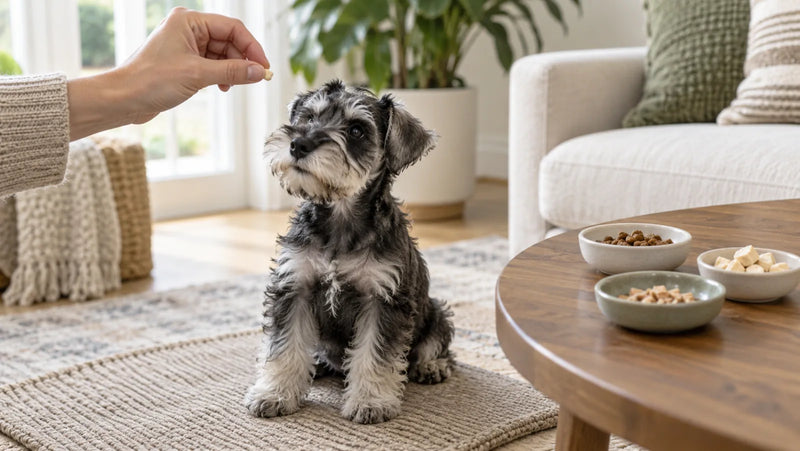
- Cut a tiny piece for the individual dog. A large cube can be a choking risk for a small dog or a fast gulper. Thin, manageable pieces are easier to inspect and portion.
- Try one piece, not a holiday sampler. Keep the rest of the day’s diet familiar and watch appetite, stool, vomiting, itching, swelling, and general comfort.
Do not rinse gravy off finished meat and call it plain. Do not carve from the cavity after seasoned stuffing has been removed. Do not use the strip directly under fatty skin or a section sitting in drippings. If no truly plain meat was reserved, the dog can celebrate without turkey.
How Much Turkey Can a Dog Eat?
There is no reliable universal answer in cubes, tablespoons, or ounces. A piece’s calories depend on the cut, size, remaining fat, and preparation, while the dog’s allowance depends on body size, body condition, life stage, activity, complete diet, and health plan.
The World Small Animal Veterinary Association’s treat guide says all treats together should make up no more than 10% of a dog’s daily calories. That ceiling includes turkey, training rewards, chews, table tastes, toppers, food used for medication, and every bite handed out by guests. It is not 10% for each category, and it is not a goal.
Start with one tiny piece rather than filling a bowl. If turkey is being used repeatedly for training or enrichment, subtract those calories from the same daily allowance. Our daily dog-treat calorie guide explains how to build an individual budget while complete food supplies the nutritional foundation.
Which Dogs Should Skip Table Turkey?
Ask the veterinary team before adding turkey—or simply skip it—when a dog has:
- a history of pancreatitis or a prescribed low-fat diet;
- a known or suspected poultry reaction;
- diabetes, kidney disease, or another medically managed condition;
- a prescription or elimination diet that requires strict ingredient control;
- swallowing trouble, a tendency to gulp, or a previous foreign-body obstruction;
- recent vomiting, diarrhea, appetite loss, or abdominal discomfort; or
- a sensitive stomach that has not handled new foods well.
Turkey is not a treatment for any of these conditions. It is also not automatically a “novel protein”: if a dog has already eaten turkey in food, treats, broth, table scraps, or flavored products, the protein is not new to that dog. Do not interrupt a veterinary diet trial with a Thanksgiving taste.
If Turkey Bones Were Swallowed
If the dog is choking, struggling to breathe, collapsing, or repeatedly retching without producing anything, go to an emergency veterinary clinic immediately. Do not delay for an online calculation or poison-control callback.
If the dog is breathing normally after swallowing a cooked turkey bone:
- Remove access to the carcass and collect any remaining pieces so you can estimate what is missing.
- Do not induce vomiting. A sharp fragment can cause more damage on the way back up.
- Do not force bread, oil, pumpkin, milk, food, salt, hydrogen peroxide, or another home remedy.
- Call your veterinarian or an emergency clinic promptly with the dog’s weight, the bone type and approximate size, the amount, the time, and current signs.
- Follow the professional monitoring or examination plan. Keep the dog calm and do not offer food unless the veterinary team says to.
Watch for drooling, repeated vomiting, gagging, refusal or inability to eat, abdominal pain or swelling, lethargy, straining, constipation, bloody vomit or stool, and black tarry stool. Signs can be delayed. The FDA notes that a veterinarian may use x-rays, endoscopy, monitoring, or surgery depending on what was swallowed and where it is; that decision cannot be made from the dog’s appearance alone.
For a deeper explanation of cooked-bone risks and the information to prepare before calling, use our cooked poultry-bone safety guide. It applies to the same brittle-bone mechanism without transferring the chicken article’s primary keyword to this page.
What If the Turkey Had Onion, Garlic, Gravy, or Brine?
A recipe exposure calls for a different evidence packet. Preserve the package, seasoning label, brine recipe, gravy ingredients, stuffing recipe, or a photo. Record what was eaten, the estimated amount, the time, the dog’s weight, and any symptoms. Do not wait for visible illness after a meaningful exposure to a potentially toxic ingredient.
Call the veterinarian or emergency clinic. You can also contact ASPCA Animal Poison Control at (888) 426-4435; the service is available 24 hours a day, 365 days a year, and a consultation fee may apply. Poison control helps assess ingredients and dose. It does not replace veterinary evaluation of a swallowed bone, choking episode, or suspected obstruction.
Keep the Thanksgiving Carcass and Guests Under Control
Most turkey accidents happen after cooking, when the carcass, carving board, plates, foil, roasting bag, skewers, string, napkins, and trash all smell rewarding. Wrap bones and scraps, place them directly in a lidded bin the dog cannot open, and remove the carving area before guests move on to dessert.
Give guests one rule: only the dog’s caregiver feeds the dog. If you choose to share plain turkey, place the entire approved amount in one small container and hand it out from there. When the container is empty, the day’s turkey is finished. This prevents five people from each giving “just one little piece.”
For the broader meal—stuffing, casseroles, vegetables, gravy, pie, bread dough, chocolate, alcohol, and leftovers—use our complete Thanksgiving food-safety guide. That article owns the full holiday menu; this guide stays focused on the turkey itself.
Turkey Meat vs Turkey Dog Treats
The word “turkey” on a package does not tell you the complete recipe, calories, texture, or manufacturing controls. A turkey treat may include chicken fat, poultry broth, glycerin, starch, salt, smoke flavor, or other animal proteins. Those ingredients are not automatically inappropriate for a healthy dog, but they matter when you are choosing one protein, managing calories, or avoiding a known ingredient.
Read the full ingredient list and feeding information. Our turkey-versus-chicken dog-treat comparison explains how to compare labeled recipes without claiming one bird is automatically leaner, safer, or less allergenic.
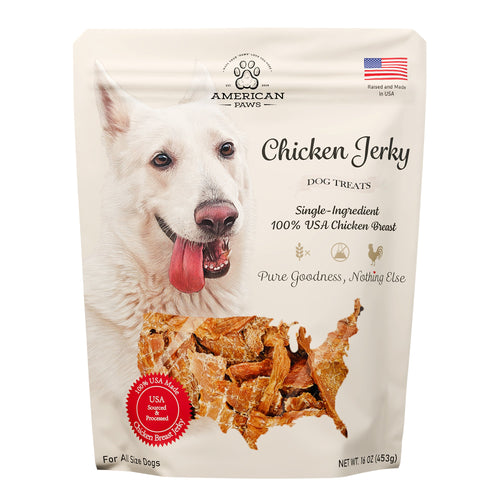
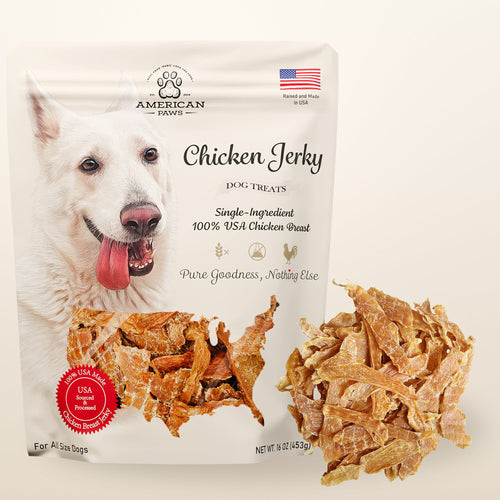
American Paws does not currently sell a turkey treat. For a dog that already tolerates chicken, you can compare the clearly labeled options in our current chicken jerky collection. Read each product’s own label; do not assume every format has the same ingredient list.
Frequently Asked Questions
Can dogs eat cooked turkey?
Yes, many healthy dogs can eat a tiny amount of fully cooked, boneless, skinless, unseasoned lean turkey. It should be reserved before brining or seasoning and counted with every other treat. Skip it when the dog’s veterinary diet or health history makes table food inappropriate.
Can dogs eat turkey skin?
No. Turkey skin is fatty and commonly carries butter, oil, salt, seasoning, and drippings. It can cause digestive upset and may contribute to pancreatitis risk in susceptible dogs. Remove it completely rather than rinsing or scraping it.
Can dogs eat deli turkey?
Deli turkey is not the same as plain home-cooked meat. It is often cured or brined and may contain substantial sodium, seasoning, flavorings, or other ingredients. Check the label, but the conservative Thanksgiving choice is to skip deli meat and use a purpose-made dog treat instead.
Can dogs eat raw turkey?
Raw turkey can carry bacteria such as Salmonella and E. coli, creating risk for the dog and people who handle the meat, bowls, stool, and household surfaces. Raw bones also carry injury and obstruction risks. Do not use raw turkey as an improvised “safer” alternative; ask your veterinarian about any raw-feeding plan.
Should dogs have turkey necks or bones?
Do not give cooked turkey necks or any cooked turkey bone. Cooking makes poultry bones brittle, and necks contain many small bones. Raw necks are not risk-free either. If a cooked bone was swallowed, call a veterinarian promptly and do not induce vomiting or give a home remedy.
Choose Plain Turkey—or a Predictable Labeled Treat
A safe turkey taste is simple: fully cooked lean meat, every bone and all skin removed, no seasoning or brine, and a tiny portion inside the dog’s complete treat budget. If the Thanksgiving recipe makes that impossible, skipping turkey is a responsible answer—not a missed celebration.
Use one familiar, clearly labeled reward instead. You can browse all current American Paws dog treats, compare each product’s ingredients and texture, and choose only what fits the individual dog. No treat or catalog item replaces a veterinarian or poison-control professional after a bone or risky ingredient has already been eaten.