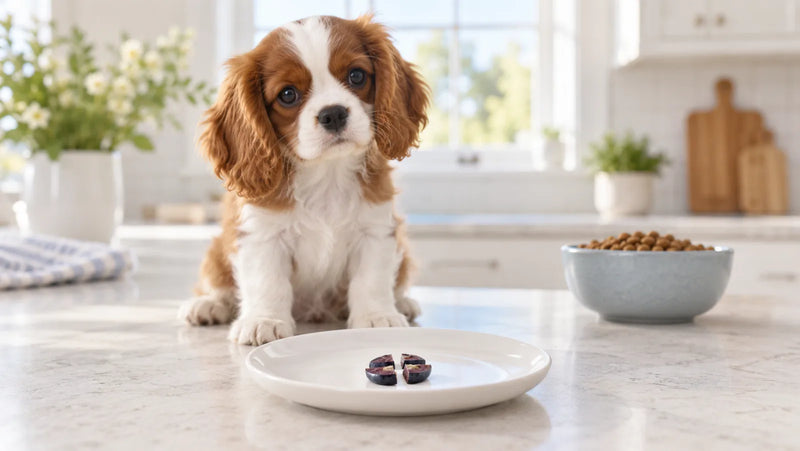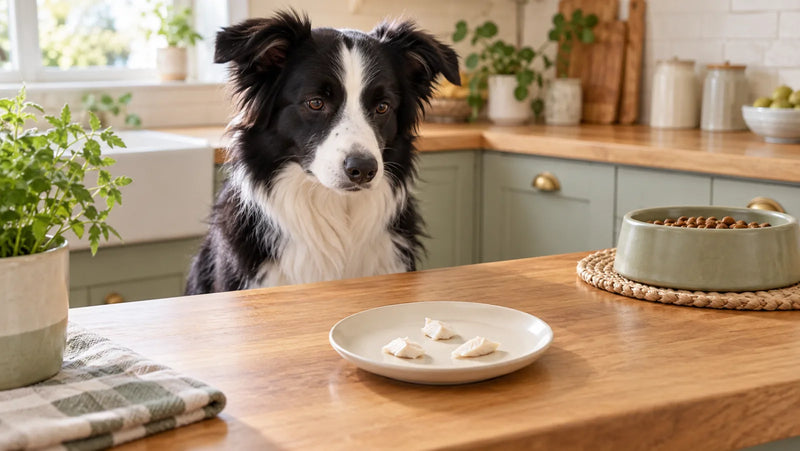

Can dogs eat zucchini? Yes—many healthy adult dogs can have a few small pieces of fresh, plain zucchini, raw or fully cooked. Wash it, remove the stem and produce sticker, cut it into small irregular pieces that suit the dog's mouth and eating style, and introduce one tiny piece first. Serve it without oil, butter, salt, garlic, onion, sauce, batter, or seasoning.
Ordinary tender skin and soft immature seeds are generally edible, but peeling thick skin or scooping hard mature seeds can improve texture. Never feed a zucchini that tastes distinctly or extremely bitter. Rare bitter squash can contain higher cucurbitacin levels; discard the whole fruit and call a veterinarian after a meaningful or symptomatic exposure.
Can Dogs Eat Zucchini? The Short Answer
Zucchini is an optional produce treat, not required nutrition. The American Kennel Club's veterinary-reviewed zucchini guidance supports offering plain raw or cooked zucchini in moderation while emphasizing small pieces and avoiding oils, salt, and seasoning.
| Form | Can it fit? | Main condition |
|---|---|---|
| Fresh raw zucchini | Yes, in a tiny amount | Wash, remove stem, cut small, and supervise |
| Steamed, boiled, or baked zucchini | Yes | Cook plain, cool, and do not add oil or seasoning |
| Tender green skin | Usually | Wash well; peel when tough or poorly tolerated |
| Soft immature seeds | Usually | Large hard seeds from an overmature squash can be scooped out for texture |
| Frozen zucchini | Sometimes | Thaw or soften for a small dog, gulper, senior, or dental patient |
| Sautéed, grilled, breaded, stuffed, or sauced zucchini | Not as a planned dog serving | Fat, salt, garlic, onion, cheese, sauce, skewers, or batter change the decision |
| Distinctly or extremely bitter zucchini | No | Discard it; cooking should not be used as a rescue step |
Low calorie does not mean unlimited. A dog already receiving complete-and-balanced food does not need zucchini for vitamins or fiber, and too much unfamiliar plant material can cause gas, loose stool, vomiting, or abdominal discomfort.
Raw vs Cooked Zucchini for Dogs
Raw zucchini
Raw zucchini is crisp and moist. Choose a firm, fresh squash without mold, slime, deep bruising, or spoilage. Wash it under running water, rub the surface, remove the sticker and hard stem, and cut only the amount you plan to use.
Avoid thick round coins, long spears, or a whole zucchini. A dog can gulp a piece that looks appropriately small from across the kitchen. Cut a thin slice into irregular dice or narrow soft pieces, then match the final shape to the individual dog's mouth and chewing behavior. Supervise every first exposure.
Raw texture may be a poor fit for toy dogs, puppies, seniors, dogs with dental pain, recent oral work, swallowing difficulty, or dogs that inhale food. Finely dice a tender piece if the veterinary plan permits it, choose plain cooked zucchini, or skip it.
Cooked zucchini
Steaming, boiling, or baking can soften zucchini. Cook it without oil, butter, salt, garlic, onion, broth, cheese, sauce, or seasoning, then cool it fully. Softening may help a careful eater, but it does not make a large cube or floppy strip impossible to gulp.
Pan-fried or restaurant zucchini is a different recipe. Even if the vegetable itself is suitable, cooking oil, butter, sodium, allium seasoning, breading, or shared grill residue may not be. Reserve the dog's tiny portion before the human dish is seasoned.
Can Dogs Eat Zucchini Skin and Seeds?
Yes, ordinary tender zucchini skin and its soft immature seeds are generally edible for dogs. They are not hard pits, stones, or apple cores. Still, edible does not mean ideal in every texture or amount.
- Skin: wash it well. Peel thick, waxy, damaged, or unusually tough skin when it would be difficult for the dog to chew or when the dog has a sensitive stomach.
- Seeds: the small soft seeds in a typical young supermarket zucchini can remain. Scoop out large, hard, mature seeds from an oversized fruit for easier chewing.
- Stem: remove the firm stem and blossom end rather than offering the entire vegetable as a chew.
- Surface: discard produce that is moldy, slimy, fermented, badly bruised, or spoiled. Washing does not restore spoiled food.
Peeling and deseeding are texture choices, not evidence that normal skin or soft seeds are poisonous. If the dog repeatedly develops gas, diarrhea, vomiting, pain, or appetite change after zucchini, stop offering it rather than trying every possible preparation.

The Rare Bitter-Zucchini Warning
Zucchini belongs to the cucurbit family. These plants produce bitter compounds called cucurbitacins. Commercially cultivated zucchini has generally been selected for low levels in the fruit, which is why ordinary zucchini tastes mild. Rare seed, cross-pollination, mutation, or garden situations can produce an extremely bitter squash.
Oregon State University Extension explains that cucurbitacins create the bitter taste in zucchini and related vine crops and advises not eating extremely bitter zucchini. The Pacific Northwest Pest Management Handbooks likewise advises discarding squash with noticeable bitterness and notes evidence that at least some cucurbitacins are heat stable.
Those sources address crop and human food safety; they do not provide a canine toxic-dose study. The conservative inference for a dog owner is narrow: do not feed distinctly or extremely bitter zucchini, do not try to fix it by cooking, and do not invent a safe pet amount. This is a rare warning, not a reason to call every normal mild zucchini toxic.
If a dog eats very bitter zucchini, remove the rest, save a sample or photo, record the likely amount and time, and call the veterinarian or an animal poison service. Report vomiting, diarrhea, drooling, abdominal pain, weakness, tremors, collapse, or any other change. Do not induce vomiting or give a home remedy unless a veterinary professional directs it for that dog and exposure.
How Much Zucchini Can a Dog Eat?
There is no universal safe number of slices because zucchini sizes, cuts, dogs, diets, and eating styles vary. Use a cautious first-taste framework instead of treating this table as a daily allowance:
| Dog or eating style | Preparation | First taste |
|---|---|---|
| Toy or small healthy adult | One very small raw dice or tender cooked piece | One piece, then stop and observe |
| Medium healthy adult that chews calmly | Two small irregular dice or tender pieces | One piece first; a second only after the first is chewed |
| Large healthy adult that chews calmly | A few small irregular dice or tender pieces | Start with two pieces; do not turn the test into a bowl |
| Gulper, puppy, senior, dental patient, or dog with swallowing trouble | Finely diced tender piece only if the veterinary plan allows | One tiny supervised taste—or skip it |
Repeat the same small amount on a different day before considering more. A symptom-free first bite is not a reason to feed half a zucchini. Keep all treats, toppers, chews, training rewards, and table tastes below 10% of daily calories unless the veterinary team gives a different plan. Our daily dog-treat allowance guide explains how every extra shares that ceiling.
Safe Preparation Step by Step
- Select: choose fresh cultivated zucchini that looks and smells normal; discard moldy, slimy, spoiled, or distinctly bitter produce.
- Wash: rinse and rub the surface under running water, even if you plan to peel it.
- Trim: remove the produce sticker, firm stem, and damaged areas. Peel tough skin or scoop hard mature seeds when needed for texture.
- Cut: make tiny irregular pieces rather than thick coins, long spears, or chew-size sections.
- Cook only if useful: steam, boil, or bake plain until tender; add no oil, salt, seasoning, garlic, onion, cheese, or sauce.
- Cool and test: offer one piece at a calm time and watch the dog chew and swallow.
- Observe: keep other new foods unchanged and monitor appetite, comfort, gas, vomiting, and stool.
Repeated gagging, frantic pawing at the mouth, blue or pale gums, trouble breathing, unproductive retching, or collapse is an emergency. Do not perform a blind finger sweep that could push food deeper.
Zucchini Dishes Dogs Should Skip
- Sautéed or grilled zucchini: human recipes often add oil, butter, salt, garlic, onion, marinades, pesto, or cheese. A plain piece reserved before seasoning is a separate decision.
- Grilled skewers: the vegetables may share marinades and alliums, while wood or metal skewers create serious injury risks. Secure every skewer and dropped fragment.
- Zucchini bread or muffins: sugar, fat, chocolate, raisins, nuts, spices, and possible xylitol-sweetened ingredients make the complete recipe—not the vegetable—the decision.
- Fritters and fries: batter, frying oil, salt, cheese, dip, and seasoning turn zucchini into a rich prepared food.
- Casseroles and stuffed zucchini: onion, garlic, cheese, sausage, sauce, breadcrumbs, and high-fat fillings are common.
- Zucchini noodles: plain cooked noodles are still zucchini, but pasta sauce, pesto, garlic butter, meat sauce, and toppings change the exposure.
If a dog steals a prepared dish, preserve the recipe or package and report every ingredient. A small bite of plain zucchini is not the same event as swallowing a garlic-seasoned skewer or a tray of xylitol-sweetened muffins.
Zucchini vs Cucumber for Dogs
Zucchini and cucumber can both be offered fresh and plain in small, safe pieces, but they are different foods and should not share one article's promises. Cucumber is usually eaten raw and is commonly searched for its high-water crunch, pickle forms, and cucumber-specific portions. Zucchini is a summer squash that is often cooked and has its own mature-skin, seed-texture, and rare extreme-bitterness questions.
For cucumber pieces, peel and seed decisions, chilled or frozen forms, and why pickles are different, use our guide to whether dogs can eat cucumber. Introduce either food separately so a stomach reaction can be traced rather than combining several new vegetables at once.
When to Ask the Veterinarian or Skip Zucchini
Ask before adding zucchini—or simply skip it—when a dog has a prescription diet, veterinary elimination trial, diabetes management, kidney disease, pancreatitis history, significant gastrointestinal disease, prior obstruction, swallowing difficulty, dental pain, recent surgery, or a veterinarian-set calorie, fiber, sodium, or nutrient plan.
A puppy's growth diet and small airway deserve extra care. A senior may have dental or swallowing changes that are not obvious from body size. A dog that gulps food may be safer with a finely crumbled purpose-made reward than a vegetable piece, even when zucchini itself is suitable.
Call the veterinarian for repeated vomiting or diarrhea, marked pain or bloating, appetite loss, unusual lethargy, blood, weakness, inability to keep water down, a swallowed large piece, or a distinctly bitter exposure. The ASPCA Animal Poison Control Center is available at 888-426-4435; a consultation fee may apply.
A Purpose-Made Training Alternative
Zucchini may work for an occasional quiet taste, but fresh pieces are wet, perishable, and awkward to carry through a training session. When frequent, tiny rewards are the real job, a purpose-made treat with a complete label and breakable texture can be easier to measure and handle. If lower calories are the goal, compare the actual label and portion instead of assuming that any product category is automatically low calorie.
American Paws' freeze-dried chicken training treats for dogs and cats list 100% USA chicken breast and come in light, crunchy pieces that can be broken smaller. They are intended for intermittent or supplemental feeding. Use them only when chicken fits the individual dog, follow the current label, and count every piece or crumb with the day's other extras.
Frequently Asked Questions
Can puppies eat zucchini?
A weaned puppy may be able to try one tiny tender piece when the veterinarian says extras fit the growth diet. Cut it much smaller than an adult portion, supervise closely, and keep complete puppy food in charge. Zucchini is not needed for growth or teething.
Can dogs eat zucchini every day?
Daily is not automatically better. A small familiar amount may fit some healthy dogs, but zucchini is optional and all extras share one calorie ceiling. Recurrent gas, loose stool, vomiting, or appetite change means it is not a good routine choice for that dog.
Can dogs eat yellow zucchini or summer squash?
Many cultivated summer squashes can follow the same plain, fresh, small-piece approach, but identify the plant accurately and check the individual variety. Do not feed ornamental gourds, unknown volunteer squash, spoiled produce, or any squash with distinct extreme bitterness.
Can dogs eat zucchini noodles?
Plain zucchini noodles cut into short manageable pieces may fit, but they have no advantage over a tiny dice. Skip noodles mixed with garlic, onion, pesto, butter, oil, cheese, tomato sauce, meat sauce, or salt.
Can dogs eat grilled zucchini?
Only a small piece grilled completely plain and removed from skewers may fit. Avoid pieces exposed to marinades, oil, salt, garlic, onion, seasoning, sauce, or heavy char, and secure every wood or metal skewer.
Can dogs eat zucchini bread?
Do not use zucchini bread as a dog treat. The complete recipe may contain sugar, fat, chocolate, raisins, nuts, spices, or a xylitol-sweetened ingredient. Zucchini in the name does not make a baked dessert suitable.
What if my dog ate a whole zucchini?
A large amount of normal plain zucchini may cause gastrointestinal upset, while large swallowed sections can create a physical problem. Record the size, missing amount, time, preparation, bitterness, and symptoms, then call the veterinarian—especially for a small dog, gulper, bitter fruit, repeated vomiting, pain, bloating, lethargy, or trouble swallowing.
Keep Zucchini Plain, Small, and Optional
The useful rule is simple: choose fresh non-bitter zucchini, wash it, remove the stem, cut a tiny irregular piece, serve it raw or cooked completely plain, supervise, and count it with every other extra. Do not turn a suitable vegetable into a risky recipe with oil, salt, garlic, onion, batter, sauce, or a skewer.
For the broader produce map, see which vegetables dogs can eat. If a labeled, portable reward better fits the training job, use the chicken option above only when appropriate, or browse the current American Paws dog treats and compare each product's actual ingredients, size, texture, and feeding directions.