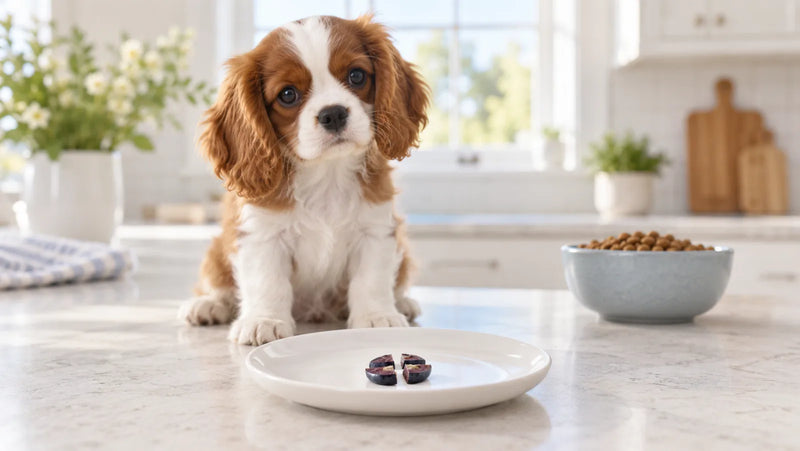

Can French Bulldogs eat apples safely? Yes—many healthy Frenchies can have a little plain apple flesh when it is washed, cored, seeded, and cut into very small, thin pieces. Put simply, the answer to “can Frenchie eat apples?” is a qualified yes. Offer one flat piece at a time only while your dog is calm, breathing normally, and swallowing comfortably. Apple is an optional treat, so it also has to fit the day's calorie plan.
The fruit does not become toxic because a dog is a Frenchie. The breed-specific difference is the serving method: a short-faced dog deserves extra attention to piece shape and swallowing, a compact dog has less absolute room for unplanned calories than a large breed, and a history of food sensitivity calls for a clean one-food trial. Remove the stem, hard core, and every seed before you make the serving.
Can French Bulldogs Eat Apples? Yes—with Four Frenchie Rules
Plain, fresh apple flesh can be a small occasional extra for many French Bulldogs. Keep the answer qualified. A dog with active airway, swallowing, digestive, weight, or diet restrictions may need a different texture or no apple at all.
| Frenchie situation | Apple decision |
|---|---|
| Healthy adult at an ideal body condition, with comfortable breathing and swallowing | May try one tiny, thin, seedless piece while supervised. |
| Fast eater but no coughing, gagging, regurgitation, or diagnosed swallowing problem | Cut one paper-thin slice into several flat pieces and hand over only one at a time. |
| Gags, coughs, retches, or regurgitates around meals; has noisy or labored breathing; or has known BOAS | Skip the food test and ask the veterinarian which textures are appropriate. |
| Weight-loss plan, diabetes, chronic gastrointestinal disease, food trial, or prescription diet | Use apple only if the individual veterinary plan allows it. |
| Breathing distress, pale or blue gums, weakness, or collapse | Do not offer food. Seek emergency veterinary care immediately. |
For the all-dog answer about apple flesh, skin, seeds, cores, fresh and frozen formats, use our complete apple safety and preparation guide. This page does a narrower job: applying those rules to French Bulldog anatomy, body size, and tolerance.
Why Frenchie Apple Prep Is Different
A short muzzle changes piece size, not whether apple flesh is safe
French Bulldogs are brachycephalic, meaning the skull and muzzle are shortened. That description does not diagnose every Frenchie with brachycephalic obstructive airway syndrome, or BOAS. Many French Bulldogs eat and swallow comfortably. Still, the breed is among those commonly affected, and swallowing signs deserve attention rather than being dismissed as normal.
Cornell University College of Veterinary Medicine's BOAS guidance lists gagging while swallowing food or water among possible signs. That is why the Frenchie serving is not a thick cube or a whole wedge. One thin slice becomes several genuinely small, flat pieces, offered individually.
Smaller pieces reduce the size of the mouthful; they do not eliminate choking or aspiration risk and cannot treat an airway disorder. If your dog coughs or gags while eating, regurgitates, struggles to breathe, or has a veterinarian-set texture restriction, cutting an apple smaller is not permission to keep experimenting.
A compact dog has a compact extra-calorie budget
French Bulldogs are compact dogs, and calories from fruit, training rewards, chews, toppers, and table bites can accumulate before the serving looks large to a person. Apple supplies natural sugar and energy. It is not a free food, even though plain apple is much less energy-dense than many rich human snacks.
There is no need to claim every Frenchie is destined to become overweight. The useful facts are simpler: any French Bulldog can gain excess body fat, a compact dog has a smaller absolute calorie allowance than a large dog, and excess weight can make brachycephalic airway problems harder. Portion arithmetic belongs in the prep plan.
A food-sensitivity history calls for a clean first test
A large VetCompass comparison of French Bulldogs and other dogs found higher recorded odds of food hypersensitivity in the French Bulldog group. That breed-level association does not prove that apple is a common trigger, and it does not mean every Frenchie has a food allergy.
It does justify a tidy introduction: use one new food, start with one tiny piece, change nothing else in the meal, and stop after that first taste. If a reaction occurs, you and the veterinarian have fewer variables to untangle. Slow introduction helps you observe tolerance; it does not prevent an allergy.
How to Prepare Apple for a French Bulldog
The American Kennel Club's apple guidance recommends washing the fruit, removing the core and seeds, and cutting it into slices or small cubes. For a Frenchie, take the size-and-shape step farther by making the pieces thin and flat.
- Choose a fresh, plain apple. Skip moldy, fermenting, or fallen fruit and every sweetened or spiced apple product.
- Wash and scrub the outside. Peeling is optional for many healthy dogs, but removing the peel can make the texture easier for an individual dog to manage.
- Remove the stem, entire core, and every seed first. Do this before cutting the edible portion, so a seed cannot hide in a serving piece.
- Cut one paper-thin half-moon. Do not start with a wedge, thick cube, or whole apple.
- Divide the thin slice into several tiny flat pieces. Each should be smaller and thinner than the mouthful your dog would try to gulp.
- Offer one piece at a time. Keep the remaining pieces in your hand or on the counter rather than placing the whole portion in a bowl.
- Watch the complete swallow. Stop for coughing, gagging, repeated swallowing, retching, regurgitation, or any breathing change.
Serve apple when the dog is calm and cool, not while panting after exercise, racing through a training session, or competing with another pet. A hard frozen apple chunk is a poor first format for a Frenchie because hardness and gulpable shape add avoidable variables. Apple pie, caramel apple, sweetened applesauce, cider, juice, dried apple, and mixed desserts create different ingredient and calorie questions.

How Much Apple Can a French Bulldog Eat?
Start the first exposure with one tiny flat piece, then stop for that trial. Once tolerance is known, a deliberately cautious occasional example for many healthy adult Frenchies is about 5 grams of edible apple—roughly one paper-thin half-moon divided into several pieces. Up to 10 grams may fit some individual plans, but it is not a daily target, a veterinary dose, or a universal maximum.
The scale matters because a visual “slice” is inconsistent. Apple variety, size, ripeness, peel, and knife work all change the result. If weight control matters, weigh the edible flesh after the core and seeds are removed rather than assuming every slice has the same calories.
| Edible apple example | Approximate energy | Approximate natural sugar |
|---|---|---|
| 5 grams | 2.6 kcal | 0.5 gram |
| 10 grams | 5.2 kcal | 1.0 gram |
Those figures are arithmetic from USDA FoodData Central's raw-apple entry, which reports 52 kcal and 10.39 grams of total sugar per 100 grams of raw apple with skin. They are estimates, not guarantees for every apple.
The World Small Animal Veterinary Association's dog-treat guide says treats should make up no more than 10% of daily calories. Its illustrative table allows 47 treat calories for an average healthy 10-kilogram adult dog in ideal body condition. Ten grams of apple at about 5.2 kcal would use roughly one-ninth of that entire extras ceiling—not one-ninth of the dog's whole diet.
That ceiling is shared. If the Frenchie already received training rewards, a dental chew, medication food, or table bites, the apple does not get a separate 10%. The veterinarian-set calorie target, actual body condition, activity, age, neuter status, and medical plan always beat a generic fruit example. Our apple benefits and sugar guide covers the broader nutrition question without turning apple into a required supplement.
Apple Seeds and Cores Create Two Different Risks
Damaged seeds can release cyanide
Apple seeds contain cyanogenic glycosides. The ASPCA's apple plant entry identifies the stems, leaves, and seeds as the hazardous plant parts. Chewing or crushing seeds can release cyanide from those compounds, which is why every seed comes out before serving.
A single accidentally swallowed intact seed is not the same exposure as deliberately feeding a core or a pile of chewed seeds. Do not create panic or wait for a guessed toxic dose. Prevent the exposure, record what happened, and get case-specific advice when the amount or damage to the seeds is uncertain.
The core and stem are mechanical hazards
The hard fibrous core and stem can choke a dog or contribute to a gastrointestinal obstruction even if seed toxicity never develops. That matters for a compact, enthusiastic eater. Removing the seeds but handing over the core is not safe preparation, and a whole apple gives the dog access to both problems at once.
What to do after a Frenchie steals a core or seeds
Take away the remaining fruit and note the dog's weight, the time, the estimated amount, whether a core or stem was swallowed, and whether seeds were chewed. Call your veterinarian promptly for a swallowed core, multiple crushed seeds, apple leaves or stems, fermenting fruit, a very small dog, symptoms, or uncertainty. The ASPCA Animal Poison Control Center is available at (888) 426-4435; a consultation fee may apply.
Do not induce vomiting or force food, oil, bread, or bulky fiber unless a veterinary professional directs it. Breathing trouble, repeated vomiting, unproductive retching, abdominal pain or swelling, inability to keep water down, marked weakness, collapse, abnormal gum color, refusal of food, or failure to pass stool needs urgent veterinary attention.
Brachycephalic Airway and Swallowing Cautions
A French Bulldog's short muzzle makes airway awareness part of feeding, but breed alone is not a diagnosis. A healthy Frenchie with quiet, comfortable breathing and normal swallowing is different from a dog that gags, coughs, regurgitates, or labors for air around meals.
The practical serving rule is to reduce avoidable challenges: thin rather than thick, tiny rather than gulpable, one at a time rather than a bowlful, and soft-fresh rather than rock-hard frozen. Supervision means watching the dog finish the swallow, not merely staying somewhere in the room.
Stop feeding and arrange veterinary assessment for recurring noisy or labored breathing, gagging or retching with food or water, coughing during or after swallowing, repeated regurgitation, exercise intolerance, or sleep disruption. Piece size does not cure BOAS, reflux, esophageal disease, dental pain, or a swallowing disorder. If breathing is visibly difficult, gums look pale or blue, or the dog becomes weak or collapses, transport the dog to an emergency veterinary hospital and do not offer more food.
Food Sensitivities: Introduce One New Food Slowly
French Bulldogs are overrepresented for food allergy in veterinary references, but “Frenchie allergy” is not a reason to declare apple harmful in advance. Most confirmed canine food allergies involve a specific individual's immune response, and signs can overlap with environmental allergy, parasites, infection, or gastrointestinal disease.
For a Frenchie with no current diet restriction, use a controlled first taste:
- Choose plain fresh apple and no other new ingredient.
- Give one tiny, seedless piece after the normal meal, not on an empty stomach.
- Offer no second piece that day and avoid changing the main food at the same time.
- Watch for repeated vomiting or diarrhea, hives, facial swelling, breathing changes, or a recurring pattern of itching, paw licking, or ear trouble.
- Record the food, amount, time, and signs if anything changes.
One loose stool does not diagnose an allergy, and slow introduction cannot prevent one. Stop the fruit and ask the veterinarian how to interpret repeated or significant signs. A dog on a prescription, hydrolyzed, novel-protein, or elimination diet gets no apple unless the veterinary team explicitly approves it; even a tiny unlisted food can compromise a diagnostic trial.
Weight, Sugar, and the Shared Treat Budget
Apple is mostly water and carbohydrate, with fiber and micronutrients, but a complete and balanced dog food already supplies the Frenchie's nutritional foundation. Fruit should not displace that food, function as a vitamin treatment, or become a reward layered on top of an already full calorie plan.
For a dog gaining weight, count before cutting. Decide how many extra calories are available after all other treats, then subtract the apple rather than adding it. Using a few pieces of measured regular kibble may be simpler during weight loss because the calories are already part of the daily ration.
Weight also connects to breathing. The American College of Veterinary Surgeons' brachycephalic-syndrome guidance notes that obesity can aggravate the problems. That does not prove every Frenchie is obesity-prone, but it does make ideal body condition especially worth protecting. Ask the veterinary team to score body condition and set a calorie target if the ribs are hard to feel, the waist has disappeared, weight is trending up, or breathing and exercise tolerance are changing.
When a French Bulldog Should Skip Apple
- Active airway or swallowing signs: coughing, gagging, retching, regurgitation, labored breathing, or a prescribed texture restriction needs veterinary guidance, not a smaller DIY test.
- Diabetes: keep meals, medication, and carbohydrate extras consistent with the veterinarian's plan.
- Weight reduction: do not add apple beyond the prescribed daily calories.
- Chronic gastrointestinal disease or pancreatitis history: unfamiliar extras may be excluded even when plain apple is low in fat.
- Dental pain or missing chewing ability: crunchy fruit may not be the right texture.
- Prescription or elimination diet: no unapproved fruit, toppers, chews, or table bites.
- Known reaction to apple: do not retest at home.
- Puppy not ready for extras: complete growth food and veterinary feeding guidance come first.
Skipping apple does not create a nutrient gap. If you want to compare apple with other safe and unsafe choices, use the dog-safe fruit list—but the same calorie, preparation, and individual-health rules still apply.
Frequently Asked Questions
Can French Bulldogs eat apple skin?
Many healthy French Bulldogs can eat a little washed apple skin attached to a very thin piece. Peeling is optional, but it may make the texture easier for a dog with a sensitive stomach or limited chewing ability. Peeling does not replace washing, coring, seeding, thin cutting, or supervision.
Can a French Bulldog puppy eat apple?
A weaned puppy established on a complete growth diet may be allowed one tiny seedless piece if the veterinarian has not restricted extras and the puppy chews and swallows normally. Make it thinner and smaller than the puppy's usual mouthful, supervise the swallow, and stop after the first taste. Do not use a frozen chunk as a teething tool.
Can French Bulldogs eat green apples?
Plain green apple flesh is not categorically different from red apple flesh, but tart varieties may be less appealing and can still cause digestive upset in excess. Wash it, remove the stem, core, and every seed, then use the same tiny thin portion. Color does not make the core or seeds safe.
Can French Bulldogs eat frozen apple?
A Frenchie with normal teeth, breathing, chewing, and swallowing may try a tiny piece that was cut before freezing and allowed to soften. Do not give a whole frozen slice, thick cube, or rock-hard chunk. Fresh thin apple is the simpler first test because it removes hardness as a variable.
Can a Frenchie with allergies eat apple?
Only if the individual veterinary plan allows it. Higher breed-level odds of food hypersensitivity do not identify apple as that dog's trigger. A Frenchie on a diagnostic elimination or hydrolyzed diet must stay on the approved ingredient list; a dog with a previous apple reaction should not be challenged again at home.
Keep It Seedless, Thin, and Truly Small
Many French Bulldogs can eat a little apple, but the safest Frenchie version is intentionally precise: washed plain flesh, no stem, no core, no seeds, one paper-thin slice divided into tiny pieces, one piece at a time, and no feeding through abnormal breathing or swallowing. Start with a single taste, then let the dog's body condition, tolerance, and veterinary plan decide whether apple belongs at all.
The same breed logic applies when the fruit changes, which is why our French Bulldog banana guide treats a soft banana differently from a crisp apple. American Paws does not currently make an apple product. If grocery fruit is not a good fit, browse all current American Paws dog treats and choose from the actual ingredient list, calorie information, size, and texture that suit your individual Frenchie.