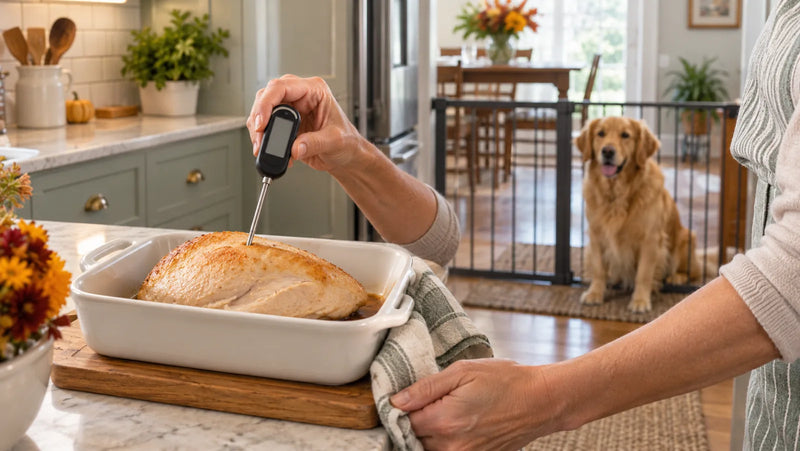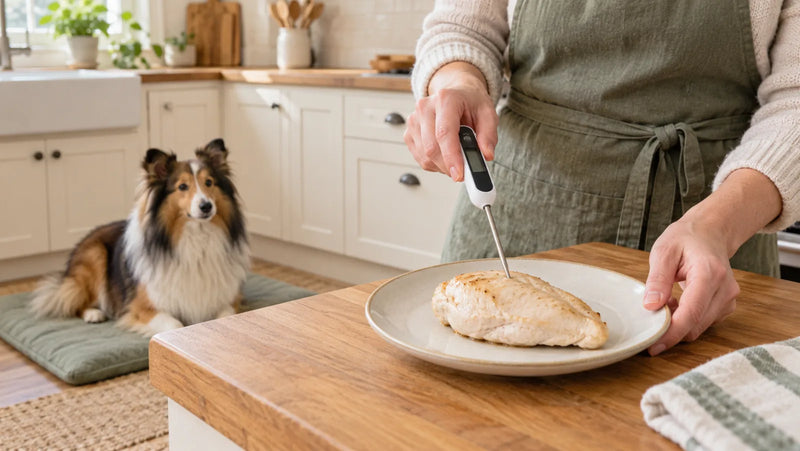

Chicken liver vs beef liver for dogs is not a contest with one universal winner: both can be useful high-value treats, and both need tiny, occasional portions. USDA cooked-food reference data show beef liver much higher in vitamin A, vitamin B12, and copper, while chicken liver is higher in iron and folate. Those differences can guide a choice, but they do not turn a 100-gram human-food record into a dog serving.
For casual treat use, count chicken and beef liver together. A conservative routine for a healthy adult is one or two tiny liver servings on separate days per week unless a veterinarian has balanced a different amount into the complete diet. Changing species does not reset the vitamin-A total, erase calories, or make liver unlimited.
Chicken liver vs beef liver for dogs: the quick answer
Choose from the whole situation, not one nutrient headline:
- Choose plain cooked chicken liver when the dog tolerates chicken, the owner can cook and refrigerate it safely, and a soft high-aroma piece fits the job.
- Choose a clearly labeled beef-liver treat when the dog tolerates beef and a dry, shelf-stable, countable training piece is more practical.
- Choose neither when the dog has a conflicting allergy, prescription diet, copper restriction, liver disease, pancreatitis history, unusually tight calorie allowance, or another veterinarian-set limit.
- Rotate only inside one shared liver allowance. Protein rotation is not a license for twice as much organ meat.
- Use preference as data. The best training reward is the smallest compatible piece the individual dog values—not whichever animal species wins an internet ranking.
This article owns that comparison and decision. For the broad safety question, use our beef-liver safety guide. For poultry-specific cooking and vitamin-A detail, use the complete chicken-liver guide.
Chicken liver vs beef liver nutrition at a glance
The most useful apples-to-apples public reference comes from two USDA FoodData Central SR Legacy records. Record 171061 covers chicken liver cooked by simmering; record 168626 covers beef liver cooked by braising. Values below are per 100 grams of the cooked food.
| Nutrient per 100 g | Chicken liver, simmered | Beef liver, braised | Comparison |
|---|---|---|---|
| Energy | 167 kcal | 191 kcal | Both are calorie-bearing foods, not free rewards |
| Protein | 24.46 g | 29.08 g | Both are protein-rich in this reference |
| Total fat | 6.51 g | 5.26 g | The database does not prove every beef product is lower-fat |
| Iron | 11.63 mg | 6.54 mg | Chicken is higher here; neither is anemia treatment |
| Folate | 578 µg | 253 µg | Chicken is higher in this cooked comparison |
| Vitamin A, RAE | 3,981 µg | 9,442 µg | Both are concentrated; beef is markedly higher here |
| Vitamin B12 | 16.85 µg | 70.58 µg | Beef is markedly higher in this record |
| Copper | 0.496 mg | 14.283 mg | Beef is far higher here; medical copper limits matter |
One hundred grams is a database comparison unit, not a suggested dog portion. It would be an enormous liver serving for many dogs. The records also use different cooking methods, and moisture loss can change nutrient concentration. Raw grocery liver, home-cooked liver, dehydrated pieces, and a finished freeze-dried product must not be treated as identical by weight.
Use the table to understand direction, not to prescribe grams. For a packaged treat, the actual ingredient list, calorie statement, guaranteed analysis, format, feeding directions, storage instructions, lot information, and manufacturer controls outrank a generic food record.
What the nutrient differences mean—and do not mean
Vitamin A makes both livers occasional foods
Preformed vitamin A is essential and fat-soluble, which means the body can store it. Liver's concentration is useful in a properly balanced diet and is also the reason a handful is a poor casual serving. In the USDA comparison, beef liver contains more than twice the vitamin A RAE of chicken liver, but chicken liver is still highly concentrated.
The Merck Veterinary Manual's small-animal nutrition chapter states that feeding only liver can cause vitamin A toxicity and that dogs eating complete-and-balanced food are unlikely to need casual nutrient correction. Merck also notes that toxicity is uncommon in dogs compared with cats; “uncommon” is not a reason to feed repeated unmeasured liver.
The total matters: main food, chicken liver, beef liver, other organ treats, cod-liver oil, multivitamins, and fortified supplements can all contribute. A dog does not process Monday's chicken liver and Saturday's beef liver as unrelated nutrient events.
Beef liver's copper and B12 concentration needs context
The beef record is far higher in copper and vitamin B12. That does not make it a universal “energy” or coat supplement. It means a dog with copper-associated liver disease, an individualized low-copper diet, or unexplained liver abnormalities should not receive beef liver based on a general blog comparison.
Vitamin B12 status is a clinical question when a dog has malabsorption, pancreatic disease, chronic intestinal disease, or an inherited problem. Feeding a concentrated ingredient cannot diagnose or reliably correct the cause. The veterinary team may need blood testing and a controlled treatment form rather than a liver treat.
Chicken liver's iron and folate do not make it anemia treatment
The chicken record contains more iron and folate than the beef record. That still does not tell us why a dog is anemic, whether iron is deficient, whether the intestine can absorb it, or whether adding liver is safe. Blood loss, immune disease, chronic inflammation, kidney disease, parasites, toxins, and many other problems require different care.
Use “contains iron and folate” as a composition statement. Do not convert it into “builds blood,” “treats anemia,” or “fixes fatigue.” A pale, weak, rapidly breathing, collapsing, or unusually tired dog needs veterinary evaluation, not a liver taste test.
Taste and training value
Preference is individual, not a species ranking
Both chicken and beef liver have a strong aroma that many dogs value. One dog may work harder for soft cooked chicken; another may prefer the smell or crunch of freeze-dried beef; a third may refuse both. Past exposure, freshness, texture, temperature, mouth comfort, hunger, and the training environment all influence the result.
Run a calm preference check only when both foods are medically compatible. Offer equally tiny pieces on separate repetitions, not two bowls to gulp. Note response speed, chewing comfort, stomach tolerance, and whether the reward is easy to deliver. The winner is the one that works at the smallest safe portion without causing digestive or diet problems.
Texture and format change the training job
Plain cooked chicken liver is soft and easy to chop very small, which can suit dogs with sound diets but limited chewing comfort. It can also smear, spoil, and transfer residue to fingers or a treat pouch. It needs cooking, cooling, prompt refrigeration, and time-limited use.
Freeze-dried beef liver is dry, lightweight, and easy to count or break, which can make it useful for recall, grooming cooperation, or a few difficult repetitions. Dry does not mean calorie-free or unlimited, and freeze-dried does not mean “no pathogen controls needed.” Evaluate the actual product label and company.
For an easy behavior the dog already knows, kibble or a lower-value compatible reward may be enough. Save liver for moments where its value matters, then make each piece smaller rather than increasing the total amount.

Cost and convenience
Chicken liver often appears as an inexpensive refrigerated grocery item, while prepared freeze-dried beef liver carries processing and packaging costs. That observation is not a permanent price rule. Region, source, pack size, sales, cooking yield, moisture removal, shipping, and waste can reverse a simple sticker-price comparison.
Compare cost per usable tiny reward:
- Start with purchase price and usable weight. Remove packaging, liquid, connective waste, and pieces the dog cannot use.
- Add preparation cost. Include cooking time, energy, cleaning, cooling, chopping, and safe containers.
- Account for water. Fresh and cooked foods contain more moisture, while freeze-drying makes price per ounce look higher because much of the water is gone.
- Count storage loss. Refrigerated liver may spoil before it is used; a correctly stored packaged product may reduce waste.
- Divide by safe servings, not handfuls. A product that breaks into many tiny effective rewards can cost less per training moment than its bag price suggests.
Convenience also has value. A person who cannot safely prep raw poultry should not choose chicken liver merely because a store price is lower. A dog that cannot eat beef should not receive it because the bag stores well. Compatibility comes before economics.
How much chicken or beef liver can a dog eat?
Use one combined liver allowance
For casual treats in a healthy adult, use one or two tiny liver servings on separate days per week as a conservative risk-reduction routine. This is not a universal nutrient prescription. A “serving” means the dog-specific tiny amount already approved—not one whole liver, one slice, one handful, or the full 10% treat-calorie budget.
If chicken liver is served Tuesday and beef liver Saturday, that is two liver occasions. Do not add two more beef-liver days because the animal species changed. Use less or skip liver when the main food, another treat, a topper, or a supplement already contains liver or substantial vitamin A.
Use the existing portion guides for the numbers
This comparison does not take over the amount intent. Our beef-liver portion guide by size owns the practical beef amount and frequency question. The chicken sibling owns the poultry first-serving framework. Both emphasize tiny starting portions and veterinary guidance rather than a fabricated grams-per-pound formula.
Piece counts are not portable between formats. A moist cooked cube and a dry freeze-dried piece can have different weights, water content, calories, and nutrient density. Use the actual label or weighed home recipe, the dog's calorie target, and the veterinarian's instructions.
Count the main food, all treats, and supplements
All treats and extras generally stay within about 10% of daily calories for a healthy dog, leaving at least 90% for complete-and-balanced food. That is a calorie ceiling, not permission to fill the full allowance with liver. Micronutrient concentration creates a separate reason to use much less.
- Review the main food ingredient list and nutritional adequacy statement.
- List every liver treat, organ blend, topper, cod-liver oil, multivitamin, and fortified supplement.
- Count training pieces before the session instead of estimating afterward.
- Use a smaller portion when more than one source contributes.
- Ask the veterinarian or board-certified veterinary nutritionist to calculate regular liver in a homemade diet.
Can dogs rotate chicken and beef liver?
A dog that tolerates both proteins can rotate them, but rotation is optional. It has not been shown to prevent food allergy, and broad casual rotation can make a future food history harder to interpret. Consistency may be more useful than variety for a dog with a sensitive stomach.
If the veterinary team approves two liver occasions per week, one practical pattern is one tiny chicken-liver serving on one day and one tiny beef-liver serving several days later. Another is to use only one species for a week and switch the next week. Keep the total the same, introduce one format at a time, and record any reaction.
Do not rotate during a prescription or elimination diet. A single unauthorized bite of chicken or beef can invalidate the trial. Do not use rotation to challenge a suspected allergy at home; the veterinarian decides when and how a controlled challenge happens.
Which liver fits which dog?
| Dog or household situation | Better next step | Why |
|---|---|---|
| Healthy adult, chicken-tolerant, owner can prep safely | Tiny plain cooked chicken-liver trial may fit | Soft texture and low-cost home prep can be practical |
| Healthy adult, beef-tolerant, needs countable shelf-stable rewards | Evaluate a labeled freeze-dried beef-liver treat | Dry pieces can be easier to carry and divide |
| Known chicken allergy or chicken-free trial | Skip chicken; ask before beef | Beef is a different protein, but diet-trial rules still control |
| Known beef allergy or beef-free trial | Skip beef; ask before chicken | Protein compatibility outranks convenience |
| Copper-associated liver disease or copper restriction | Do not self-select either; ask the veterinary team | Beef liver is especially copper-dense in the USDA reference |
| Pancreatitis, hyperlipidemia, or prescribed low-fat plan | Use a veterinarian-approved alternative | Generic cooked-food fat data cannot approve an individual treat |
| Puppy, pregnancy, nursing, or homemade diet | Get formulation guidance | Growth and reproductive nutrition leave less room for guessing |
| Dog dislikes or cannot tolerate both | Choose another compatible reward | Liver is optional |
Preparation and label safety still decide the answer
For home-prepared chicken liver, choose food-grade liver, prevent raw-poultry cross-contamination, cook it plain, and verify 165°F in the thickest pieces. The USDA/FoodSafety.gov temperature chart places poultry giblets at 165°F. Cool, chop tiny, refrigerate promptly, and discard anything with an uncertain time-temperature history.
The AVMA policy on raw or undercooked animal-source protein supports cooking, pasteurization, or another validated process that reduces or eliminates pathogenic contaminants. Raw chicken or beef liver is not the conservative household-treat choice, and freezing or casual home dehydration is not sterilization.
For a packaged beef-liver treat, check:
- the exact ingredient list rather than assuming every liver bag contains only liver;
- calories and piece variability so a training count can be planned;
- lot code, best-by date, seal, storage directions, and recall information;
- manufacturer sourcing and pathogen-control answers; and
- the dog's protein, fat, copper, calorie, and medical compatibility.
Never serve liver cooked with onion, garlic, leek, chive, salt, butter, oil, gravy, stock, alcohol, breading, or a seasoning blend. Picking a piece out of pâté or gravy does not return it to plain liver.
What if a dog eats too much liver?
A single large theft more often raises immediate concerns about rich-food stomach upset, packaging, raw-food exposure, or toxic seasonings than it proves vitamin A toxicity. Chronic vitamin-A oversupply is usually a repeated-pattern concern. Both situations deserve a fact-based response rather than a home diagnosis.
- Identify the liver. Chicken, beef, raw, cooked, freeze-dried, mixed organ, pâté, or seasoned dish.
- Estimate the amount and time. Photograph the remaining food and keep the bag, label, recipe, or receipt.
- List every added hazard. Include onion, garlic, fat, salt, alcohol, supplements, wrappers, absorbent pads, and oxygen absorbers.
- Call for individual advice. Give the veterinarian the dog's weight, health conditions, symptoms, and current diet and supplements.
- Watch for urgent signs. Repeated vomiting or diarrhea, severe lethargy, weakness, abdominal pain or swelling, inability to keep water down, tremors, breathing trouble, or collapse needs prompt care.
Do not induce vomiting or give peroxide, salt, oil, milk, bread, activated charcoal, or another remedy unless a veterinary professional specifically directs it. A swallowed package or oxygen absorber changes the incident and should be mentioned immediately.
Frequently asked questions
Is chicken liver healthier than beef liver for dogs?
Not universally. Chicken is higher in iron and folate in the cited cooked-food records; beef is higher in vitamin A, B12, copper, and protein. The best choice depends on the dog's full diet, protein tolerance, medical limits, portion, format, and the job the treat needs to do.
Is beef liver better for dog training?
A dry freeze-dried beef-liver piece can be easier to carry and count than home-cooked chicken liver, but that is a format advantage, not proof beef is more motivating. Test only compatible tiny pieces and let the dog's response, digestion, and diet determine the useful reward.
Can dogs eat chicken and beef liver in the same week?
Some healthy adult dogs can, but count both inside one combined liver allowance. One tiny serving of each on separate days already uses two liver occasions. Dogs with medical or diagnostic diets need veterinary approval.
Which liver has more vitamin A?
USDA's cooked braised beef-liver record reports 9,442 µg RAE per 100 g, compared with 3,981 µg RAE for cooked simmered chicken liver. Both are concentrated, and those human-food database units are not dog serving recommendations or finished-product analyses.
Can puppies eat chicken or beef liver?
A puppy may be able to tolerate a tiny fully cooked or properly produced compatible liver treat, but growth food must remain complete and balanced. Ask the veterinarian first; do not improvise organ percentages or vitamin doses during growth.
Choose by the dog, then keep the portion tiny
Chicken liver offers a soft home-prepared option and, in the USDA reference, more iron and folate. Beef liver offers a different protein and, in a freeze-dried format, a dry countable training tool—but the reference also shows much greater vitamin A and copper concentration. Neither profile earns unlimited feeding. For where liver sits among the other organs, see our guide to organ meats for dogs.
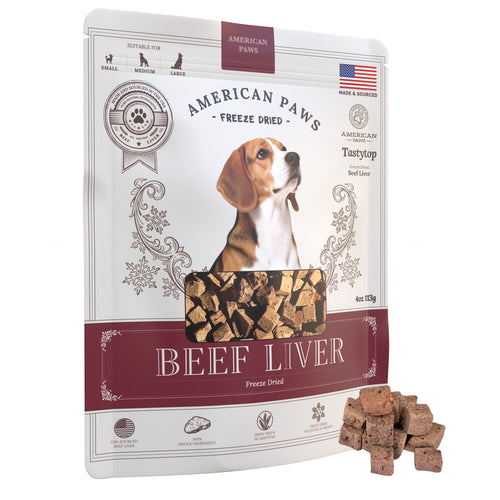
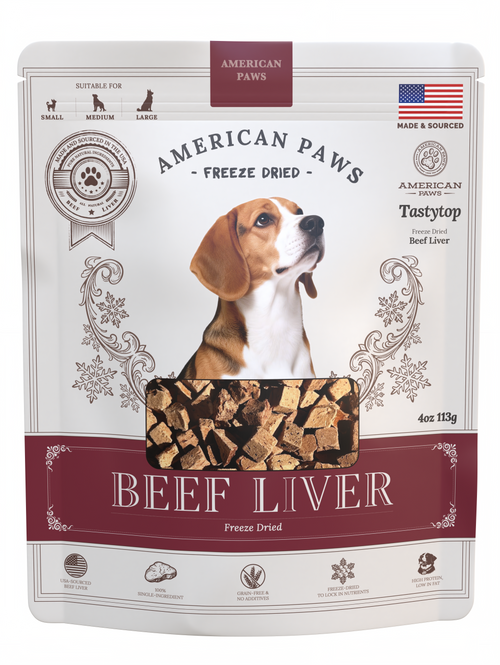
American Paws does not currently sell chicken liver. For a beef-tolerant dog whose diet allows liver, our single-ingredient freeze-dried beef-liver training treats use 100% USA beef liver and can be broken into small rewards. Review the label and the dog's full diet before serving. You can also browse all current American Paws dog treats for a different compatible protein or texture. The safest comparison ends with the individual dog—not a generic winner.