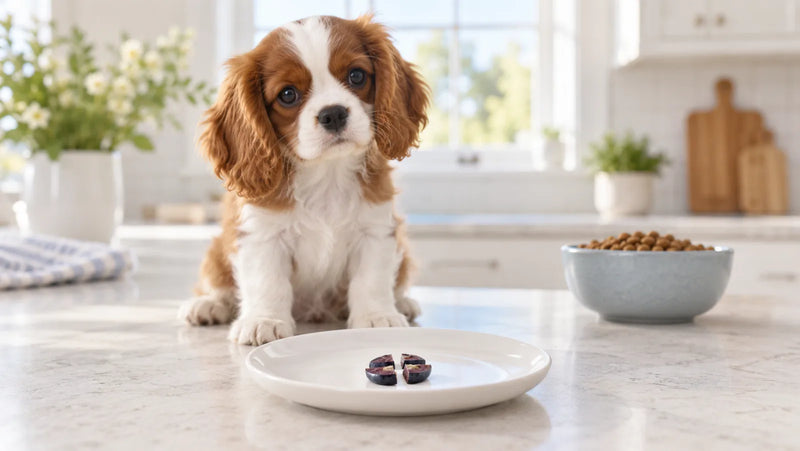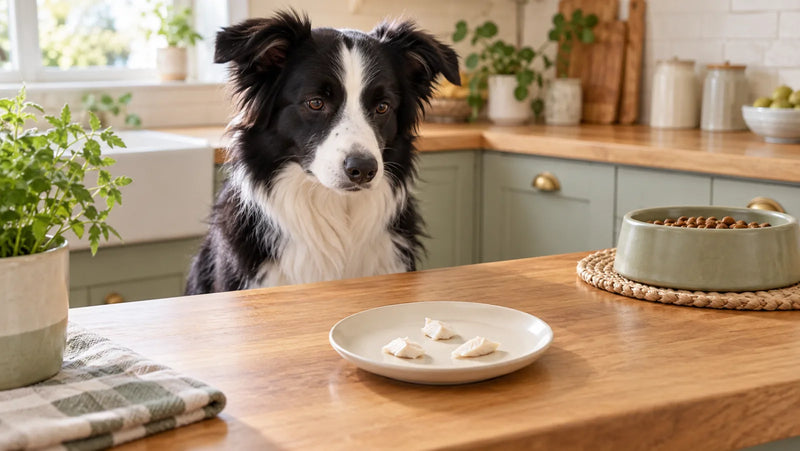

How much beef liver can a dog eat? For most dogs, the safe answer is small amounts: keep all treats, liver included, under about 10% of daily calories, and use liver a couple of times a week rather than as a daily staple. Liver is rich in vitamin A, so a little can be useful and a lot can be too much.
That usually means one or two tiny pieces for a small dog, a few tiny pieces for a medium dog, and several small training-size pieces for a large dog. Exact amounts depend on your dog's size, diet, health, and activity level, so use this as a practical starting point and ask your veterinarian if your dog has special needs.
How much beef liver can a dog eat?
Beef liver should be treated as a high-value reward, not a bowl ingredient you measure by the handful. The easiest framework is the 10% treat rule: treats should generally make up no more than about 10% of your dog's daily calories. The other 90% should come from complete and balanced food.
Within that treat allowance, liver should still be only a small part because it is nutrient-dense. You can use it for training, recall, grooming cooperation, or difficult distractions, but you do not need much. If your dog will work for a pea-size piece, there is no benefit to feeding a large cube.
Why moderation matters
Liver is valuable because it is naturally rich in vitamin A, iron, vitamin B12, and copper. That same density is why moderation matters. Vitamin A is fat-soluble, meaning the body stores it. VCA Animal Hospitals explains that vitamin A is important but excessive intake can become unsafe, especially when multiple sources add up.
This does not mean beef liver is dangerous when fed sensibly. It means liver should be portioned like a rich treat. A small amount gives you the aroma and reward value dogs love. Too much can add unnecessary calories and too much vitamin A over time.
A rough guide by dog size
Use the following as a starting point, not a prescription. If your dog's regular food already includes organ meats, if your dog is very small, or if your dog has a medical condition, ask your veterinarian for a more specific amount.
Small dogs under 20 lb: start with one tiny piece, about pea-size or smaller, once or twice a week. Break freeze-dried pieces smaller if needed.
Medium dogs 20-50 lb: a few tiny pieces per session may be enough. Keep liver for higher-value moments instead of using it for every easy repetition.
Large dogs over 50 lb: several small pieces can fit some training sessions, but do not turn liver into a handful snack. Count pieces, keep sessions brief, and stay within the daily treat allowance.
If you train often, make each piece smaller rather than increasing total liver. Dogs respond to timing and value more than volume.
How often can dogs eat beef liver?
For most healthy adult dogs, beef liver works best as an occasional treat a couple of times a week. Some dogs may tolerate tiny pieces more often, but daily liver is rarely necessary. If you want to use liver frequently, keep each piece extremely small and rotate with lighter rewards.
Think of liver as your premium reward. Use it when the job is difficult: coming when called outside, ignoring a distraction, holding still for brushing, or learning a new skill. Use regular kibble or a lighter treat for easy known behaviors.
How freeze-dried liver makes portioning easy
Fresh liver can be messy and hard to portion consistently. Cooked liver requires prep, cooling, storage, and cleanup. Freeze-dried liver is easier: the pieces are dry, lightweight, shelf-stable, and simple to count.
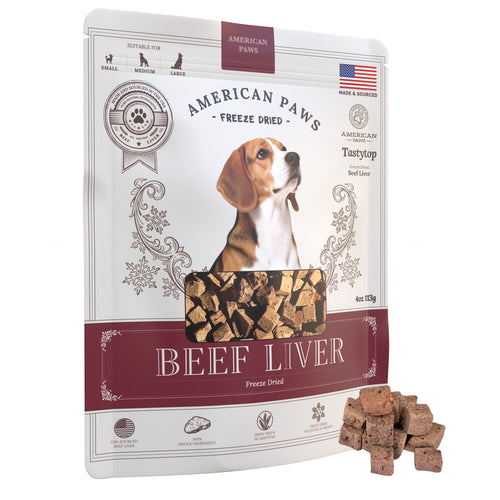
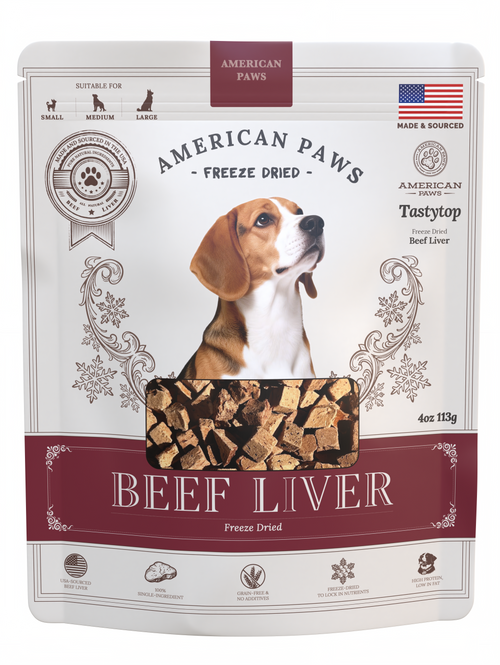
American Paws freeze-dried beef liver training treats are made from single-ingredient USA beef liver in a USDA-inspected facility in Highland, California. The pieces are naturally training-size, and you can break them smaller for tiny dogs or long sessions.
Freeze-dried does not remove the need for moderation. It simply makes portion control easier because you can count and split pieces instead of guessing from a cooked slab.

How to start
Start smaller than you think. Give one tiny piece on a normal day, not on a day when your dog is already trying several new foods. Watch for normal stool, appetite, and energy. If everything looks normal, you can use liver again in small amounts.
If your dog gets loose stool, stop and give the stomach time to settle. The issue may be the amount, the richness, or the speed of introduction. When you try again, use a smaller piece and feed it less often.
Also remember total calories. If you use liver during a longer training session, reduce other treats that day. Treats add up quickly, especially for small dogs.
Signs you may be feeding too much liver
The most immediate sign is digestive upset: loose stool, gas, or vomiting after eating rich treats. Another sign is treat creep, where a few tiny rewards slowly become a large daily snack. Over time, too many treats can contribute to weight gain and unbalanced nutrition.
Vitamin A excess is not something to diagnose at home, and it is not usually about one tiny treat. The concern is repeated overfeeding or stacking multiple high-vitamin-A sources without guidance. If your dog has symptoms that worry you, or if you have been feeding liver heavily, call your veterinarian.
Which dogs should eat less liver?
Puppies, pregnant dogs, senior dogs, very small dogs, dogs on prescription diets, and dogs with liver disease, kidney disease, pancreatitis, or other health conditions should have liver only with veterinary guidance. Their needs can be different from a healthy adult dog's needs.
If your dog already eats a diet that includes organ meats, be more conservative with liver treats. The goal is not to duplicate nutrients; the goal is to use a small, exciting reward when it helps.
How this fits the beef liver cluster
This article is the portion guide. If you want the nutrition angle, read our guide to the benefits of beef liver for dogs. If you want the raw vs cooked safety answer, read can dogs eat beef liver. To compare products, browse the American Paws beef collection.
Keeping each guide focused helps you get a clearer answer: benefits, safety, and amount are related, but they are not the same search intent.
Frequently asked questions
How much beef liver can a dog eat per day?
Most dogs do not need beef liver every day. If you use it on a given day, keep it within the general treat allowance of under about 10% of daily calories and use tiny pieces.
How often can dogs eat beef liver?
A couple of times a week is a practical rhythm for many healthy adult dogs. Dogs with health conditions need veterinary guidance.
Can too much liver hurt a dog?
Yes. Too much liver can add too many calories and too much vitamin A over time. If your dog ate a large amount or seems unwell, contact your veterinarian.
How much liver can a puppy eat?
Ask your veterinarian first. Puppies need complete growth nutrition, and treats should be limited to very small pieces.
Is freeze-dried beef liver easier to portion?
Yes. Freeze-dried pieces are dry, countable, and easy to break smaller, which makes portion control simpler than with fresh liver.
Keep liver small and useful
Beef liver is best when it is treated like a powerful tool: small, occasional, and valuable. Use tiny pieces, count them, rotate rewards, and keep the 10% treat guideline in mind. That gives your dog the flavor and motivation of liver without turning a nutrient-dense treat into too much of a good thing.