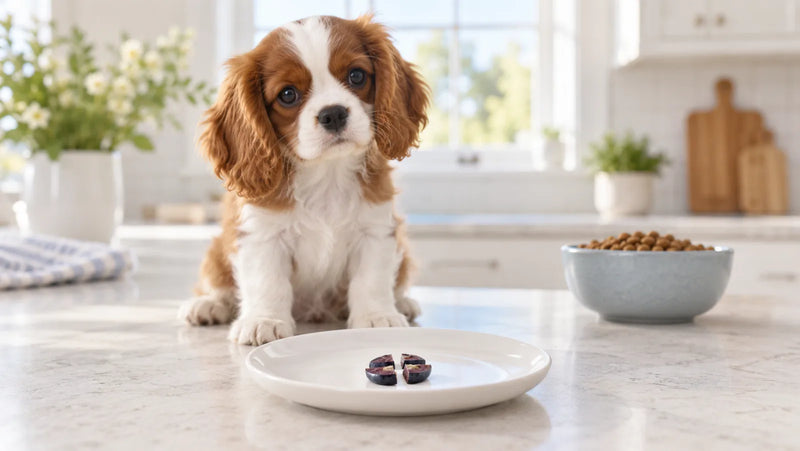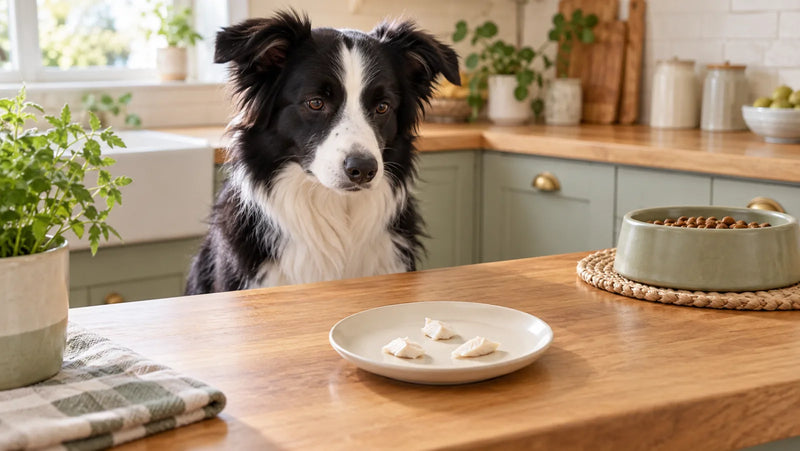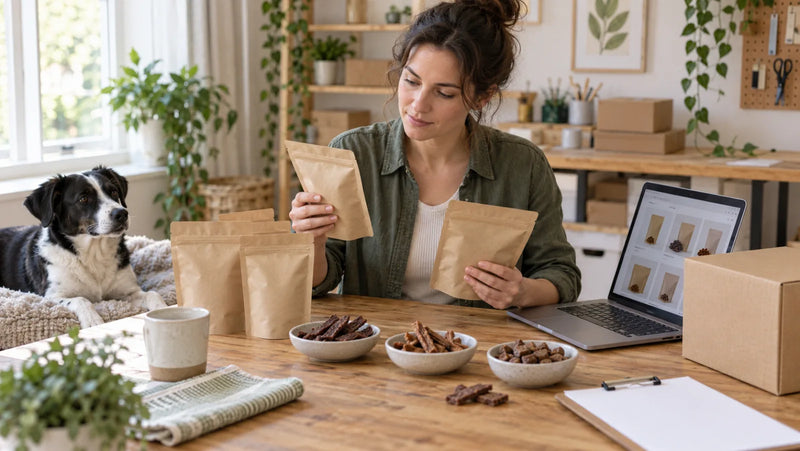

The best dog safe Halloween treats are simple, familiar to your dog, and measured before the first guest arrives. Plain pumpkin mini biscuits, tiny pieces of single-ingredient chicken, or part of your dog's regular food can make the night feel special without sharing from the candy bowl. Count every reward, topper, and chew together; treats should generally provide no more than 10% of daily calories.
A festive plan does not need a themed box or a mountain of snacks. Choose one small reward for repeated moments, one optional seasonal bite, and—only if it suits your dog—one supervised quiet-time chew. Then put the whole evening's allowance in one cup so the family can see when it is gone.
The Best Dog Safe Halloween Treats Start With a Plan
Halloween changes the setting, not the rules of good feeding. Before choosing a treat, ask four questions:
- Has my dog eaten this ingredient before? A crowded, noisy night is a poor time to test a new protein, rich food, or unfamiliar recipe.
- Can I divide it into small rewards? Doorbell practice may take many repetitions. A tiny piece gives the moment without spending the calorie budget at once.
- Can I verify every ingredient and the calories? Front-of-bag holiday art is not a feeding guide. Use the complete label and current package information.
- Will participation actually feel good to my dog? A dog who hides, guards food, startles at costumes, or rushes the door needs distance and calm more than another snack.
Dogs with food allergies, pancreatitis, diabetes, kidney disease, a prescription diet, a veterinary weight-loss plan, or an elimination trial need an individual answer from their veterinary team. For them, the safest Halloween reward may be measured kibble taken from dinner.
Treat choice is only one part of the evening. Use our full Halloween safety plan for dogs for door management, costumes, decorations, identification, and a secure quiet space.
Three Ways to Build a Dog-Friendly Halloween Treat Menu
Think in jobs rather than flavors. Repeated rewards should be tiny, a seasonal biscuit should be planned, and a chew should support calm time—not circulate among party guests.
Tiny rewards for doorbell practice and party manners
Use the smallest useful reward for coming away from the door, settling on a mat, checking in with you, or entering a quiet room. Regular kibble works well for many dogs. For a higher-value option, a light freeze-dried chicken piece or a strip of jerky can be broken into many small rewards.
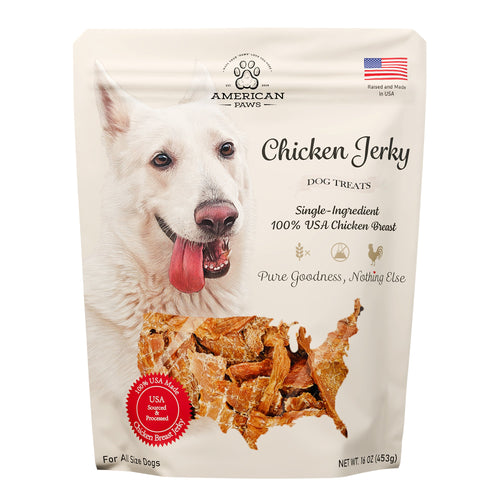
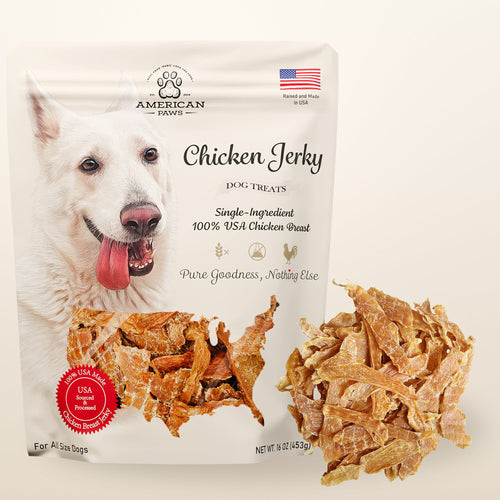
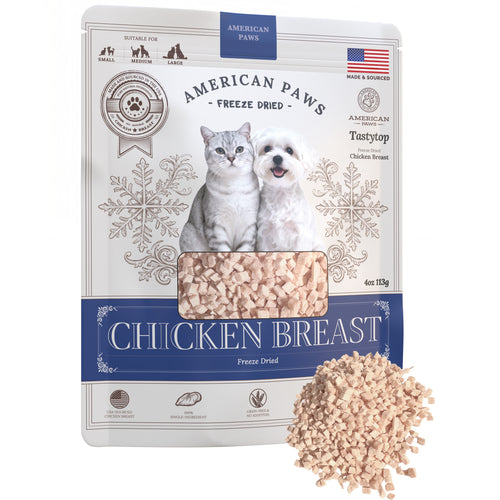
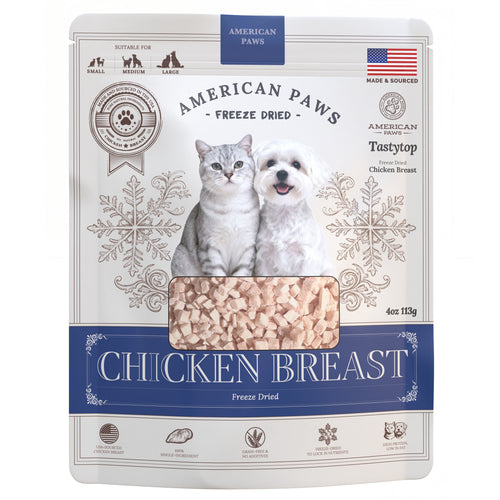
American Paws Chicken Breast Freeze-Dried Treats list one ingredient—100% USA chicken breast—and approximately 5 calories per piece. The light texture is easy to crumble, so one listed piece can become several reward moments. Our Chicken Breast Jerky also lists 100% USA chicken breast and approximately 15 calories per whole treat; tear a strip into dog-appropriate pieces before the activity begins.
Those numbers are package approximations, not a universal serving. Recheck the current label, and remember that breaking a treat changes the piece size but not its total calories.
One seasonal pumpkin mini biscuit
A small homemade biscuit adds an autumn note without borrowing ingredients from human desserts. Use 100% plain pumpkin puree—not sweetened or spiced pumpkin pie filling—and peanut butter only after checking the entire label for xylitol and its alternate names.
The FDA warns that xylitol is toxic to dogs and may also be called birch sugar or wood sugar. If the label is unclear, leave that jar out of the recipe. A familiar dog-safe seed butter or a veterinarian-approved alternative may work for an individual dog, but substitutions change texture and should not be improvised for a dog with dietary restrictions.
A supervised chew for quiet time
A chew is a separate activity, not a handful of party treats. American Paws Dehydrated Chicken Feet list 100% USA chicken feet and approximately 30 calories per foot. Because this is a bone-containing chew, it requires direct supervision, an appropriate chewer, and a calm location away from children, visiting dogs, and foot traffic.
Do not cut or snap a dehydrated chicken foot into sharp party pieces, place feet in a communal bowl, or use one for rapid training repetitions. Skip it for dogs who gulp, compete, guard resources, have dental limitations, or have been told to avoid bone-containing chews. If the chew does not fit the individual dog, choose a familiar enrichment toy with measured regular food instead.

A Small-Batch Pumpkin Biscuit Recipe
This half batch makes it easier to create genuinely small biscuits. It uses the same simple formula as our full homemade pumpkin dog treat recipe, where you can find expanded storage and portion guidance.
Ingredients:
- 1 cup all-purpose flour
- 1/2 cup 100% plain pumpkin puree
- 1/4 cup smooth peanut butter verified free of xylitol, birch sugar, wood sugar, and birch bark extract
Method:
- Heat the oven to 375°F and line a baking sheet.
- Mix the flour, pumpkin, and checked peanut butter into a workable dough. Add a small dusting of flour only if needed for rolling.
- Roll to about 1/4 inch thick. Cut very small shapes with a mini cutter or a clean knife; uniform size makes later portioning easier.
- Bake for about 12 minutes, until set. Oven performance and cutter size vary, so watch the first tray rather than treating the clock as a guarantee.
- Cool completely before offering one. Refrigerate or freeze according to the full recipe's guidance, and discard any biscuit with moisture damage, mold, or an off smell.
Do not add chocolate, raisins, nutmeg, sugar-free sweetener, frosting, candy pieces, or pumpkin-pie spice. “Homemade” does not make a biscuit calorie-free, and the flour, pumpkin, and peanut butter still count toward the same daily treat allowance.
How Much Can Your Dog Have on Halloween?
The World Small Animal Veterinary Association advises that treats generally stay under 10% of a dog's daily calories so the complete main diet can provide the large majority of nutrition. Ten percent is a ceiling, not a target, and some medical or weight plans allow less.
Start with the daily calorie target set for your dog—not a generic number from body weight alone. Multiply that target by 0.10, then subtract every non-meal extra planned for the day. Training rewards, mini biscuits, chews, toppers, samples from family, and food placed in an enrichment toy all draw from that one total.
| Halloween job | Portion strategy | What to count |
|---|---|---|
| Repeated doorbell practice | Use kibble or break one low-calorie treat into many tiny rewards. | The full original piece, even when divided. |
| Seasonal photo or calm check-in | Offer one small pumpkin biscuit after the dog settles. | The entire biscuit recipe portion. |
| Quiet-time activity | Use a familiar food toy or one appropriate supervised chew. | Everything loaded into the toy or the full chew. |
| Guest interaction | Guests take only from the pre-measured cup after asking. | Every piece, including “just one more.” |
Our daily treat-calorie budget explains the math in more detail. If the package does not list calories, contact the maker or choose an option you can measure. Do not create a piece allowance by appearance; a light freeze-dried crumb, a dense biscuit, and a bone-containing chew are not equivalent.
The Treat-Captain System for Parties and Trick-or-Treating
The easiest way to prevent accidental overfeeding is to give one adult control of one pre-measured container. That person is the treat captain for the evening. No second bowl, no backup pocket, and no refills unless the captain deliberately reallocates food from the dog's planned meal with veterinary guidance.
Pre-measure the entire evening's allowance
Before the doorbell starts, break jerky or freeze-dried pieces to the size you intend to use and place the complete allowance in a small cup. Keep the original bag closed and out of reach. If a pumpkin biscuit or chew is planned, count it first and put fewer training rewards in the cup.
A useful visual rule is simple: when the cup is empty, the treat portion of the event is over. Praise, a sniff break, play, or calm attention can take over without adding calories.
Give guests one clear script
Tell every guest the same thing: “Please ask me first, and give her only one piece from this bowl—no candy or table food.” For children, the adult treat captain should hand over one approved piece only if the dog is relaxed and comfortable. Nobody should reach into a dog's space, tease with food, or feed an unfamiliar dog without the owner's permission.
If several visitors want a turn, have them reward one simple behavior while you supervise, or say the dog has finished the evening's snacks. A clear limit is kinder than managing stomach upset after the party.
Know when participation should become quiet time
The ASPCA recommends keeping pets away from the busy front door and providing a secure space. Repeated barking, pacing, pinned ears, hiding, trembling, guarding, refusal of a familiar treat, or frantic grabbing are signs to stop the social activity rather than offer richer food.
Move the dog to a quiet, secure room with water, comfortable bedding, and a familiar enrichment option. The AKC also emphasizes supervision and a calm area during Halloween activity. Joining in can mean resting safely while the household celebrates.
Which American Paws Treat Fits the Job?
Choose by function, ingredient fit, and calorie budget—not by the biggest-looking reward. These facts come from the current live product listings and should be rechecked on the package you receive.
| Option | Verified listing facts | Best Halloween role | Important limit |
|---|---|---|---|
| Chicken Breast Freeze-Dried Treats | 100% USA chicken breast; approximately 5 kcal per piece. | Crumble one piece into tiny high-value rewards. | Keep dry, size pieces for the dog, and count the whole original piece. |
| Chicken Breast Jerky | 100% USA chicken breast; approximately 15 kcal per treat. | Tear one strip into a planned sequence of rewards. | A whole strip can spend the budget quickly for a small dog. |
| Dehydrated Chicken Feet | 100% USA chicken feet; approximately 30 kcal per foot. | One calm, supervised chew for an appropriate dog. | Bone-containing; not a party tidbit, not for gulpers, and not suitable for every dog. |
Browse the current chicken jerky collection if chicken already agrees with your dog, or see all current American Paws treats to choose another familiar option. No product is appropriate merely because it is single-ingredient; allergies, chewing style, medical needs, and the day's calorie plan still decide.
Keep Candy Separate From the Dog's Celebration
Dog treats belong in their own closed container, handled by the treat captain. Human candy stays in a different closed container on a high surface or behind a secure door. Do not rely on color, wrappers, or a dog-shaped bowl to prevent a mix-up in a busy room.
If your dog gets into chocolate, remove access, keep the wrapper, estimate the amount, and use our dog ate chocolate action guide. For gummies, hard candy, sugar-free products, mixed candy, or swallowed wrappers, follow the Halloween candy triage guide. Xylitol exposure, collapse, tremors, trouble breathing, seizures, repeated vomiting, or other severe symptoms require immediate veterinary or animal-poison-control help. Do not induce vomiting unless a veterinary professional specifically tells you to.
Positive planning and emergency planning can coexist: set out the approved dog cup, lock away the candy, and save your veterinarian's number before the event.
Frequently Asked Questions
Can dogs have pumpkin treats on Halloween?
Many healthy dogs can have a small treat made with 100% plain pumpkin puree and familiar dog-appropriate ingredients. Pumpkin pie filling, frosted cookies, and human pumpkin desserts are different recipes and should not be shared. Count the biscuit's calories, and ask the veterinarian first for a dog on a restricted diet.
Can I give my dog peanut butter on Halloween?
Only after reading the complete label. The peanut butter must be free of xylitol, birch sugar, wood sugar, and birch bark extract, and the individual dog must tolerate its ingredients and fat content. Use the measured recipe amount—not a free-pour spoonful—and skip it when the dietary fit is uncertain.
Are chicken jerky treats good for a Halloween party?
They can be useful when chicken agrees with the dog and the strip is torn into small, pre-counted rewards. Keep the main bag closed so guests cannot hand out whole strips. The same strip divided into six pieces still has the strip's full calories.
Can guests give treats to my dog?
Only with the owner's permission and direct supervision. Let guests use one piece from the pre-measured dog-only cup, then close the interaction. Skip guest feeding if the dog is worried, overly excited, guarding food, jumping at hands, or managing a special diet.
What should I put in a dog Halloween treat bag?
For your own dog, use a small amount of a familiar, clearly labeled treat and keep it in its original packaging until you can preserve the ingredient and calorie information. For someone else's dog, ask the owner before giving food. Allergies and diets are invisible, so an unlabelled homemade assortment is not a safe surprise.
Let the Dog Join In—With One Measured Menu
A good Halloween treat plan is intentionally modest: tiny familiar rewards for the moments that matter, perhaps one small pumpkin biscuit, and an optional supervised chew only when it fits the dog. Pre-measure everything, appoint one treat captain, and let the 10% ceiling cover the whole day—not each guest.
American Paws does not currently sell a Halloween gift box, seasonal bundle, or holiday-only SKU, so there is no imaginary package to chase. Choose a live, clearly described option from our current dog-treat collection, keep the candy locked away, and make calm participation the real celebration.