
Yes—many healthy dogs can eat a small amount of plain, fully cooked chicken liver. Chicken livers for dogs provide protein, iron, and a very concentrated source of vitamin A, so the safest role is an occasional tiny treat rather than a daily bowl ingredient. Cook poultry liver to 165°F, leave it unseasoned, and count it with every other extra your dog receives.
The important caution is not that one tiny taste is poisonous. It is that liver is unusually nutrient-dense, vitamin A is stored by the body, and repeated unmeasured servings can stack on top of the vitamin A already present in complete food, other liver treats, cod-liver oil, and supplements. For casual treat use, one or two tiny servings on separate days per week is a conservative ceiling unless your veterinarian has calculated a different plan.
Chicken livers for dogs: the quick answer
Use this checklist before sharing chicken liver:
- Choose food-grade liver: use fresh or frozen poultry liver sold for human food, with intact packaging and a sound cold-storage history.
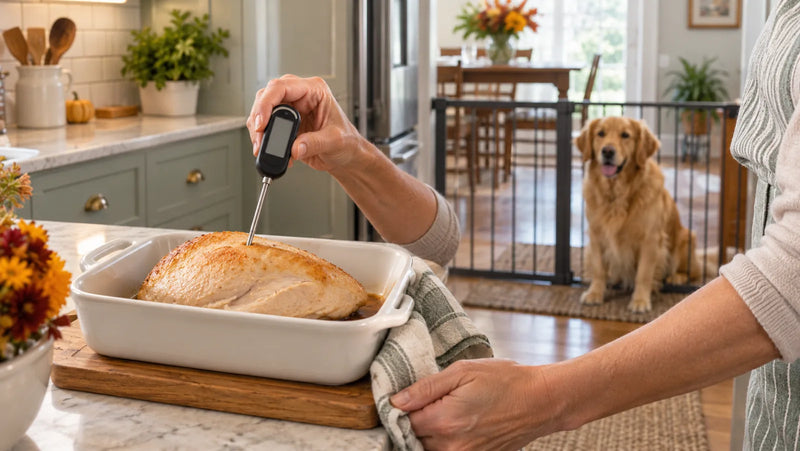
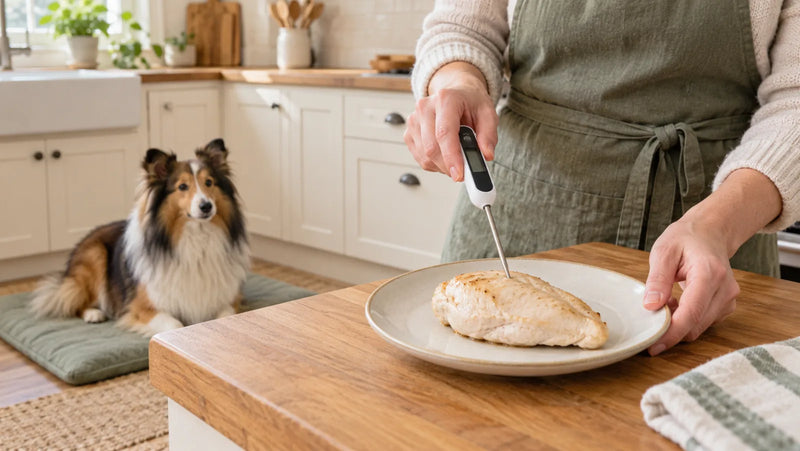
- Cook it completely: poultry giblets should reach 165°F (74°C) at the thickest point on a food thermometer.
- Keep it plain: add no onion, garlic, salt, stock, gravy, butter, oil, breading, or seasoning.
- Make the first serving tiny: finely chop a cooled piece and offer less than you think your dog needs.
- Keep it occasional: for ordinary treat use, stop at one or two small servings on separate days each week.
- Count the whole diet: use less—or skip liver—when the main food, another treat, or a supplement already adds liver or vitamin A.
A dog with a medical condition, a prescription diet, a chicken allergy, or special growth or pregnancy needs should not be assigned a liver amount from a generic chart. The veterinary team needs to consider the complete diet.
Are chicken livers good for dogs?
Chicken liver can be a useful occasional food because a small amount contains substantial nutrition. That does not make it a complete meal or a supplement that every dog needs. A dog already eating complete and balanced food should receive its dependable nutrient balance from that food; liver is an optional extra.
Protein in a compact cooked food
USDA FoodData Central record 171061 for cooked, simmered chicken liver reports about 24.46 grams of protein and 167 calories per 100 grams. Those figures describe a human-food database reference amount, not a recommended portion for a dog. They support the narrower statement that cooked chicken liver is protein-rich and calorie-containing.
Protein supplies amino acids used throughout the body, but adding liver does not prove a dog was protein-deficient. More protein from treats is not automatically better, and a pile of organ meat can displace the complete food that was formulated to provide protein in balance with every other nutrient.
Iron is present, but liver is not an anemia treatment
The same USDA record reports about 11.63 milligrams of iron per 100 grams. Iron participates in normal oxygen transport, so saying chicken liver contains iron is accurate. Telling an owner to treat pale gums, fatigue, blood loss, or suspected anemia with liver is not.
Anemia has many possible causes, and some require urgent treatment. A veterinarian uses an examination and testing to identify the cause. Chicken liver must not replace that diagnosis, prescribed medicine, or a therapeutic feeding plan.
Vitamin A is the benefit and the reason for restraint
USDA's cooked-liver record reports about 3,981 micrograms of vitamin A RAE per 100 grams. Again, 100 grams is not a serving suggestion. It is useful evidence that chicken liver is a concentrated source of preformed vitamin A.
Vitamin A is essential for normal body functions, but it is fat-soluble and stored rather than simply flushed away like excess water. That storage is why a small ingredient can be useful in a formulated diet and why casual repeated oversupply is a poor idea.
Chicken liver is not the same as heart or gizzard
Liver, heart, and gizzard may appear together in a giblet package, but they are different tissues. Liver is a metabolic and storage organ with an unusually high concentration of vitamin A. Heart is working cardiac muscle, while gizzard is a dense muscular part of the bird's digestive tract.
That difference changes both the nutrition and the advice. Our chicken-heart guide explains protein, iron, taurine, texture, and safe preparation without importing liver's vitamin-A limit. Our separate chicken-gizzard guide covers that organ's dense texture, cooking, and portion questions.
Do not use “organ meat” as if it were one interchangeable ingredient. A spoonful of liver, a whole heart, and a sliced gizzard do not deliver the same calories, micronutrients, or chewing experience.
The vitamin A guardrail
Why repeated excess matters more than one tiny taste
The Merck Veterinary Manual's small-animal nutrition reference notes that feeding only liver can cause vitamin A toxicity in dogs and cats. That is a warning against an unbalanced pattern, not a claim that one tiny cooked bite creates chronic disease.
A veterinarian-authored VCA overview of vitamin A poisoning in dogs describes the more common problem as repeated oversupply of vitamin-A-rich liver, cod-liver oil, or supplements over weeks to months. Dogs are less susceptible than cats, but that is not permission to serve unmeasured liver every day.
The practical lesson is simple: do not panic over a crumb, and do not normalize a large recurring portion. Chronic excess can be associated with changes involving appetite, weight, skin and coat, weakness, and painful or limited movement. Those signs are not specific enough to diagnose vitamin A toxicity at home.
Count vitamin A from the whole diet, not liver in isolation
A complete commercial dog food may already include liver, liver flavor, vitamin A supplement, or another ingredient that contributes vitamin A at a formulated level. Treat bags and toppers can add more. Cod-liver oil and human or pet supplements can be especially concentrated.
Read every label before making chicken liver a routine. Our guide to simple dog-treat ingredient labels explains how to identify what a product actually contains. “Natural,” “whole food,” and “single ingredient” do not make a nutrient unlimited.
Never stack chicken liver, beef liver, multiple liver treats, cod-liver oil, and a vitamin A supplement because each item looks small on its own. The combined exposure is what matters.
The 10% treat rule is a calorie ceiling, not a liver target
The World Small Animal Veterinary Association's treat guide says treats and extras should make up no more than 10% of a dog's daily calories. The other 90% or more should come from complete and balanced food appropriate for that dog.
That rule helps protect calorie and nutrient balance, but it does not say that all 10% may safely be filled with liver. Vitamin A concentration is a separate reason to stay far below the calorie ceiling. Liver also shares the allowance with training rewards, dental chews, toppers, table bites, and food used to give medication.
Use our daily dog-treat calorie budget to count all extras together. Treat the calculated allowance as a maximum, not a bowl you need to fill.
How much chicken liver can a dog eat?
Conservative first servings by dog size
The table below gives deliberately small first servings for a healthy dog that already tolerates chicken. These are not daily doses, nutrient prescriptions, or amounts for a homemade diet. Finely chop fully cooked liver so a level spoon reflects food rather than empty space.
| Dog size | Conservative first serving | How to use it |
|---|---|---|
| Under 20 lb | About 1/4 teaspoon finely chopped | Offer once, then watch digestion and comfort |
| 20–50 lb | About 1/2 teaspoon finely chopped | Split into several tiny reward pieces |
| 50–90 lb | About 1 teaspoon finely chopped | Use a few tiny pieces, not one large chunk |
| Over 90 lb | Up to 2 teaspoons finely chopped | A large dog still does not need a handful |
Begin below the table amount for a puppy, senior, dog new to organ meat, or dog with a sensitive stomach—and ask the veterinarian before offering it. If vomiting, diarrhea, itching, facial swelling, marked discomfort, or another reaction appears, stop feeding the food and seek advice.
A practical weekly ceiling for occasional treat use
For casual treat use, offer no more than one or two tiny servings on separate days per week unless the veterinary team has calculated a different amount. Do not double the serving because you skipped a week, and do not call the full daily 10% calorie allowance a liver portion.
If the dog's complete food lists liver, the dog receives another liver treat, or a supplement contains vitamin A, reduce the frequency further or skip homemade liver. Record which family member feeds it so two “tiny” servings do not become four.
This frequency is a conservative household routine, not a universal biological maximum. A veterinarian or board-certified veterinary nutritionist may use a different amount when formulating an entire diet because that professional can calculate calories, vitamin A, copper, calcium, and every other nutrient together.
Why there is no universal liver dose
Whole chicken livers vary in size. Cooking changes water weight. A teaspoon of loose chunks is not identical to a packed teaspoon of paste. Dogs of the same weight can have different calorie needs, and two complete foods can contain different vitamin and organ ingredients.
That is why a chart claiming “one whole liver per X pounds” creates false precision. Use the table only as a cautious introduction, keep the weekly frequency low, and ask the veterinary team to calculate any regular or substantial use.
Can dogs eat cooked chicken liver?
Use food-grade liver and keep raw poultry separate
Choose chilled or properly frozen chicken liver intended for human food. Reject torn, swollen, leaking, slimy, badly discolored, or foul-smelling packages. Thaw frozen liver in the refrigerator, in a leak-proof bag under cold water, or in a microwave only if cooking immediately afterward—not on the counter.
Keep raw juices away from produce, cooked food, utensils, phones, and dog bowls. Do not splash raw poultry around the sink. Wash hands with soap and running water, then clean and sanitize the board, knife, thermometer, counter, and sink area after handling.
Cook plain to 165°F and verify with a thermometer
The federal safe minimum temperature chart places all poultry giblets at 165°F (74°C). Simmer or bake chicken liver without seasoning or added fat, checking several of the thickest pieces with a clean food thermometer.
Color is not a reliable safety test. Liver is dark tissue and may not look like cooked chicken breast. Temperature—not a timer, exterior color, or a guess from texture—is the useful control. After cooking, use clean utensils and a clean plate rather than returning liver to a surface that held it raw.

Cool, cut tiny, refrigerate promptly, and freeze measured extras
Let the cooked liver cool away from the dog, then cut the serving into pieces smaller than the dog's usual reward. Liver is soft and easy to gulp, so supervision and small pieces still matter. It is a food reward, not a chew.
Refrigerate cooked poultry within two hours, or within one hour when the room is above 90°F (32°C). Store it in a shallow covered container and use refrigerated cooked poultry within three to four days. Freeze the rest promptly in tiny labeled portions rather than keeping a large batch in the refrigerator “just in case.”
Discard cooked liver with mold, slime, an unusual odor, or an uncertain time-temperature history. Reheating does not repair spoilage.
Can dogs eat raw chicken liver?
Raw chicken liver is not a chemical poison, but it carries raw-poultry pathogen and cross-contamination risks. Bacteria can move through hands, utensils, counters, bowls, saliva, and stool, and an apparently healthy animal may still expose people or other pets.
The American Veterinary Medical Association's policy on raw or undercooked animal-source protein supports using cooking, pasteurization, or another validated process that reduces or eliminates pathogenic contaminants. For a home-prepared occasional treat, fully cooking plain liver is the clearest conservative choice.
Freezing is not sterilization. Casual home dehydration does not prove pathogen control either. A commercial freeze-dried liver product should be evaluated by its complete label, manufacturing controls, calorie statement, storage directions, and lot information—not by assuming “freeze-dried” means germ-free.
Seasoned liver, gravy, pâté, and mixed dishes are not plain liver
Liver from giblet gravy, stuffing, pâté, restaurant plates, skewers, or fried dishes may carry ingredients that create separate risks. Onion, garlic, leek, and chive are unsafe for dogs. Salt, butter, oil, rich gravy, alcohol, breading, and seasoning blends add calories or compounds a dog does not need.
Picking one liver piece out of gravy does not remove absorbed fat, salt, or seasoning. Prepare a separate plain piece from the start or choose a different reward. Do not serve wooden skewers, toothpicks, foil, absorbent pads, or the plastic bag sometimes found inside a whole poultry cavity.
Which dogs need veterinary guidance or a different treat?
Ask before adding chicken liver for:
- dogs with liver or kidney disease, copper-storage concerns, or another condition with individualized nutrient limits;
- dogs with a history of pancreatitis, high blood lipids, obesity, or repeated digestive upset;
- dogs receiving vitamin A, cod-liver oil, multivitamins, several fortified treats, or a homemade diet;
- dogs on prescription, elimination, limited-ingredient, or veterinarian-formulated food;
- dogs with chicken allergy or intolerance;
- dogs with dental pain, swallowing difficulty, or a history of gulping;
- puppies, pregnant or nursing dogs, and dogs with unusual growth or reproductive needs; and
- dogs whose main food already uses substantial liver or organ ingredients.
“Tiny” does not override an elimination trial or prescription diet. An unauthorized chicken bite can invalidate a food trial even when its calories are negligible.
What if a dog eats too much chicken liver?
If a dog steals a container, record the approximate amount, whether the liver was raw or cooked, every seasoning or mixed-dish ingredient, when it happened, the dog's weight, current symptoms, and any vitamin supplements the dog also receives. Keep the package or recipe available when you call.
Contact a veterinarian promptly for a large or unknown amount, raw spoiled liver, onion or garlic exposure, a swallowed package, vitamin supplement exposure, repeated vomiting, severe diarrhea, marked weakness, painful or limited movement, collapse, breathing difficulty, or another concerning sign. Breathing trouble or collapse is an emergency.
Do not induce vomiting or give oil, milk, bread, salt, hydrogen peroxide, activated charcoal, or another home remedy unless a veterinary professional specifically directs it. Vitamin A toxicity cannot be confirmed from one symptom, and a single rich-food stomach upset is not the same diagnosis as chronic oversupply.
Frequently asked questions
Can dogs eat chicken liver every day?
Daily chicken liver is not necessary for casual treat use. Because liver is highly concentrated in vitamin A and the complete food may already contain vitamin A, use one or two tiny servings on separate days each week instead. Daily use belongs inside a professionally formulated full diet.
How often can dogs eat chicken liver?
For a healthy dog using liver only as an occasional treat, once or twice a week is a conservative routine. Make each serving tiny, use less when other liver or vitamin A sources are present, and ask the veterinary team before making it regular.
Can puppies eat chicken liver?
A weaned puppy may be able to taste a very small fully cooked plain piece after the veterinarian confirms it fits the growth diet. Puppy food must remain complete and balanced, and a small body leaves little room for nutrient-dense extras.
Is chicken liver better than beef liver for dogs?
Neither is universally better. They come from different species and have different nutrient profiles, flavors, and allergy implications. Both are liver, both are rich in vitamin A, and both need small portions. Do not swap a chicken-liver serving into a beef-liver plan as if they were identical.
Can dogs eat freeze-dried chicken liver?
A properly made commercial freeze-dried chicken-liver treat may fit some dogs when the label, pathogen controls, calories, storage directions, portion, and health plan are appropriate. It is still liver, so freeze-drying does not remove the vitamin-A limit or make unlimited pieces sensible.
Keep chicken liver tiny, cooked, and occasional
Chicken liver offers real nutrition, and restraint is what makes that useful. Choose a sound food-grade source, cook it plain to 165°F, cool and finely chop a deliberately small first serving, and keep casual use to one or two separate days per week. Count every other liver product, supplement, and treat before deciding it fits. For the whole-diet picture, see our guide to organ meats for dogs.
American Paws does not currently sell a chicken-liver product, and we will not point you to a pretend SKU. If you prefer a prepared reward with a clear ingredient label and feeding directions, browse all current American Paws dog treats and choose a protein, size, and texture that suit your dog. Your veterinarian remains the right person to calculate liver as part of a homemade or medical diet.