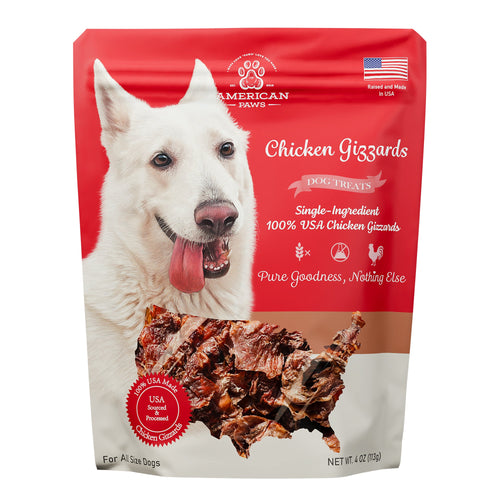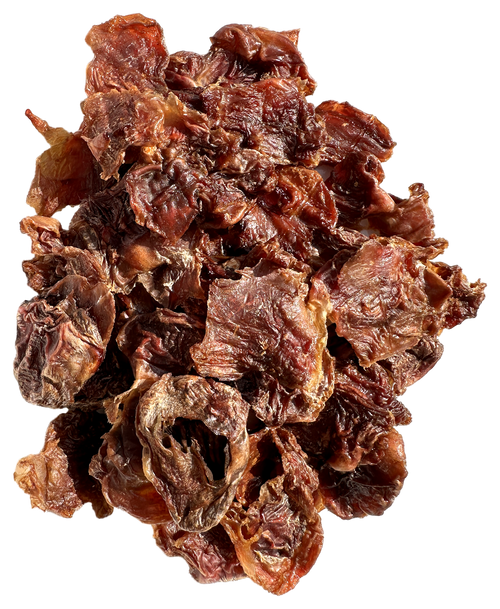

Are chicken gizzards good for dogs? Yes—plain, fully cooked chicken gizzards can be a protein-rich occasional treat for many healthy dogs. Clean them, cook the thickest part to 165°F, let them cool, cut the dense muscle into bite-sized pieces, and keep the amount small.
Gizzards also contain iron and zinc, but those nutrients do not turn them into a complete meal or a remedy for a deficiency. Raw poultry carries pathogen and kitchen cross-contamination risks, while seasoned, fried, or heavily salted gizzards add ingredients a dog does not need. Some dogs should avoid chicken entirely or ask a veterinarian first.
Are chicken gizzards good for dogs? The quick answer
Use this four-part test before sharing one:
- Plain: no onion, garlic, salt, sauce, butter, frying oil, breading, or spice blend.
- Fully cooked: poultry giblets should reach 165°F as measured with a food thermometer.
- Cut small: a gizzard is a dense working muscle, so match the piece to the dog and supervise.
- Limited: gizzards belong inside the total treat budget, not in place of complete and balanced food.
If all four conditions fit your dog, one small piece is a reasonable starting point. If your dog has a chicken allergy, a prescribed diet, swallowing trouble, or a medical condition that changes nutrient allowances, the answer may be no.
Can dogs have chicken gizzards? Many healthy dogs can under those conditions. Put another way, the question “is gizzard good for dogs?” has a conditional answer: safe preparation, a small portion, and the individual dog decide whether it fits.
What is a chicken gizzard?
A muscular digestive organ, not the same thing as liver
A gizzard is part of a bird’s stomach. The USDA Agricultural Research Service describes it as a thick-walled muscular sac in the poultry digestive tract. In the grocery store, gizzards are grouped with giblets such as hearts and livers, so people often call them organ meat.
Anatomically, that label is fair. Nutritionally and texturally, however, a gizzard is not a second liver. It is dominated by hard-working muscle tissue. Liver is softer and unusually rich in vitamin A; gizzard is a muscular organ with a dense, chewy texture and a nutrient profile distinct from liver. That difference matters when someone asks whether dogs can eat chicken gizzards every day or whether gizzards carry the same liver-specific concerns.
Why the texture is dense and chewy
The gizzard helps grind food for the bird, so the muscle is thick and strong. Cooking makes it safe from the raw-poultry standpoint, but it can remain firm. A large cooked gizzard offered whole may be awkward for a small dog or a fast gulper. Slicing across the muscle and then cutting the slices into small pieces makes portioning and supervision easier.
Dense texture does not make gizzard a dental product or long-lasting chew. It is food, and many dogs will swallow it quickly. Stay nearby and use pieces the dog can handle comfortably.
Chicken gizzard benefits for dogs
Protein in a relatively lean cooked food
USDA FoodData Central record 171457 for cooked, simmered chicken gizzard reports about 30.4 grams of protein and 2.7 grams of fat per 100 grams. Those figures describe a human-food database portion, not a recommended serving for a dog, and cooking method changes the final weight and concentration. They do show why plain gizzard can reasonably be called a protein-rich, relatively lean food.
Protein supports normal body tissues, but a dog eating a complete and balanced diet should already receive appropriate protein from meals. Adding gizzard does not automatically improve that diet, and excitement about meat does not diagnose a protein deficiency.
Iron and zinc without a “superfood” promise
The same cooked-gizzard reference contains iron and zinc. Both are essential nutrients: iron participates in oxygen transport, and zinc has roles in many normal body processes. The useful conclusion is modest—gizzard is more than empty calories. It is not evidence that gizzards cure anemia, boost immunity, fix low energy, or replace veterinary testing and treatment.
More is not always better with minerals. Dogs on complete foods already receive a formulated nutrient balance, and dogs with certain medical diets may need specific limits. Think of gizzard as an occasional food with nutrients, not as a supplement to dose.
A simple single-protein option when prepared plain
A home-cooked piece of plain chicken gizzard comes from one animal protein. That simplicity makes it easy to identify what you served, but it does not make chicken suitable for a dog that reacts to chicken. It also does not prove the food is “hypoallergenic.”
Clear ingredients are still a useful habit. Our guide to how to read a simple dog-treat ingredient label explains how to separate a genuinely short formula from broad front-label claims. Apply the same discipline to grocery-store gizzards: start with a cleaned, food-grade product and add nothing.
Can dogs eat chicken gizzards safely?
Plain, fully cooked gizzards are the conservative default
The conservative home choice is cleaned gizzard cooked without seasoning or added fat. The American Kennel Club’s chicken guidance similarly points to unseasoned cooked chicken rather than seasoned table preparations. For poultry giblets, current USDA FSIS temperature guidance sets 165°F as the safe minimum internal temperature.
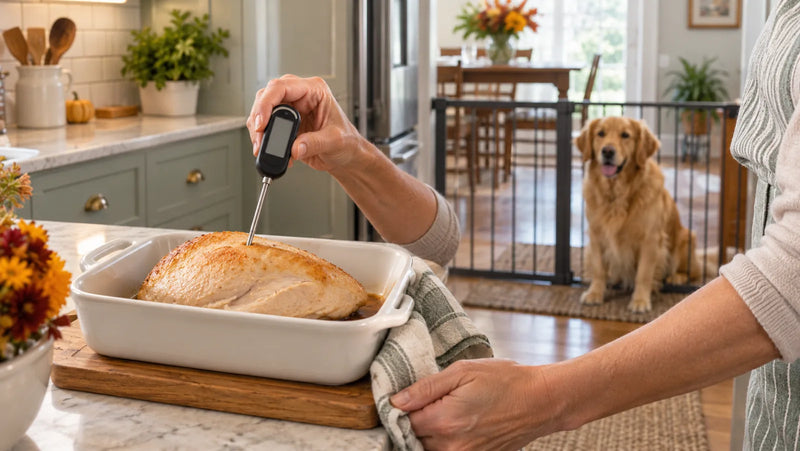
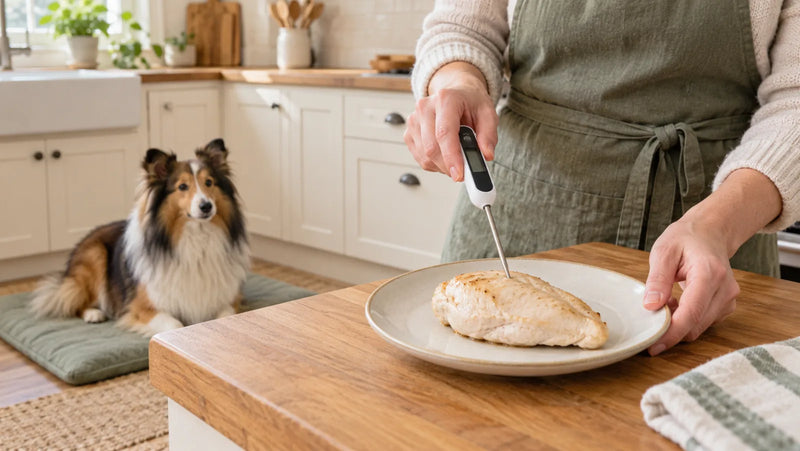
A thermometer matters more than color. Gizzard is dark muscle, and color varies. Insert the probe into the thickest piece, verify the temperature, then let the food cool fully before cutting and serving.
Raw chicken gizzards carry pathogen and household-handling risks
Raw gizzard is not automatically a poison, but raw poultry can carry disease-causing bacteria. The FDA’s review of raw pet food risks found raw products more likely than other tested pet foods to contain pathogens and highlights risk to both pets and the people handling the food. Raw juices can also contaminate hands, utensils, counters, bowls, and other foods.
Freezing does not make raw poultry sterile. Neither does a casual pass through a home dehydrator. If a household includes a young child, an older adult, a pregnant person, an immunocompromised person, a puppy, or a medically vulnerable dog, avoiding raw animal protein is especially prudent. For a simple occasional treat, cooking thoroughly is the clearer path.
Seasoned, fried, smoked, or mixed-dish gizzards are poor choices
Restaurant gizzards and holiday giblet dishes are not the same as plain cooked gizzard. Breading, frying oil, gravy, butter, salt, smoke flavor, and spice blends add fat and sodium. Onion and garlic are unsafe for dogs. Picking meat out of a seasoned dish does not reliably remove what it absorbed.
If you did not control the ingredient list, skip it. Buy plain food-grade gizzards and prepare a separate unseasoned portion instead.
How to cook chicken gizzards for dogs
1. Start with cleaned, food-grade gizzards
Use gizzards sold for human food. Keep fresh raw gizzards at 40°F (4°C) or below and cook within one to two days, or freeze them; follow the package directions. Commercially cleaned gizzards should have the inner lining and contents removed, but inspect each piece and trim obvious excess fat or tough loose material. Do not use a product with an off odor, sticky surface, damaged package, or uncertain storage history.
2. Keep raw poultry separate and wash hands and tools
Set aside a clean cutting board, knife, pan, and thermometer. Keep raw gizzards away from salad ingredients, cooked food, dog bowls, and ready-to-eat surfaces. Do not rinse raw poultry under the faucet; splashing can spread contaminated droplets. After handling, wash hands with soap and running water for at least 20 seconds, then clean and sanitize the food-contact area.
3. Simmer, bake, or pressure-cook without seasoning
You can simmer gizzards in plain water, bake them in a covered dish, or use a pressure cooker according to its safety instructions. Add no salt, stock cube, onion, garlic, butter, oil, or sauce. Cooking time varies with size and method. Gizzards often benefit from longer moist cooking for tenderness, but time alone is not the safety test.
4. Verify 165°F, cool, and cut into bite-sized pieces
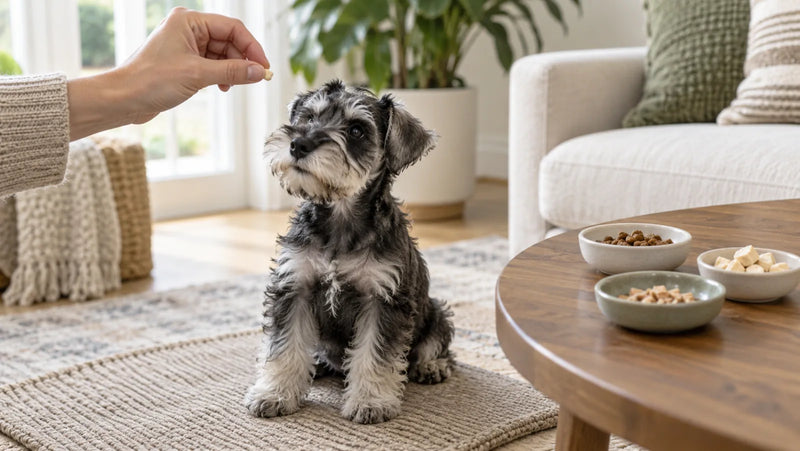
Check the thickest gizzard with a food thermometer and confirm at least 165°F. Let the batch cool away from the dog. Slice across the dense muscle, then cut only the amount you plan to offer into small pieces. For a tiny dog or puppy, a piece may need to be smaller than a pea; a large dog still does not need a whole gizzard to understand that it earned a reward.

5. Refrigerate promptly or freeze measured portions
Move cooked gizzards into a clean shallow container and refrigerate within two hours—or within one hour when the ambient temperature is above 90°F (32°C). Use refrigerated cooked poultry within three to four days, or freeze small measured portions so you do not keep thawing the whole batch. Thaw in the refrigerator, not on the counter, and discard food left out too long or showing spoilage.
Label the container for the dog so it is not mixed into a seasoned family meal later. When in doubt about storage, throw it out; a low-cost treat is not worth a food-safety gamble.
How much chicken gizzard can a dog have?
Start with one small piece
For a dog that has not eaten gizzard before, begin with one small cooked piece. Offer no other new food that day, then watch for vomiting, diarrhea, itching, unusual gas, or discomfort. Our step-by-step guide can help you introduce a new treat gradually.
Starting small is about tolerance, not because one bite is a magic dose. If the dog does well, you can include measured pieces occasionally while staying inside the total calorie plan.
Keep every treat inside the 10% calorie allowance
A common veterinary nutrition guideline is that treats and other extras together should provide no more than about 10% of daily calories; at least 90% should come from complete and balanced food. Gizzard, jerky, training rewards, toppers, dental chews, and table bites all share that same small allowance.
Use our portion pillar on how many treats a dog can have per day to build the budget. The 10% limit is a ceiling, not a target. A dog on a weight plan or prescribed diet may need less or none.
Do not use a universal pieces-per-day chart
One gizzard can be several times the size of another, and water loss changes calorie concentration during cooking. Dog size alone also misses body condition, age, activity, main-diet calories, and health. That is why “one gizzard for a small dog, three for a large dog” would look helpful but could be misleading.
For precision, weigh the cooked batch, use a reliable calorie reference for the same preparation, and ask your veterinary team for the dog’s daily calorie target. For casual treating, one small bite and a deliberately modest total are safer than counting variable whole organs.
When should a dog avoid chicken gizzards?
- Known chicken allergy or intolerance: gizzard is still chicken, regardless of how plain it is.
- Prescription or elimination diet: an extra protein can disrupt the plan or make a food trial hard to interpret.
- Chewing or swallowing difficulty: dense muscle may be a poor texture even when cut small.
- Medical nutrient restrictions: dogs with conditions that change protein, mineral, calorie, or fat allowances need individualized advice.
- Previous reaction to organ or rich foods: ask a veterinarian before retrying rather than testing a larger serving.
- Uncertain source or preparation: spoiled, seasoned, undercooked, or improperly stored gizzards should be discarded.
Stop feeding and contact your veterinarian for repeated vomiting or diarrhea, marked lethargy, facial swelling, hives, breathing trouble, choking, or any other concerning sign. Breathing difficulty or an active obstruction is an emergency.
Frequently asked questions
Can dogs eat cooked chicken gizzards?
Yes. Many healthy dogs can eat a small amount of plain chicken gizzard cooked to 165°F, cooled, and cut into suitable pieces. Keep it supplemental, supervise, and introduce it gradually.
Can dogs eat raw chicken gizzards?
Raw gizzards can contain pathogens that put the dog and household at risk. Cooking plain gizzard thoroughly is the conservative default. Freezing or home drying should not be treated as guaranteed sterilization.
Can puppies have chicken gizzards?
A weaned puppy eating complete and balanced puppy food may be able to try a tiny plain cooked piece, but puppies have little room for unbalanced extras and may be more vulnerable to foodborne illness. Ask your veterinarian, cut the piece very small, and keep treats well within the daily allowance.
Can dogs eat chicken gizzards every day?
There is usually no need to serve them daily. Occasional measured pieces are easier to fit around a complete diet. If you want gizzard to be a regular or substantial part of a home-prepared diet, work with a board-certified veterinary nutritionist so the full recipe—not just one ingredient—is balanced.
Are chicken gizzards the same as chicken liver?
No. Both are giblets, but the gizzard is a muscular part of the digestive tract, while the liver is a different organ with a different texture and nutrient profile. Do not copy liver portion advice onto gizzard or assume the two are interchangeable. For how each organ fits the overall diet, see our guide to organ meats for dogs.
Keep a useful extra in its proper place
Chicken gizzards can be a simple, protein-rich reward when you choose a sound source, cook to 165°F, cool, cut small, supervise, and limit the total. American Paws does not currently sell a chicken-gizzard product, so we will not point you to a pretend substitute. If you would rather choose a packaged reward with its own ingredient label and feeding directions, browse all current American Paws dog treats and pick the protein and texture that fit your dog.