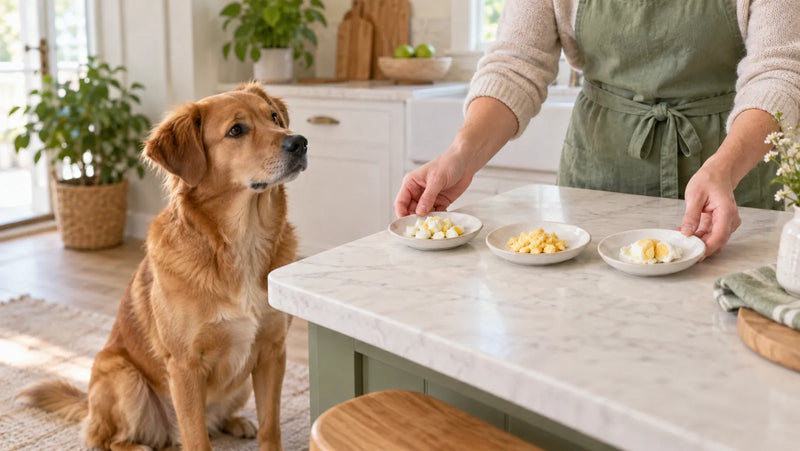

Plain pumpkin may help some otherwise healthy adult dogs with mild, short-lived diarrhea because its soluble fiber can add bulk and hold water in the stool. Pumpkin for dog diarrhea is a supportive food trial, not a treatment for the cause. Blood or black stool, repeated vomiting, weakness, pain, dehydration, puppy diarrhea, or symptoms that persist need a veterinarian before more pumpkin.
If the dog is bright, comfortable, drinking normally, not vomiting, and has had one mild loose stool with no known toxin or foreign-object exposure, a small measured amount of 100% plain pumpkin mixed into one meal may be reasonable. Start at the low end, monitor the whole dog—not only the next stool—and stop if anything worsens.
Pumpkin for dog diarrhea: the quick answer
Use this decision check before opening a can:
- Mild case only: the home-trial lane is an otherwise normal adult dog with one mild episode, normal water intake, and no red flags.
- Plain pumpkin only: use 100% pumpkin puree or plain cooked peeled pumpkin, not pie filling, dessert, or a sweetened blend.
- One low measured start: use the size table below with one meal; do not keep adding spoonfuls because the first stool is still loose.
- Fresh water stays available: diarrhea causes water loss, and vomiting makes dehydration happen faster.
- Short limit: call the veterinarian if there is no clear improvement within 24 hours, if diarrhea continues beyond 24 hours, or if any red flag appears sooner.
- No substitution for diagnosis: pumpkin cannot identify or treat parasites, infection, pancreatitis, obstruction, toxins, medication reactions, or chronic intestinal disease.
A veterinary team may reasonably give different instructions after examining the dog. That individualized plan replaces a generic internet table.
Check for red flags before trying pumpkin
Diarrhea describes a stool change; it does not name the cause. Stress or a small diet change may produce one mild episode, but parasites, viruses, bacterial disease, toxins, swallowed objects, pancreatitis, medication effects, food intolerance, and chronic disease can look similar at the beginning. A spoonful of fiber cannot sort those possibilities out.
Puppies and medically vulnerable dogs call first
Puppy diarrhea deserves prompt veterinary guidance, especially in an unvaccinated or incompletely vaccinated puppy. Small bodies have less fluid reserve, and serious infections can progress quickly. Do not use a pumpkin trial to delay a call.
Also call before adding pumpkin for a frail senior, pregnant or nursing dog, toy dog with repeated watery stool, dog with diabetes or chronic gastrointestinal disease, dog on a prescription or elimination diet, or dog with immune compromise, kidney disease, liver disease, or a previous intestinal obstruction.
Blood, black stool, vomiting, pain, or weakness change the plan
The Merck Veterinary Manual's veterinary-care table places bloody, foul-smelling, or uncontrollable diarrhea and thick black stool in the immediate-care category. Black, tarry stool can represent digested blood; bright red blood also needs professional triage rather than a home fiber experiment.
Repeated vomiting, marked lethargy, weakness, fever, pale gums, collapse, a painful or swollen abdomen, repeated unproductive retching, refusal of food, or a dog that cannot get comfortable also moves the situation out of the mild lane. Breathing difficulty or collapse is an emergency.
Dehydration can become serious quickly
Diarrhea moves water out of the body in stool. Vomiting at the same time accelerates that loss. Dry or tacky gums, sunken-looking eyes, reduced urination, unusual weakness, poor drinking, or worsening lethargy can signal dehydration, but do not wait for every sign to appear before calling.
Fresh water should remain available. Do not force a large volume into a nauseated dog and do not withhold water based on a generic fasting rule. A dehydrated dog may need veterinary fluids; pumpkin cannot replace water or electrolytes.
Possible toxin or foreign-object exposure is not a fiber problem
If the dog may have eaten medication, sugar-free food, garbage, a bone, corn cob, toy, fabric, absorbent pad, string, or another non-food object, contact a veterinarian, emergency veterinary service, or animal poison-control service promptly. Give the exact item, amount, time, dog weight, and symptoms if known.
Do not use pumpkin, bread, oil, milk, or extra fiber to “push” an object through. Do not induce vomiting unless a veterinary professional specifically directs it.
How pumpkin may help mild loose stool
Soluble fiber can absorb water and add stool bulk
The American Kennel Club's pumpkin-and-diarrhea guide explains that soluble fiber can absorb water and add bulk to stool. In a mild case, that change may make loose stool more formed.
“May” matters. The fiber acts on stool consistency and the intestinal environment; it does not kill a parasite, remove a blockage, reverse a toxin, or diagnose why the diarrhea began. A dog can have firmer stool temporarily while the underlying problem remains.
Fermentable fiber interacts with the colon and microbiome
Some pumpkin fiber can be fermented by bacteria in the colon. Fermentation produces compounds that interact with colon cells and water and sodium handling. That is one reason fiber type and amount can influence stool.
The microbiome is complex, and “prebiotic” is not a promise that one grocery ingredient repairs it. Dogs with chronic diarrhea may need fecal testing, blood work, imaging, a veterinary diet trial, a defined probiotic, medication, or another plan based on the cause.
A supportive food is not a diagnosis or cure
Pumpkin is most defensible as a short, low-risk trial for a stable adult dog with mild loose stool. It is not an antibiotic, dewormer, antiviral, anti-inflammatory drug, anti-nausea medicine, or fluid treatment.
If the diarrhea happens repeatedly, follows every meal, alternates with normal stool for weeks, wakes the dog at night, includes weight loss or poor appetite, or returns whenever pumpkin stops, the important question is no longer “how much pumpkin?” It is “why does this dog keep having diarrhea?”
What kind of pumpkin should you use?
Choose 100% plain canned pumpkin
Plain canned pumpkin puree is already cooked, soft, and easy to measure. Read the complete ingredient list. Ideally it contains pumpkin and nothing else; do not rely only on the orange can or a front label that says “pumpkin.”
Use a clean spoon, move the amount you need to a separate dish, and follow the can's refrigeration and discard directions after opening. Do not let the dog lick the can because the metal rim can cut the mouth.
Plain cooked fresh pumpkin can work
Fresh pumpkin should be cooked plain, with the stem, seeds, strings, and rind removed, then cooled and mashed until smooth. Add no salt, butter, oil, sugar, spice, onion, garlic, or broth.
For selection, steaming, roasting, canned-puree checks, and storage details, use our plain cooked-pumpkin preparation guide. The broader complete pumpkin benefits and safety guide covers routine forms and serving outside this diarrhea-specific use.
Pumpkin pie filling, desserts, and sweetened mixes are unsafe choices
Pumpkin pie filling is a different product from 100% pumpkin. It can contain added sugar, salt, spices, flavoring, or sweeteners. Pumpkin butter, pie, muffins, lattes, dessert puree, and sugar-free mixes may add even more ingredients.
The FDA warns that xylitol is dangerous to dogs and may appear in sugar-free desserts and baked goods. It can also be called birch sugar or wood sugar. Suspected xylitol exposure needs immediate veterinary or poison-control contact; do not wait to see whether pumpkin firms the stool.
Pumpkin powder is concentrated and follows its own label
Pumpkin powder, fiber blends, and pet digestive supplements are not spoon-for-spoon substitutes for canned puree. Drying changes concentration, and a blend may contain psyllium, probiotics, flavor, sweetener, or another ingredient.
Use only a dog-appropriate product with a complete label, follow its directions, and ask the veterinary team when diarrhea is the reason for use. Do not apply the canned-pumpkin table below to powder.
How much pumpkin for dog diarrhea?
Conservative starting amounts by dog size
The AKC publishes a broad one-to-four-tablespoon range and advises starting smaller. There is no validated universal therapeutic dose by body weight, so the table below deliberately begins low. It is a one-meal trial for a stable adult dog—not a prescription, daily target, or puppy dose.
| Dog size | One-meal starting trial | Important limit |
|---|---|---|
| Under 10 lb | 1/2 teaspoon | Call first for a toy dog with frequent watery stool |
| 10–25 lb | 1 teaspoon | Do not jump straight to a tablespoon |
| 26–50 lb | 1 level tablespoon | Mix into the usual meal only if the dog wants food |
| 51–90 lb | 1–2 level tablespoons | Begin with one tablespoon when unsure |
| Over 90 lb | 2 level tablespoons | Ask before increasing; giant size does not make four tablespoons necessary |
These amounts assume smooth 100% plain pumpkin puree. A heaping spoon, pumpkin chunks, watery homemade puree, and concentrated powder are not equivalent. When a veterinarian gives a different amount, use that individualized instruction.
Give one measured trial with a meal
Mix the starting amount into the dog's usual food only if the dog is willing to eat and is not vomiting. Do not force-feed pumpkin by spoon or syringe. Keep the rest of the diet steady so you can interpret what happens rather than adding chicken, rice, broth, probiotics, new treats, and pumpkin all at once.
Do not automatically repeat a serving at every meal or increase after a few hours. Observe the next stool, appetite, water intake, energy, comfort, and any vomiting. A dog that looks worse needs a call, not a larger scoop.

More fiber is not automatically better
Too much pumpkin can add gas, bloating, abdominal discomfort, or more loose stool. Fiber also adds water-holding material to the gut, so piling it into a dog that is already losing fluid is not a substitute for evaluating hydration.
Stop the trial if stool becomes more watery or frequent, the abdomen appears uncomfortable, vomiting begins, appetite falls, or the dog seems less active. Do not push toward four tablespoons simply because that number appears at the top of a broad range.
How to monitor the next 24 hours
Keep fresh water available
Place clean fresh water where the dog can reach it and refresh it regularly. Note whether the dog drinks normally, drinks nothing, cannot keep water down, or seems unusually thirsty. Do not add sugar, sports drink, electrolyte powder, salt, or flavored broth without veterinary direction.
A dog that cannot keep water down, refuses water while losing fluid, or shows dehydration signs needs prompt veterinary assessment.
Record stool, appetite, water intake, vomiting, and energy
Write down when diarrhea began, how many episodes occurred, stool color and consistency, the amount and time of pumpkin, recent food or treat changes, medications, possible scavenging, travel or stress, and whether other pets are affected. A photo of the stool and a fresh sample in a clean container may help if the clinic asks for them.
Watch the dog between bathroom trips. Normal interest, comfort, hydration, and appetite matter. A single firmer stool does not cancel weakness, pain, repeated vomiting, or another red flag.
Stop if stool or other symptoms worsen
Do not continue a home trial through new blood, black stool, increasing frequency, vomiting, appetite loss, pain, bloating, weakness, fever, dehydration signs, or behavior change. Call sooner for a small dog because repeated fluid loss represents a larger fraction of body size.
There is no benefit to “finishing” a pumpkin schedule. The trial ends when the dog worsens, improves, or reaches the short time limit without clear improvement.
When to call the veterinarian
Immediate or same-day reasons
Seek immediate or same-day veterinary guidance for:
- fresh blood, black/tarry stool, uncontrollable watery diarrhea, or severe foul diarrhea;
- repeated vomiting, inability to keep water down, or repeated unproductive retching;
- marked lethargy, weakness, collapse, pale gums, fever, severe pain, or a swollen abdomen;
- dry/tacky gums, sunken eyes, reduced urination, poor drinking, or other dehydration concern;
- a puppy, unvaccinated dog, frail senior, pregnant/nursing dog, or medically vulnerable dog;
- possible toxin, xylitol, medication, garbage, bone, or foreign-object ingestion; or
- a prescription diet or chronic condition that makes an unapproved food change risky.
The exact urgency depends on the dog and symptoms. If you are unsure whether the case is mild, call and let the clinic triage it.
No clear improvement within 24 hours
Merck's general guidance places vomiting or diarrhea lasting more than 24 hours in the “see a veterinarian within 24 hours” category. For this article's conservative home trial, call if there is no clear improvement within 24 hours or if loose stool continues beyond that point—even when the dog still seems fairly normal.
Cornell's canine diarrhea guidance likewise emphasizes veterinary care when diarrhea persists, appetite stops, lethargy develops, stool is black/tarry, or vomiting accompanies diarrhea. Do not keep extending pumpkin day after day to postpone evaluation.
Recurrent diarrhea needs a cause, not recurring pumpkin
Diarrhea that returns weekly, follows particular proteins, alternates with constipation, includes mucus or urgency, causes nighttime accidents, or accompanies weight loss deserves a veterinary workup. A stool test, diet history, medication review, laboratory testing, imaging, or formal diet trial may be needed.
Pumpkin can change stool texture without identifying the trigger. Repeatedly masking the symptom may make the pattern harder to interpret.
Do not give human anti-diarrheal medicine without veterinary direction
Cornell warns against giving human products such as bismuth subsalicylate or loperamide unless a veterinarian directs it. These medicines can be inappropriate for some dogs, interact with other drugs, create breed-related risks, or obscure a condition that needs different care.
Do not give leftover antibiotics, dewormer, anti-nausea medicine, probiotic, pain medicine, activated charcoal, or another pet's prescription. Treatment depends on the cause and the individual dog.
Pumpkin and the 10% treat-calorie rule
Even when pumpkin is used for stool support, it remains an extra. The World Small Animal Veterinary Association's treat guide says all treats and extras should stay at no more than 10% of daily calories so complete and balanced food continues to supply at least 90%.
Active diarrhea is not a treat opportunity. Do not introduce several new “gentle” products at once. Once the acute episode is addressed, our guide to dog treats for sensitive stomachs can help you evaluate ingredient simplicity and portioning without promising that any treat prevents gastrointestinal disease.
Frequently asked questions
How fast does pumpkin work for dog diarrhea?
There is no guaranteed clock. If pumpkin suits a mild case, the next one or two stools over roughly 12–24 hours may become more formed. Worsening symptoms need an earlier call, and no clear improvement within 24 hours ends the home trial.
Can I give pumpkin to a puppy with diarrhea?
Call the puppy's veterinarian first. Puppies can dehydrate quickly, and diarrhea may signal infection, parasites, dietary problems, or another condition that needs prompt assessment. Pumpkin must not delay that triage.
Can too much pumpkin make diarrhea worse?
Yes. A large fiber increase can cause gas, bloating, discomfort, or looser stool in some dogs. Start with the low measured amount, do not automatically repeat it, and stop if frequency, consistency, or the dog's overall condition worsens.
Can I use pumpkin pie filling?
No. Use 100% plain pumpkin puree. Pie filling, dessert mixes, pumpkin butter, and sugar-free baked products can contain sugar, salt, spices, fat, or xylitol. Check the complete ingredient list rather than relying on color or the word “pumpkin.”
Can dogs have pumpkin every day for loose stool?
Do not use daily pumpkin to manage unexplained recurring diarrhea without veterinary guidance. A professional may include a measured fiber source in a defined diet plan, but that is different from repeatedly treating a symptom at home.
Use pumpkin as a small trial, not a substitute for diagnosis
For one mild episode in a bright, hydrated adult dog, a small amount of 100% plain pumpkin may help stool consistency. Measure the low starting amount, mix it into one usual meal only if the dog wants food, keep water available, and monitor the entire dog for no more than 24 hours.
American Paws does not sell a pumpkin remedy, supplement, or pumpkin treat, and active diarrhea is not the moment to introduce an unrelated reward. After the dog is well and the veterinary plan permits normal treats, you can browse all current American Paws dog treats for clearly labeled options. Blood, black stool, vomiting, pain, weakness, dehydration, puppy diarrhea, possible ingestion, or persistence belongs with a veterinarian—not another spoonful.