
Bone broth from pork can be a small topper for many healthy dogs, but only when it is plain, completely separated from every bone fragment, chilled, skimmed, and served in a measured amount. Start with fresh, uncured pork bones and water—never ham, smoked bones, brined ribs, seasoned leftovers, onion, garlic, or added salt. The cooked pork bones go in a secure trash container, not in the dog’s bowl.
Pork does not make broth automatically safe, unsafe, lean, or rich. The cut, attached skin and fat, water ratio, cook time, reduction, seasonings, and final serving size determine what is in the bowl. A dog with pancreatitis, a prescribed low-fat or low-sodium diet, a pork allergy, or an elimination diet needs veterinary approval before this topper is introduced.
Bone Broth from Pork: The Short Answer
For a healthy adult dog that already tolerates pork, a teaspoon of plain, cooled pork broth mixed into the regular complete meal can be a reasonable first taste. Keep fresh water available and watch for vomiting, diarrhea, itching, ear irritation, or another unexpected change. Stop rather than increasing the amount if the dog does not tolerate it.
This article answers the pork-specific questions: which pork bones belong in the pot, how to avoid cured and seasoned ingredients, how to remove bones and visible fat, and how pork compares with chicken or beef. For cross-species label selection, general benefits and limits, storage, and broader serving ideas, use our complete bone-broth guide for dogs. That page owns the general bone-broth question; this one stays with pork.
Start with Fresh, Uncured Pork—Not Ham or Leftover Rib Bones
Suitable starting material
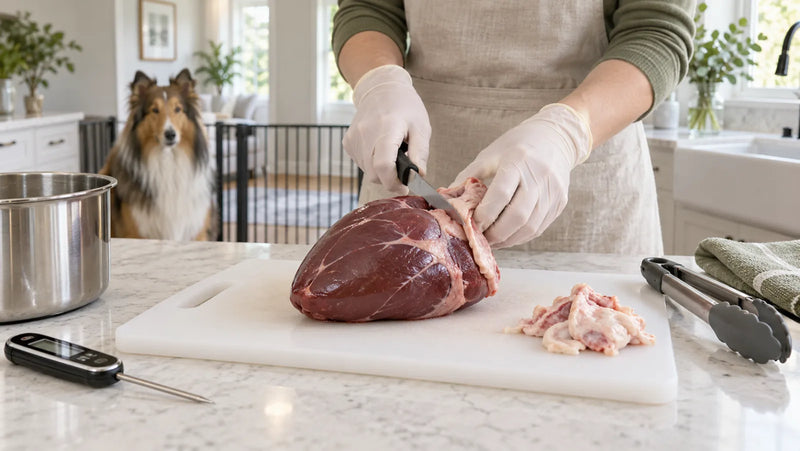
Use fresh, raw, unseasoned pork bones sold for cooking, with as little attached skin and loose fat as practical. Ask the butcher what the bones are and whether they have been cured, smoked, brined, injected, or seasoned. If the answer is unclear, do not use them for a dog batch. Keep raw pork refrigerated, prevent its juices from touching ready-to-eat food, wash hands and tools, and clean the work surface after the pot is loaded.
The bones are an ingredient for making liquid, not a chew to be handed over before or after cooking. Keep the dog out of the work area so a raw bone, hot splash, or cooked fragment cannot be stolen.
Ingredients that disqualify the pot
Ham hocks, bacon ends, smoked neck bones, brined pork, barbecue ribs, pork chops from dinner, roast drippings, gravy, bouillon, and soup base are poor starting points. They may bring substantial sodium, smoke flavor, sweeteners, sauce, or seasonings into the liquid. A rinse does not reverse curing or remove ingredients that have already dissolved into the meat and bone.
Do not add onion, garlic, shallot, leek, chive, onion powder, garlic powder, a seasoning packet, salt, or an unclear “natural flavor” blend. The AKC’s bone-broth safety guidance specifically flags onion, garlic, and salt in commercial broth. If a household soup was cooked with them, straining out the visible pieces does not turn the liquid into dog-safe broth.
How to Make Pork Bone Broth for Dogs Safely
A dog batch should be deliberately boring. Use a clean pot or slow cooker, fresh uncured pork bones, and enough water to keep the bones covered during the cook. Follow the appliance manufacturer’s fill, heat, and unattended-use instructions. A long, controlled simmer is common for broth, but the exact time depends on the equipment, amount, and recipe; longer is not a safety contest and does not make the bones edible.
- Inspect the pork. Remove loose skin and obvious fat. Reject any cured, smoked, brined, seasoned, spoiled, or unidentified piece.
- Add only water. Skip salt, aromatics, stock cubes, vinegar blends, herbs, oil, and leftover pan liquid. Simplicity makes the batch easier to evaluate.
- Control the cooker. Keep the vessel stable, use the correct fill level, and block pets and children from the hot pot and cord.
- Lift out every bone. When cooking is complete, move the dog out of the kitchen and remove all large bones and pieces with tongs.
- Fine-strain the liquid. Pour the broth through a fine-mesh strainer into a clean heat-safe container. Inspect the strainer and repeat the pass if grit or fragments remain.
- Cool promptly. Divide a large batch into shallow containers so it cools efficiently, then refrigerate it. Do not leave a deep stockpot cooling where the dog can reach it.
- Chill and skim. Once cold, lift off the hardened surface fat. Skimming reduces visible fat; it does not prove that the remaining broth is fat-free or suitable for a medically fat-restricted dog.
- Portion and label. Keep only a few days’ supply refrigerated and freeze the rest in small measured portions. The USDA FSIS storage guidance gives cooked leftovers a three-to-four-day refrigerator window, so a conservative broth routine is to discard rather than stretch an aging batch.
Remove bones twice: lift, then fine-strain
“I took the big bones out” is only the first removal step. Long cooking can loosen cartilage and produce small chips that are hard to see in cloudy liquid. The AKC’s broth-preparation instructions call for removing the bones and straining so small pieces do not escape notice. Use both steps every time.
Chill and skim the fat cap
Pork skin, rib trimmings, and fatty scraps can create a substantial surface layer. Chilling turns much of that visible fat into a removable cap. Do not blend it back in, pour it over kibble, or assume that a dog can “handle it” because the serving is liquid. Fat has calories, and a rich meal can be a problem for a susceptible dog.
Never Serve the Cooked Pork Bones
Do not offer the used bones as a reward, even if they look clean, softened, or too large to swallow. The AKC warns that cooked bones are dangerous, and the Merck Veterinary Manual’s obstruction review lists bones among slowly digested foreign bodies that can block the gastrointestinal tract. Sharp fragments can also injure the mouth, esophagus, stomach, or intestine.
Move the cooked bones directly into a lidded trash container the dog cannot open. Do not leave them in a sink, compost bucket, cooling strainer, or outdoor trash bag. If a dog swallows a cooked pork bone, call a veterinarian or emergency clinic for case-specific instructions; do not induce vomiting or improvise a home “padding” remedy unless a veterinary professional tells you to.

Pork vs. Chicken vs. Beef Bone Broth for Dogs
There is no evidence-based species ranking that makes pork always fattier, chicken always easier to digest, or beef always more nutritious. Compare the actual recipe and the individual dog, not a wellness story attached to the animal name.
| Question | Pork | Chicken | Beef |
|---|---|---|---|
| Source-protein fit | Avoid for a known pork reaction or pork-free elimination trial | Avoid for a known chicken reaction or chicken-free trial | Avoid for a known beef reaction or beef-free trial |
| Bone handling | Lift every bone, fine-strain, and discard securely | Smaller bones may be easy to miss; lift, fine-strain, and discard | Large bones are not safe chews after cooking; lift, fine-strain, and discard |
| Fat decision | Attached skin and fatty trimmings can create a heavy cap; chill and skim | Skin and fatty cuts can also enrich the broth; chill and skim | Marrow and fatty cuts can also enrich the broth; chill and skim |
| What matters most | No alliums or added salt, a fully strained batch, known calories when possible, a tolerated source protein, and a small serving | ||
A pale broth is not automatically lean, and a broth that gels is not automatically therapeutic. Water ratio and reduction change concentration. Chilling shows removable surface fat, while a product label or manufacturer analysis gives more useful numbers for calories and nutrients.
How to Read a Store-Bought Pork Broth Label
Dog-specific pork broth is uncommon, so shoppers may be tempted by human stock or bone broth. Do not rely on the front-panel words “natural,” “reduced sodium,” or “no salt added.” Turn the package around and inspect the full ingredient list and Nutrition Facts panel.
- Named pork base: Pork and water should be identifiable. An unclear mixed-meat base is unsuitable for a protein trial.
- No alliums: Reject onion, garlic, leek, shallot, chive, and their powdered forms.
- No curing or seasoning: Reject smoke flavor, ham base, bacon flavor, brine, bouillon, gravy base, spice blends, and ingredients you cannot verify.
- Sodium in context: Compare milligrams of sodium per labeled serving and check how large that serving is. “No salt added” does not mean sodium-free.
- Calories and fat: Use declared values rather than assuming clear liquid is calorie-free. If a pet product omits information you need, ask the manufacturer.
- Opening and storage: Follow the package’s refrigeration and discard directions; they override a homemade estimate.
If the label does not let you confidently answer what is in the broth, how much sodium and energy the dog receives, and how to store it, choose water or make a controlled plain batch instead.
How Much Pork Bone Broth Can a Dog Have?
There is no responsible universal cup amount. A teaspoon of cooled broth mixed into the normal meal is a cautious first exposure for a healthy adult dog, not a permanent dose for every size. The next decision depends on the dog’s daily calorie need, the broth’s calories, every other treat and topper, stool response, body condition, and veterinary diet plan.
The WSAVA treat guide says treats should remain under 10% of a dog’s daily calories and should never replace a complete meal. Count pork broth inside that shared allowance with chews, scraps, training rewards, and other toppers. Our daily treat-calorie guide explains how to build that budget without turning 10% into a target that must be filled.
Serve broth over the regular food rather than in the water bowl. The dog should always have separate plain fresh water. Discard uneaten moistened food promptly instead of leaving a warm meat liquid at room temperature.
Dogs That Need Veterinary Approval First
The VCA guidance on pancreatic nutrition explains that pancreatitis has varied causes, while lower-fat foods and careful accounting of meals, treats, and people foods can matter in treatment and recurrence prevention. It also places treats and toppers inside the 10% calorie allowance. That does not make home-skimmed pork broth a therapeutic low-fat food.
Ask the veterinary team before serving it to a dog with current or previous pancreatitis, high blood lipids, kidney or heart disease, a sodium or fluid restriction, diabetes, chronic digestive disease, a prescription diet, a calorie-restricted plan, or a confirmed/suspected pork reaction. During a veterinarian-directed elimination diet, an unapproved splash can invalidate the trial even if the broth looks clear.
Puppies, pregnant or nursing dogs, and medically fragile seniors also deserve individual guidance because their complete diet has a specific job. Broth should never displace the balanced food they need.
When Broth Is Not the Answer
A topper may add aroma and moisture to an otherwise normal meal. It should not be used to cover up sudden appetite loss, repeated vomiting or diarrhea, abdominal pain, weakness, marked lethargy, trouble swallowing, collapse, or signs of dehydration. Those are reasons to contact a veterinarian, not reasons to make the broth richer.
Pork broth is not oral rehydration therapy, a pancreatitis treatment, a joint supplement, an immune booster, a detox, or a complete and balanced diet. It can perform one modest job: make a familiar meal smell and feel a little different while contributing some liquid and calories.
That limited role is how a topper should be judged. Our dog-food topper guide compares liquid, dry, and freeze-dried formats without asking any one add-on to replace the main meal.
Frequently Asked Questions
Can dogs have pork broth made with ham bones?
Do not use ham bones for a dog batch. Ham is cured and commonly salty, and it may be smoked, glazed, seasoned, or cooked with onion and garlic. Start with fresh, uncured, unseasoned pork bones—or skip the recipe.
Can I reuse pork rib or pork-chop bones from dinner?
No. Dinner bones have already been cooked and may carry salt, sauce, oil, garlic, onion, or other seasoning. They also remain dangerous if a dog reaches them after the broth is strained. Use controlled ingredients from the beginning.
Is pork bone broth always fattier than chicken or beef broth?
No. Species alone cannot answer that. Pork skin and fatty trimmings can produce a heavy fat cap, but chicken skin and beef marrow can also make rich broth. Compare the cut, recipe, skimming, reduction, label values, and serving amount.
Does straining make seasoned broth safe?
No. A fine strainer catches solids and bone fragments; it does not remove dissolved salt, onion, garlic, brine, sauce, or seasoning. Seasoned household soup stays off the dog menu.
Can pork broth replace water or a complete meal?
No. Keep fresh water available and feed a complete and balanced main diet. Broth is an optional measured extra. A dog that cannot stay hydrated or will not eat needs veterinary attention.
Keep the Pork Broth Plain, Strained, Skimmed, and Small
If bone broth from pork fits your dog, make one controlled batch: fresh uncured bones and water, no seasoning, two-stage bone removal, prompt cooling, a full chill, and visible-fat skimming. Begin with a teaspoon over the regular meal, keep plain water beside it, and count the broth with every other extra.
American Paws does not currently sell pork bone broth. For separate, clearly labeled reward formats, browse our current American Paws dog treats and choose a product that fits your dog’s ingredients, chewing style, and calorie plan. If appetite, hydration, fat tolerance, or a medical diet is the real concern, call the veterinary team before changing the bowl.