
Can cats eat chicken gizzards? Yes—many healthy adult cats that tolerate chicken can have a tiny amount of plain, fully cooked gizzard as an occasional treat. The important preparation detail is texture: a gizzard is dense, firm muscle, so cook it to 165°F, cool it, trim tough connective tissue, and chop or mince it smaller than the cat's usual food pieces.
Start with one tiny bit, offer no other new food that day, and watch appetite, stool, skin, and behavior. If it is tolerated and used again, measure it inside the same calorie allowance as all other cat treats. A whole gizzard is not a cat portion, and chicken gizzard is not complete cat food.
Can Cats Eat Chicken Gizzards? The Short Answer
| Question | Practical answer |
|---|---|
| Can a healthy adult cat try gizzard? | Usually yes, if chicken is tolerated and the gizzard is plain, fully cooked, and minced very small |
| How much first? | One tiny minced piece smaller than the cat's usual kibble, then stop and observe |
| Can it be served whole? | No; a whole cooked or dehydrated gizzard is too large and dense to use as a feline serving unit |
| Can it replace cat food? | No; use it only as a treat or measured topper beside complete and balanced cat food |
| Raw or cooked? | Plain fully cooked is the conservative home choice; raw poultry adds pathogen and household-contamination risk |
| What about a dog-labeled product? | Do not use dog feeding directions for a cat; ask the cat's veterinarian before offering it |
This answer is for an otherwise healthy adult cat. Kittens, cats with dental or swallowing trouble, and cats with a therapeutic diet, food trial, kidney disease, pancreatitis, obesity plan, or suspected chicken reaction need an individual veterinary decision before any new extra.
What a Chicken Gizzard Is—and Why Texture Matters to Cats
The gizzard is a bird's muscular stomach. It mechanically grinds food, so its walls are made of dense working muscle. Although people often group gizzard with “organ meat,” it is not liver and it is not the same tissue as heart. Its firm, springy fibers explain why a whole gizzard can stay chewy even after cooking.
That texture can be the main feline challenge. Cats use sharp teeth to grip and shear food, but individual mouth size, chewing habits, missing teeth, tooth resorption, oral pain, and swallowing control vary. A cat that gulps soft food may try to swallow a larger gizzard chunk instead of patiently breaking it down.
Preparation should therefore change the geometry, not merely the temperature. “Cooked” does not automatically mean “easy to chew.” Trim any rubbery connective tissue, slice across the muscle fibers, and mince the selected portion into bits smaller than the cat's familiar food pieces. Supervise the first offers and stop if the cat repeatedly drops the food, paws at the mouth, coughs, gags, or struggles to swallow.
The dog-side guide to chicken gizzards for dogs owns the canine benefits and portion question. Dog mouth size, calorie needs, and product directions do not transfer to a cat.
How to Prepare Chicken Gizzard for a Cat
Cook plain poultry to 165°F
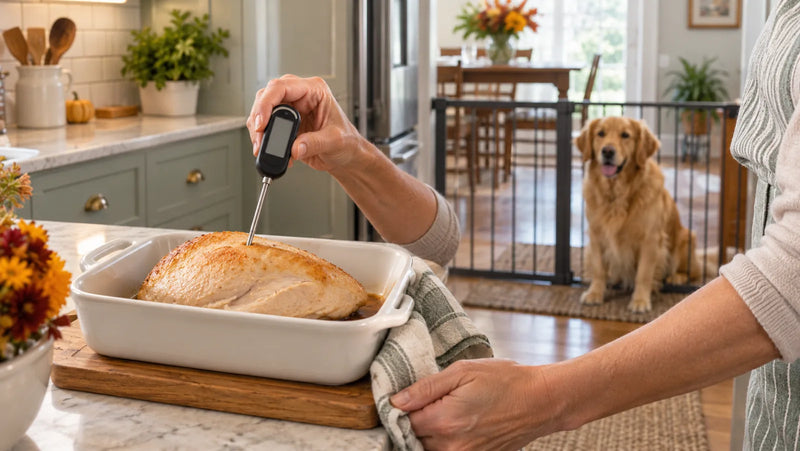
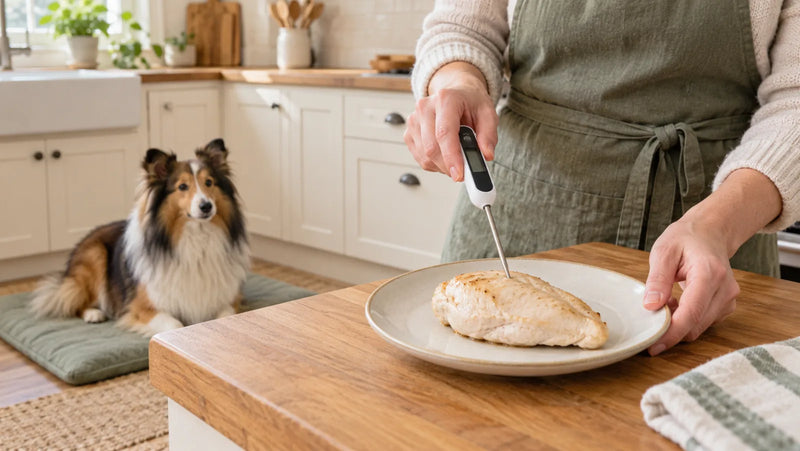
Begin with cleaned, food-grade chicken gizzards. Keep raw poultry separate from ready-to-eat foods, wash hands and utensils, and use a clean food thermometer. FDA poultry guidance says all poultry should reach a minimum internal temperature of 165°F.
Simmering can make gizzard easier to slice, but baking or pressure cooking can also work when the thickest representative piece reaches 165°F. Keep the batch plain: no salt, onion, garlic, broth, oil, butter, gravy, breading, smoke flavor, or seasoning. Fried, pickled, smoked, or restaurant gizzards are outside this guidance.
If you need a preparation walkthrough, the plain gizzard cooking method covers safe raw handling, temperature checking, cooling, and storage. Use its food-safety steps, then make the final cut much smaller for a cat and set the portion from the cat's plan rather than the dog examples.
Cool, inspect, and chop smaller than the usual food pieces
- Cool safely. Move the cooked gizzards to a clean container and refrigerate promptly rather than leaving the batch on the counter.
- Inspect the piece. Remove any hard, rubbery lining or connective tissue that remains.
- Slice across the fibers. This shortens long muscle strands and makes the final mince more consistent.
- Mince the trial portion. Make the first piece smaller than the cat's usual kibble or wet-food chunk.
- Set aside only today's amount. Return the main batch to cold storage before feeding or training begins.
Offer the tiny piece on a clean shallow dish or mixed into the cat's normal food. Do not push it into the mouth. A cat that sniffs and walks away has answered; refusal is not a nutrition problem to solve with force.
How Much Chicken Gizzard Can a Cat Eat?
There is no responsible universal gizzard-per-day number for cats. Whole gizzards vary in weight and connective tissue, cooking changes water weight, and a dehydrated piece is much more concentrated than a moist cooked piece. Cats also differ in body size, body condition, age, activity, main diet, and medical needs.
Use two separate limits:
- First-taste limit: one tiny minced cooked piece, smaller than the cat's familiar food pieces, with no other new food that day.
- Ongoing calorie limit: the veterinarian-approved portion that fits inside all extras together, after the calories in the exact cooked or packaged gizzard are known.
AAHA weight-management guidance says treats should make up no more than 10% of a pet's total daily calories. That is a ceiling, not a target. A small cat, a weight-loss plan, a prescription diet, or a medical condition may leave a much smaller allowance—or no allowance for an unapproved treat.
Do not measure by “one organ.” Weigh the portion in grams when repeatability matters, use a calorie value for the exact plain preparation or the current product label, and subtract that amount from the shared extras budget. Chopping one gizzard into ten bits changes swallowing size, not total calories.
A First-Taste and Portion Table
| Situation | Gizzard amount or action | Why |
|---|---|---|
| First exposure, healthy adult cat | One plain cooked minced bit smaller than usual food; then stop for the day | Tests tolerance without turning the trial into a meal |
| First taste tolerated | Use only the measured veterinarian-approved amount within the daily extras ceiling | Cat calorie needs and gizzard weights vary too much for a piece count |
| As a topper | Sprinkle the measured mince across the normal complete food rather than covering or replacing it | Preserves the nutrient and calorie plan |
| Whole cooked gizzard | Do not serve as one unit; slice, trim, and mince the selected portion | Dense muscle can be difficult to chew and easy to gulp |
| Whole dehydrated gizzard | Do not give to a cat without product-specific veterinary approval and substantial division | Dry texture, calorie density, dog labeling, and variable size change the decision |
| Vomiting, diarrhea, itching, coughing, or mouth trouble | Stop the gizzard and contact the veterinary team | A reaction or mechanical problem needs assessment, not another trial |
Normal tolerance after one taste does not prove that a larger or daily portion will fit. If gizzard becomes a regular training reward or topper, have the veterinary team calculate its place in the full diet and recheck body weight and body condition over time.
Chicken Gizzard vs Chicken Heart for Cats
Gizzard and heart are both muscular tissues, but they are not interchangeable. Gizzard is the thick muscular stomach; heart is cardiac muscle. They differ in structure, texture, typical piece size, and nutrient profile. A serving decision for one should not be copied to the other.
| Feature | Chicken gizzard | Chicken heart |
|---|---|---|
| Tissue | Muscular stomach | Cardiac muscle |
| Cat-relevant texture | Dense, firm, and often fibrous; benefits from slicing and fine mincing | Smaller and usually less fibrous after cooking, but still requires a cat-size cut |
| Meal status | Occasional extra, not complete cat food | Occasional extra, not a complete diet or taurine treatment |
For the separate heart question, use the cat-specific chicken-heart guide. Rotating multiple chicken organs does not automatically build a balanced homemade diet; it simply adds more extras that still need calorie and nutrient control.
Raw, Dehydrated, and Dog-Labeled Gizzards Need Separate Decisions
Raw poultry adds pathogen risk
Raw gizzard belongs to the raw-poultry safety decision, not the plain-cooked lane. In its sampling study, FDA found raw pet food more likely than the other tested types to contain disease-causing bacteria. A cat can also spread organisms through the bowl area, mouth, paws, and stool even when the animal does not look sick.
Freezing does not make raw poultry sterile, and a raw-meat routine increases household handling demands. Plain fully cooked gizzard is the conservative home option. Ask the veterinarian before any raw feeding plan, especially in a home with young children, pregnant people, older adults, or anyone immunocompromised.
Dehydrated texture and calorie density change the unit
Dehydration removes water and makes a piece lighter, drier, and more calorie-dense by weight than a moist cooked piece. It may also make gizzard crunchy or hard. A whole dry gizzard is therefore not a feline serving unit, and the dog-style piece count cannot be scaled down by sight.
Confirm the exact product's ingredient list, calorie statement, species label, process, storage directions, and piece variability. Dehydrated does not automatically mean sterile, cooked, easy to chew, or nutritionally complete.
The current American Paws product is labeled for dogs
The live American Paws Dehydrated Chicken Gizzards for Dogs page lists 100% USA chicken gizzards in a 4 oz resealable bag and describes a crunchy texture with natural variation in size, shape, and color. The product title says “for Dogs,” and its feeding guide uses dog-size bands. The same page lists approximately 47 kcal per piece; for a cat whose plan is 200 kcal a day, the 10% treat ceiling is 20 kcal, so one whole piece is more than twice that ceiling.
That distinction matters. A one-ingredient dog treat is still not automatically labeled, validated, or portioned for cats. Do not apply the dog feeding chart or offer a whole piece. Ask the cat's veterinarian to review the current label and calorie statement before purchase or use; if the veterinarian approves it, weigh and divide the allowed amount to a cat-safe texture.

Gizzard Is a Treat, Not Complete Cat Food
Cats are carnivores, but that does not mean one meat tissue is a complete diet. Cats require particular amounts and ratios of amino acids, fatty acids, vitamins, minerals, and energy. Plain gizzard does not carry a nutritional-adequacy statement and should not replace formulated cat food.
AAFCO explains that pet food must match the intended species and life stage, and that “complete” means all required nutrients are present while “balanced” means they are in the correct ratios. It also distinguishes treats and supplements from complete feeds.
The current Merck Veterinary Manual cat-nutrition guidance likewise recommends nutritionally balanced food rather than a meat-only homemade diet. The cat's regular complete meal stays the nutritional foundation; gizzard, if used at all, is one measured extra.
“High protein,” “single ingredient,” “organ meat,” and “cats are carnivores” are not reasons to fill the bowl. They are facts or marketing descriptions that still sit below the complete-diet and calorie controls.
Which Cats Should Skip Gizzard or Ask the Veterinarian First?
- Kittens: growth diets have little room for unbalanced extras, and mouth size changes rapidly. Ask the veterinarian before introducing gizzard.
- Cats on therapeutic diets or elimination trials: one chicken treat can break a controlled ingredient or nutrient plan.
- Cats with kidney, pancreatic, gastrointestinal, urinary, or weight conditions: the relevant protein, phosphorus, fat, sodium, moisture, and calorie limits must come from the veterinary plan.
- Cats with dental pain, missing teeth, oral lesions, or swallowing trouble: dense muscle may be the wrong texture even when finely chopped.
- Cats with known or suspected chicken reactions: a different chicken tissue is still chicken protein.
- Cats with recent vomiting, diarrhea, appetite loss, or weight change: investigate the symptom before adding a novel treat.
Seek urgent veterinary help for choking, breathing difficulty, collapse, repeated unproductive gagging, or severe weakness. For milder vomiting, diarrhea, itching, or refusal of food after a trial, stop the gizzard and call the regular veterinary team.
Keep Digestive Questions Separate From Treat Questions
Gizzard is not a constipation or diarrhea remedy. Adding dense meat without knowing the cause can complicate the diet and delay care. Stool change, straining, repeated vomiting, pain, lethargy, blood, or loss of appetite needs veterinary guidance.
If the original question was about fiber rather than a meat reward, the guide to plain pumpkin for cats explains why even pumpkin is optional, tiny, and not a diagnosis or universal treatment. Keep each food in its own decision lane.
Frequently Asked Questions
Can cats eat cooked chicken gizzards?
Many healthy adult cats that tolerate chicken can try one tiny piece of plain gizzard cooked to 165°F. Cool it, trim tough tissue, mince it smaller than the cat's familiar food, and count any future amount with all other treats.
Can cats eat raw chicken gizzards?
Raw poultry carries foodborne-pathogen and household cross-contamination risk. Freezing is not sterilization. Plain fully cooked gizzard is the conservative choice; discuss any raw feeding plan with the veterinarian.
Can kittens eat chicken gizzards?
Do not assume an adult-cat treat rule fits a kitten. Kittens need complete growth nutrition, have small mouths, and can have little calorie room for extras. Ask the kitten's veterinarian before offering gizzard, and never serve a whole piece.
Can cats eat dehydrated chicken gizzards?
Only after the exact product and cat have been reviewed. Dehydrated gizzard is dry, concentrated, and potentially hard; some products are labeled only for dogs. Do not copy dog feeding directions or use a whole gizzard as the cat's unit.
How often can a cat eat chicken gizzard?
It does not need to be daily. If it becomes a repeat treat, the veterinary team should set the measured amount and frequency from the cat's complete diet, body condition, health, and total extras. Variety does not require gizzard.
Are chicken gizzards better than chicken hearts for cats?
Neither is universally better. Gizzard is denser muscular stomach tissue; heart is cardiac muscle and has its own taurine discussion. Texture, calories, the exact label, the cat's health, and the role in the diet decide whether either one fits.
Cook It, Mince It, and Keep It Optional
The useful rule is simple: choose plain fully cooked gizzard, make the first piece tiny, and stop well before the treat displaces complete cat food. A whole gizzard—especially a dry one—is the wrong portion unit for a cat.
Use the cat treats selection guide to screen species labeling, calories, texture, and health fit before trying any product. You can review current labels in the full American Paws treat catalog, but not every item is labeled for cats. If you are considering the American Paws dehydrated gizzard product, remember that it is labeled for dogs and ask your veterinarian before feeding it to a cat.