
Can cats eat chicken hearts? Yes—when the heart is plain, the form fits the individual cat, and the portion is very small. Chicken hearts can contribute taurine, an essential feline nutrient, but that does not make a whole heart a cat-size serving or a substitute for complete-and-balanced cat food. Raw, cooked, dehydrated, and freeze-dried forms also have different food-safety and texture questions.
For a healthy adult cat that already tolerates chicken, the most conservative home test is one tiny piece of fully cooked, cooled, unseasoned heart. Count it with every other treat. Cats with kidney disease, a prescription diet, an elimination trial, food allergy, swallowing problem, or another medical restriction need the veterinary team's answer before the taste test.
Can Cats Eat Chicken Hearts? The Short Answer
| Form or situation | Practical answer | Main reason |
|---|---|---|
| Plain, fully cooked heart | A tiny occasional piece may fit | Verify chicken fits the diet, cook fully, cool, cut small, and count the calories |
| Raw chicken heart | Avoid the raw-food risk | Pathogens can affect the cat and contaminate people, hands, tools, bowls, and surfaces |
| Dehydrated or freeze-dried heart | Read the exact label and process evidence | Dry appearance does not prove cooking, sterilization, cat suitability, or a small serving |
| Seasoned, sauced, salted, or mixed with onion or garlic | Do not intentionally feed it | The recipe is no longer plain chicken heart |
| Kidney disease or therapeutic diet | Ask the veterinarian first | The treatment plan may control protein, phosphorus, sodium, calories, and every extra |
“Yes” is not blanket clearance. The cat's age, body condition, calorie target, health plan, chewing and swallowing, current diet, and reaction history still control the decision.
Why Taurine Matters to Cats
Taurine is not a marketing bonus for cats; it is a required dietary nutrient. The Cornell Feline Health Center's overview of feline cardiomyopathy explains that taurine deficiency was historically a common cause of dilated cardiomyopathy in cats and that routine taurine supplementation in commercial cat foods has made that form much less common.
Chicken hearts are animal tissue and can contribute dietary taurine. A peer-reviewed UC Davis School of Veterinary Medicine study of taurine in animal feed ingredients and the effects of cooking found taurine in animal tissues, substantial variation among samples, and different retention depending on preparation. Because taurine is water-soluble, cooking in water and discarding that liquid can change how much remains in the food.
Those facts do not turn one heart into a measured taurine supplement. The exact starting tissue, size, water content, cooking or drying method, batch, and laboratory method matter. If a veterinarian is evaluating taurine status or has prescribed supplementation, use the tested complete diet or supplement and dose the veterinarian selected—not a home estimate based on heart count.
Chicken Heart Is a Treat, Not a Complete Cat Diet
Cornell's guide to feeding a cat emphasizes that cats need many nutrients in the right amounts and that more is not always better. A chicken heart supplies only one animal part. It does not demonstrate that the total diet has the required balance of amino acids, fatty acids, vitamins, minerals, calories, and water.
Use chicken heart only within the cat's extras allowance. The broader guide to choosing cat treats by label, calories, texture, and health fit helps screen the exact product. It also separates a treat label from a complete-and-balanced nutritional adequacy statement.
Multi-pet households need a species check at the package. Dog-directed items do not become cat treats because both pets like chicken. Keep products such as the dog-focused chicken jerky collection out of the automatic sharing pile and review the intended species, ingredients, calories, texture, and veterinary restrictions for the cat separately.
Raw vs Cooked vs Dehydrated or Freeze-Dried Chicken Hearts
Raw chicken hearts
The FDA's review of raw pet food and pathogen risk found raw pet food more likely than other tested pet-food types to contain disease-causing bacteria and describes risk to pets and people handling the food. A cat can also spread contamination through the bowl, mouth, paws, stool, counters, and household surfaces.
Freezing does not make a raw heart sterile. Rinsing can spread droplets and does not replace a validated pathogen-control step. Do not use a raw piece as a casual “natural” upgrade, especially in homes with young children, older adults, pregnant people, immunocompromised people, or vulnerable animals.
Plain fully cooked chicken hearts
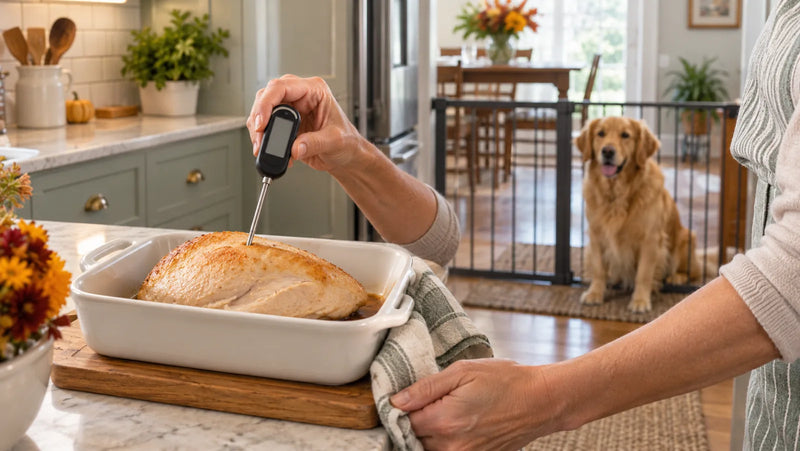
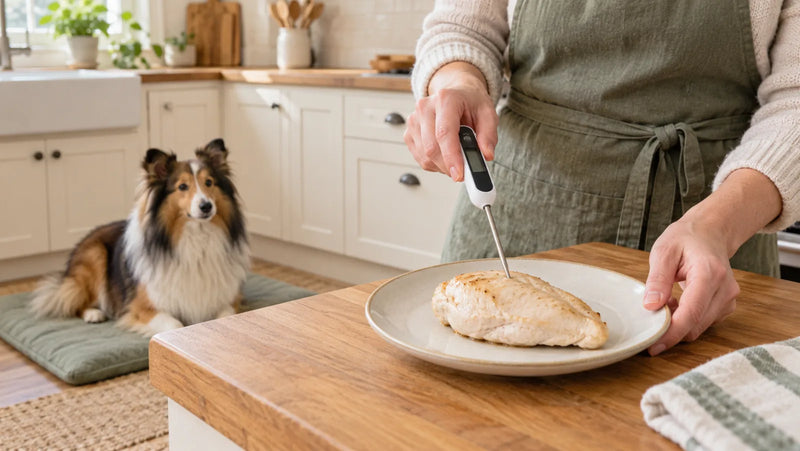
For ordinary home preparation, use a food thermometer. The federal USDA FSIS cooking guidance lists 165°F (74°C) for poultry. Cook the heart plain, verify the center, cool it, and cut one tiny test piece. Do not add salt, oil, butter, gravy, garlic, onion, seasoning blends, toothpicks, or skewers.
Cooking changes water and nutrient retention; it does not create a universal cat serving. Keep raw utensils and surfaces away from the cooked portion, wash hands and tools, and discard food that was handled or stored uncertainly. A clean cooked piece can still be the wrong ingredient, calorie load, or texture for an individual cat.
Dehydrated and freeze-dried chicken hearts
Dry texture is a product characteristic, not proof of a pathogen kill step. Freeze-drying removes water under low temperature and pressure; it is not another word for cooking. Dehydrated items may or may not have had a validated heating step. Ask the manufacturer what process applies to the exact SKU rather than filling the gap with a category assumption.
The peer-reviewed 2021 AAHA/AAFP feline life-stage guidelines say the organizations do not advocate raw or dehydrated non-sterilized animal-origin foods, including treats. For any dry heart product, check intended species, complete ingredients, calories per piece or gram, piece dimensions, texture, lot information, storage, and evidence for the processing claim.

How Much Chicken Heart Can a Cat Have?
The WSAVA guide to feeding treats to cats says all treats together should remain below 10% of daily calories and should never replace a meal. Ten percent is a ceiling, not a chicken-heart target. It includes toppers, dental products, table tastes, foods used for medication, and every person in the household giving rewards.
Use the cat's veterinarian-confirmed daily calorie target. If that target were 200 kcal, the under-10% ceiling for every extra combined would be under 20 kcal. That is a math example, not a feeding prescription. A natural heart varies, and a packaged heart can be surprisingly calorie-dense.
For a healthy adult cat cleared for chicken, begin with one crumb or pea-size piece of a plain compatible form—not one whole heart. Offer it while supervising, then wait before trying more. Do not convert a dog serving chart by body weight or assume a cat should receive a daily piece.
Kidney Disease and Other Reasons to Ask the Veterinarian First
The Cornell Feline Health Center's current chronic kidney disease guidance describes therapeutic diets that may restrict protein, phosphorus, and sodium while supporting other nutritional and hydration needs. That plan is individualized, and a cat can become ill if a diet change causes it to stop eating.
Do not label chicken heart “kidney-friendly.” If the exact heart product does not publish phosphorus and sodium, the missing numbers are uncertainty—not evidence that the values are low. A cat on a renal diet may need no outside treats, a veterinarian-selected alternative, or a precisely limited amount.
Ask first for a kitten, pregnant or nursing cat, cat with an elimination trial, known chicken reaction, prescription diet, pancreatitis or gastrointestinal plan, dental pain, missing teeth, swallowing history, obesity plan, recent illness, or unexplained appetite change. The veterinary team can decide whether the ingredient, form, and amount fit the entire plan.
How to Introduce One Tiny Piece
- Verify the candidate. Confirm that chicken is allowed and read every ingredient, not only the front name.
- Choose one form. Do not introduce raw, cooked, and dried versions together or combine the test with another new food.
- Make the piece cat-size. Cut or break one tiny piece that the cat cannot gulp as a large chewy object.
- Count the original calories. Breaking a piece into fragments changes delivery size, not total energy.
- Supervise and observe. Stop for vomiting, diarrhea, itching, facial swelling, coughing, gagging, difficulty chewing, appetite change, or other concerning signs.
Difficulty breathing, collapse, blue or pale gums, repeated distressed gagging, or an active choking event needs urgent veterinary help. A mild stool change after a new food is different from airway distress, but both are reasons to stop offering the product until the cat has been assessed appropriately.
Keep the Dog Question Separate
Dogs and cats have different nutrient requirements, calorie budgets, eating behavior, and medical-diet decisions. The guide to chicken hearts for dogs covers the dog-side benefits, preparation, and portion questions. Its dog serving language should not be copied into a cat plan.
Other feline animal-food decisions also keep their own risk profiles. The guide to beef liver for cats focuses on vitamin A and the difference between one taste and repeated excess. For a plain holiday-meat comparison, use the separate guidance on turkey for cats, which screens skin, bones, brine, deli slices, and seasoning.
What the Current American Paws Product Page Actually Says
The current American Paws page for dehydrated chicken hearts for dogs lists 100% USA chicken hearts, a 4 oz package, and approximately 20 kcal per piece. The product title, feeding guide, and page copy are dog-directed, and the product is labeled for intermittent or supplemental feeding.
Those are useful label facts, not cat clearance. Do not apply the dog chart to a cat. Because one listed piece is about 20 kcal, a whole piece could consume or exceed a cat's entire extras ceiling, depending on the veterinarian-confirmed daily calorie target. Ask the cat's veterinarian whether the exact dog-labeled product and processing evidence fit, then use only the approved fraction.
Frequently Asked Questions
Can kittens eat chicken hearts?
Do not use chicken heart as a growth-food shortcut. Kittens need complete-and-balanced kitten food, and their small mouths and calorie budgets make portion error easy. Ask the veterinarian when a separate treat is appropriate, then use a tiny compatible piece rather than a whole heart.
Are chicken hearts a taurine supplement for cats?
No. They can contribute taurine, but a heart does not provide a tested dose for an individual cat and cannot replace complete food or a prescribed supplement. Processing and natural variation also change the amount present. Treat diagnosed or suspected deficiency only with veterinary guidance.
Can cats eat raw chicken hearts?
Raw poultry carries pathogen and household-contamination risk. FDA testing found raw pet food more likely than other tested categories to contain disease-causing bacteria. Freezing and rinsing do not turn a raw heart into a sterile product.
Can cats eat cooked chicken hearts every day?
Do not make “daily” the default. Even a plain cooked heart is an extra with calories and an incomplete nutrient profile. Use the total treat ceiling, the exact amount, the cat's body condition and diet, and the veterinarian's plan to decide frequency.
Are freeze-dried chicken hearts safe for cats?
Not by format alone. Verify that the product is intended for cats, read the ingredients and calories, assess piece size and texture, and ask what pathogen-control step was validated. Freeze-drying is not the same as cooking or sterilization.
Can a cat with kidney disease eat chicken hearts?
Only if the treating veterinarian approves the exact product and amount. Renal plans may control phosphorus, protein, sodium, calories, and all extras. A product without published phosphorus or sodium data should not be assumed to fit.
The Bottom Line
A healthy adult cat that tolerates chicken may be able to enjoy one tiny piece of plain, fully cooked chicken heart occasionally. Keep complete cat food in charge, avoid raw-food risk, do not infer safety from a dry texture, and count the exact calories. Taurine is important; it is not a reason to turn an organ treat into a meal.
Use the cat-treat selection guide to screen labels and portions, or browse current American Paws treats for live product facts. The chicken-heart product is dog-labeled, so ask the cat's veterinarian before sharing it—especially with kidney disease, a prescription diet, or any unresolved feeding concern.