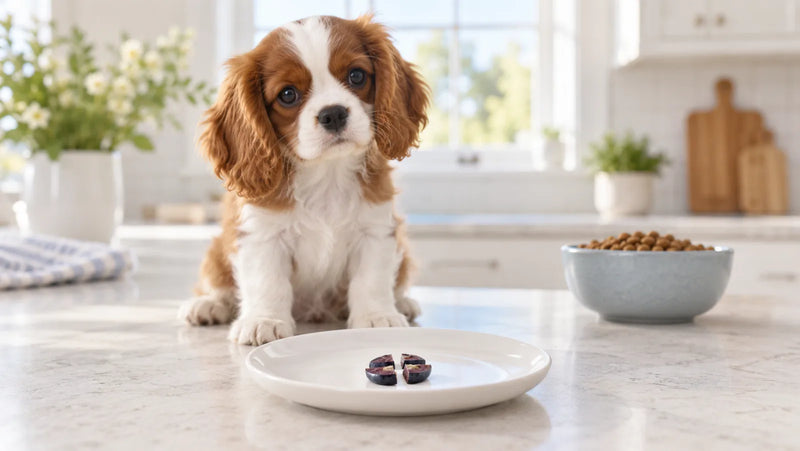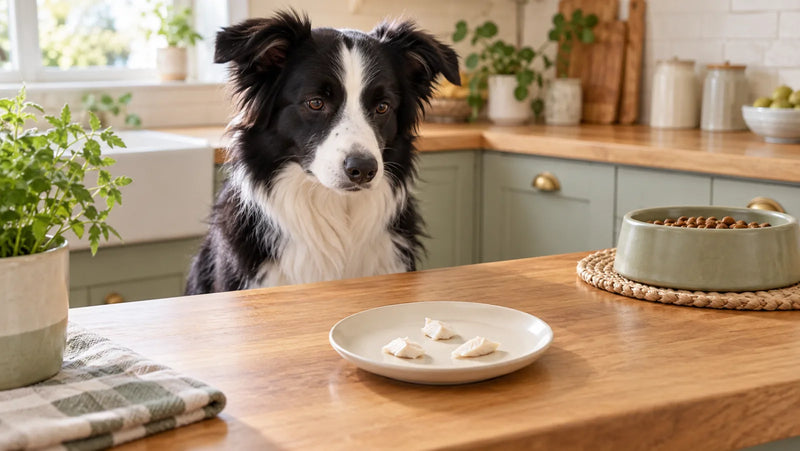

Can cats eat dog treats? A healthy adult cat that steals one small, ordinary dog treat with no cat-unsafe ingredient will often need monitoring rather than emergency treatment, but dog treats should not become the cat's routine reward by default. Read the exact ingredient list, check the amount and missing packaging, and confirm whether the product is labeled for cats.
Call a veterinarian or animal poison service promptly if the treat contains onion or garlic, propylene glycol, an unknown ingredient, or if your cat swallowed a large or unknown amount, a wrapper, or a packet from the bag. Trouble breathing, repeated vomiting, weakness, pale gums, tremors, collapse, or any other concerning sign also needs professional help. Do not wait for symptoms after a known high-risk ingredient exposure.
Can Cats Eat Dog Treats? The Short Answer
The answer depends on the exact treat, amount, cat, and purpose. A product being sold for dogs does not make every bite poisonous to cats, but it also does not establish feline suitability. Use this first-pass guide:
| Situation | Best next step |
|---|---|
| One small piece; package known; no concerning ingredient; healthy adult cat; no symptoms | Remove access, preserve the package, monitor closely, and use a cat-suitable reward next time. |
| Onion, garlic, chives, leeks, propylene glycol, an unknown ingredient, or an unclear sugar-free formula | Call your veterinarian or an animal poison service now for product-specific guidance. |
| Large or unknown amount, missing wrapper or packet, hard oversized chew, or choking concern | Call promptly; breathing trouble is an emergency. |
| Vomiting, diarrhea, drooling, weakness, pale gums, fast breathing, dark urine, tremors, or collapse | Seek veterinary care; bring the package and exposure details. |
| Owner wants to share the product routinely | Use only if the exact item is suitable for cats, the texture fits, and the calories stay within the cat's treat allowance. |
This is not a universal clearance for a brand or product category. Ingredient lists and formulations change, and a cat's prescription diet, allergy, age, dental condition, or illness can change the answer.
Dog Treats Are Not the Same Question as Dog Food
A dog treat is a supplemental food. It is usually not designed to provide every nutrient a dog needs, and a cat treat is usually supplemental too. The FDA explains that treats and snacks are typically not intended to be complete and balanced diets. That makes the immediate question about one treat different from the long-term question of feeding dog food as a meal.
One small dog treat does not create an instant taurine deficiency. The concern with repeated sharing is that unsuitable extras can add calories, expose a cat to ingredients or textures not chosen for cats, complicate an allergy or therapeutic diet, and gradually displace the complete-and-balanced cat food meant to supply feline nutrition.
For kibble, canned food, meal replacement, and repeated bowl stealing, read why dog food cannot be a cat's regular diet. That article owns the main-food question; this page stays with dog-treat exposure and reward selection.
Why Cats Need Their Own Nutritional Foundation
Cats and dogs are not nutritionally interchangeable. The Merck Veterinary Manual's small-animal nutrition reference explains that cats require dietary taurine and have higher requirements for some amino acids and certain other nutrients than dogs. Complete-and-balanced cat food is formulated around those feline needs and the cat's life stage.
A meat-heavy dog treat can contain protein without being a complete feline diet. "High protein," "natural," and "made with chicken" are not substitutes for an ingredient statement, a calorie statement, species labeling, or a nutritional-adequacy statement. Likewise, adding a supplement to dog food at home does not reliably turn it into balanced cat food.
Keep the logic straight: feline nutrition explains why cat food remains the foundation. It does not prove that every dog-labeled treat is acutely toxic. The exposure decision still comes from the product label, amount, physical form, and individual cat.
Read the Dog-Treat Label Before Sharing
Onion, garlic, chives, and leeks
Do not intentionally give cats dog treats containing onion, garlic, chives, or leeks. Check for powders, flakes, seasonings, broth blends, and flavor systems rather than scanning only the front of the bag. The Merck Veterinary Manual's allium toxicosis review notes that cats are especially susceptible and that concentrated forms such as powders and flakes are common concerns.
Damage to red blood cells can develop before obvious anemia signs appear, so a cat may look normal immediately after an exposure. Call rather than trying to calculate a safe amount from an online chart. Weakness, loss of appetite, pale or yellow-tinged gums, fast breathing, dark or reddish urine, and collapse can appear later and require veterinary care.
Propylene glycol
Propylene glycol has been used as a moisture-holding ingredient in some soft or semi-moist products made for other species. The FDA states that propylene glycol has not been shown safe for use in or on cat food and that current rules prohibit that use except under narrow regulatory conditions that are not available for ordinary cat food.
If a dog treat lists propylene glycol, do not use it as a cat treat. After an accidental exposure, keep the package and call the veterinarian for advice based on the product, amount, time, and cat. Do not confuse propylene glycol with glycerin or glycerol; they are different ingredients and should not be treated as interchangeable names.
Sweeteners and sugar-free formulas
Read the actual sweetener name. "Sugar-free" does not tell you which compound is present, what else is in the product, or whether the treat is suitable for cats. Sweeteners can add unnecessary ingredients or cause digestive upset, and a flavored product may contain a different co-ingredient that drives the risk.
Xylitol requires an important species distinction. It is a documented emergency in dogs, but the Merck Veterinary Manual's xylitol review states that cats are not at risk for the same xylitol-related hypoglycemia or liver injury described in dogs. Do not repeat a dog-specific toxic dose as if it were a feline threshold. Still, if a cat ate an unknown sugar-free product, the exact formulation is unclear, or symptoms appear, call a veterinary professional rather than guessing from the marketing phrase.
Calories, fat, sodium, allergens, and texture
Even when a label contains no acute toxin, the treat may be a poor match. Dog treats can be much larger than a useful cat reward. A hard biscuit or chewy strip may be difficult for a cat to bite safely, while a calorie-dense piece can consume much of a small animal's daily extras budget. Salty, fatty, heavily flavored, or multi-ingredient products offer no advantage over a simpler cat-suitable option.
Do not share a protein that the cat is avoiding for a suspected allergy, elimination trial, or prescription diet. Ask the veterinary team before adding any outside food for a cat with kidney, urinary, gastrointestinal, pancreatic, diabetic, weight-management, or other medically managed needs.

My Cat Ate a Dog Treat: What Should I Do?
- Stop access. Put away the treat bag and separate pets so the amount does not increase.
- Preserve evidence. Keep the original package, ingredient panel, calorie statement, lot information, and any remaining pieces. Check whether a wrapper, oxygen absorber, desiccant, or other packet is missing.
- Estimate the exposure. Note the product name, treat size, likely number eaten, earliest and latest possible time, and whether the piece was swallowed whole.
- Record the cat's details. Have weight, age, health conditions, medications, diet, and current symptoms ready.
- Call when the risk is not clearly low. Known onion or garlic, propylene glycol, an unknown ingredient or amount, missing packaging, choking risk, a kitten or medically fragile cat, or any symptoms justify prompt professional guidance.
In the United States, your veterinarian or emergency clinic can advise on the next step. The ASPCA Animal Poison Control Center is available at 888-426-4435; a consultation fee may apply. Do not induce vomiting, give hydrogen peroxide, force food or water, or try another home remedy unless a veterinarian or poison professional specifically directs it for this cat and exposure.
When home monitoring is advised, watch appetite, energy, breathing, gum color, swallowing, vomiting, diarrhea, urine color, and behavior for the time the professional recommends. Allium-related anemia signs can be delayed, so feeling reassured by the first symptom-free hour is not a substitute for advice after known onion or garlic exposure.
Can Dogs and Cats Share Any Treats?
Yes, some individual products are intentionally suitable for both species. The safe way to choose is product by product:
- the package or manufacturer identifies both dogs and cats as intended species;
- the complete ingredient statement fits both animals and the individual cat;
- the label gives a usable calorie unit or the manufacturer can provide one;
- the piece can be broken or selected in a cat-safe size and texture;
- the treat remains a measured extra, not a meal or nutrition repair; and
- the cat has no conflicting allergy, prescription diet, disease plan, or veterinary restriction.
American Paws' freeze-dried chicken breast treats for dogs and cats are a current example made with 100% USA chicken breast. They can be broken into a suitable small piece for a cat that already tolerates chicken. This is an item-specific statement: it does not make every American Paws product suitable for cats, and chicken alone is not a complete feline meal.
For a broader label, calorie, texture, age, and health-fit framework, use our best cat treats selection guide. A shared bag is convenient only when the exact product truly fits both pets.
How Often Can a Cat Have a Suitable Shared Treat?
Count a suitable dual-species treat with every other extra the cat receives: training rewards, toppers, pill food, table tastes, and snacks from other family members. Keep at least 90% of the cat's calories in complete-and-balanced food and keep all extras below 10% of daily calories unless the veterinary team gives a different plan.
There is no universal piece count. One large dog treat may contain more calories than several cat-sized crumbs, and breaking a piece changes reward moments but not total calories. Our daily cat-treat calorie guide shows how to start from the cat's actual calorie target and the product's calorie statement. Do not borrow a dog serving chart for a cat.
Frequently Asked Questions
Will one dog treat hurt my cat?
One small, ordinary dog treat without a cat-unsafe ingredient is often a monitor-and-prevent event for a healthy adult cat, but the answer changes with the exact formula, amount, texture, packaging, and cat. Check the label and call if any part is concerning or unknown.
Can kittens eat dog treats?
Do not make dog treats part of a kitten's routine. Growth nutrition and small airway size leave less room for unsuitable calories or texture. If a kitten steals a piece, preserve the package and call the veterinarian when the ingredient, amount, size, or symptoms raise concern.
Can cats eat dog biscuits?
A crumb of a plain biscuit may not be toxic, but many dog biscuits are too large, hard, calorie-dense, or ingredient-heavy to be useful cat treats. Choose a product specifically suitable for cats instead of trying to convert a dog portion.
Can cats eat soft dog treats?
Soft does not automatically mean cat-safe. Read the ingredient list for onion or garlic, propylene glycol, sweeteners, flavor blends, and the cat's excluded proteins. Also check calories and whether the sticky or chewy texture can be offered in a safe small piece.
Is propylene glycol safe for cats?
Do not intentionally feed a cat a product listing propylene glycol. FDA says it has not been shown safe for use in or on cat food and prohibits that use under current ordinary-food conditions. Call the veterinarian for exposure-specific advice rather than estimating from a dog label.
Is xylitol toxic to cats like it is to dogs?
Current veterinary references do not identify cats as being at risk for the same xylitol-induced hypoglycemia or liver injury seen in dogs. That does not make every sugar-free product suitable for cats: confirm the exact formula and contact a professional after an unknown exposure or any symptoms.
Can cats eat freeze-dried dog treats?
Only when the exact product is also suitable for cats. Check the intended species, complete ingredient statement, processing and storage directions, calories, texture, and the individual cat's diet. Freeze-dried describes a process; it is not a universal safety guarantee.
Give the Cat a Cat-Suitable Reward
The calm rule is simple: do not panic over every stolen crumb, and do not turn that into permission to share every dog treat. Check the exact item, respond early to a risky or unknown exposure, and keep complete-and-balanced cat food in charge.
If chicken fits your cat, consider the current dual-species freeze-dried chicken product linked above and break off a measured cat-sized piece. Otherwise, browse the current American Paws pet treats for context and verify the intended species on each product before buying or sharing.