
Can cats eat dog food? A healthy adult cat that steals one or two bites of ordinary dog food will usually not have an acute poisoning emergency, but dog food must not become the cat's meal, routine snack, or backup diet. Cats need a complete-and-balanced food formulated for cats and their life stage. Dog food is made to a different nutrient profile and cannot reliably supply everything a cat requires.
If your cat ate dog food, first identify the exact product, amount, and time. Remove access, offer the cat's normal food and water, and monitor. Call a veterinarian promptly for a large or unknown amount, a food containing a concerning ingredient, repeated vomiting or diarrhea, breathing trouble, facial swelling, marked weakness, pain, collapse, or a cat with a medical diet or other special risk.
Can cats eat dog food? The quick answer
The useful answer depends on whether “eat” means one stolen mouthful or a feeding pattern. Ordinary dog food is not automatically a feline poison. It is also not a suitable feline diet.
| Situation | What it means | What to do |
|---|---|---|
| One or two bites; healthy adult cat remains normal | Usually an accidental taste, not a nutrition crisis | Remove the bowl, check the label, restore the normal cat diet, and monitor. |
| Cat regularly finishes the dog's leftovers | Dog food is displacing balanced cat food | Separate meals now and discuss appetite or diet concerns with the veterinary team. |
| Dog food is being used for full meals | The cat is receiving a diet formulated for another species | Contact a veterinarian for a safe transition to an appropriate complete cat food. |
| Large amount, unknown product, raw or spoiled food, medicated food, or symptoms | Ingredient, contamination, calorie, medication, or illness risk may be present | Call a veterinarian or emergency clinic for case-specific guidance. |
Will cats eat dog food? Many will. Smell, fat, texture, curiosity, competition, or easy access can make another animal's bowl interesting. Willingness to eat it says nothing about nutritional adequacy. Cats also investigate foods that are too rich, unsafe, or simply intended for another species.
Why dog food cannot replace cat food
Cats and dogs have different nutrient profiles
The Association of American Feed Control Officials' pet-food selection guide explains that dogs and cats have different nutrient requirements and that food should be formulated for the intended species and life stage. The small-print nutritional adequacy statement—not a meat photo or a high-protein slogan—is the decisive label clue.
Look for a statement saying the food is complete and balanced for cats and for the relevant life stage, such as adult maintenance or growth. A package formulated to meet an AAFCO Dog Food Nutrient Profile is still dog food. A product marked “for intermittent or supplemental feeding only” is not a complete main diet for either species.
Cats are obligate carnivores, but that does not mean meat alone is complete
The Cornell Feline Health Center's feeding guide describes cats as obligate carnivores that rely on nutrients found in animal products. That phrase is sometimes misread as permission to feed any meat-heavy product. It actually points to feline-specific nutritional needs.
A bowl of plain muscle meat, a chicken treat, or a protein-rich dog food does not automatically provide the right amino acids, fatty acids, vitamins, minerals, and calorie balance in the right proportions. The complete formulation matters. “Contains meat” and “complete for cats” are not interchangeable claims. To choose treats made for cats, start with our best cat treats guide.
Taurine supports feline heart and retinal function
Cats need taurine from their diet. Dog foods may contain taurine from ingredients or added sources, but they are not required to meet feline taurine needs and should not be used to do so. The Merck Veterinary Manual's small-animal nutrition reference explains that taurine is essential in cat diets and that deficiency can cause dilated cardiomyopathy and central retinal degeneration.
Those conditions are consequences of sustained nutritional deficiency, not a prediction after one stolen kibble. They are the reason not to normalize a bad feeding pattern while the cat still appears well. Deficiency signs can take time to develop, and retinal damage may not be reversible. Prevention means feeding a correctly formulated feline diet, not waiting for symptoms.
Preformed vitamin A and arachidonic acid also matter
Cats also require dietary sources of preformed vitamin A and arachidonic acid. Dogs can make use of metabolic pathways that cats cannot rely on to the same degree. Merck's dog-and-cat food comparison notes that dog foods may not contain the assured concentrations of taurine, preformed vitamin A, arachidonic acid, protein, fat, vitamins, and minerals needed by cats.
This does not mean every dog-food formula contains zero taurine, vitamin A, or arachidonic acid. It means the dog label cannot be trusted to meet feline requirements. Sprinkling one supplement over dog food at home does not rebalance all the other nutrients or prove that the finished diet is safe.
What if my cat ate dog food once?
One small accidental taste and the cat seems normal
Pick up the dog bowl, note roughly how much is missing, and read the full ingredient list. Let the cat return to its normal complete food at the regular time. Keep fresh water available and monitor appetite, energy, breathing, vomiting, diarrhea, itching, facial appearance, and litter-box use.
Do not make the event bigger by withholding the cat's normal food, forcing water, or giving oil, milk, salt, charcoal, or another home remedy. Do not induce vomiting unless a veterinarian specifically directs you. For an ordinary small taste and a cat that stays completely normal, the practical focus is preventing repeat access.
Check the exact product, not just the word “dog food”
Risk can change when the product is raw, spoiled, moldy, unusually fatty, medicated, part of a prescription diet, or mixed with human food. Save the package, lot number, ingredient panel, and a photo if you need to call. Be ready to give the cat's weight, age, health conditions, time of ingestion, estimated amount, and current symptoms.
A cat with a known food allergy or a veterinary elimination diet may react to an ingredient that another cat tolerates. A kitten, senior, pregnant or nursing cat, or cat with diabetes, kidney disease, heart disease, pancreatitis, swallowing difficulty, or another medical condition deserves an earlier veterinary call. For age-appropriate options, see our guide to the best treats for kittens.
Signs that need prompt veterinary advice
- repeated vomiting or diarrhea, blood, or inability to keep water down;
- facial swelling, hives, breathing trouble, collapse, or rapidly worsening weakness;
- gagging, choking, drooling, abdominal swelling, or obvious pain;
- marked lethargy, wobbliness, tremors, or unusual behavior;
- a large or unknown amount, a medication exposure, or a product with a concerning ingredient; or
- refusal of normal cat food, especially in a kitten or an overweight, elderly, or medically fragile cat.
This list is not a diagnostic test. If the cat looks wrong or you cannot identify what was eaten, an early call is safer than waiting for every possible sign.
How long can a cat live on dog food?
There is no responsible “safe number of days.” The answer changes with the exact formulas, how much cat food is still being eaten, the cat's age and health, and which nutrients are short or excessive. A visible emergency may not occur on day one, while the diet can still be nutritionally wrong from the first replacement meal.
If normal cat food is unexpectedly unavailable, call the regular veterinary clinic, an emergency clinic, or a local pet-food retailer for an appropriate short-term option. Do not use online timelines to turn dog food, tuna, chicken breast, treats, or a homemade mixture into a do-it-yourself feline diet. A growing kitten or a cat that has stopped eating needs especially prompt veterinary guidance.
How to read the package before feeding a cat
- Find the intended species. The package should identify the food as cat food, not merely show an animal protein cats can eat.
- Find the nutritional adequacy statement. Look for complete-and-balanced language tied to an AAFCO Cat Food Nutrient Profile or animal-feeding tests.
- Match the life stage. Growth, gestation/lactation, adult maintenance, and all-life-stages claims are not the same.
- Read the intended-use wording. “Intermittent or supplemental feeding only” identifies a treat, topper, or other extra—not a sole diet.
- Read every ingredient and calorie information. Check known allergies, veterinary restrictions, and how the food fits the cat's daily energy intake.
A cat treat follows the same logic. It can be appropriate as a small extra without being complete food. Our guide to using training treats for cats explains how tiny rewards support training while the complete diet stays in charge.
How to keep a cat out of the dog's bowl
Feed scheduled meals in separate spaces
Put the cat and dog behind different doors or use separate rooms during meals. Give each animal enough quiet time to finish, then remove both bowls. Free-feeding a dog creates an all-day opportunity for a determined cat, so ask the veterinary team whether scheduled feeding fits both animals.
Use physical access controls
A cat may eat on a stable elevated surface that the dog cannot reach, but height alone does not keep the cat out of the dog's floor bowl. A baby gate with an appropriate pet opening, a closed room, a supervised feeding station, or a microchip-activated feeder may be more reliable. Choose a setup that does not trap, frighten, or force either animal to compete.
Pick up leftovers and clean bowls
Measure each meal, watch the session, remove leftovers, and wash bowls. Do not leave a shared scoop in both bags, because it can move crumbs between diets and make an allergy or prescription-diet plan harder to control.

Investigate persistent stealing instead of punishing it
Do not punish the cat for approaching the bowl. Improve access control and ask why the behavior persists. The dog food may simply be available, but increased hunger can also accompany an inadequate portion, boredom, medication effects, parasites, diabetes, hyperthyroidism, gastrointestinal disease, or another problem. A new or intense appetite change belongs in a veterinary conversation.
Can dogs and cats share treats?
Some individual treats are marketed for both dogs and cats, but species suitability must be checked product by product. The exact ingredient must fit both animals, the texture must be safe for each mouth, and the item must remain a small supplemental reward. A bag being sold among dog treats does not automatically make every product inside the category cat-appropriate.
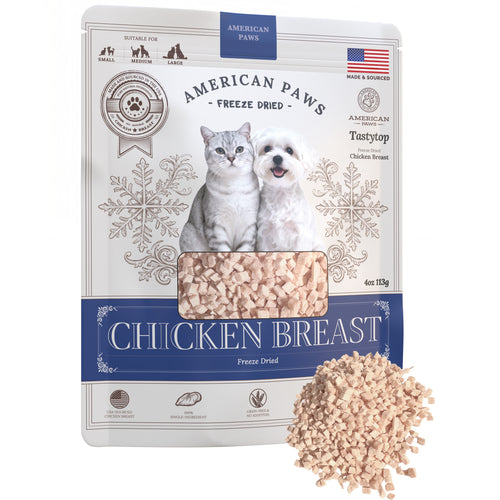
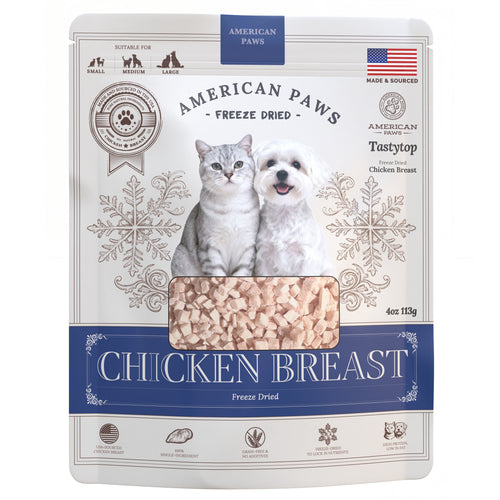
American Paws' freeze-dried chicken breast treats for dogs and cats are a current single-ingredient option made from 100% USA chicken breast. They are treats, not complete food. Break a suitable piece small, use only when chicken fits the individual cat, and count it with every other extra.
For feline portions, use our daily cat-treat allowance guide. For the separate question of plain chicken, preparation, and what meat cannot replace, see whether cats can eat chicken safely. Neither article turns a supplemental food into a balanced feline meal.
Frequently asked questions
Can cats eat wet dog food?
A tiny accidental taste of ordinary wet dog food is usually different from using it as a diet. Moisture does not correct the species mismatch. Wet dog food is formulated to canine requirements, so it should not replace complete-and-balanced wet or dry cat food.
Can cats eat dry dog food?
One stolen kibble is not automatically toxic, but dry dog food is still dog food. Repeated bowl stealing can displace the cat's balanced diet and add uncounted calories. Separate feeding stations and remove the dog's leftovers.
Can kittens eat dog food?
Do not feed dog food to a kitten. Growth places demanding requirements on protein, amino acids, fatty acids, vitamins, minerals, and calorie density. A stolen crumb does not guarantee illness, but repeated feeding needs prompt correction with veterinary guidance and a complete food labeled for kitten growth.
Is cat food okay for dogs?
A dog stealing a small amount of ordinary cat food is a different question, but cat food should not become the dog's diet either. It may be richer and more calorie-dense and is formulated for cats. Repeated access, a large amount, symptoms, allergies, pancreatitis history, or a medical diet warrants veterinary advice.
Can I add taurine to dog food for my cat?
No home-added amount turns dog food into a complete feline diet. Taurine is only one of the differences between feline and canine nutrition, and the correct amount depends on the whole formulation. Use a complete-and-balanced cat food or a veterinary nutritionist's individualized recipe.
Keep cat food in charge
The safest conclusion separates exposure from nutrition: one small accidental bite of ordinary dog food is usually a monitor-and-prevent event, while routine dog-food feeding is an inappropriate diet. Read the exact label, watch the individual cat, and call early when the amount, ingredients, health history, or symptoms create doubt.
Keep complete-and-balanced cat food as the nutritional foundation. Use suitable treats as measured extras, never meal substitutes. If you are comparing current American Paws options, browse all current American Paws dog treats and verify the individual product's species label before offering anything to a cat.