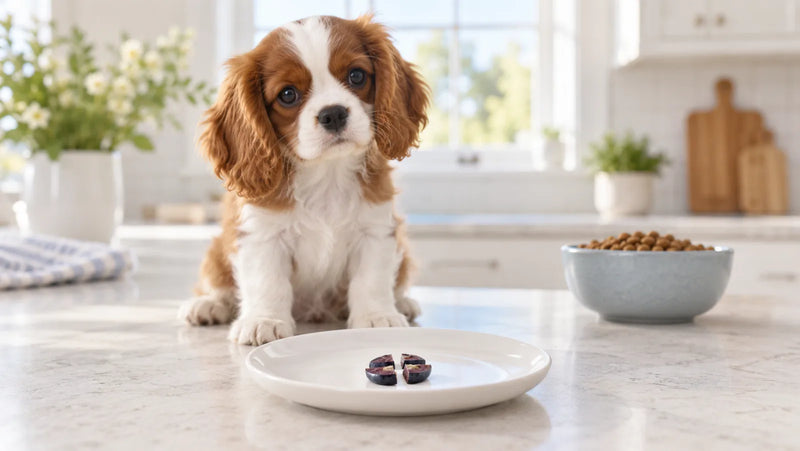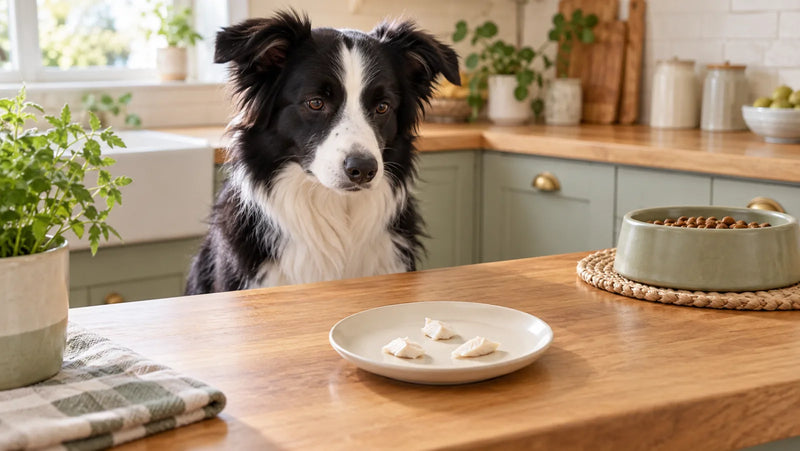

Can dogs eat caramel apples? No—do not offer one. Plain seedless apple flesh can be a separate occasional treat, but a caramel apple adds concentrated sugar and fat, may include xylitol or hazardous toppings, and usually comes with a hard core plus a wooden stick or bamboo skewer that can choke, lodge, splinter, obstruct, or puncture.
Call now if xylitol is present or possible, a stick or skewer is missing, a hazardous topping may have been eaten, the amount is large or unknown, or the dog has symptoms. Contact your veterinarian or emergency clinic, or ASPCA Animal Poison Control at 888-426-4435. The ASPCA service is available 24/7 and a consultation fee may apply. Do not induce vomiting or try a home remedy unless a veterinary professional directs it for this exact exposure.
Dog Ate a Caramel Apple? Check These Four Things Now
- Identify the recipe. Save the package, ingredient panel, bakery card, online listing, or homemade recipe. Confirm regular versus sugar-free caramel and every topping.
- Account for objects. Find every wooden stick, bamboo skewer, wrapper, bag, napkin, and piece of the apple core. A missing sharp object changes the urgency.
- Estimate the exposure. Record the maximum amount missing, when it happened, the dog's weight and age, and relevant conditions or prescribed diets.
- Check the dog. Note gagging, drooling, repeated swallowing, retching, regurgitation, vomiting, diarrhea, abdominal pain or swelling, refusal to eat, weakness, shaking, poor coordination, collapse, seizure, or unusual behavior.
Bring that information to the call. Do not wait for a dog to look sick after possible xylitol ingestion or a swallowed sharp stick. Conversely, do not label a tiny lick of confirmed regular caramel as xylitol poisoning when the label shows no xylitol and no other hazard.
Can Dogs Eat Caramel Apples? The Short Answer
Caramel apples are not a useful dog treat. Even when the coating is a conventional sugar-and-dairy recipe, the dessert is hard to portion, easy to gulp, and attached to parts a dog should not eat. The safer decision is to keep the finished dessert out of reach.
A tiny lick of confirmed regular caramel or one small bite containing only seedless apple flesh and conventional caramel may be a lower-concern event for a healthy dog. Remove access, verify the ingredients and objects, and monitor. The answer changes with a sugar-free or unknown formula, chocolate or hazardous toppings, a swallowed core, a missing stick, a large amount, a small or medically vulnerable dog, or any sign of illness.
Break the Caramel Apple Into Five Risk Questions
| Part | Main question | Why it matters |
|---|---|---|
| Caramel coating | Regular, sugar-free, low-sugar, keto, or unknown? | Xylitol requires an immediate call; regular caramel mainly adds sugar, fat, and possible stomach upset |
| Toppings | Chocolate, raisins, macadamia, candy, nuts, caffeine, or alcohol? | A topping can create its own toxic or physical exposure |
| Apple flesh | Plain, seedless, and a small bite? | The edible flesh is a different decision from the finished dessert |
| Core, stem, and seeds | How much, and were seeds chewed? | The core can obstruct; seeds contain cyanogenic glycosides |
| Stick, skewer, and packaging | Is every object accounted for? | Wood or bamboo can lodge, splinter, obstruct, or perforate |
Do not let one reassuring part clear the whole dessert. Plain apple flesh does not make a sugar-free coating safe, and a conventional caramel recipe does not make a missing skewer harmless.
Regular Caramel Is Not the Same as Xylitol
Conventional caramel is commonly built around sugar and may include butter, cream, milk, or other fats. Those ingredients can add substantial calories and may cause digestive upset, especially after a large amount or in a dog not used to rich foods. That is different from the specific toxic mechanism of xylitol.
A dog with diabetes, obesity, a pancreatitis history, gastrointestinal disease, lactose sensitivity, a prescribed diet, or a veterinarian-set calorie plan needs a more conservative answer. The fact that conventional caramel is not xylitol does not make it compatible with that dog's medical or nutrition plan.
Read any product described as sugar-free, low-sugar, keto, diabetic-friendly, or reduced-sugar with extra care. Homemade does not mean xylitol-free. The FDA warns that xylitol is toxic to dogs and may also appear as wood sugar, birch sugar, or birch bark extract. It can be present in sugar-free candy and desserts.
If xylitol is listed or cannot be ruled out, call immediately even if the dog looks normal. Do not calculate a home dose, wait for weakness, or offer food as a substitute for professional direction. Our xylitol emergency guide explains the label names and veterinary response pathway in depth.
Toppings Can Change the Answer
A caramel apple can be rolled in chocolate, candy pieces, raisins, nuts, cookie crumbs, coffee-flavored coatings, or several toppings at once. Identify the actual recipe. Chocolate or cocoa, raisins or grapes, macadamia nuts, caffeine, alcohol, and unknown sugar-free candy each require their own exposure assessment.
Do not group every nut as the same toxin. Macadamia nuts have a specific canine toxicity. Other nuts may chiefly add fat, salt, choking risk, or mold concerns. The amount, dog, and complete topping still matter.
Use our Halloween candy hazards for dogs guide for the broader candy-label decision. This page stays focused on what makes a caramel apple different: the coating is wrapped around fruit with a hard core and is mounted on an object.
The Wooden Stick or Bamboo Skewer Is an Urgent Physical Hazard
A caramel-apple stick is not digestible food. It may choke a dog, lodge in the esophagus, splinter, obstruct the stomach or intestines, or injure tissue. A sharp bamboo skewer can be even more concerning because puncture is possible.
The Merck Veterinary Manual notes that wood and other foreign objects can lodge in a dog's esophagus; signs can include sudden drooling, gagging, regurgitation, and repeated attempts to swallow. Its gastrointestinal obstruction guidance explains that unresolved foreign bodies can damage tissue and may perforate the tract.
If a stick or skewer is missing or swallowing was witnessed, call a veterinarian promptly rather than waiting to see whether it appears in stool. Do not induce vomiting; bringing a sharp object back through the esophagus can create additional danger. Do not push bread, fiber, or another bulky food as a home fix.
The Core and Seeds Are Not Serving Pieces
The apple flesh and the seed-bearing plant parts are different safety questions. Our dedicated guide to plain apple flesh, the core, seeds, and safe preparation owns the full answer: wash the fruit, remove the stem, core, and every seed, then cut a modest piece appropriate for the dog.
The ASPCA identifies cyanogenic glycosides in apple stems, leaves, and seeds. Risk depends on details such as how many seeds were involved and whether they were chewed. One accidentally swallowed intact seed is not the same as a large amount of crushed or chewed seeds, but seeds should never be an intentional serving.
The tough core and stem create a physical issue even apart from the seed chemistry. A whole or large core can choke or obstruct, particularly in a small dog or a dog that gulps food. A swallowed core, repeated retching or vomiting, abdominal pain or swelling, refusal to eat, marked lethargy, or trouble passing stool warrants prompt veterinary assessment.

A Lick, One Bite, Half an Apple, and a Missing Stick Are Different Calls
- One lick of confirmed regular caramel: remove access, verify the full recipe, and monitor a healthy dog. Call if symptoms develop or the dog has a condition that makes rich foods a concern.
- One small bite of seedless flesh with regular caramel: usually lower concern when no hazardous topping or object is involved, but it is still not a recommended treat.
- A large or unknown amount: call for case-specific advice because recipe, calories, fat, dog size, and missing parts matter.
- Sugar-free or unknown sweetener: call immediately and preserve the label or recipe.
- Missing stick, skewer, core, wrapper, or package piece: call promptly as a possible foreign-object exposure even if the dog appears normal.
- Any concerning sign: seek veterinary care rather than using an online portion example to clear the dog.
This ladder is not a safe-dose chart. It shows why identification comes before reassurance. The same visible bite can carry different risk when the coating, topping, object, or dog changes.
Halloween and Fall-Fair Prevention
Store caramel apples in a closed refrigerator, cabinet, or rigid lidded container the dog cannot open. A high open counter is not a reliable barrier for a determined dog. Count sticks and skewers before serving and again during cleanup; wrap or contain used sticks before placing them in secured trash.
Ask children and guests not to hold a finished caramel apple at a dog's nose level or leave one on a chair, bed, floor, or low table. Sweep the serving area and yard for fallen toppings, wrappers, and broken skewers. Keep ingredient labels or recipes until cleanup is complete.
For the rest of the evening—candy storage, door traffic, costumes, decorations, and a calm retreat—use our Halloween safety plan for dogs. Prevention is easier when one adult owns both the candy zone and the dog's measured rewards.
Frequently Asked Questions
What if my dog only licked caramel?
A tiny lick of confirmed regular caramel may be low concern for a healthy dog. Verify the recipe, remove access, and monitor. If the caramel is sugar-free, the sweetener is unknown, a hazardous topping is present, or symptoms appear, call promptly.
What if my dog ate one bite of a caramel apple?
Identify what was in that bite: coating, toppings, seeds, core, stick, and wrapper. A small bite of seedless flesh with conventional caramel differs from a bite containing xylitol, chocolate, a core fragment, or wood.
Are sugar-free caramel apples dangerous to dogs?
They can be if the sweetener is xylitol. Not every sugar-free recipe contains it, so check the exact ingredient list. If xylitol is present or the sweetener cannot be identified, call a veterinarian or poison professional immediately.
What if my dog swallowed the wooden stick?
Call a veterinarian promptly. Wood can lodge, splinter, obstruct, or perforate. Do not induce vomiting, push bulky food, or wait for proof that the stick will pass.
Can one apple seed poison a dog?
One intact accidental seed is not automatically a poisoning event. Risk depends on the number of seeds, whether they were chewed, and the dog's size. Still remove all seeds before serving apple and call for many chewed seeds or uncertainty.
What if the caramel apple has chocolate or nuts?
Identify the chocolate type, nut, amount, and other toppings. Chocolate and macadamia nuts have specific canine toxicities; other nuts may add fat, salt, choking, or mold risks. Call for exact-product advice rather than treating all toppings alike.
What fall treat can I give instead?
Use a labeled dog treat in a measured portion that fits the dog's regular plan. If offering plain apple, remove the core, stem, and seeds and follow the dedicated apple guide rather than sharing the caramel dessert.
Choose a Measured Dog Treat Instead
Caramel apples are for people. Before the party or fair treat comes out, reserve a few pieces from the dog's normal allowance and put one adult in charge. Browse American Paws training treats for small reward options or review all current American Paws dog treats, then choose by the exact label, the dog's needs, and a measured portion.