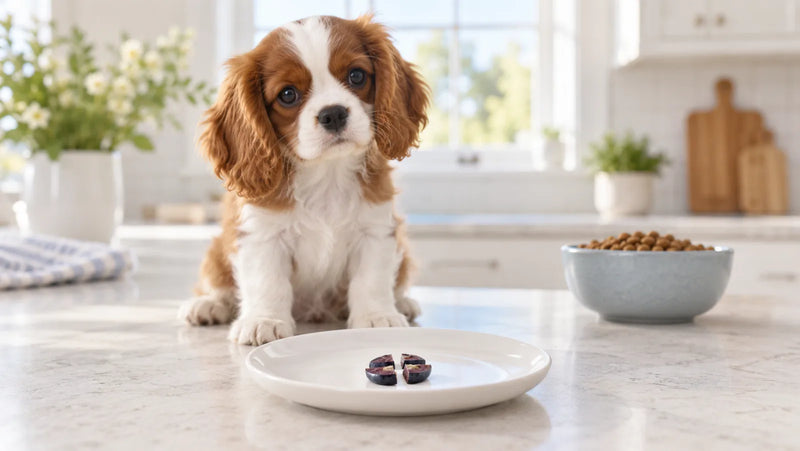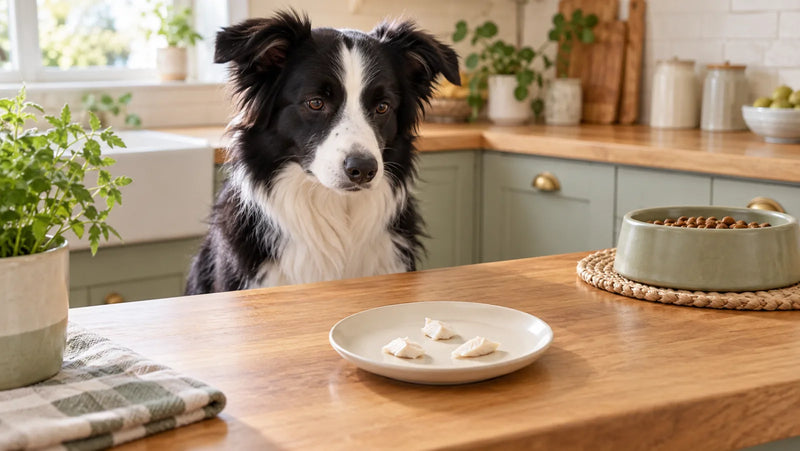

Can dogs eat cat treats? A healthy dog that eats one or two small, ordinary cat treats made only from dog-safe ingredients will often need monitoring rather than emergency care. But “cat treat” is a shelf category, not a safety guarantee. Check the exact ingredients, amount, package, dog, and symptoms before deciding what the exposure means.
Cat treats are formulated and portioned for cats. Some are richer or more calorie-dense than a dog owner expects, and some formulas contain an ingredient or physical form that does not fit a particular dog. They should not become a dog's routine reward by default. A product explicitly labeled for both species is a separate, item-specific decision.
Can Dogs Eat Cat Treats? The Short Answer
One or two small, known cat treats will often be a low-concern event for an otherwise healthy dog when every ingredient is dog-safe, no wrapper or packet is missing, and the dog remains normal. VCA's multi-pet feeding guidance reaches the same practical distinction: a couple of small cat treats are different from feeding cat products as a routine diet.
Call a veterinarian or animal poison service promptly if the ingredient list contains a known or possible dog toxin, the product is sugar-free and the sweetener is unknown, the amount is large or cannot be estimated, the dog swallowed packaging or an oxygen absorber/desiccant, or any concerning sign appears. A puppy, very small dog, medically fragile dog, or dog on a prescribed diet may need a more cautious answer.
Cat Treats Are Supplemental, Not a Better Dog Diet
A treat does not become complete nutrition just because it contains meat or has a high protein number. The Merck Veterinary Manual's dog and cat food labeling overview explains that treats and snacks are treated differently from products intended as complete diets. The dog's complete-and-balanced food should remain the nutritional foundation.
The intended species still matters. Pet-food labels identify whether a product is for dogs, cats, or both, and the directions and serving unit are written for that use. The FDA's animal-food labeling guidance emphasizes accurate product identity, ingredient listing, quantity, and manufacturer or distributor information. Read the package rather than assuming that every bite sold near cat food has the same formula.
This article stays with treats. It does not argue that cat food should replace dog food, nor does it reverse the separate question covered in our can cats eat dog treats guide. The direction of the mix-up changes the nutritional and ingredient questions.
Are Cat Treats Higher in Protein or Fat?
Some cat treats are high in protein, fat, or calories; others are not. Freeze-dried meat, soft morsels, crunchy biscuits, lickable products, dental formats, and toppers can have very different guaranteed analyses, moisture levels, piece sizes, and calorie statements. Do not treat “for cats” as a nutrient specification.
Compare the exact product:
| Label check | What it tells you | What it does not prove |
|---|---|---|
| Ingredient list | Every listed ingredient and its order by weight | That the amount fits this dog |
| Guaranteed analysis | Minimum protein and fat; maximum fiber and moisture where listed | Calories per actual piece |
| Calorie statement | Energy density and/or energy per familiar unit | That the stated cat serving is a dog serving |
| Feeding directions | The maker's intended use and species context | A substitute for an individual veterinary plan |
| Piece and texture | Whether it can be divided and comfortably handled | That swallowing it whole is safe |
For most healthy dogs, the practical concern with routine sharing is not that protein from one piece is poisonous. It is that a rich or unfamiliar food may cause vomiting or diarrhea, extra calories can crowd the daily budget, and the product may conflict with a food reaction, elimination trial, prescribed diet, or weight plan. Dogs with a pancreatitis history, abnormal blood fats, chronic gastrointestinal disease, or another diet-sensitive condition need the veterinary team's exact-product answer. One bite should not be blamed for pancreatitis automatically.
Read the Cat-Treat Label Before You Share
Use the back of the package, not the front-panel flavor name. Confirm intended species and purpose, every ingredient, calories per piece or serving, feeding directions, texture, storage, lot information, and the maker's contact details.
For dogs, pause and obtain urgent professional guidance when the label lists or may contain xylitol, chocolate or cocoa, grapes or raisins, macadamia nuts, onion, garlic, chives, leeks, alcohol, or caffeine. The WSAVA dog-treat guide identifies these as unsafe treat ingredients and also stresses physical hazards. “Sugar-free,” “natural flavor,” or an incomplete online listing is not specific enough; find the full current ingredient statement.
Also inspect the nonfood parts. A missing wrapper, cap, string, skewer, pouch fragment, oxygen absorber, or desiccant packet creates a different problem from the treat itself. Preserve everything you can identify and do not assume the packet contents from its appearance.
My Dog Ate Cat Treats: What Should I Do?
- Remove access. Secure the remaining treats, package, and any loose nonfood parts.
- Identify the exact product. Photograph the front, ingredient list, calorie statement, lot code, and feeding directions.
- Estimate the exposure. Record the number or amount missing, time, dog weight and age, health history, regular diet, and whether any wrapper or packet is unaccounted for.
- Check the dog. Note vomiting, diarrhea, drooling, repeated retching, abdominal discomfort, weakness, tremors, unusual thirst, restlessness, collapse, breathing change, or anything else abnormal.
- Choose the response. A small known amount with dog-safe ingredients and no signs may be monitored while access is prevented. A known or possible toxin, large or unknown amount, missing nonfood item, high-risk dog, or symptom calls for prompt veterinary or poison-professional advice.
Do not induce vomiting, give peroxide, add food, or try another home remedy unless a veterinarian or poison professional directs it for this dog and this exposure. The right response depends on the ingredient, amount, time, dog, and physical object involved.
How Much Cat Treat Is Too Much for a Dog?
There is no universal piece count. One airy cube, one dense soft morsel, one long strip, and one lickable tube are not equal. Dogs also differ in size, daily energy needs, body condition, activity, disease, and regular food.
For routine planning, WSAVA advises that all treats together stay at no more than 10% of a dog's daily calories. That is a ceiling for every extra—cat treats, dog treats, chews, toppers, pill foods, table bites, and rewards from every person—not a target. Our daily dog-treat calorie guide owns the full portion calculation.
A stolen handful should not be evaluated only through the 10% rule. Ingredient hazards, fat and calorie load, unfamiliar food, missing packaging, and the dog's medical history can matter before the day's treat arithmetic does.
Why Routine Cat Treats Are a Poor Default
A cat treat may use a dog's small extras allowance without serving a dog-specific need. Repeated unplanned sharing also makes it difficult to know which pet ate what, whether a medical diet stayed intact, and why one animal's weight or appetite changed.
Do not apply the cat package's serving directions to the dog. “Two pieces” has meaning only for that exact product, stated species, and use. If a dog enjoys the aroma or texture, look for a dog-labeled or verified dual-species option with a clear calorie unit and a portion that fits the dog's plan.
Routine access is especially unhelpful during an elimination diet or food-reaction investigation. Even a small, otherwise ordinary treat can become an unplanned protein exposure and make the record harder to interpret.
Can Dogs and Cats Share Any Treats?
Yes, but only when the exact product—not the aisle—is suitable for both. Look for an explicit cats-and-dogs label or confirmation from the manufacturer, a complete ingredient statement, no dog-unsafe ingredient, a measurable calorie unit, a manageable texture, and an individual history that permits the ingredients.
The current American Paws freeze-dried chicken training treats for cats and dogs are a clear example: the ingredient list is 100% USA chicken breast, and the product is labeled for both species. It is intended for intermittent or supplemental feeding only. That makes the protein easy to identify; it does not make the treat a meal or a fit for an animal whose plan excludes chicken.
Do not transfer those facts to the full catalog. Some American Paws products have different ingredients and are marketed for dogs. Cat caregivers comparing rewards should use the best cat treats selection guide; dog caregivers still need to budget their own portion.

A Multi-Pet Treat System That Prevents Mix-Ups
- Keep original packages or complete label records. Preserve ingredients, calories, lot code, storage, and intended species.
- Use separate closed storage zones. A bin, shelf, or cabinet for each pet reduces accidental grabbing and self-service.
- Feed in separate stations. Doors, gates, crates, or supervised distance can keep a fast dog from clearing the cat's reward.
- Pre-portion the day's extras. When the container is empty, the household can see that the allowance has already been used.
- Use one shared log. Record toppers, medication foods, training rewards, stolen pieces, and treats from every caregiver.
- Discard unidentified loose pieces. A mystery morsel is not worth guessing about.
Secure storage matters because the risk changes when a dog eats the whole bag, package included. The system should prevent both quiet overfeeding and the one-time raid that turns a simple treat question into an ingredient and foreign-object investigation.
Frequently Asked Questions
Will one cat treat hurt my dog?
One small cat treat is often low concern for a healthy dog when every ingredient is dog-safe, no packaging is missing, and the dog remains normal. Check the exact label. A known toxin, unknown sugar-free sweetener, high-risk dog, or symptom changes the response.
Can puppies eat cat treats?
Cat treats are not a useful default for puppies. Growth food should remain the foundation, small bodies leave little room for extras, and texture and ingredients need an age-appropriate check. Ask the puppy's veterinarian before routine use.
Can dogs eat freeze-dried cat treats?
Process alone does not decide suitability. Check whether the exact freeze-dried product is labeled for dogs or both species, which ingredients it contains, whether it was handled and stored correctly, and how its calories and texture fit the dog.
Are lickable cat treats safe for dogs?
Some may contain dog-safe ingredients, but formulas and calorie units vary. Read the entire label, do not let a dog swallow the tube or cap, and do not use a cat serving direction as a dog portion.
Can dogs eat catnip treats?
The word “catnip” does not answer the whole-product question. Check every ingredient, sweetener, flavor, medication claim, calorie unit, and physical form. Choose a dog-labeled reward instead of sharing by habit.
Why does my dog prefer cat treats?
A strong aroma, animal-protein flavor, soft texture, or novelty can make a cat treat exciting to a dog. Enthusiasm is not evidence of nutritional completeness, safe ingredients, or an appropriate portion.
Can dogs and cats use the same training treats?
They can use one product when it is explicitly suitable for both species, each pet tolerates the ingredients and texture, and each receives its own measured portion. Keep separate daily records even when the bag is shared.
Choose a Shared Treat Only When the Label Supports It
A few ordinary cat treats are often not a crisis, but routine sharing should be intentional rather than convenient. Check the exact product, protect the dog's complete diet and calorie budget, and keep multi-pet rewards identified and measured. If both pets tolerate chicken, consider the verified dual-species freeze-dried chicken above; otherwise browse American Paws treats for dog-focused context and choose an individually appropriate option.