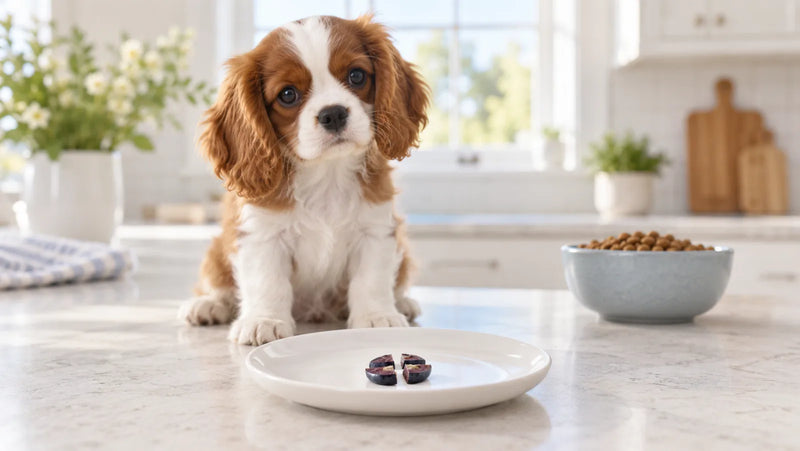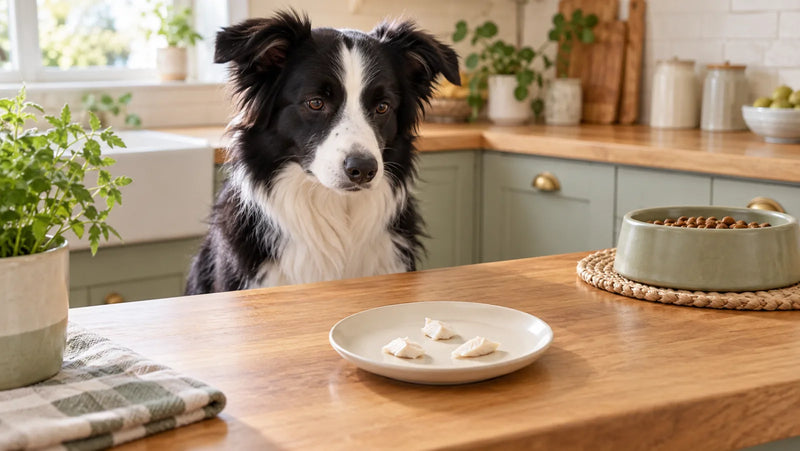

Can dogs eat eggs? Yes—most healthy dogs can have a small amount of fully cooked, plain egg. Cook the white and yolk until firm, let the egg cool, remove the shell, and serve only a size-appropriate portion. Do not add butter, oil, salt, cheese, milk, onion, garlic, hot sauce, or seasoning.
Egg is an extra food, not a complete meal and not a treatment for skin, coat, muscle, or digestive problems. The safe amount depends on the dog's normal calorie intake, body size, health, and every other reward served that day. Raw or runny egg creates avoidable foodborne-bacteria risk, while shells create separate contamination, texture, and calcium-balance questions.
Can dogs eat eggs? The quick answer
A healthy adult dog that already tolerates egg can usually eat a little plain, fully cooked egg as an occasional treat or meal topper. “Can eat” does not mean “needs,” and it does not make a whole egg the right serving for every dog.
Use this five-part gate before offering any:
- Cook it through: the white and yolk should be firm, not raw or runny.
- Keep it plain: no fat, salt, dairy, sauces, onion, garlic, or spice blends.
- Remove the shell: do not improvise a calcium supplement from breakfast scraps.
- Start tiny: introduce one new food at a time and watch the dog afterward.
- Count the calories: egg shares the same daily extra-food budget as every other treat and topper.
Skip egg unless the veterinarian approves it for a puppy, a pregnant or nursing dog, a dog on a prescription or elimination diet, or a dog with pancreatitis, high blood lipids, obesity treatment, chronic digestive disease, or a known egg reaction.
Are eggs good for dogs?
Useful food, not a necessary supplement
A cooked whole egg supplies protein and fat along with several vitamins and minerals. The National Institutes of Health biotin fact sheet, for example, lists cooked whole egg as a biotin source. Those are food facts, not proof that an added egg will fix a dull coat, build muscle, cure poor appetite, or correct a deficiency.
A dog eating a complete and balanced diet should already receive the nutrients required for its life stage. Adding more of one nutrient-rich food can also add more calories and fat or displace balanced food. The practical question is therefore not whether egg contains useful nutrients; it is whether a measured serving fits this dog's complete diet.
The whole diet matters more than the ingredient
The Merck Veterinary Manual's small-animal nutrition guidance explains that nutritional disease is uncommon when dogs eat a good complete-and-balanced diet, while unbalanced homemade diets built from a limited set of foods are a common source of problems. Egg can be an extra; it should not turn breakfast scraps into a replacement diet.
That distinction also protects dogs who do not need egg at all. A familiar, calorie-counted dog treat can be a better choice during training because it is easier to divide consistently. Variety is optional; nutritional adequacy is not.
Can dogs eat cooked eggs?
Hard-boiled, poached, or scrambled—with strict limits
Hard-boiled egg is usually the easiest form to portion because it needs no cooking fat and both white and yolk can be made firm. A plain poached egg is also workable when cooked through. Scrambled egg can be dog-safe when it is made in a clean pan with no butter, oil, milk, cheese, salt, or seasoning and is cooked until no liquid remains.
The USDA shell-egg safety guide says eggs should be cooked thoroughly until yolks are firm and scrambled eggs are not runny; mixed egg dishes should reach 160°F. That human food-safety benchmark is a useful kitchen floor, not a reason to serve a hot egg directly to a dog. Let it cool before cutting.
A simple dog-safe preparation
- Start clean. Wash hands, utensils, the counter, and the bowl before and after handling the raw shell egg.
- Cook the white and yolk fully. Hard-boil, plain-poach, or dry-scramble without add-ins.
- Cool it. Hot egg can burn the mouth, and steam can hide the serving size.
- Remove the shell. Peel hard-boiled egg completely and check for fragments.
- Cut the day's portion. Put the rest away before the dog sees it so “one more piece” does not become a whole egg.
- Refrigerate promptly. USDA advises refrigerating cooked egg dishes promptly and using refrigerated cooked egg foods within three to four days.
Egg forms to skip
- Raw, soft, or runny egg: avoidable pathogen exposure.
- Fried egg: often carries added oil, butter, salt, or browned pan residue.
- Egg salad: mayonnaise, salt, mustard, onion, garlic, relish, and other ingredients change the risk.
- Omelets and breakfast casseroles: cheese, milk, processed meat, seasoning, and onions are common.
- Breakfast sandwiches: the bread, sauces, meat, cheese, and total calories make this a mixed-food incident, not an egg serving.
- Spoiled or long-unrefrigerated egg: cooking history cannot rescue food that was stored unsafely.
Can dogs eat raw eggs?
Salmonella is the practical reason to say no
Raw egg can carry disease-causing bacteria even when it looks and smells normal. The FDA Center for Veterinary Medicine's raw-food study found that raw pet food was more likely than the other tested food types to contain pathogens. FDA also warns that contaminated food can expose the animal, the person preparing it, household surfaces, and other people through handling or bacterial shedding.
The American Veterinary Medical Association's zoonotic-disease guidance explicitly advises against feeding animals raw or undercooked meat, poultry, seafood, and eggs. An apparently healthy dog is not evidence that a raw serving was free of bacteria or that the household had no exposure.
Freezing a shell egg is not a dependable home kill step, and cracking it over kibble spreads raw egg onto the bowl, counter, hands, package, and dog muzzle. Fully cooking an egg is simple, so there is no practical nutritional prize that justifies choosing the riskier form.
The avidin and biotin controversy, explained honestly
Raw egg white contains avidin, a protein that binds biotin in the digestive tract. NIH explains that cooking denatures avidin so it can no longer interfere with biotin absorption, and Merck identifies avidin in raw egg as an antinutritional factor destroyed by cooking.
This fact is often stretched into two bad internet claims: that one accidental lick of raw egg automatically creates a biotin deficiency, or that the yolk always “cancels out” any amount of raw white. Deficiency studies use repeated, disproportionate raw-white exposure; a one-time taste is not the same scenario. But the absence of an instant deficiency does not turn raw egg into the sensible choice. Cooking addresses both the avidin mechanism and the more immediate food-safety concern.
Pasteurized is not the same as useful
Pasteurized shell eggs or egg products are made to reduce pathogen risk for recipes that remain undercooked. They do not make a raw serving nutritionally necessary for a dog, and pasteurization does not remove calories, fat, allergy potential, or diet restrictions. When egg is appropriate, fully cooked and plain remains the clearest household rule.
Can dogs eat eggshells?
Do not toss a breakfast shell into the bowl. A shell can carry contamination from handling and can leave hard, sharp-edged fragments. More importantly, “contains calcium” is not the same as “provides the correct calcium dose and calcium-to-phosphorus balance for this dog.”
Merck notes that calcium and phosphorus deficiencies are uncommon in dogs eating complete-and-balanced diets, while young dogs—especially rapidly growing large and giant breeds—are more vulnerable to excess calcium. A homemade diet may need a precisely weighed calcium source, but that is a formulation job for a veterinarian or board-certified veterinary nutritionist, not a guess based on shell count.
Remove the shell for an ordinary treat. If a veterinarian-formulated recipe specifies a prepared eggshell powder, follow that exact recipe, sanitation method, particle size, and weighed dose. Do not substitute coarse hand-crushed shell or add it on top of an already balanced puppy food.

How many eggs can a dog eat?
Start with a taste, not a whole egg
There is no veterinarian-approved universal “eggs per week” rule based only on weight. Egg size, the dog's daily calorie target, activity, body condition, main food, other treats, and medical needs all change the answer. Use the table as a conservative starting ceiling for a healthy adult whose veterinarian has not restricted egg, fat, protein, or calories—not as a feeding target.
| Adult dog size | First taste | Conservative serving ceiling | Starting weekly rhythm |
|---|---|---|---|
| Under 10 lb | 1/2 teaspoon, finely chopped | About 1 teaspoon | Up to 1–2 occasions |
| 10–25 lb | 1 teaspoon | Up to 1 tablespoon, about 1/3 large egg | Up to 1–2 occasions |
| 26–50 lb | 1 tablespoon | Up to 1/2 large egg | Up to 1–2 occasions |
| 51–75 lb | 1–2 tablespoons | Up to 1/2–1 large egg | Up to 1–2 occasions |
| Over 75 lb | 2 tablespoons | Up to 1 large egg | Up to 1–2 occasions |
A dog does not earn the ceiling by weighing enough. A sedentary large dog in a weight-loss plan may have less room for egg than an active smaller dog with a veterinarian-calculated allowance. If the egg carton lists calories, use the actual label rather than assuming every egg is identical.
Count egg inside the total treat budget
For most healthy dogs, veterinarians commonly reserve no more than about 10% of daily calories for all extras combined, leaving at least 90% for complete-and-balanced food. Our daily dog-treat calorie guide explains how to work from the dog's actual calorie target instead of counting pieces.
- Get the dog's daily calorie target from the veterinarian or the feeding plan being used.
- Find the calories for the actual egg size on its carton or nutrition record.
- Calculate the day's total extra-food ceiling.
- Subtract every training treat, chew, topper, table bite, and medication food already planned.
- Use only the egg amount that fits in what remains—or serve no egg that day.
Frequency cannot rescue an oversized serving. A whole egg once a week may still be far too much at one sitting for a tiny dog, while dividing a measured portion across training moments may be easier to tolerate and count.
When the table does not apply
Ask the veterinarian for an individual answer before using egg for:
- a puppy, especially a large- or giant-breed puppy;
- a pregnant or nursing dog;
- a dog with pancreatitis, hyperlipidemia, obesity, or a prescribed low-fat plan;
- a dog with chronic vomiting, diarrhea, inflammatory bowel disease, or another digestive disorder;
- a dog with kidney, liver, endocrine, or other disease that changes nutrient targets;
- a dog eating a prescription, hydrolyzed, novel-protein, or elimination diet;
- a dog with a previous reaction to egg.
Can dogs be allergic to eggs?
Yes. Egg is a possible canine food allergen, although food allergy overall is less common than many owners assume. Merck lists egg among foods that can trigger allergy in dogs and explains that diagnosis requires a controlled veterinarian-directed elimination diet followed, when appropriate, by a challenge. A home blood panel or one itchy afternoon does not establish the diagnosis.
Stop the new food and contact the veterinarian if egg is followed by persistent itching, red skin, ear trouble, repeated paw licking, hives, vomiting, diarrhea, gas, or a recurring pattern after each exposure. Facial swelling, breathing trouble, weakness, or collapse requires emergency veterinary care.
Do not “test” egg during a diagnostic food trial. Even a tiny bite, flavored medication, topper, or treat can make the trial impossible to interpret. Feed only what the supervising veterinarian approved.
How to introduce egg safely
- Choose the right day. The dog should feel normal, and no other new food should be introduced.
- Prepare one plain egg safely. Cook it through, cool it, peel it, and separate the dog's measured portion.
- Offer the first-taste amount. Do not start at the table ceiling.
- Watch the dog. Look for vomiting, diarrhea, gas, itching, ear redness, hives, or appetite and behavior changes.
- Decide from the result. Stop for a reaction; if everything remains normal, use the same small amount on another day before considering a larger serving.
A normal first taste proves only that the dog tolerated that exposure. It does not prove unlimited egg is safe, eliminate future allergy potential, or override a new medical diet.
What if a dog ate raw egg, shell, or a seasoned egg dish?
First identify what was eaten: raw egg only, shell fragments, or a mixed dish. Record the approximate amount, time, dog's weight, health conditions, and every added ingredient. Keep the package or recipe available. Do not induce vomiting or give a home remedy unless a veterinarian or animal poison professional specifically directs it.
- Raw egg: call the veterinarian for a very young, elderly, pregnant, immunocompromised, or medically fragile dog, or for any symptoms. Clean contaminated surfaces and wash hands.
- Shell: a few tiny accidental flecks may pass, but contact the veterinarian for coarse or large fragments, pain, repeated vomiting, trouble swallowing, blood, straining, or abdominal discomfort.
- Seasoned egg dish: check immediately for onion, garlic, chives, leeks, xylitol, heavy salt, rich fat, alcohol, chocolate, raisins, or other hazardous additions. The mixed dish may be more important than the egg.
Seek urgent veterinary care for repeated vomiting or diarrhea, severe lethargy, a swollen or painful abdomen, blood, inability to keep water down, tremors, facial swelling, breathing difficulty, weakness, or collapse. Do not wait for every sign to appear.
Frequently asked questions
Can dogs eat eggs every day?
Daily egg is usually unnecessary and can make calorie control or diet balance harder, especially for small dogs. If a veterinarian has approved regular egg for a specific dog, use a calculated portion inside the total daily diet—not an automatic whole egg.
Can puppies eat eggs?
A puppy may tolerate a tiny amount of fully cooked plain egg, but growth food must remain complete and balanced and treat calories are limited. Large- and giant-breed puppies are particularly poor candidates for improvised calcium from eggshell. Ask the puppy's veterinarian before adding egg or shell.
Can dogs eat scrambled eggs?
Yes, when the egg is scrambled until firm in a clean pan with no butter, oil, milk, cheese, salt, onion, garlic, or seasoning. Cool it and measure the dog's portion before serving.
Can dogs eat hard-boiled eggs?
Yes. A fully hard-cooked, cooled, peeled egg is one of the simplest forms to divide. Remove all shell and serve only the amount that fits the dog's calorie and health plan. To see how eggs compare with meat rewards, read our overview of protein sources for dog treats.
Is egg a single-ingredient dog treat?
Plain cooked egg contains one named food, but that does not make it appropriate for every dog or turn a homemade serving into a complete diet. Our single-ingredient dog-treat label guide explains how ingredient count, processing, calories, and individual compatibility answer different questions.
Choose simple dog treats without inventing an egg product
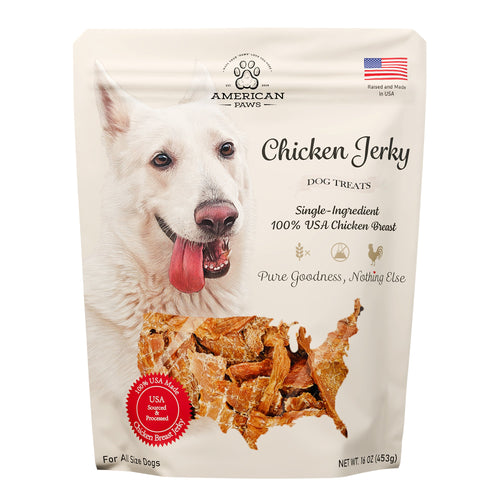
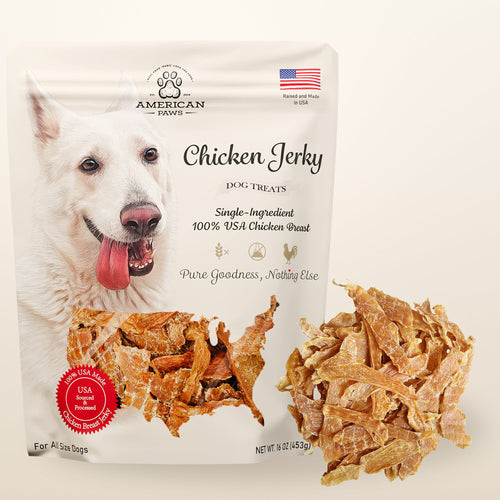
American Paws does not currently sell an egg treat, so we will not point you to an imaginary product. If egg does not fit your dog's diet—or you want a shelf-stable reward with a label you can count—compare the clearly named ingredients, calories, texture, and serving directions in our current American Paws dog treats. Choose for the individual dog, keep every extra inside the daily budget, and let complete-and-balanced food do the nutritional heavy lifting.