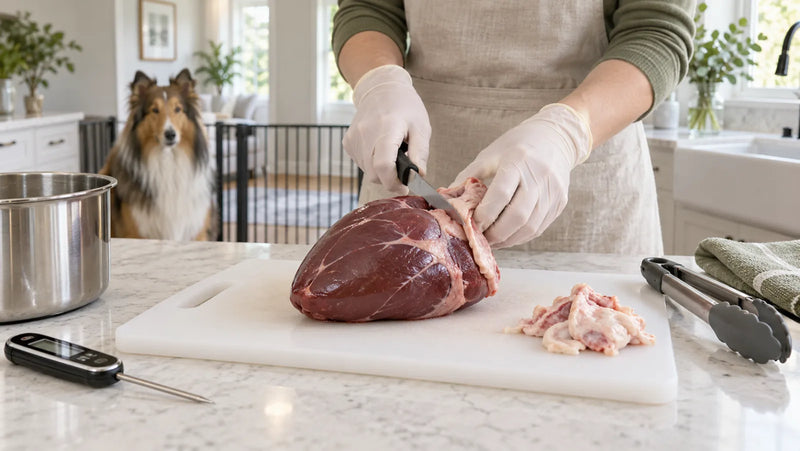

The best protein sources for dog treats are the ones your dog already tolerates, the label identifies clearly, and the portion fits the job. Chicken, turkey, duck, beef, fish, egg, and dairy can all appear in treats, but the animal name alone does not tell you the finished treat's fat, calories, texture, or suitability for a particular dog.
For everyday variety, you can stay with one familiar source or rotate a few deliberately. Introduce one product at a time and keep the complete-and-balanced main diet steady. If you are investigating itching, repeated ear trouble, or digestive signs, stop rotating and call your veterinarian; a true food-allergy evaluation follows a controlled elimination-and-challenge plan, not a tasting flight.
Protein Sources for Dog Treats: A Quick Decision Framework
Start with the dog and the full product, not a reputation attached to one species. A useful choice passes six checks:
- Known tolerance: Has the dog eaten this animal source without a problem?
- Clear identity: Does the ingredient list name every animal-derived ingredient plainly?
- Appropriate format: Is the piece soft, crisp, chewy, or breakable enough for the dog's teeth, swallowing style, and training task?
- Practical portion: Can it be divided small enough to reward without quietly replacing a meaningful part of the daily diet?
- Health fit: Does it work with the dog's veterinary diet, fat restriction, calorie target, and medical history?
- Simple purpose: Are you choosing it for an actual reason—such as a high-value recall reward or a lower-mess pocket treat—rather than because one protein has a fashionable halo?
No source wins every category. A lean, easy-to-break chicken strip may be convenient for one dog, while a tiny aromatic liver cube may be more motivating for another. A familiar protein with a transparent label is often a better everyday choice than an exotic source wrapped in vague claims.
What “Protein Source” Means on a Treat Label
The protein source answers which animal-derived ingredients are present. It is different from the crude-protein percentage in the guaranteed analysis. A percentage estimates quantity under a testing framework; it does not tell you whether the protein came from chicken breast, liver, egg, cheese, fish, or several sources together.
The FDA's pet-food labeling overview explains that ingredients are identified by their common or usual names and listed in descending order by weight. Read that list from beginning to end. Front-of-package flavor language and a large animal picture are not substitutes for the ingredient statement.
Scan for every animal source, not just the first one
A chicken-labeled recipe may also contain egg, cheese, fish oil, animal fat, broth, gelatin, or a mixed-source flavor. That may be perfectly acceptable for ordinary feeding, but it means the product does not answer a one-protein question. If a term is unclear, ask the manufacturer what species it represents and whether the recipe or production line can change.
Then separate three different label ideas:
- Single protein describes the number of animal protein sources you can verify.
- Single ingredient describes the entire ingredient count.
- Limited ingredient is broader language and does not automatically mean either of the above.
Our guide to single-protein labels and cross-contact questions owns that detailed shopping test. For a wider package-reading method—including ingredient order, guaranteed analysis, calorie statements, and serving directions—use the dog-treat label guide.
Common Protein Families and What Each Can Bring
Compare finished products within a family as carefully as you compare families. Drying method, cut, added ingredients, calories, and piece size can matter more to day-to-day use than whether the animal had feathers or fins.
| Protein family | Examples | Useful questions |
|---|---|---|
| Poultry | Chicken, turkey, duck | Is the exact bird named? Is the piece lean, fatty, soft, or chewy? |
| Red meat | Beef muscle, beef liver | Is this muscle meat or organ? How concentrated and breakable is the portion? |
| Fish | Fish flesh, dried skin | Is the species named? Does the label declare calories, fat, and any omega-3 amount? |
| Supplementary animal sources | Egg, cheese, other dairy | Are these the main ingredient, a binder, a flavor, or one part of a mixed recipe? |
Chicken, turkey, and duck are all poultry
Poultry is a family, not one interchangeable ingredient. Chicken tends to be easy to find in many formats. Turkey can look similar on a label, while duck is often marketed as an alternative, but the finished recipe still determines fat, calories, texture, and all additional sources.
A dog's response to one bird does not let you predict every response to another, and “poultry” on a history is less useful than the exact species and product. Use our turkey-versus-chicken comparison or duck-versus-chicken comparison when that species decision is the real question. This pillar stays at the family level.
Beef muscle and beef liver are red-meat options with different jobs
“Beef” may refer to muscle meat, while beef liver is an organ with a stronger aroma and a different nutrient profile. That distinction matters more than treating both as generic red meat. A strip of dried beef muscle may suit chewing or breaking into rewards; a small freeze-dried liver cube may deliver a strong scent in very little volume.
Liver is not simply “better beef.” It is nutrient-dense, so portions should remain small and the complete diet should do the nutritional balancing. The separate organ-meat guide explains liver, heart, gizzard, and other anatomy without blurring organs and muscle meat together.
Fish may contribute omega-3s, but the package has to prove the amount
Some fish ingredients can supply the long-chain omega-3 fatty acids EPA and DHA. The Merck Veterinary Manual's nutrition reference explains their roles in canine nutrition. Species, cut, processing, storage, and portion all affect what a particular fish treat contributes.
Do not turn “contains fish” into a promised therapeutic omega-3 dose. Unless the manufacturer declares and supports an EPA/DHA amount, treat the item as a treat—not as a replacement for a veterinary supplement plan. Fish skin can also be calorie-dense and must be stored carefully after opening. Our dried fish-skin guide owns those product-specific texture, portion, and storage decisions.
Egg and dairy are supporting sources, not automatic main proteins
Egg can be the main ingredient in a simple bite, but it also appears as a binder in a multi-ingredient recipe. The label still needs to show whether other animal sources are present. Preparation and portion questions belong in the guide to serving eggs to dogs.
Cheese and other dairy ingredients contribute protein, yet they may also bring meaningful fat, sodium, and lactose. A cheese-flavored product is therefore not equivalent to a lean meat treat, even when its crude-protein number looks similar. For the dairy-specific tolerance and serving boundaries, see whether dogs can eat cheese.

Novel Protein Does Not Mean Hypoallergenic
A novel protein is one that is genuinely new to this individual dog. Duck is not novel for a dog who has eaten duck kibble, duck treats, or duck-flavored chews for years. Chicken could be novel to a dog with no prior chicken exposure, though that history is uncommon in many households. Novelty comes from a complete diet history, not from how unusual the animal sounds to a shopper.
“Hypoallergenic” is a different idea. A new retail protein is not guaranteed to avoid a reaction, diagnose an allergy, or meet the controlled formulation and manufacturing standards of a veterinarian-selected therapeutic diet. It can also stop being novel once you feed it casually.
This is why buying every unusual species “just in case” can make a future veterinary trial harder. For ordinary healthy dogs, choose foods you can identify and use. For a suspected food reaction, preserve the diet history and let the veterinarian choose an appropriate novel or hydrolyzed plan.
How to Choose a Protein for Everyday Rewards
Begin with known tolerance and the treat's purpose
List the animal ingredients already present in the dog's main food, treats, chews, toppers, supplements, table food, and flavored medications. If the dog feels well on those foods, a familiar source can be the simplest baseline. You do not have to chase novelty to provide a good reward.
Next, name the job. Rapid training often calls for a tiny soft or easily broken piece. A calm enrichment moment may allow a larger chew, provided it fits the dog's chewing behavior and is supervised. A high-value emergency-recall reward needs strong motivation but still has to fit the daily calorie budget.
Judge the finished recipe
Two chicken products can differ dramatically if one is whole-cut breast and the other combines chicken with fat, starch, salt, smoke flavor, or another protein. Compare the complete ingredient statement, calorie declaration, guaranteed analysis, piece size, country-of-origin information, storage directions, and any maker answer you need. The species name alone cannot rank them.
Keep extras in their lane
The World Small Animal Veterinary Association treat guide recommends that treats stay below 10% of daily calories and never replace a complete meal. That is a ceiling for all extras combined—not 10% for chicken, another 10% for beef, and another 10% for cheese.
Protein rotation does not “balance” an incomplete treat menu. The complete-and-balanced main food supplies required nutrients in the right proportions; treats provide rewards, texture, and variety within a small allowance. Dogs with pancreatitis, kidney disease, gastrointestinal disease, obesity, or another medical condition need an individual veterinary plan before protein variety becomes the priority.
How to Rotate Protein Sources Without Losing the Plot
Rotation is optional. A healthy dog doing well on one treat does not need a revolving menu, and there is no established rule that routine rotation prevents food allergy. Useful reasons to rotate include maintaining interest in training, matching different textures to different tasks, or offering measured variety to a dog who tolerates each option.
If you rotate, make it interpretable:
- Hold the main diet steady. Do not change kibble, toppers, chews, and treats all at once.
- Add one finished product. Record its complete ingredient list, not just “turkey” or “fish.”
- Start with a small piece. Use less than the label maximum and account for the calories.
- Watch through several normal meals and stools. Note vomiting, diarrhea, itching, ear changes, appetite, and comfort.
- Change only after the dog is stable. A simple two- or three-option rotation is easier to understand than a different mix every day.
- Keep the packaging or a photo. Recipes can change, and “the blue bag” is not a useful medical history.
Stop the new item and contact the veterinary team if the dog develops repeated vomiting or diarrhea, marked itching, facial swelling, hives, pain, weakness, or another concerning change. Facial swelling, breathing difficulty, collapse, or severe distress needs urgent veterinary care. Do not immediately test a second new protein; that adds another variable before the first event is understood.
A Single-Protein Investigation Is Not an Elimination Trial
A single-protein retail treat can help an owner keep an everyday ingredient log tidy. It cannot, by itself, diagnose a food allergy. It may share equipment with other recipes, and the package may not make the cross-contact controls needed for a clinical diet trial.
The VCA elimination-challenge protocol describes a veterinarian-selected novel or hydrolyzed diet, strict control of everything the dog consumes, and a later challenge step. Treats, table scraps, chews, supplements, toothpaste, and flavored medications can all matter. The Merck Veterinary Manual's allergy overview likewise explains that food allergy is evaluated with an elimination diet and recurrence after re-exposure—not by a retail label or a blood test alone.
During a veterinary elimination trial:
- Do not rotate proteins.
- Do not add an “all-natural” treat because its front label looks simple.
- Use only rewards the veterinarian approves, which may mean pieces of the prescribed diet itself.
- Ask before giving flavored preventives or medications rather than stopping medically necessary treatment on your own.
Symptoms such as itching, ear trouble, vomiting, and loose stool have many possible causes. A veterinarian needs to examine the dog and decide whether a diet trial is appropriate. If it is, consistency produces useful evidence; casual rotation destroys it.
Protein Options American Paws Actually Sells
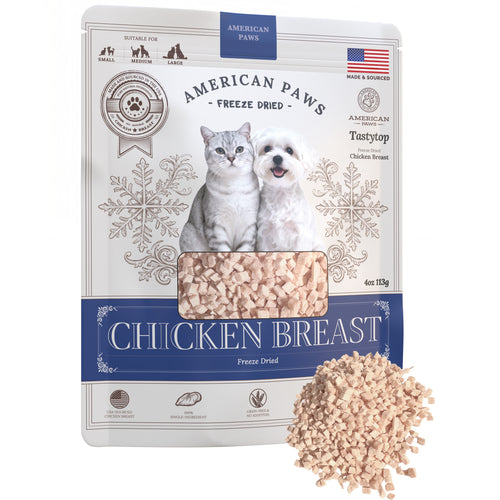
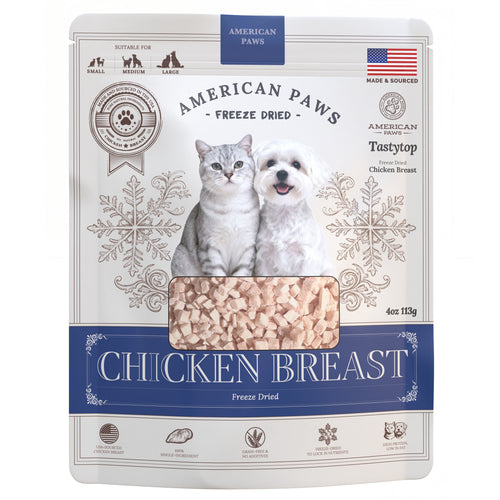
American Paws currently sells several chicken formats and a beef-liver option. We do not currently sell turkey, duck, fish, egg, or cheese treats; those sources are included here so you can compare categories honestly, not as hidden product pitches.
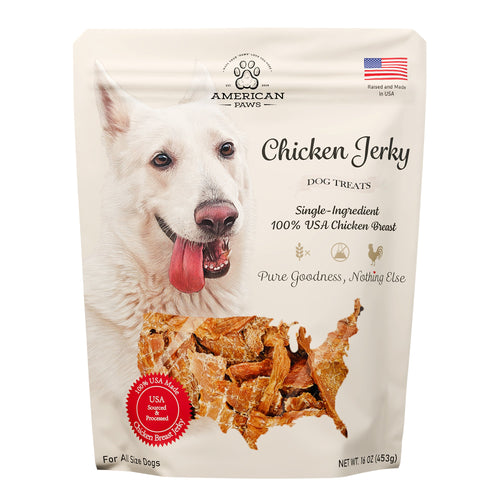
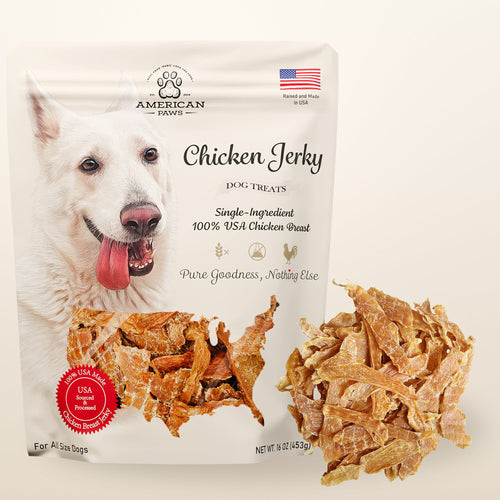
For a clearly identified poultry option, our single-ingredient whole-cut chicken breast jerky is made in the USA from 100% USA chicken breast with nothing added. The strips can be portioned to the dog and the training job rather than served as an automatic whole piece.
For a small red-meat organ reward, our single-ingredient freeze-dried beef liver training treats use 100% USA beef liver and are made in the USA. Liver's strong aroma can make a small piece valuable, but it still belongs inside the shared treat-calorie allowance.
These examples show two different jobs and formats; they do not prove that chicken or beef is right for every dog. Read the current product label when it arrives, introduce one product at a time, and follow a veterinarian's diet instructions when they are more restrictive.
Frequently Asked Questions
What is the best protein for a dog treat?
There is no universal winner. Choose a clearly labeled source the dog tolerates, then compare the finished product's ingredients, calories, fat, texture, portionability, and fit with the dog's health plan. Familiar and transparent often beats exotic and vague.
Should I rotate chicken, beef, and fish treats?
You may rotate them for variety if the dog is healthy and tolerates each complete product, but rotation is not required. Introduce one at a time, keep portions small, and retain a simple ingredient record. Do not rotate during a veterinarian-directed elimination trial.
Is duck automatically a novel protein?
No. Duck is novel only if the individual dog has never consumed duck in meals, treats, chews, supplements, or flavored products. It is not automatically hypoallergenic, and casually feeding it can remove it as a future novel option.
Does a high crude-protein percentage mean a better treat?
No. It is one number, not a quality ranking. It does not identify the animal source, ingredient simplicity, calorie density, fat, texture, digestibility for an individual dog, or manufacturing controls. Use the whole label and the dog's response.
Can I use an ordinary single-protein treat during an allergy trial?
Only if the supervising veterinarian approves that exact product. A retail single-protein claim may not address shared equipment or every exposure that matters. Many trials use the prescribed food itself as the only reward.
Are fish treats the same as an omega-3 supplement?
No. Some fish treats may contribute EPA and DHA, but the amount varies and may not be declared. Do not replace a veterinarian-recommended supplement dose with an ordinary treat unless the veterinary team specifically calculates and approves it.
Choose the Label and the Dog, Not a Protein Halo
A sensible protein choice starts with known tolerance, a complete ingredient statement, an appropriate texture, and a portion that stays small. Rotation can add useful variety when it is slow and documented. It is not a substitute for balanced nutrition, and it must stop when a veterinarian needs a controlled diet history.
To compare the chicken and beef options we actually carry, browse all American Paws dog treats by ingredient and format. Whether you stay with one source or rotate a few, the best system is the one you can explain from the label—and the one your dog consistently handles well.