
Duck and chicken dog treats can both be useful rewards, and neither protein wins for every dog. In a duck vs chicken dog treats decision, compare the complete recipe, calories, texture, and the individual dog's food history—not a front-label promise that one bird is naturally healthier or less allergenic.
Duck may be a novel protein when a dog has truly never eaten it. “Novel” only means new to that dog; it does not mean hypoallergenic, allergy-proof, lean, or safe for every chicken-sensitive dog. For ordinary healthy dogs, protein rotation is optional variety. For suspected food allergy, a veterinarian-directed elimination and challenge plan replaces casual rotation.
Duck vs chicken dog treats: the quick answer
Choose chicken when your dog already tolerates it and the actual product has a clear recipe, suitable calories, and a useful texture. Consider duck when your dog tolerates duck, enjoys it, and the label meets the same standards. Choose neither during a diagnostic diet trial unless the veterinarian approves that exact food.
A five-question comparison is more reliable than species hype:
- History: Has the dog eaten chicken, duck, poultry blends, broths, toppers, table food, or flavored medication before?
- Recipe: Does the ingredient list name one protein, several animal sources, skin, fat, flavor, glycerin, starch, or coatings?
- Purpose: Is the item a tiny training bite, whole-cut strip, biscuit, freeze-dried cube, topper, or chew?
- Calories and texture: Can the portion fit the dog's mouth, teeth, digestion, and daily treat allowance?
- Medical context: Is this normal shopping, or is a veterinarian investigating allergy, intolerance, pancreatitis, obesity, or another condition?
How duck and chicken treats are similar
Duck and chicken are distinct proteins from poultry species. Either can be made into whole-cut jerky, freeze-dried pieces, soft training bites, biscuits, toppers, mixed recipes, or long-lasting chews. Either can be a one-protein recipe or one ingredient among many.
Both are supplemental when sold as treats. Neither should replace complete and balanced dog food, and neither is automatically appropriate for a dog on a prescribed diet. A single-protein treat may simplify the stated animal source, but it does not prove there was no cross-contact or that the product is nutritionally complete.
Both can motivate a dog through aroma, texture, and reward history. The protein name alone does not tell you how fragrant, soft, hard, crumbly, greasy, salty, or calorie-dense the finished piece will be.
How duck and chicken treats can differ
Nutrition depends on cut and recipe
Duck is often marketed as rich, while chicken is often marketed as lean. Those stereotypes cannot describe every dog treat. Skin-on duck, trimmed duck breast, chicken thigh, chicken breast, organ meat, rendered meal, added poultry fat, and a starch-based biscuit all produce different nutrient profiles.
Processing matters too. Dehydration and freeze-drying remove water and concentrate calories by weight. A soft treat may use glycerin or starch to retain texture. A whole-cut strip may contain one named meat, while a “duck flavor” bite may contain chicken fat or another protein. Compare the guaranteed analysis, moisture, and calories per piece or gram on the package in hand.
Do not use two raw-meat database entries to declare every duck treat fattier or every chicken treat higher in protein. The finished recipe is the food your dog actually eats.
Aroma, texture, and training use
A less familiar duck aroma may catch one dog's attention; another dog may work harder for familiar chicken. Preference is individual and can change with processing. A small soft bite can support fast training repetitions, while a fibrous strip may be divided into deliberate high-value rewards.
Match the format to the task. Training success comes from timing and motivation, not from making every bite large. Count the entire session's calories and reduce piece size when the texture allows it.
For another poultry comparison with a different protein history, read our turkey vs chicken dog-treat comparison. That page owns the turkey question; this one stays with duck, novelty, rotation, and allergy limits.
Duck vs chicken dog treats at a glance
| Question | Duck treats | Chicken treats |
|---|---|---|
| Protein source | Duck, if the complete recipe actually confirms it | Chicken, if the complete recipe actually confirms it |
| Novel-protein status | Possibly novel only when truly new to this dog | Less often novel because chicken is widely used, but history decides |
| Fat and calories | Depend on cut, skin, moisture, processing, and additions | Depend on cut, skin, moisture, processing, and additions |
| Allergy meaning | Not automatically hypoallergenic; any protein can become an allergen | Commonly reported, but tolerated by most dogs that eat it |
| Best use | Ordinary reward when tolerated; diagnostic use only if veterinarian-selected | Ordinary reward when tolerated; avoid only when medically indicated |
| Best selection tool | Full label, calorie statement, dietary history, and dog response | Full label, calorie statement, dietary history, and dog response |
Is duck a novel protein for dogs?
Novel means new to this dog
A novel protein is one the individual dog has not eaten before. The Merck Veterinary Manual's nutrition guidance lists duck among proteins that may be used in novel-protein diets, but it also says diet selection depends on a careful food history and must be individualized with the veterinarian.
Duck is not novel merely because the owner has never purchased a bag labeled “duck treats.” Check every main food, canned food, topper, broth, chew, table scrap, mixed-meat product, supplement, and flavored medication. Terms such as poultry, natural flavor, animal digest, or mixed protein can make the history less certain.
Novel does not mean hypoallergenic
A dog's immune system can react to any dietary protein. Duck may be less familiar in one dog's history, but repeated exposure can still lead to an allergy, and a dog may already have eaten it without the owner realizing. “Novel” is a diagnostic strategy based on history, not a permanent biological property of duck.
Likewise, chicken's appearance on lists of commonly reported canine food allergens does not make chicken inherently bad. Chicken is also one of the most commonly fed proteins. Most dogs that eat chicken do not develop a food allergy.
Chicken allergy, food intolerance, or something else?
A true food allergy involves an immune response. Food intolerance does not use the same immune pathway, but it can still cause digestive signs. Itching, ear problems, paw licking, skin infection, vomiting, diarrhea, and gas overlap with environmental allergy, parasites, infection, medication effects, dietary excess, and other disease.
The current AAHA dog-allergy guidance describes a stepwise veterinary workup and says a strict food elimination trial followed by challenge may be used when food allergy is suspected. A treat response at home cannot confirm the diagnosis.
A dog described as having a “sensitive stomach” may simply need a slower introduction, a smaller portion, a different fat level, or a simpler recipe—or may have a condition that needs care. Our guide to dog treats for sensitive stomachs covers practical label choices without treating digestive sensitivity as proof of allergy.
Can a dog with chicken allergy eat duck?
Maybe, but do not make the decision from the bird names alone. Duck and chicken are distinct proteins, so a confirmed reaction to chicken does not automatically prove a reaction to duck. At the same time, being a different poultry species does not guarantee tolerance, and related-protein cross-reactivity can complicate novel-protein selection.
The veterinarian needs the dog's complete diet history and clinical picture. They may choose a prescription novel-protein diet, a hydrolyzed diet, or another controlled approach. If duck is selected, the exact diet and allowed rewards matter. A random retail duck treat can contain undeclared cross-contact, chicken fat, poultry flavor, or supporting ingredients that make the result impossible to interpret.
For a diagnosed chicken allergy outside a trial, use only products that meet the veterinarian's avoidance plan. Read every label at every purchase because formulas can change.
How to rotate duck and chicken treats for a healthy dog
Protein rotation is optional. It can provide flavor variety and give a trainer rewards of different value, but it is not required for nutritional completeness and has not been shown to prevent food allergy.
For a healthy dog that is allowed both proteins:
- Start with one product. Offer one tiny piece and keep every other food familiar.
- Repeat before adding another. Use the same small amount on separate days so tolerance is easier to judge.
- Record the label. Save the ingredient list, calories, lot, and first-use date.
- Add the second protein later. Do not debut duck and chicken on the same day.
- Keep portions small. All treats, chews, toppers, and table extras together should generally stay near or below 10% of daily calories.
- Stop for recurring signs. Repeated itching, ear or skin trouble, vomiting, diarrhea, hives, facial swelling, or appetite change warrants veterinary guidance.
A dog thriving on one clear protein does not need rotation. Consistency is a valid choice, especially for a dog with a narrow list of tolerated foods.
Label checklist for duck and chicken treats
Use our full dog-treat label guide, then answer these protein-specific questions:
- Is the species named? “Duck” or “chicken” is more useful than an unspecified poultry or meat blend.
- What other animal sources appear? Count fat, liver, broth, meal, gelatin, egg, dairy, and flavor—not only the first ingredient.
- Is it single protein or single ingredient? Those terms are different. Our single-protein dog-treat guide explains the boundary.
- What determines texture? Whole-cut jerky, freeze-dried cubes, soft bites, and biscuits can use very different recipes.
- How many calories are in a piece or gram? “Lean protein” is not a portion.
- What are the crude fat and moisture values? Interpret them with the full recipe and any veterinary diet limits.
- Does the maker discuss cross-contact? This matters for confirmed allergy or strict avoidance.
- Can you trace the batch? Keep the lot code, date, company contact, and original package.

Do not rotate proteins during an elimination diet
A diagnostic diet trial works through control. The dog eats only the veterinarian-selected novel or hydrolyzed diet for the prescribed period. AAHA's 2023 allergic-skin-disease guidelines explain that strict prescription trials may last several weeks and that food challenge is used to confirm a suspected food allergy when appropriate.
No unapproved duck treat, chicken treat, dental chew, table scrap, food-stuffed toy, flavored toothpaste, supplement, or chewable medication belongs in the trial. Even a tiny extra can introduce a protein and erase the meaning of improvement or relapse.
AAHA also notes that over-the-counter novel-protein products can contain unlisted proteins and are not equivalent to a true prescription elimination trial. That does not make every retail duck treat poor quality. It means ordinary treats and diagnostic diets have different jobs and manufacturing requirements.
After a veterinarian confirms or rules out allergy, they can define which proteins and treats are appropriate long term. Do not conduct ingredient challenges independently in a dog with severe reactions.
What American Paws currently sells
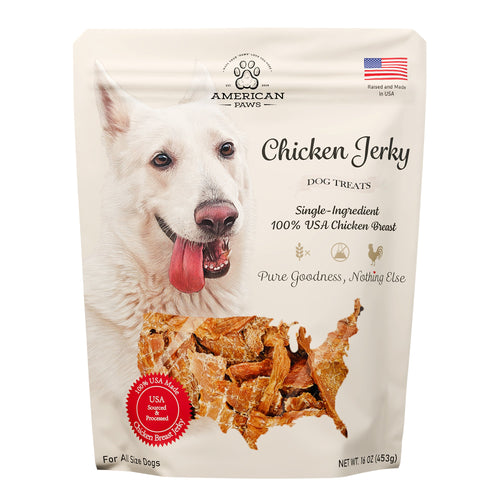
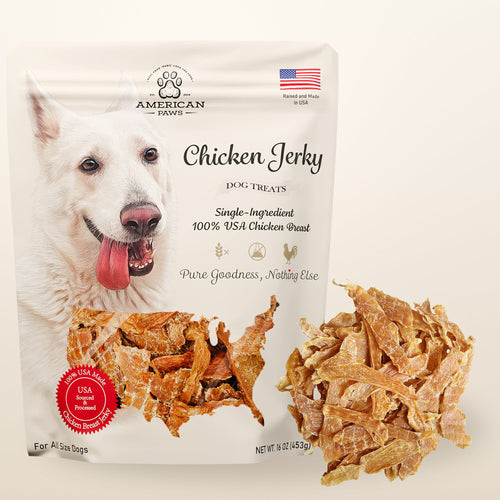
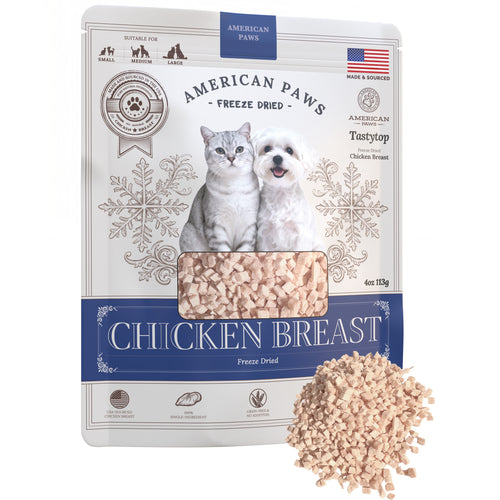
American Paws currently sells chicken treat formats and a freeze-dried beef-liver option. We do not currently sell a duck treat, and we will not imply that a dark meat bite in an educational image represents a hidden product.
If chicken is an allowed protein for your dog, compare the real products in our American Paws chicken jerky collection. Read each individual label because recipe and texture can differ by product; do not extend a single-ingredient claim to the entire catalog.
If chicken is not allowed, do not use our chicken products as substitutes and do not guess that beef liver is appropriate. Follow the veterinarian's diet plan. You can browse all current American Paws dog treats to see what actually exists, but medical compatibility always outranks the catalog.
Frequently asked questions
Is duck healthier than chicken for dogs?
Not as a universal rule. Healthfulness depends on the finished recipe, amount, calories, fat, texture, processing, and individual dog. A clear chicken strip can be a better fit than a rich mixed duck bite, or the reverse. Compare actual labels.
Is duck always lower in fat than chicken?
No. Fat varies by cut, skin, trimming, added fat, moisture, and processing. Check the guaranteed analysis and calorie content on the finished treat, especially for a dog with pancreatitis history, prescribed fat restriction, or a weight plan.
Can puppies have duck treats?
A weaned puppy may be able to have an appropriately small duck treat if the veterinarian approves it and duck is not being reserved for a future diagnostic diet. Growth food remains the priority. Introduce one tiny piece, verify the texture, and count all extras within the puppy's small calorie allowance.
Does rotating proteins prevent allergies?
There is no solid reason to promise that it does. Rotation can provide optional variety for a healthy dog, but it also broadens the list of prior exposures. If a future diet trial is needed, fewer proteins may remain truly novel.
Is a single-protein duck treat hypoallergenic?
No. Single protein describes the stated animal-protein recipe; hypoallergenic is a much stronger medical implication. A dog can react to duck, supporting ingredients, or cross-contact. During diagnosis, use only the exact diet and rewards the veterinarian approves.
Choose the dog and label, not the species halo
Duck vs chicken dog treats is not a contest with one nutritional or allergy winner. Both are poultry proteins, and the finished recipe plus the individual dog's history decides the fit. Duck is novel only when it is new to that dog, and a novel protein is a diagnostic tool—not a low-allergy guarantee. For the full rotation picture, see our overview of protein sources for dog treats.
For a healthy dog, introduce one clear product at a time, save the label, watch tolerance, and keep the portion inside the total treat budget. For recurring skin or digestive signs, stop rotating and ask a veterinarian to build the controlled plan. Then choose only from products that plan allows, whether they come from our current dog-treat catalog or somewhere else.