
Single-protein dog treats use one named animal protein source, such as chicken or beef. That can make a treat easier to evaluate for a dog with known food sensitivities, but it does not mean the recipe has only one ingredient, is hypoallergenic, or belongs in a veterinary elimination trial.
The useful question is not whether a package carries the right phrase. It is whether you can identify every animal source, compare the full recipe with your dog's food history, and choose a protein your dog already tolerates. When strict avoidance or allergy testing is involved, your veterinarian's diet plan overrides every retail label.
What are single-protein dog treats?
In practical label language, a single-protein treat contains one animal protein source. A chicken recipe might include chicken plus a non-protein ingredient used for texture, while a beef recipe might contain beef plus other supporting ingredients. Both could still be described as single protein even though neither is necessarily single ingredient.
This distinction matters because dogs react to individual foods, not to tidy marketing categories. A clear one-protein recipe may reduce the number of animal sources you need to consider, but the named protein still has to suit the individual dog. Chicken-only is simple information; it is not proof that chicken is appropriate.
Single protein vs single ingredient vs limited ingredient
These three terms answer different questions. Use the comparison as a starting point, then verify the ingredient panel instead of relying on the front of the bag. For a step-by-step walkthrough, see our guide on how to read a dog treat label.
| Label term | What it usually tells you | What it does not promise |
|---|---|---|
| Single protein | One named animal protein source | One total ingredient, zero cross-contact, or hypoallergenic status |
| Single ingredient | Exactly one item in the ingredient list | That the one ingredient suits every dog |
| Limited ingredient | A relatively short recipe | A fixed ingredient count or only one animal protein |
Single protein: one animal protein source
The animal source is the key. If the front says beef but the panel also lists chicken broth, poultry flavor, or another animal-derived ingredient, the recipe may not meet the one-protein goal. If a term such as natural flavor does not identify its source, ask the manufacturer before using the product for strict avoidance.
Single ingredient: exactly one listed ingredient
A one-ingredient meat treat is the narrowest version of a single-protein treat. If the panel says only chicken breast, there is one ingredient and one animal protein. That clarity can make comparison easy, but a dog that should avoid chicken still should not eat it. Our guide to single-ingredient dog treats explores that label in more depth.
Limited ingredient: a shorter recipe, not necessarily one protein
A limited-ingredient product may use one protein, several proteins, or supporting ingredients that matter to your dog. The phrase can be useful when it leads to a concise, understandable panel, but it is not a substitute for reading that panel. See our guide to limited-ingredient dog treats for a complete shopping framework.
Why one protein can make treats easier to evaluate
Every extra animal source creates another variable. A treat made with chicken, beef, egg, and dairy may be perfectly acceptable for a dog that tolerates all four, yet it is a poor choice when you are deliberately trying to keep rewards aligned with one known protein.
A one-protein approach can help in three practical ways:
- Clearer comparison: you can match the treat's animal source with proteins already present in the dog's regular food.
- Fewer accidental changes: training rewards do not quietly introduce several new animal ingredients at once.
- Better records: if your veterinarian asks for a complete diet history, the treat exposure is easier to describe accurately.
It does not diagnose a food allergy, make a rich treat easier to digest, or guarantee that the product was made without contact with other proteins. Simplicity improves visibility; it does not remove the need for judgment.
How to read a single-protein dog treat label
Start with the full ingredient statement. The FDA's animal-food labeling guidance says ingredients must use their common or usual names and appear in descending order of predominance by weight. Read from the first item through the last; the flavor name on the front is not the complete recipe.
Find every named animal source
Circle or write down each meat, organ, meal, broth, fat, gelatin, egg, dairy ingredient, and animal-derived flavor you can identify. Some of these may contribute little protein, but they still matter when the goal is to avoid exposure to a particular animal source. If the source is vague, clarity has not yet been established.
Look beyond the flavor on the front
A package can emphasize salmon while using chicken fat or poultry flavor elsewhere in the recipe. A chicken treat can use beef gelatin. Do not decide based on the largest photo or the first word in the product name. Confirm that the complete panel supports the single-protein claim you intend to rely on.
Check the full recipe and calorie information
Non-protein ingredients are not automatically undesirable. They may control moisture, texture, stability, or flavor. The important questions are whether they are clearly named, whether they fit the dog's plan, and how the finished treat should be portioned. A simple animal-source list does not make calories disappear.
Read the feeding guidance and any calorie statement, then count treats within the dog's full daily allowance. Breaking one piece into five training rewards creates more reward moments, not fewer calories. Keep regular food complete and balanced, with treats remaining a supplemental part of the day.
Ask about manufacturing controls when strict avoidance matters
The ingredient panel tells you the intended recipe. It may not answer every question about shared equipment, supplier controls, or unintended cross-contact. For an ordinary preference, that level of detail may not be necessary. For a diagnosed allergy or a veterinary diet trial, contact the manufacturer and follow the veterinarian's standard instead of assuming a retail front-label claim is enough.

How to choose for a dog with food sensitivities
Food sensitivity is a broad everyday phrase, not a diagnosis. Itching, recurring ear problems, loose stool, vomiting, appetite changes, and other signs can have many causes. Use a simple label to make a careful buying decision, not to decide what medical condition a dog has.
- List what is already working. Write down the animal proteins in the dog's main food, treats, chews, toppers, flavored medications, and table extras.
- Choose one tolerated source. If the dog has eaten chicken comfortably, a clearly labeled chicken treat may be a logical option. If chicken is suspected or excluded, do not choose it just because the recipe is simple.
- Audit every ingredient. Confirm there are no additional animal sources and no ingredients your veterinary team has told you to avoid.
- Set a small portion. Match the piece to the dog's size, chewing style, calorie plan, and product directions.
- Change only one item. Keep meals and other extras steady so you can describe any change accurately.
For dogs that get occasional digestive upset but are not in a diagnostic diet trial, our guide to choosing treats for sensitive stomachs adds portion, texture, and introduction considerations.
Single-protein treats are not a diagnostic allergy diet
A true food-elimination trial is controlled veterinary work. The Merck Veterinary Manual's food-allergy guidance explains that the selected diet must exclude previously fed ingredients and that treats, table food, flavored medications, and other food exposures can interfere with the trial. The approved diet has to be fed exclusively for the period your veterinarian sets.
AAHA's guidance on dog allergies likewise describes veterinarian-directed novel-protein or hydrolyzed diets and warns that over-the-counter limited-ingredient products are not equivalent to carefully controlled prescription diets for diagnosis. A retail single-protein treat may be a useful everyday choice, but it should enter an elimination trial only when the veterinarian managing the trial approves that exact product.
Do not improvise by choosing a new meat at random. A novel protein is novel only in relation to the dog's actual diet history, and hydrolyzed veterinary diets work on a different principle. If the plan says no extras, a treat-free trial is more accurate than a well-intentioned exception.
Chicken and beef examples from American Paws
American Paws makes several treat formats, and their recipes are not all identical. The two options below are verified one-ingredient meat treats, which means each is both single ingredient and single protein. Choose between them by the protein your dog tolerates, not by assuming one animal is universally gentler.
Chicken breast for dogs that tolerate chicken
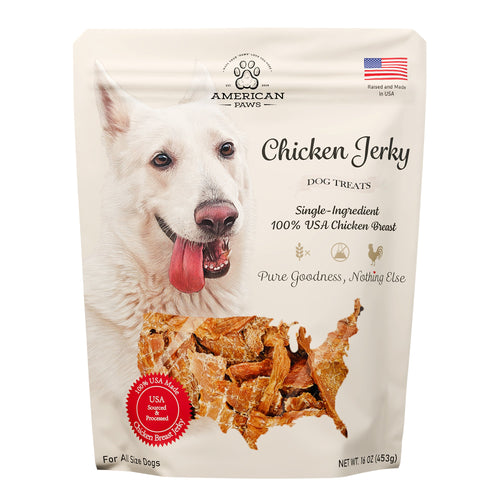
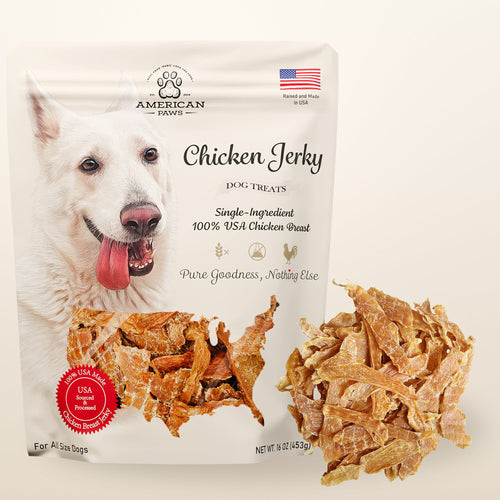
American Paws single-ingredient chicken breast jerky lists 100% USA chicken breast and nothing else. It is whole-cut and slowly dried in small USA batches. The strips can be cut or broken into smaller supervised portions, making the product easy to fit into a known chicken-based routine.
This is not the right option for a dog avoiding chicken, and the single-ingredient claim belongs to this specific whole-cut product. Do not transfer that claim to every chicken treat or to the full catalog.
Beef liver for dogs that tolerate beef
American Paws single-ingredient freeze-dried beef liver lists 100% USA beef liver. The crunchy pieces can be divided into small high-value rewards. Liver is nutrient-dense and can be rich, so follow the product guidance, introduce it gradually, and keep portions modest.
A beef-only label does not make the treat appropriate for a dog avoiding beef or for a dog whose veterinarian has prescribed a different diet. It simply makes the animal source clear.
A practical first introduction
Choose an otherwise ordinary day. Offer one small, supervised piece or a fraction of the normal serving, then put the bag away. Keep the dog's regular food, other treats, exercise, and medications unchanged unless the veterinary team has given different instructions.
Watch the dog chew and swallow. Over the following days, note appetite, stool, vomiting, itching, ear changes, paw licking, and energy without assuming that every normal variation came from the treat. If the first small servings are uneventful, increase only within the product guidance and the dog's daily treat budget.
Stop the new item and call your veterinarian for persistent vomiting or diarrhea, recurring skin or ear signs, appetite or weight changes, or anything else that concerns you. Trouble breathing, facial swelling, collapse, repeated vomiting, or severe lethargy needs urgent veterinary care.
Common single-protein shopping mistakes
- Equating single protein with single ingredient: one animal source can appear in a recipe that contains several other ingredients.
- Assuming simple means hypoallergenic: a dog can react to the one protein named on the panel.
- Choosing a trendy novel meat without checking history: the dog's past exposure and veterinary plan determine whether a source is useful.
- Reading only the front: broth, flavor, gelatin, egg, or dairy can introduce another animal source farther down the panel.
- Ignoring cross-contact questions: strict avoidance may require information beyond the intended recipe.
- Adding treats to an elimination trial: even a clean label can invalidate a controlled trial when it is not approved.
- Overfeeding a clear-label product: ingredient simplicity does not replace portion control or supervision.
Frequently asked questions
Are single-protein dog treats hypoallergenic?
No. Single protein describes the number of animal protein sources, not the dog's likelihood of reacting. A dog may tolerate the source, be sensitive to it, or need a veterinarian-directed hydrolyzed or novel-protein diet instead.
Is single protein the same as single ingredient?
No. A single-ingredient meat treat contains one item and therefore one animal protein. A single-protein treat can contain that one animal source plus other non-protein ingredients. The ingredient panel tells you which version you are buying.
Can limited-ingredient treats contain several proteins?
Yes. Limited ingredient suggests a shorter formula, but it does not by itself guarantee one animal protein. Look for every meat, organ, meal, broth, flavor, gelatin, egg, and dairy ingredient before deciding.
Can a dog with a chicken sensitivity eat chicken-only treats?
No. Removing every other ingredient does not make chicken suitable for a dog that needs to avoid chicken. Choose a veterinarian-approved alternative based on the dog's history and current diet plan.
Can single-protein treats be used during an elimination diet?
Only if the veterinarian managing the trial approves that exact treat. Diagnostic diet trials depend on exclusive feeding and tight control of every food exposure, including treats, chews, table food, flavored medication, and toothpaste.
Choose the clearest protein your dog already tolerates
Single-protein dog treats are useful because they make one part of the label easier to understand: the animal source. The best choice still comes from the complete recipe, the dog's known tolerances, the serving size, and any veterinary instructions.
If chicken or beef already fits your dog's routine, compare American Paws' verified chicken-only and beef-liver-only options and read each ingredient panel yourself. You can also browse all American Paws dog treats to compare formats. For every product, choose one appropriate protein, start with a small supervised portion, and keep medical diet decisions with your veterinarian.