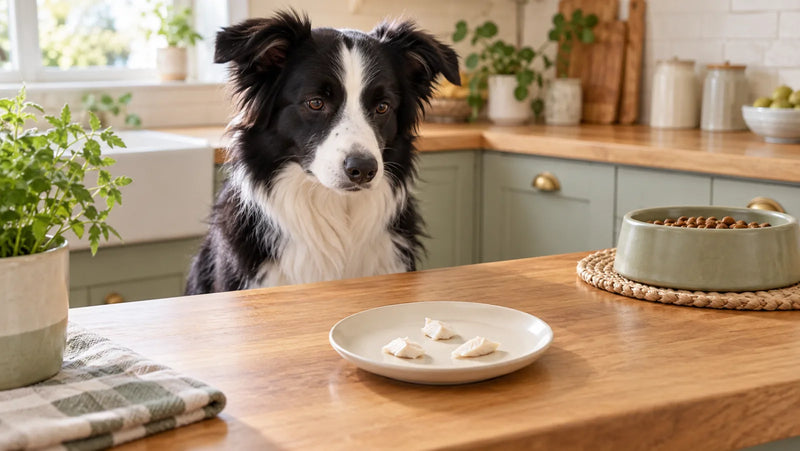

Can dogs eat gingerbread? No—human gingerbread should stay off the dog-treat menu. A small accidental crumb of ordinary gingerbread may cause little or no trouble, but the recipe still combines sugar, butter, and concentrated spices. Nutmeg can be toxic in larger amounts, and some sugar-free icing may contain xylitol, which makes an exposure urgent.
If your dog already ate gingerbread, do not guess from the cookie's size alone. Find the recipe or package, check the icing and sweetener, note the spices and decorations, and estimate how much is missing. Suspected xylitol, an unknown sugar-free product, concentrated nutmeg, a large or unknown amount, or any symptoms calls for prompt professional help.
Can Dogs Eat Gingerbread? No—Check the Recipe After an Accident
“Gingerbread” can mean a soft homemade cookie, a hard house panel, a cake, a frosted bakery figure, or a heavily decorated holiday display. Those versions do not share one ingredient list, so the safest response begins with the actual recipe.
| What was eaten? | Best next step |
|---|---|
| One small crumb of ordinary gingerbread, with a known recipe and no toxic add-ins | Remove the rest, offer no more, and watch for digestive upset. Call the veterinarian if you are unsure about the recipe or your dog's health. |
| A whole cookie, several cookies, cake, or an unknown amount | Call the veterinarian with the dog’s weight, time, amount, recipe, and current signs. Size, fat, spice concentration, and medical history change the advice. |
| Sugar-free or low-sugar icing with xylitol, birch sugar, wood sugar, or birch bark extract—or an unknown sweetener | Treat it as urgent. Call a veterinarian, emergency clinic, or poison-control service immediately; do not wait for symptoms. |
| Nutmeg from a shaker, spice jar, extract, or a heavily spiced batch | Call promptly. This is different from a trace amount dispersed through one ordinary cookie. |
| Chocolate, raisins or currants, alcohol, macadamia nuts, wrappers, toothpicks, ribbons, or other decorations | Identify every item and call for case-specific advice. Toxicity and foreign-body risks require different responses. |
| Vomiting, weakness, agitation, disorientation, tremors, trouble walking, seizure, collapse, or breathing trouble | Seek urgent veterinary care now. |
Possible poisoning? Contact your veterinarian or ASPCA Animal Poison Control at (888) 426-4435. The service is available 24/7, and a consultation fee may apply.
Why Gingerbread Is Not a Dog Treat
Nutmeg contains myristicin, and larger exposures can be toxic
Nutmeg is the gingerbread ingredient that deserves the clearest toxicology distinction. The American Kennel Club's nutmeg guidance identifies myristicin as the concerning compound and lists possible effects such as increased heart rate, high blood pressure, abdominal pain, disorientation, tremors, lack of coordination, and seizures.
Dose matters. AKC notes that the nutmeg dispersed through a bite of cookie may have little or no effect, while the ASPCA Animal Poison Control Center's spice guidance describes vomiting, dry mouth, agitation, pupil changes, rapid heart rate, trouble walking, and hallucinations after larger nutmeg exposure. That is why this page does not call every crumb poisonous—but also does not recommend serving gingerbread.
Sugar and butter add calories and digestive risk without a benefit
A cookie is designed for human taste, not canine nutrition. Sugar adds energy without making the dog's complete food more complete, and butter or shortening makes the recipe richer. One bite does not guarantee disease, but a larger rich exposure can cause vomiting or diarrhea and may be especially concerning for a dog with a history of pancreatitis, diabetes, obesity, or a veterinarian-managed diet. For the other classic Christmas sweet, see our guide to dogs and candy canes.
All extras share one calorie budget. Gingerbread would spend that budget on sugar and fat while adding the harder-to-screen spice and decoration questions. A familiar measured reward is a much more predictable use of those calories.
Clove and allspice make the spice blend more complex
Recipes vary, but holiday spice blends can include cinnamon, ginger, nutmeg, allspice, and cloves. The AKC guide to pumpkin-spice foods lists that common blend and recommends keeping spice-flavored baked goods away from dogs.
Do not turn that into the false claim that a culinary speck of clove or allspice automatically poisons a dog. The practical rule is that a mixed human cookie offers no reason to experiment, while a dog that gets into whole spices, a jar, an extract, or an essential oil has a different and more concentrated exposure that deserves an immediate call.
Sugar-free icing can hide xylitol
“Sugar-free” does not mean dog-safe. The U.S. Food and Drug Administration's xylitol warning says the sweetener can appear in sugar-free desserts and baked goods. It may also be listed as wood sugar, birch sugar, or birch bark extract.
In dogs, xylitol can cause a dangerous drop in blood sugar and other severe effects. FDA lists vomiting, decreased activity, weakness, trouble walking or standing, shaking, seizures, collapse, coma, liver failure, and bleeding problems. The response begins before signs appear: if an icing, candy decoration, or bakery product contains xylitol—or its sweetener cannot be identified—call immediately.
Decorations can add a second hazard
A plain cookie and a gingerbread house are not the same exposure. Icing may carry an unknown sweetener. Candy can add chocolate, raisins or currants, hard pieces, or wrappers. Houses may also contain toothpicks, ribbon, plastic, foil, glue, or nonfood display materials. Do not assume “edible-looking” means the entire display was made as food.
List each missing component separately when you call. Chocolate toxicity, xylitol poisoning, nutmeg exposure, choking, and a swallowed nonfood object are not interchangeable problems.

Ginger Is Not the Same as Gingerbread
The name creates a misleading shortcut. A gingerbread cookie contains ginger, but it also contains flour, sugar, fat, and usually several spices; frosting and decorations add still more variables. The fact that one component can be used in a small culinary amount does not make the finished dessert suitable for dogs.
AKC's ginger overview says small amounts of ginger can be tolerated by some dogs, while also noting medication and health-condition cautions. That is not a prescription and not a reason to improvise a dose. Ask the veterinarian before deliberately adding ginger for a health purpose, and keep the answer to “can dogs eat gingerbread?” separate: the human cookie remains a no.
My Dog Ate Gingerbread: What Should I Do?
1. Remove access and preserve the evidence
Move the remaining cookies, house, icing, candy, spice containers, and packaging out of reach. Save the package or take clear photos of the ingredient list, bakery label, display, and remaining amount. Do not throw away the recipe information before the call.
2. Put xylitol and unknown sugar-free icing at the top of the call
Check for xylitol, birch sugar, wood sugar, and birch bark extract. If any appears—or the sweetener in a sugar-free product is unknown—call the veterinarian, emergency clinic, or poison-control service now. Do not wait to see whether the dog looks sick.
3. Build a useful exposure note
- Dog's weight, age, medical conditions, medications, and current diet restrictions
- Time of the exposure and best estimate of the amount missing
- Type of gingerbread: soft cookie, hard house piece, cake, frosting, or display
- Sweetener and icing ingredients
- Nutmeg and other spices, including whether a jar or extract was reached
- Chocolate, raisins or currants, macadamia nuts, alcohol, or candy
- Wrappers, ribbon, toothpicks, plastic, foil, or other nonfood pieces
- Every symptom and when it began
Exact answers are helpful, but uncertainty is also information. Say “unknown” rather than filling the gap with a reassuring guess.
4. Do not start a home remedy
Do not induce vomiting or give hydrogen peroxide, salt, oil, milk, bread, charcoal, syrup, or a forced meal unless a veterinarian or poison-control professional gives case-specific instructions. The correct response depends on the ingredient, amount, time, symptoms, and aspiration risk. A generic internet remedy can delay or complicate appropriate care.
Warning Signs After a Dog Eats Gingerbread
Watch the dog while arranging the recommended help, but never use “no symptoms yet” to clear a possible xylitol exposure. FDA warns that xylitol signs can begin quickly, and some serious effects may require professional monitoring.
- Digestive signs: repeated vomiting, diarrhea, drooling, obvious abdominal discomfort, refusal to eat, or unusual lethargy
- Low-blood-sugar or neurologic signs: weakness, wobbling, difficulty standing, tremors, seizures, collapse, or unusual unresponsiveness
- Nutmeg-type signs: agitation, disorientation, dry mouth, abnormal pupil size, rapid heart rate, tremors, or lack of coordination
- Foreign-body or choking signs: repeated retching, gagging, trouble swallowing, a swollen or painful abdomen, unproductive vomiting, or inability to keep water down
- Immediate emergency signs: breathing difficulty, pale or blue gums, seizure, collapse, or loss of consciousness
Symptoms overlap, so the list cannot diagnose which ingredient is responsible. Tell the veterinary team what was in the gingerbread and what was attached to it.
Is One Bite of Gingerbread an Emergency?
Not every bite has the same urgency. One small piece from a known ordinary recipe may cause no effect or short-lived stomach upset in an otherwise healthy dog. That is different from xylitol icing, an unknown sugar-free cookie, concentrated spice, toxic decorations, a hard house section swallowed whole, or a large amount eaten by a small dog.
Use four questions rather than a blanket rule:
- What exactly was in it? Find the recipe and every decoration.
- How much is missing relative to the dog? “One cookie” can range from a thin bite-size figure to a large dense house panel.
- What else was swallowed? Icing, candy, wrappers, and display pieces may matter more than the dough.
- How is the dog now? Symptoms raise urgency, but suspected xylitol is urgent before symptoms.
If any answer is unknown, call. A short professional triage conversation is safer than deciding from a photo or waiting for a dramatic sign.
Safer Christmas Treat Choices for Dogs
If the goal is festive baking, use our dog-safe Christmas cookie recipes. That page owns the intentional recipe question and keeps the cookies plain, uniced, and portioned. Human gingerbread should not be “fixed” by merely scraping off the frosting because the dough and spice mixture remain unknown.
For the rest of the holiday plate, use the Christmas dinner food-safety guide. For parties and guest feeding, our holiday dog-treat plan explains how to set aside one familiar reward and keep every guest from adding a second serving.
The simplest alternative is often a purpose-made reward the dog already tolerates. Browse all current American Paws dog treats, read the actual ingredient and calorie information, and choose a size and texture that fit the individual dog. American Paws does not sell gingerbread, and no treat replaces a complete and balanced diet.
Frequently Asked Questions
Can dogs eat gingerbread without nutmeg?
Removing nutmeg removes one major concern, but the result is still a sugary, buttery human cookie that may contain other spices, icing, chocolate, raisins, or an unsafe sweetener. Do not offer it as a dog treat. If an accident happened, check the full recipe rather than stopping at the word “nutmeg.”
Can dogs eat gingerbread cookies with icing?
No. Icing adds sugar and makes the sweetener question more important. Sugar-free icing may contain xylitol, so read the label for xylitol and its FDA-listed aliases. If the sweetener is unknown or xylitol may be present, call a veterinarian or poison-control service immediately.
Can dogs eat a gingerbread house?
No. A house can combine hard pieces, thick icing, candy, chocolate, wrappers, toothpicks, ribbon, plastic, foil, or craft materials. If any part is missing, identify both the food and nonfood components and call for advice; a swallowed display piece can create a mechanical problem even when the dough itself is ordinary.
Is ginger itself safe for dogs?
Small culinary amounts may be tolerated by some dogs, but ginger can interact with health conditions and medications. Do not treat the spice as a home remedy or calculate a dose from a cookie recipe. Ask the veterinarian before deliberate use, and remember that ginger's presence does not make gingerbread safe.
What if my dog ate only a gingerbread crumb?
Check the recipe first. A tiny crumb from a known ordinary cookie with no xylitol or toxic add-ins may cause no problem, but monitor for digestive signs and call if the dog has a relevant medical condition, the ingredients are uncertain, or symptoms appear. Any possible xylitol exposure deserves an immediate call regardless of crumb size.
Keep Human Gingerbread Out of the Dog-Treat Bowl
Gingerbread is a mixture, not simply ginger. Nutmeg can become toxic at larger exposures, sugar-free icing can turn the incident into a xylitol emergency, and decorations can add both toxic and foreign-body risks. Even a plain version spends the dog's treat calories on sugar and fat without offering a useful reason to serve it.
Keep the human cookies and gingerbread house out of reach, give guests one clear feeding rule, and reserve the dog's holiday calories for a familiar measured reward. If an accident happens, use the recipe—not reassurance—to guide the call: identify the ingredients and amount, contact the veterinarian or ASPCA Animal Poison Control at (888) 426-4435 when risk or uncertainty is present, and skip unapproved home remedies.