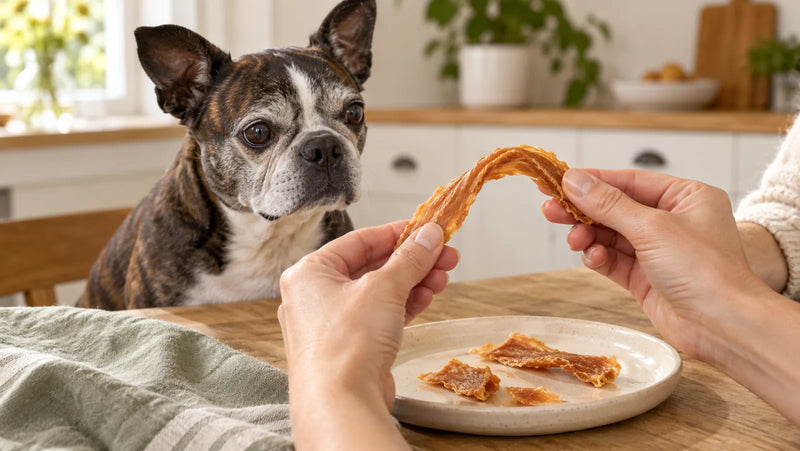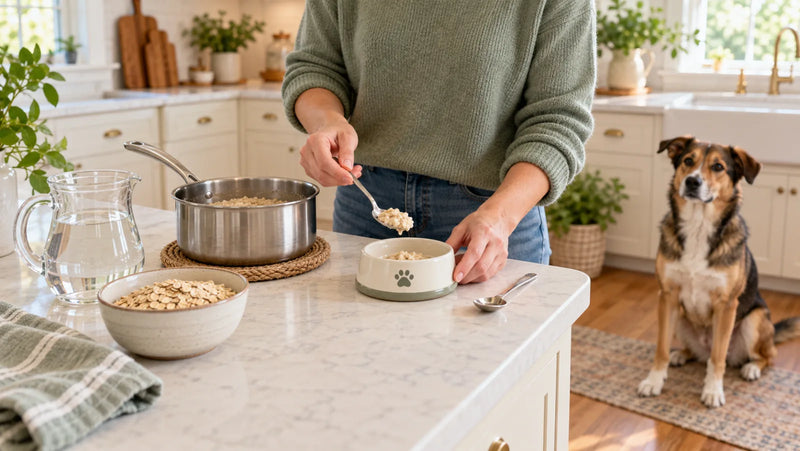

Yes—Christmas cookies for dogs can be a safe holiday project when they use plain, dog-appropriate ingredients, stay uniced, and count toward the dog’s normal treat allowance. The three recipes below use oat flour with pure pumpkin, unsweetened applesauce, or peanut butter whose ingredient label has been checked to confirm that it contains no xylitol.
Festive shapes do not require human-cookie ingredients. Skip chocolate, raisins, nutmeg, sugar-free sweeteners, frosting, and decorative candy. Start with a small taste, keep every cookie inside the day’s treat calories, and do not add a new homemade food to a prescription or elimination diet without the veterinarian’s approval.
Christmas Cookies for Dogs Start with a Safety Check
Read every package before the mixing bowl comes out. “Plain,” “natural,” and “sugar-free” are not complete ingredient lists, and a product that was suitable last year may have a different formula now. The FDA’s xylitol guidance for dog owners specifically says to check nut-butter labels because some contain xylitol. The sweetener may also appear as birch sugar, wood sugar, or birch bark extract.
The five-label pre-bake check
| Ingredient | Use this | Reject this |
|---|---|---|
| Oat flour | Plain oat flour, or plain rolled oats ground finely | Flavored oatmeal, packets with raisins, chocolate, spices, or sweetener |
| Pumpkin | 100% pure pumpkin puree | Pumpkin-pie filling or pumpkin-spice mix |
| Applesauce | Unsweetened applesauce with a short, reviewed label | Sweetened, spiced, “diet,” or sugar-free applesauce |
| Peanut butter | Smooth, unsalted peanut butter confirmed xylitol-free | Any jar listing xylitol, birch sugar, wood sugar, birch bark extract, chocolate, or added candy |
| Egg | A fresh egg baked fully into the cookie | Raw dough offered for tasting |
The AKC’s homemade dog-treat guidance also uses simple bases such as oats, egg, pumpkin, apple, and xylitol-free peanut butter. That does not make every combination right for every dog. A familiar ingredient history still matters.
Dogs who should skip a homemade-cookie test
Ask the veterinary team before baking for a dog with diabetes, pancreatitis, chronic digestive disease, food allergy, swallowing trouble, a weight-loss plan, or a veterinary-prescribed diet. Do not break an elimination trial with “just one” cookie. Puppies should already be comfortably eating an appropriate complete growth diet before extras are considered, and their absolute treat allowance is small.
Recipe 1: Pumpkin-Oat Christmas Stars
This is the plainest of the three recipes. It uses pumpkin for moisture and oat flour for structure; there is no pumpkin spice, sugar, oil, or frosting. For more pumpkin-specific variations, keep the broader recipe intent with our guide to homemade pumpkin dog treats.
Ingredients
- 2 cups plain oat flour, plus 1 to 3 tablespoons if the dough is sticky
- 1/2 cup 100% pure pumpkin puree—not pumpkin-pie filling
- 1 large egg
Method
- Heat the oven to 325°F (163°C). Line a baking sheet with parchment.
- Stir the pumpkin and egg together. Add 2 cups oat flour and mix until no dry pockets remain.
- Wait two minutes so the oats can absorb moisture. The dough should be soft but rollable. If it sticks heavily, add oat flour 1 tablespoon at a time.
- Roll between two sheets of parchment to about 1/4 inch thick. Cut small stars, trees, or simple rounds about 1 inch across. Re-roll scraps once.
- Bake for 22 to 28 minutes, until the tops look dry and the edges are set. Smaller or thinner shapes finish first, so check at 20 minutes.
- Move the cookies to a rack and cool completely before counting, storing, or offering one small test piece.
Recipe 2: Apple-Oat Snowflakes
Unsweetened applesauce gives this batch a mild apple aroma without chopped fruit or decorative sugar. The applesauce label still needs a full check. If you want apple preparation details and other apple-only formats, use our apple dog-treat recipe guide; this page stays focused on Christmas cookies.
Ingredients
- 2 cups plain oat flour, plus more by the tablespoon if needed
- 1/2 cup unsweetened applesauce with no xylitol
- 1 large egg
Method
- Heat the oven to 325°F (163°C) and line a baking sheet with parchment.
- Whisk the applesauce and egg, then mix in the oat flour. Rest the dough for two minutes.
- Add oat flour a tablespoon at a time only until the dough releases from the parchment. Applesauce thickness varies, so texture is a better guide than forcing in extra flour.
- Roll to about 1/4 inch and cut small snowflakes or rounds. Avoid intricate points that bake faster than the center or break into sharp crumbs.
- Bake for 20 to 26 minutes, rotating the sheet once if the oven browns unevenly. Remove when the surfaces are dry and the edges are firm.
- Cool completely on a rack. Break the first cookie open to confirm that the center is baked rather than gummy.
Recipe 3: Xylitol-Free Peanut Butter Pumpkin Trees
This richer option uses only a modest amount of peanut butter. Check the complete jar label every time—even if the brand was used before—and skip this recipe for a dog whose diet excludes peanuts or higher-fat extras.
Ingredients
- 1 3/4 cups plain oat flour, plus more if needed
- 1/3 cup 100% pure pumpkin puree
- 1/4 cup smooth, unsalted peanut butter confirmed free of xylitol and its alternate names
- 1 large egg
Method
- Heat the oven to 325°F (163°C). Line a baking sheet with parchment.
- Mix the pumpkin, peanut butter, and egg until evenly combined. Stir in the oat flour.
- Rest for two minutes. If the dough is still sticky, add oat flour by the tablespoon; if it crumbles, work in plain water 1 teaspoon at a time.
- Roll to about 1/4 inch and cut small trees or rounds. Keep the finished pieces modest because peanut butter adds calories quickly.
- Bake for 20 to 25 minutes, until set and dry on top. Cool fully on a rack.
- Offer no raw batter. Wash the bowl and utensils before making food for people so nobody mistakes the pet batch for human cookies.

Holiday Ingredients That Do Not Belong in Dog Cookies
A dog recipe should begin with its own clean tools and ingredient pile. Do not “adapt” finished human dough by picking out visible raisins or scraping off frosting; ingredients can remain throughout the cookie.
| Leave it out | Why it does not belong |
|---|---|
| Chocolate, cocoa, baking chocolate, or chocolate chips | Chocolate contains methylxanthines and can poison dogs. Darker and baking chocolates are especially concentrated. |
| Grapes, raisins, currants, or sultanas | These can cause serious toxicity in dogs, and a safe individual amount cannot be predicted from cookie size. |
| Xylitol or a sugar-free product with an uncertain label | Xylitol can trigger dangerous low blood sugar and other severe effects. It may appear in nut butter, baked goods, frosting, or candy. |
| Nutmeg | Nutmeg contains myristicin. The AKC’s nutmeg safety guidance recommends keeping it away from dogs rather than treating a small cookie amount as permission. |
| Frosting, icing, sprinkles, and decorative candy | They add unnecessary sugar or fat and may hide cocoa, xylitol, hard pieces, or other unsafe ingredients. A plain shape is festive enough. |
| Alcohol or raw yeast dough | Neither belongs in a dog treat. Keep rising dough, extracts containing alcohol, and holiday drinks out of reach. |
How to Size and Count Christmas Dog Cookies
A cookie cutter does not establish a serving. Thickness, ingredient brand, and finished yield change the calories, while the dog’s normal food, body condition, health, and other rewards change the available room. Make pieces small enough for the individual dog to chew comfortably, supervise the first taste, and break a cookie rather than assuming one whole shape is one portion.
Calculate calories per finished cookie
- Use each package’s calorie information to total the calories in the exact amount of oat flour, pumpkin or applesauce, peanut butter, and egg used.
- Count only the finished cookies that will actually be served. If some are discarded or much larger, separate them rather than pretending the batch is uniform.
- Divide the batch calories by the number of similar finished cookies. Example: 1,200 batch calories divided by 60 small cookies equals about 20 calories per cookie.
- Compare that number with the dog’s veterinarian-guided daily calorie plan and every other extra consumed that day.
Do not copy the example number as the nutrition value for these recipes. Ingredient labels, measurements, water loss, cutter size, and yield differ. The calculation method is the useful part.
Keep all extras within the daily treat allowance
The World Small Animal Veterinary Association’s dog-treat guide recommends that all treats together provide no more than 10% of a dog’s daily calories. Ten percent is a ceiling for the whole category, not a Christmas-cookie allowance. Training rewards, chews, table tastes, toppers, and these cookies all share it.
Our daily dog-treat calorie guide explains how to turn that ceiling into a measured plan. On baking day, the easiest adjustment may be to use half a small cookie and reduce other treats rather than stacking a festive extra on top.
How to Cool, Store, and Gift the Cookies
Home-baked dog cookies are not shelf-life tested, and their moisture varies with puree brand, thickness, oven, and local humidity. Treat even a crisp edge as perishable rather than promising pantry stability.
- Cool completely. Steam trapped in a warm container creates condensation and softens the batch.
- Refrigerate promptly. Place fully cooled cookies in a clean sealed container and use a conservative four-day refrigerator window.
- Freeze the surplus. Freeze small daily portions and use them within about two months for best quality. Thaw one portion in the refrigerator, not the whole batch repeatedly.
- Discard questionable cookies. Visible mold, unusual odor, dampness, slime, insect activity, or a damaged container means the batch goes in the trash. Do not taste-test it for the dog.
If gifting cookies, include the full ingredient list, baked-on date, “keep refrigerated” instruction, and the approximate calories per piece based on your package labels. Ask the recipient before baking. A surprise treat is inappropriate for a dog with an allergy, prescription diet, medical restriction, or unknown calorie plan.
If Your Dog Ate a Human Christmas Cookie
First, take away the remaining cookies and save the package, recipe, or ingredient labels. Identify the dog’s weight, what may be missing, when it happened, and whether the cookie contained chocolate, cocoa, raisins or currants, xylitol, nutmeg, alcohol, raw dough, macadamia nuts, or another uncertain ingredient.
Call a veterinarian or emergency veterinary clinic promptly if a hazardous ingredient may be involved; do not wait for symptoms and do not induce vomiting unless a professional directs it. For poison-specific guidance in the United States, the ASPCA Animal Poison Control Center is available at 888-426-4435; a consultation fee may apply. Collapse, seizures, breathing trouble, repeated vomiting, severe weakness, or marked disorientation warrants emergency care.
For the rest of the meal, use our Christmas dinner food-safety guide. It covers plated holiday foods; this article owns only the dog-cookie baking and storage decision.
Frequently Asked Questions
Can dogs eat human Christmas cookies?
Do not treat an ordinary human Christmas cookie as dog food. Recipes may contain chocolate, raisins, nutmeg, xylitol, alcohol, high-fat frosting, or an unknown combination. If a dog already ate one, check the exact ingredients and call a veterinarian or poison-control service promptly when any hazardous or uncertain ingredient is involved.
Can I put icing on dog Christmas cookies?
Leave these cookies plain. Icing adds no benefit and can add sugar, fat, artificial sweetener, cocoa, hard decorations, or other label surprises. A small star or tree shape gives the visual holiday cue without a coating.
Can I use regular peanut butter?
Only after reading the full ingredient list and confirming that it contains no xylitol or alternate name such as birch sugar. Choose smooth, unsalted peanut butter, measure it, and skip the recipe if peanuts or higher-fat extras do not fit the dog’s diet.
How long do homemade dog cookies last?
There is no universal counter life because recipe moisture, thickness, baking, cooling, and humidity differ. Cool these cookies fully, refrigerate them in a sealed container, use a conservative four-day window, and freeze the rest in small portions. Discard any cookie with mold, unusual odor, dampness, or texture change.
Can puppies have these cookies?
Ask the veterinarian first, especially for a very young puppy or one with loose stool, food sensitivity, or a prescribed feeding plan. A puppy’s complete growth food comes first and leaves little room for extras. If approved, use a crumb-size taste of a fully baked plain cookie and introduce only one new recipe at a time.
Keep the Holiday Shape, Skip the Human-Cookie Risks
The safest Christmas cookie is simple enough to audit: plain oat flour, one familiar flavor, a fully baked center, no icing, a known calorie count, and refrigerated storage. The shape can be festive while the ingredient list stays boring—in this case, boring is useful.
For a gathering where several people may reward the dog, use our holiday dog-treat planning guide to create one shared treat budget. If baking does not fit the dog’s diet or your schedule, American Paws does not sell Christmas cookies, but you can browse all current American Paws dog treats for clearly labeled ready-made options. Either way, one measured plan is safer than an open plate passed around the room.