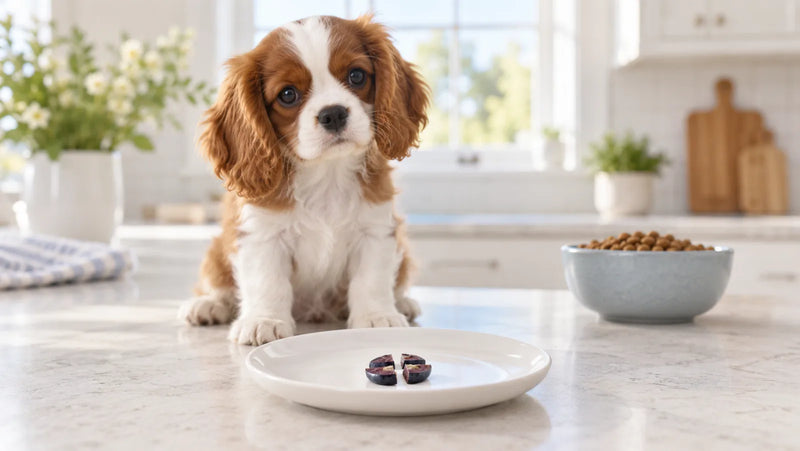

Can dogs eat honey? Usually, but only a healthy adult dog and only in a tiny amount. Plain honey is not generally considered toxic to dogs, yet it is concentrated sugar, calorie-dense, sticky on teeth, and nutritionally unnecessary. A taste is an optional extra—not a supplement, allergy treatment, cough remedy, or daily health food.
Puppies and immunocompromised dogs should avoid raw or unpasteurized honey because it may contain botulism spores. Dogs with diabetes should not receive honey as a casual treat, and overweight dogs, dogs on prescription diets, and dogs with other nutrition-sensitive conditions should skip it unless their veterinarian approves. The word natural does not override those limits.
Can Dogs Eat Honey? The Quick Answer
- Healthy adult dog, plain honey, tiny amount: a measured first taste may be reasonable after the dog's diet and medical needs are considered.
- Puppy or immunocompromised dog: avoid raw or unpasteurized honey. For a puppy, honey is unnecessary enough that skipping every form is the simplest choice.
- Diabetic dog: do not add honey casually. Only follow a veterinarian's specific feeding or emergency plan.
- Overweight, calorie-restricted, dental, gastrointestinal, pancreatitis-prone, or medically managed dog: ask the veterinarian or choose no honey.
- Honey for seasonal allergies, cough, stomach trouble, infection, or a wound: do not use pantry honey as treatment. The symptom needs a diagnosis and an evidence-based plan.
- Honey-flavored spread, syrup, gummy, baked good, cough product, supplement, or sugar-free product: the plain-honey answer does not apply. Review every ingredient.
The American Kennel Club's honey guidance also gives a qualified small-quantity answer, while flagging sugar, obesity, dental health, diabetes, raw honey for puppies or immunocompromised dogs, and the weak evidence behind allergy claims.
Which Dogs Should Skip Honey or Ask a Veterinarian?
A food can be nontoxic for the average healthy adult and still be a poor choice for a particular dog. Honey has no required role in canine nutrition, so uncertainty is a good reason to leave it out.
| Dog or situation | Why honey needs caution | Practical decision |
|---|---|---|
| Puppy | Raw honey may contain botulism spores; growth diets also leave little room for unnecessary sugar | Skip honey, especially raw or unpasteurized honey |
| Immunocompromised dog | Reduced defenses make an avoidable raw-food exposure harder to justify | Avoid raw honey; ask the veterinarian before any form |
| Diabetic dog | Honey is concentrated sugar and can disrupt a tightly managed food-and-insulin routine | Do not feed unless the treating veterinarian specifically directs it |
| Overweight or on a weight-loss plan | A tiny volume carries sugar and calories without useful fullness | Choose a lower-calorie approved reward |
| Dental disease or painful mouth | Sticky sugar is not a dental-care strategy and may be uncomfortable to manage | Skip and follow the veterinary dental plan |
| Prescription or elimination diet | An extra ingredient can disrupt calorie control or the purpose of a controlled diet trial | Use only approved foods and rewards |
| Active vomiting, diarrhea, abdominal pain, or pancreatitis history | Introducing concentrated sugar during illness adds uncertainty | Do not test honey; contact the veterinary team |
Raw Honey and Botulism Spores: Keep the Risk in Perspective
Raw or unpasteurized honey should not be given to puppies or dogs with compromised immune systems. AKC and a veterinarian-reviewed PetMD honey guide make this precaution because raw honey may contain spores of Clostridium botulinum. A package labeled local, organic, pure, or natural is not proof that spores are absent.
This guardrail should not be inflated into a false claim. The Merck Veterinary Manual's botulism overview says botulism occurs only rarely in dogs. It describes a serious neuroparalytic intoxication, most often associated with food containing preformed toxin. That does not establish raw honey as a common cause in dogs, and it does not mean every raw-honey sample contains spores.
The useful conclusion is simple risk reduction: a puppy or immunocompromised dog receives no needed benefit from raw honey, so avoid the exposure. If one of these dogs eats raw honey, save the container, estimate the amount and time, and call the veterinarian for case-specific advice. Progressive weakness, difficulty standing, trouble chewing or swallowing, altered vision, collapse, or breathing difficulty is emergency-clinic territory regardless of the suspected cause.
Pasteurization changes the raw-honey question, but it does not remove sugar, calories, stickiness, or an individual dog's medical restrictions. Pasteurized honey is not automatically appropriate.
Plain, Raw, Pasteurized, and Honey-Flavored Products Are Different
The narrow yes in this article applies only to a tiny amount of plain honey with a complete, understandable label. It does not transfer to every product that tastes like honey or shows a honeycomb on the package.
- Plain pasteurized honey: still concentrated sugar; only a tiny optional taste for a suitable adult dog.
- Raw or unpasteurized honey: adds the spore precaution and should be kept away from puppies and immunocompromised dogs.
- Honey blend or honey-flavored syrup: may combine honey with corn syrup, flavor, color, sweeteners, preservatives, or other ingredients. Read the complete list.
- Honey baked goods, granola, candy, or gummies: may include raisins, chocolate, macadamia nuts, excess fat, spices, wrappers, or sugar-free sweeteners. They are mixed products, not servings of plain honey.
- Cough syrup, lozenge, supplement, or medicated honey product: may contain medicines, alcohol, xylitol, herbs, essential oils, or other active ingredients. Never dose it as food.
- Cannabis or THC honey: is not dog-safe honey. Treat any exposure as an urgent veterinary or poison-control call.
Recheck the label each time. Brands reformulate, flavors within one line differ, and the word sugar-free is a warning to identify the actual sweetener—not permission to feed the product.
Sugar, Calories, Teeth, Diabetes, and Weight
Honey is mostly sugar. The small quantities of vitamins, minerals, or plant compounds sometimes highlighted in wellness claims do not turn the teaspoon fractions a dog might receive into a meaningful nutrient intervention. Complete and balanced dog food already has the job of supplying required nutrients in suitable proportions.
Repeated unmeasured pours can add calories quickly, especially for a small dog. AKC warns that too much honey can contribute to obesity and tooth decay. The issue is not that one tiny taste creates obesity or diabetes; it is that a concentrated, low-satiety extra can become a habit while every other reward is still being fed.
A diabetic dog's meals, calories, timing, medication, and monitoring work as one plan. Do not use internet advice about honey for low blood sugar as a reason to add it casually. Some veterinarians may include a sugar source in a diagnosed dog's emergency protocol, but that is case-specific treatment, not ordinary feeding. Follow the treating veterinarian's written instructions exactly and contact them about any suspected hypoglycemic event.
Honey is also sticky. It is not a substitute for brushing with canine toothpaste, veterinary dental care, or an accepted dental product. Do not rub it on a painful tooth, inflamed gum, oral wound, or extraction site.
How Much Honey Can a Dog Eat?
No universal veterinary dose exists for recreational honey. The table gives conservative first-taste ceilings for a healthy adult dog whose veterinarian has not restricted sugar or extras. They are not daily allowances, treatment doses, or targets. Start below the ceiling, and do not feed honey merely to reach it.
| Dog size | Cautious first-taste ceiling | How to use it |
|---|---|---|
| Under 20 lb | One small drop, no more than 1/16 teaspoon | Touch a tiny amount into regular food; do not free-pour |
| 20–49 lb | Up to 1/8 teaspoon | Measure level and offer no other new food that day |
| 50–79 lb | Up to 1/4 teaspoon | Keep it an occasional taste, not a spoonful |
| 80 lb and over | Up to 1/2 teaspoon | Large body size does not make honey nutritionally useful |
These deliberately tiny ceilings are lower than many human serving assumptions. A toy dog, dog that needs weight loss, medically managed dog, or dog with an unknown history may need none. Do not scale the serving up for athletic work, allergies, coughing, or a perceived immune boost.
The WSAVA treat guide recommends that all treats and extras together provide less than 10% of daily calories, leaving at least 90% for complete and balanced food. Honey, toppers, chews, scraps, biscuits, and training rewards share that one limit. Our daily dog-treat calorie guide explains the budget; honey does not receive a separate 10%.
Can Honey Treat a Dog's Seasonal Allergies?
There is not reliable evidence that feeding local or raw honey treats a dog's seasonal allergies. AKC notes that scientific support is lacking and says honey is not guaranteed—or even likely—to help. The proposed story also depends on the dog reacting to the same flower pollen represented in that particular honey, while canine environmental allergy can involve many pollens, molds, dust mites, and other allergens.
Words such as local, raw, wildflower, organic, manuka, immune, antioxidant, or anti-inflammatory do not establish a canine treatment effect. A dog that seems less itchy after honey has not completed a controlled trial; season, bathing, flea control, medications, exposure, infection, and natural variation can all change signs.
Cornell's canine atopic dermatitis guidance describes environmental allergy as a lifelong condition diagnosed from history, examination, response to treatment, and sometimes allergy testing. Effective care may require flea prevention, skin-barrier care, treatment of secondary infections, medication, allergen-specific immunotherapy, or a veterinary dermatologist. Pantry honey is not a substitute.
Persistent scratching, paw licking, recurrent ear trouble, skin redness, hair loss, odor, sores, coughing, sneezing, or nasal discharge deserves veterinary assessment. Do not delay that workup while testing sweeter and larger honey servings.
Honey Is Not a Home Treatment for Coughs, Stomachs, or Wounds
A cough is a symptom, not one disease. Airway irritation, infection, heart disease, tracheal disease, foreign material, and other problems can sound similar at home. PetMD notes that it is unclear whether honey helps a dog's cough as it may in some human contexts. Contact the veterinarian before trying a home remedy, especially for labored breathing, blue or pale gums, collapse, fever, marked lethargy, repeated coughing, or a puppy.
Honey should not be used to treat vomiting, diarrhea, ulcers, sore throat, infection, or appetite loss without a diagnosis. Concentrated sugar can complicate gastrointestinal signs, and a dog that cannot swallow normally should not be given sticky food.
Veterinarians sometimes use purpose-made medical honey products in selected wound plans. That does not make grocery honey a sterile dressing or a safe DIY wound treatment. Do not put pantry honey on a burn, incision, hot spot, bite, puncture, abscess, or open wound. Prevent licking and contact the veterinary clinic for cleaning and treatment instructions.
How to Offer a Tiny Honey Taste If the Veterinarian Approves
- Confirm the dog is a candidate. No puppy, diabetes, immune compromise, unapproved prescription diet, active illness, or other restriction.
- Identify the product. Use plain pasteurized honey with a complete label, not raw honey or a honey-flavored mixture.
- Measure before serving. Use a measuring spoon and stay below the size-based first-taste ceiling.
- Mix a tiny touch into familiar food. Do not let the dog lick freely from a jar, squeeze bottle, sticky spoon, wrapper, or countertop.
- Offer no other new food. Keep the rest of the day predictable so tolerance is easier to judge.
- Watch the dog. Stop if vomiting, diarrhea, reduced appetite, abdominal discomfort, itching, facial swelling, coughing, weakness, or another unusual sign appears.
- Store and clean up. Seal the jar, wipe sticky surfaces, and keep packaging out of reach.

What If a Dog Eats Too Much Honey or a Honey Product?
Identify the product before deciding what too much means. A large lick of plain honey mainly raises sugar, calorie, and gastrointestinal concerns; a sugar-free cough drop, chocolate-honey candy, raisin granola, medicated syrup, cannabis honey, or swallowed wrapper can create a different and more urgent problem.
- Remove access. Secure the container, food, wrappers, spoon, spill, and trash.
- Keep the evidence. Save the full package and ingredient panel; photograph them if travel is likely.
- Record the facts. Estimate the amount, earliest possible time, dog's weight, age, medical conditions, medications, and current signs.
- Call based on risk. Contact the veterinarian promptly for a puppy, diabetic or immunocompromised dog, a large amount, raw-honey concern, persistent gastrointestinal signs, weakness, or an unknown product. For xylitol, chocolate, raisins, medication, cannabis, or another suspected toxin, contact the veterinarian, emergency clinic, or ASPCA Animal Poison Control at (888) 426-4435. A consultation fee may apply.
- Do not improvise. Do not induce vomiting or give hydrogen peroxide, salt, oil, charcoal, milk, food, or more sugar unless the professional handling this case directs it.
Difficulty breathing, collapse, seizure, inability to stand, progressive weakness, repeated vomiting, a painful or swollen abdomen, or inability to keep water down warrants emergency care. Do not wait for every possible sign to appear.
Lower-Sugar and Purpose-Made Reward Options
If the goal is simply to share a food moment, a dog does not need sweetness. Part of the dog's measured regular meal may be the cleanest reward. For an otherwise suitable dog that enjoys a crunchy people-food extra, our plain cucumber serving guide explains a separate lower-calorie option. Cucumber is not automatic for every medical plan, and pickles are not the substitute. For another plain people-food decision with a sugar-free-product trap, see our plain-yogurt and xylitol-check guide.
American Paws does not currently claim a honey product. Browse all current American Paws dog treats to compare actual ingredients, calories, texture, and piece size with the dog's needs. Purpose-made does not mean unlimited, but a defined dog-treat label is easier to assess than a wellness claim attached to a spoonful of sugar.
Frequently Asked Questions
Can puppies eat honey?
Skip it, especially raw or unpasteurized honey. Those forms may contain botulism spores, and a puppy's complete growth diet should not be displaced by unnecessary concentrated sugar. If a puppy eats honey, save the package and call the veterinarian when it was raw, the amount was large, the product had other ingredients, or any sign develops.
Can dogs eat raw honey?
A healthy adult dog may tolerate a tiny amount, but raw honey adds an avoidable spore question. Never give it to a puppy or immunocompromised dog. Pasteurized honey removes that specific label concern but remains concentrated sugar and may still be wrong for the individual dog.
Can dogs eat honey every day?
There is no need. Daily honey adds sugar and calories without supplying a required benefit and can make portion creep easy. If a veterinarian approves an occasional taste for a healthy adult, keep it tiny and count it with every other extra.
Can honey help a dog's cough?
Evidence is unclear, and a cough can signal several conditions that need different treatment. Do not use honey to delay an examination or give a human cough product. Breathing difficulty, blue or pale gums, collapse, repeated coughing, marked lethargy, or a coughing puppy needs prompt veterinary attention.
Does local honey help dog allergies?
Reliable canine evidence is lacking. Local honey does not prove that it contains the allergen affecting the dog, provide a known therapeutic dose, or replace diagnosis and treatment. Recurrent itch, ear or skin disease, paw licking, cough, or nasal signs should be assessed by a veterinarian.
Keep Honey Tiny, Optional, and Evidence-Based
For a healthy adult dog, plain honey can be a tiny occasional taste after medical and diet restrictions are ruled out. Measure a fraction of a teaspoon, keep it inside the shared extras budget, and stop if the dog does not tolerate it. Puppies, immunocompromised dogs, diabetic dogs, and many medically managed dogs should skip it or follow their veterinarian's specific plan.
The bigger rule is not to let honey's reputation outrun the evidence. It is concentrated sugar, not a proven allergy cure, cough medicine, immune booster, wound dressing, or required dog food. A measured dog-appropriate reward and timely veterinary care are more dependable choices.