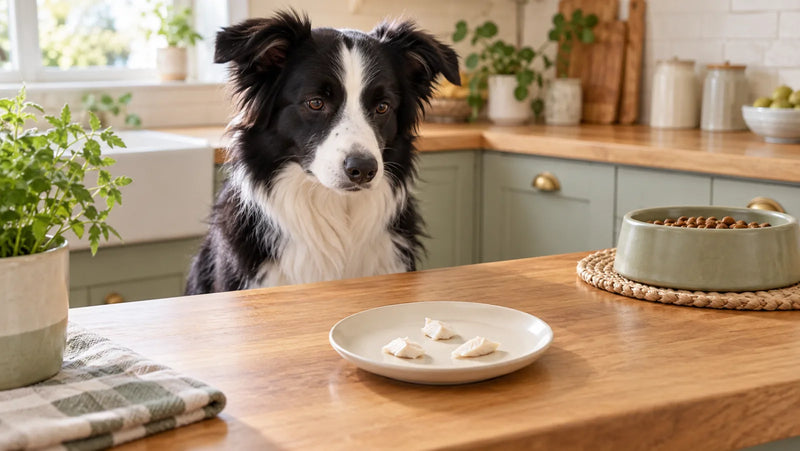

Can dogs eat oatmeal? Yes—many healthy dogs can have a small amount of plain oatmeal cooked fully with water. Cool it before serving, measure the finished oats, and count them with every other extra. Oatmeal does not replace complete and balanced dog food.
That yes does not extend to flavored or sweetened instant packets. Sugar, milk powder, salt, raisins, chocolate, and especially xylitol can turn a plain grain into an unsuitable product or an emergency. Read the complete ingredient list every time; the word “oatmeal” on the front is not a safety check.
Can Dogs Eat Oatmeal? The Quick Answer
- Plain old-fashioned or steel-cut oats: yes for many dogs when cooked completely in water and served in a small amount.
- Plain instant oats: a single-ingredient product is not automatically toxic, but it is easy to over-serve and still needs water-only cooking and label review.
- Flavored instant packets: do not feed them. Their full ingredient list may include sugar, sweeteners, raisins, chocolate, dairy, salt, or several add-ins at once.
- Raw dry oats: skip them. They are harder to digest than cooked oatmeal and are not the form covered by the yes verdict.
- Oatmeal for a medical condition: ask the veterinarian first. Fiber is not a home treatment for diarrhea, constipation, diabetes, weight, skin, or allergy problems.
The American Kennel Club's oatmeal guidance supports a qualified yes, water instead of milk, fully cooked rather than raw oats, gradual introduction, moderation, and strict avoidance of flavored products that may contain xylitol.
Which Oatmeal Can Dogs Eat?
Plain old-fashioned or steel-cut oats
Choose a package whose ingredient list is simply oats. Old-fashioned rolled oats soften relatively quickly; steel-cut oats need more cooking. Either form must be fully cooked in water until soft. The cut does not make a large serving appropriate.
Plain instant oats versus flavored instant packets
A plain, unsweetened instant oat with one ingredient can be cooked in water, although AKC prefers less-processed forms. A maple-brown-sugar, fruit-and-cream, chocolate, protein, “diet,” low-sugar, or sugar-free packet is a different product. Do not assume that removing visible fruit or adding more water removes ingredients already blended into the oats.
Why raw dry oats and milk-based oatmeal are poor choices
Dry flakes are tougher to digest and can be unpleasant to swallow. Cook them. Use water rather than cow's milk, cream, or plant milk; those products add their own lactose, fat, sugar, sweetener, gums, flavoring, or other label questions. Once human toppings are added, set that bowl aside for the human.
Flavored Oatmeal Packets: Read Every Ingredient
“Made with whole grains” and “sugar-free” are marketing phrases, not pet-safety verdicts. Turn the package over and inspect every ingredient before the product comes near the dog.
| Label finding | Why it changes the decision | What to do |
|---|---|---|
| Xylitol, wood sugar, birch sugar, or birch bark extract | FDA identifies these as names associated with a sweetener that is toxic to dogs | Do not feed; treat ingestion as an immediate call |
| Raisins, grapes, raisin paste, or dried grape pieces | These are on FDA's potentially dangerous foods list for pets | Do not feed; call after any suspected exposure |
| Chocolate, cocoa, or chocolate chips | Chocolate is also on FDA's hazard list | Do not feed; identify the product and call for case-specific advice |
| Sugar, syrup, sweetener blends, milk powder, salt, butter flavor, or mixed toppings | They add calories and tolerance questions and make the bowl no longer plain | Choose a separate single-ingredient oat package |
The FDA's potentially dangerous pet-items list includes chocolate, grapes and raisins, xylitol, onion, garlic, salt, and other hazards that can appear in human foods. Do not invent a safe amount from the packet's flavor name or front label.
Xylitol in Oatmeal Is an Emergency
If a dog may have eaten oatmeal or another product containing xylitol, call a veterinarian, emergency animal clinic, or animal poison-control center immediately. Do not wait for symptoms. The FDA's xylitol warning for dogs says effects can begin rapidly and lists vomiting, reduced activity, weakness, difficulty standing or walking, collapse, shaking, seizures, coma, liver failure, and bleeding problems among possible signs.
FDA also lists three alternate names that belong in a label check: wood sugar, birch sugar, and birch bark extract. These names do not mean every birch-related phrase or every sugar alcohol is xylitol; read the actual ingredient list. If the label is unclear, bring the package into the call.
- Secure the food and wrapper. Prevent more access and keep the ingredient panel, product name, lot information, and remaining contents.
- Record the facts. Note the estimated amount, time, dog's weight, symptoms, and every other ingredient in the packet.
- Call now. Contact the veterinarian, emergency clinic, or ASPCA Animal Poison Control at (888) 426-4435. A consultation fee may apply.
- Follow case-specific directions. Do not induce vomiting or give hydrogen peroxide, salt, charcoal, syrup, food, or a forced drink unless the professional handling the case instructs you.
There is no responsible at-home “safe xylitol amount” calculation for this article. Product concentration, amount eaten, time, dog size, and current signs all matter, and every minute can affect the response.
Oatmeal Fiber: Useful Context, Not a Treatment
Oats contain soluble fiber. In an appropriate amount inside a balanced diet, that fiber can contribute to ordinary stool bulk and bowel regularity. That is a nutritional property, not a promise that a spoonful will fix diarrhea, constipation, glucose control, high cholesterol, obesity, skin disease, or allergies.
More fiber is not automatically better. AKC warns that a large amount of oatmeal can cause gastrointestinal upset, diarrhea, and vomiting. An unfamiliar fiber load may also cause gas, urgency, or discomfort. A dog with persistent stool changes needs a diagnosis and an individual feeding plan, not repeated oatmeal experiments.
Oatmeal also contains carbohydrates and calories. It cannot be treated as “free” because it looks plain. Complete dog food already supplies a formulated nutrient balance; extra oats can dilute that balance when the bowl grows.
How Much Oatmeal Can a Dog Eat?
AKC offers a general reference of about one tablespoon of cooked oatmeal per 20 pounds of body weight. Treat that as broad context, not a target, prescription, or reason to fill a large dog's bowl. The dog's total calories, body condition, current food, activity, age, eating style, and medical needs may justify much less or none.
For a healthy adult with no veterinary restriction, use the smaller first-taste amounts below. Offer less than the listed amount on the first bite and do not combine the trial with another new food.
| Dog size | Cautious first-taste ceiling | Reminder |
|---|---|---|
| Under 20 lb | Up to 1 teaspoon cooked oatmeal | Start with less, especially for a toy dog or gulper |
| 20–49 lb | Up to 2 teaspoons | Not a daily allowance |
| 50–79 lb | Up to 1 tablespoon | Count it with every other extra |
| 80 lb and over | Up to 2 tablespoons | Still not a breakfast bowl or meal replacement |
The WSAVA treat guide recommends that all treats and extras together provide less than 10% of daily calories, leaving at least 90% for complete and balanced food. Our daily dog-treat calorie guide explains the shared budget. Oatmeal, toppers, table scraps, chews, biscuits, and training rewards do not each get a separate 10%.
How to Cook Plain Oatmeal for a Dog
- Read the ingredient list. Choose a plain product that lists oats without flavoring or sweetener.
- Measure dry oats for the human batch. The dog's final serving is measured after cooking, not as a mound of dry flakes.
- Cook fully in water. Follow the package's water and timing directions until the oats are soft.
- Separate the dog's portion before toppings. Do this before milk, cream, sweetener, salt, butter, fruit, chocolate, raisins, spices, or protein powder reaches the pan or bowl.
- Cool to room temperature. Hot oatmeal can burn the mouth.
- Offer a small first taste. Supervise, then store or discard the remaining plain batch according to the package's food-safety directions.

Are Grain and Oat Allergies Common in Dogs?
Grain fear should not be the default explanation for every itch or loose stool. VCA's veterinary nutrition overview says grain and gluten allergies are very rare in dogs. It also cautions against reaching for grain-free food simply because skin or gastrointestinal signs are suspected to be food-related.
Rare does not mean impossible. An individual dog can react to an ingredient, and intolerance can resemble allergy. Diagnosis is not made by removing oats for a weekend, switching among retail foods, or reading a symptom list. A veterinarian may use a strict elimination diet and controlled re-challenge; unapproved oatmeal, treats, toppers, and flavored medicines can invalidate that trial.
Do not call oats “hypoallergenic,” and do not call a dog allergic to grain without veterinary workup. Environmental allergies, parasites, infection, other foods, and non-allergic gastrointestinal problems can produce overlapping signs.
Which Dogs Should Skip Oatmeal or Ask a Veterinarian?
- Dogs on a prescription, elimination, hydrolyzed, kidney, urinary, gastrointestinal, diabetic, or weight-management diet.
- Dogs with active vomiting, persistent diarrhea, belly pain, bloating, appetite loss, dehydration, or unexplained weight change.
- Dogs with a known oat reaction or a current food-allergy diagnostic trial.
- Dogs whose swallowing difficulty, dental pain, or rapid eating makes a sticky spoonful hard to manage.
- Puppies and medically fragile dogs when oatmeal would displace a precisely balanced diet.
- Any dog after a flavored-packet exposure involving xylitol, raisins, chocolate, or an unknown sweetener—the correct next step is a call, not another feeding test.
How to Introduce Oatmeal and Watch Tolerance
- Confirm that oats do not conflict with the dog's medical or elimination diet.
- Cook a plain, single-ingredient product with water and let it cool.
- Offer less than the size-based first-taste ceiling.
- Introduce no other new food that day.
- Watch appetite, comfort, energy, gas, vomiting, and stool over the next day or two.
- Stop and contact the veterinarian if signs are persistent, worsening, painful, or otherwise concerning.
A tolerance check asks whether this dog handles this plain food in this small amount. It does not prove a health benefit, diagnose an allergy, or authorize a larger daily serving.
Oatmeal Safety vs Pumpkin-Oatmeal Dog-Treat Recipes
This page owns the basic question of whether dogs can eat oatmeal, including plain-versus-flavored forms, water-only cooking, portions, fiber limits, xylitol screening, and allergy context. It does not provide a recipe.
For a measured combination with baking and storage instructions, use our separate pumpkin-oatmeal dog-treat recipe. That recipe owns the pumpkin-and-oat formula and finished-treat portions. Do not add pumpkin, peanut butter, egg, flour, sweetener, or another ingredient to plain oatmeal and assume the result follows this article's yes verdict.
Frequently Asked Questions
Can dogs eat oatmeal every day?
Daily oatmeal is not automatically helpful. It would need to fit the shared extras budget without displacing complete food and without conflicting with health needs. An occasional small serving is easier to justify for many healthy dogs than a standing breakfast habit.
Can puppies eat oatmeal?
A puppy may tolerate a tiny amount of plain cooked oatmeal, but growth food needs precise nutrient balance. Do not replace puppy food, use flavored packets, or use oatmeal to treat puppy vomiting or diarrhea. Ask the veterinarian before making it routine.
Can dogs eat overnight oats?
Human overnight oats commonly contain milk, yogurt, sweeteners, fruit, chocolate, nut butter, seeds, or flavoring. They are not the same as oats cooked fully in water. Do not share the finished jar; prepare a separate plain cooked portion if oatmeal fits the dog.
Can dogs eat oatmeal with cinnamon?
The clean yes in this article is for plain oatmeal. Cinnamon-flavored products may also contain sugar, sweeteners, salt, raisins, or other ingredients. There is no need to add spice to a dog's portion; separate it before human flavoring.
Is oatmeal good for a dog with diarrhea?
Soluble fiber may affect stool, but oatmeal does not diagnose or treat the many causes of diarrhea. Persistent, recurrent, bloody, painful, or worsening diarrhea—and diarrhea with vomiting, weakness, dehydration, or appetite loss—needs veterinary care.
Keep Oatmeal Plain, Measured, and Optional
The safe pattern is simple: choose single-ingredient oats, cook them fully with water, cool them, and offer a small measured first taste. Keep flavored packets and their xylitol, raisin, chocolate, sugar, dairy, salt, and mixed-ingredient questions away from the dog.
American Paws does not currently claim an oatmeal SKU. If you prefer a purpose-made reward with a defined label, browse all current American Paws dog treats and compare ingredients, calories, size, and texture with the dog's needs. Oatmeal can be an occasional extra; it does not need to become breakfast.