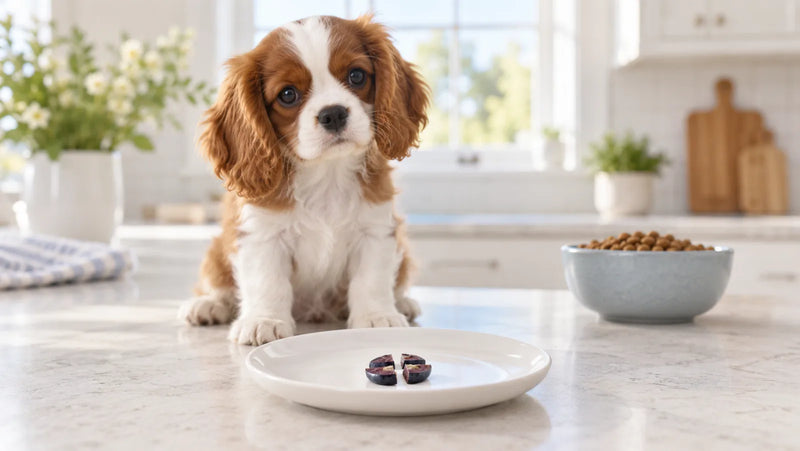

Pumpkin oatmeal dog treats can be made with three simple ingredients: 1 cup of 100% plain pumpkin puree, 3 cups of plain rolled oats, and 1 egg. Grind the oats, mix a stiff dough, roll it about 1/4 inch thick, cut small pieces, and bake at 350°F for roughly 20–30 minutes until the centers are fully set. Cool every piece completely, refrigerate the batch, and count each treat within your dog's daily calorie allowance.
This recipe is intentionally narrow and peanut-butter-free. It contains no wheat flour, oil, sugar, salt, spice blend, or decorative extras. That keeps the ingredient list easy to check, but “simple” does not mean grain-free, hypoallergenic, complete food, or suitable for every dog. Oats are a grain, egg can also be an allergen, and dogs on prescription or elimination diets need their veterinarian to approve every ingredient.
Pumpkin oatmeal dog treats: the 3-ingredient recipe
Ingredients
- 3 cups plain rolled oats: no flavored packet, raisins, chocolate, sweetener, sugar, salt, spices, or other mix-ins.
- 1 cup 100% plain pumpkin puree: the ingredient statement should say only pumpkin. Do not use pumpkin pie filling or pie mix.
- 1 large egg: this binds the oat flour and moist pumpkin into a workable dough.
- For adjustment only: reserve a few tablespoons of ground oats; keep 1–2 tablespoons of plain water nearby, but add either only if the rested dough truly needs it.
Ingredient moisture varies. One can of pumpkin can be thicker than another, rolled oats do not all absorb at the same rate, and egg size is not perfectly uniform. That is why the method includes a short rest and tiny adjustments instead of adding an extra ingredient immediately.
Equipment
- measuring cups and a small measuring spoon;
- a food processor or blender suitable for grinding dry oats;
- a mixing bowl and sturdy spoon if not mixing in the processor;
- two sheets of unprinted parchment and a rolling pin;
- a small cutter or knife for roughly 1-inch pieces;
- a baking sheet and wire cooling rack; and
- a clean airtight refrigerator or freezer container.
Wash your hands and make sure the processor, bowl, counter, cutter, sheet, and rack are clean before you begin. Keep the dog away from the work area so raw egg and oat flour are not licked from the bowl, floor, or counter.
Step-by-step directions
- Heat the oven: preheat to 350°F. Line the baking sheet with parchment.
- Make coarse oat flour: grind all 3 cups of rolled oats until they resemble a coarse flour. Set aside a few tablespoons before adding wet ingredients.
- Mix the dough: add the pumpkin and egg. Process or stir until the color and texture are even and no dry pockets remain. The dough should be stiff, moist, and able to hold together when pressed.
- Let it rest: wait 5 minutes so the ground oats can absorb pumpkin moisture. Do not judge the texture the moment mixing stops.
- Adjust only if needed: if the rested dough is sticky, add reserved ground oats 1 tablespoon at a time. If it crumbles and cannot hold together, add water 1 teaspoon at a time. Stop as soon as the dough becomes cohesive.
- Roll evenly: place the dough between two sheets of parchment and roll to about 1/4 inch thick. Even thickness helps the pieces finish together.
- Cut small: make roughly 1-inch rounds or squares, or portion teaspoon-size balls and flatten each to the same thickness. Re-roll scraps once rather than making oversized novelty biscuits.
- Bake and check: bake for 20 minutes, then inspect a piece from the center of the tray. If the center is still wet or tacky, continue baking and recheck. Most evenly thin pieces should finish within about 20–30 minutes. Turn them after the first check if the undersides need more even drying.
- Cool completely: move the treats to a wire rack. Do not serve or pack them while warm; the centers firm as they cool and trapped steam creates moisture in a container.
The veterinarian-authored Zoetis oatmeal-treat method likewise uses ground rolled oats, a 350°F oven, flattened pieces, and complete cooling. This pumpkin version uses a dedicated three-ingredient ratio, but the same practical controls—uniform thickness, a fully baked center, and cooling before storage—still matter.
How to tell when the treats are done
Use the clock as a check-in range, not as the only test. The surface should look dry rather than glossy, the edges should feel lightly firm, and a test piece broken open after the first check should have a fully set, non-wet center. There should be no visible raw egg mixture or sticky paste inside.
A thicker or larger shape can need longer than a small 1/4-inch piece. A dark pan can brown the bottoms sooner than a light pan. Oven calibration and altitude also change timing. If the edges are dark while the center stays wet, the pieces are too thick or the oven may run hot; do not solve that by serving a raw center.

Why use pumpkin and oats—and why keep the recipe plain?
Choose 100% pumpkin puree, not pie filling
Look at the ingredient statement, not just the orange can or a pumpkin picture on the front. The recipe needs plain pumpkin puree with no sugar, syrup, cream, salt, spice blend, or sweetener. The AKC's pumpkin recipe guidance makes the same important distinction between canned pumpkin puree and pumpkin pie mix.
Plain pumpkin supplies moisture, fiber, carbohydrate, and calories. Those facts do not turn a biscuit into a treatment for diarrhea, constipation, weight loss, or another condition. Our complete pumpkin safety and serving guide owns the broader benefits and forms questions; this page stays with one oatmeal recipe.
Use plain rolled oats, not a flavored packet
Rolled oats provide the dry structure in this recipe after they are ground and baked. Avoid flavored or instant oatmeal packets. A packet can include sugar, salt, dairy flavoring, chocolate, raisins, artificial sweeteners, or spice blends, and the finely processed texture can absorb differently from the rolled oats used here.
The AKC's oatmeal guidance recommends plain oatmeal and warns that too much can cause digestive upset. The sensible lesson for a biscuit is not that oats cure digestion; it is that the ingredient should be plain, baked, introduced in a small amount, and kept supplemental to complete food.
The egg binds the dough; it does not make the treat complete food
Egg helps the pumpkin and ground oats hold together so the recipe does not need peanut butter, oil, or a larger list of binders. It also contributes protein, fat, and calories. A biscuit made from three recognizable foods is still an occasional treat, not a complete and balanced meal.
Egg can conflict with a diagnosed food allergy or veterinary elimination trial. Do not swap in a different binder at random if egg is excluded. Each substitute changes moisture, texture, calories, and allergen exposure; ask the veterinarian or veterinary nutritionist for a formula designed for that dog's plan.
Safe recipe adjustments when the dough changes
If the dough is sticky
Give the mixture its full 5-minute rest first. If it still sticks heavily to parchment and will not hold a cut shape, mix in 1 tablespoon of reserved ground oats. Wait a moment, then reassess before adding another tablespoon. Adding a large amount at once can make the finished treat crumbly and dry.
Do not dust the counter with wheat flour unless wheat is intentionally part of the dog's approved diet. Rolling between parchment reduces sticking without quietly turning a pumpkin-oat recipe into a wheat recipe.
If the dough is crumbly
Press a small amount between clean fingers. If it falls apart rather than forming a cohesive piece, add plain water 1 teaspoon at a time and mix thoroughly. Pumpkin may simply be thicker than expected. Stop when the dough rolls without cracking apart.
Do not reach for milk, broth, oil, honey, syrup, or peanut butter. Milk can add lactose, broth can contain onion, garlic, or excessive salt, and sweet or fatty binders add ingredients and calories the recipe does not need.
If you want smaller or softer treats
For training-size rewards, cut smaller pieces while keeping the thickness even. If one cooled biscuit breaks cleanly, it can be divided into several reward moments; count all fragments as the calories of the original piece.
For a softer result, do not intentionally underbake raw egg and oat flour. Instead, keep the pieces small, bake until set, and store them refrigerated so they retain more moisture than a long-dried biscuit. A dog with dental pain, loose teeth, or swallowing difficulty should have a veterinarian-approved texture rather than an improvised “soft” cookie.
Oats are a grain: allergy and diet cautions
Wheat-free is not the same as grain-free
This formula does not intentionally add wheat, but oats are themselves a cereal grain. Calling the treats grain-free would be inaccurate. A dog that avoids wheat may or may not tolerate oats; the reason for the restriction matters.
Grains do not automatically cause every dog's symptoms, and removing all grains is not a general cure. A confirmed food allergy is an individual immune response to a particular ingredient. Repeated itching, ear problems, vomiting, or diarrhea needs veterinary assessment because many conditions can look similar.
Gluten-free is not the same as oat-allergy safe
Certified gluten-free oats are processed to control gluten cross-contact. That label can matter when wheat, barley, or rye contamination is the concern, but it does not remove oat protein. A dog with a confirmed oat allergy still should not receive a treat simply because the bag says gluten-free.
Ordinary oats may also share equipment with wheat. If the veterinarian requires strict ingredient control, use only the exact products approved for the diet and clean tools and work surfaces accordingly. A home recipe should not be introduced during a diagnostic elimination trial unless the treating team approves every ingredient and cross-contact risk.
Prescription and elimination diets come first
Do not use this recipe for a dog on a hydrolyzed, novel-protein, renal, gastrointestinal, diabetic, weight-loss, or other therapeutic diet without permission. Pumpkin, oats, and egg may each conflict with the treatment goal, and even an allowed ingredient can use calories reserved for the complete prescription food.
If a dog has a known egg allergy, oat allergy, or repeated reaction to pumpkin, skip the recipe. “Only three ingredients” makes the list easy to read; it does not make the list medically universal.
Do not feed raw pumpkin-oat dough
Grinding oats into flour does not cook them or kill germs. Raw egg can also carry bacteria. The CDC's raw-dough safety guidance says not to taste dough made with raw flour or egg and to clean hands, bowls, tools, and counters after handling it.
Keep the dog out of the kitchen while processing and cutting. Pick up spills before the dog finds them, wash the food processor and utensils with hot soapy water, and keep raw-dough tools away from the cooling rack. Do not save raw scraps as a no-bake treat.
How many pumpkin oatmeal dog treats can a dog have?
Calculate calories from the actual batch
A homemade recipe does not arrive with a guaranteed calorie statement. Use the calorie information from the exact oat and pumpkin packages plus the egg. Add those ingredient calories, then divide by the number of equal-size finished pieces.
For example, if the measured ingredients total 1,200 calories and the batch makes 60 equal treats, the estimate is 20 calories per treat. If the same dough makes only 30 larger pieces, the estimate doubles to 40 calories. That example teaches the math; it is not a tested calorie value for your ingredients or cutter.
Keep all extras under 10% of daily calories
The World Small Animal Veterinary Association's treat guide recommends that treats and other extras provide no more than 10% of a dog's daily calories. At least 90% should come from complete and balanced food. Ten percent is a ceiling, not a goal for homemade biscuits.
Our guide to the daily dog-treat calorie budget explains how training rewards, chews, toppers, table bites, and food used for medication all share the same allowance. A small dog can use that allowance quickly even with a modest-looking oat biscuit.
Start with one small piece
Introduce the finished treat on an otherwise normal day. Start with one small piece or part of a piece, then watch for vomiting, diarrhea, unusual gas, itching, facial swelling, or another repeated response. Do not introduce another new food at the same time.
Puppies, small dogs, dogs losing weight, and dogs with medical conditions often have especially limited room for extras. Ask the veterinary team to translate the dog's calorie plan into a maximum treat allowance rather than guessing from a recipe yield.
How to store pumpkin oatmeal dog treats
Cool completely before packing
Spread the baked pieces in a single layer on a clean wire rack. Packing warm treats traps steam, and extra moisture shortens quality and encourages spoilage. Wait until the centers and bottoms are fully cool, then move them to a clean airtight container.
Do not leave the batch on the counter all afternoon. A home kitchen has not tested these moist pumpkin-and-egg biscuits for water activity or shelf stability. Treat “crunchy outside” as texture, not proof that the center is safe at room temperature for weeks.
Refrigerate and use within 3–4 days
Refrigerate the fully cooled treats promptly and no later than two hours after they leave the oven. The USDA's conservative guidance for home-cooked leftovers uses a 3–4 day refrigerator window. That is a sensible maximum for this untested moist home recipe, not a laboratory-validated shelf life.
Date the container and take out only the portion you intend to use. Discard a treat that develops mold, slime, wet spots, an unusual softness, a fermented or off odor, or any other unexpected change. Do not taste it to decide whether it is still good.
Freeze extras in small portions
Freeze fully cooled extras on a tray, then transfer them to small sealed portions so the whole batch is not thawed repeatedly. Use frozen treats within about two months for best quality. Thaw a small packet in the refrigerator and use those pieces within the original conservative refrigerator window.
Freezing pauses spoilage; it does not rescue treats that were already left warm too long or starting to change. Label the container so family members know these are dog treats and can track when they were baked.
How this recipe differs from other pumpkin treats
This page owns one combination: baked pumpkin plus oatmeal with egg as the binder. It does not try to replace every pumpkin recipe or repeat the broad benefits guide.
- For pumpkin forms, benefits, and general serving safety, use the linked pumpkin mother pillar.
- For a recipe whose defining combination is pumpkin and peanut butter, follow the separate pumpkin peanut butter dog-treat recipe, including its full xylitol label check.
- For this oatmeal version, keep peanut butter out so the recipe and search intent stay distinct.
American Paws does not currently sell a pumpkin or oat treat. These are home-baked extras prepared by the reader, not products made in our facility.
Frequently asked questions
Can I make pumpkin oatmeal dog treats without egg?
Not by simply omitting it from this formula. The egg binds the dough, and removal changes texture, moisture, calories, and baking behavior. If egg is excluded for an allergy or elimination diet, ask the veterinary team for a tested binder and recipe that fit the dog's plan.
Can I use instant or flavored oatmeal?
Use plain rolled oats for the predictable texture in this recipe. Flavored packets can contain sugar, salt, dairy flavoring, raisins, chocolate, spices, or sweeteners. Even plain instant oats absorb differently, so they are not a one-for-one choice for the stated method.
Can I use fresh pumpkin instead of canned?
Yes, if it is plain cooked pumpkin flesh with stem, seeds, strings, and tough rind removed, then pureed to a thick consistency similar to canned pumpkin. Do not add oil, butter, salt, sugar, stock, or spices. A watery puree may require more ground oats, so adjust only after the dough rests.
Are pumpkin oatmeal dog treats grain-free?
No. Oats are a grain. The recipe can be made without intentional wheat, but that is not the same as grain-free, and ordinary oats can have wheat cross-contact. A gluten-free label also does not make oats safe for a dog with a true oat allergy.
Can puppies eat pumpkin oat treats?
A weaned puppy may be able to taste a tiny fully baked piece if the veterinarian confirms that pumpkin, oats, and egg fit the growth diet. Puppy food must remain the nutritional foundation, and the small calorie allowance makes tiny portions important. Cut or break the biscuit to a safe size and supervise.
Bake small, store cold, and portion carefully
A useful batch of pumpkin oatmeal dog treats does not need a long ingredient list. Plain pumpkin, rolled oats, and egg can make a workable biscuit when the oats are ground, the pieces are evenly thin, the centers are fully baked, and every treat cools before refrigeration.
The final checks matter as much as the recipe: oats are a grain, raw dough is not a snack, homemade treats are not shelf-stable by assumption, and all extras share the under-10% calorie ceiling. If home baking is not a fit, browse all current American Paws dog treats for labeled, portionable options made from ingredients and textures your dog already tolerates.