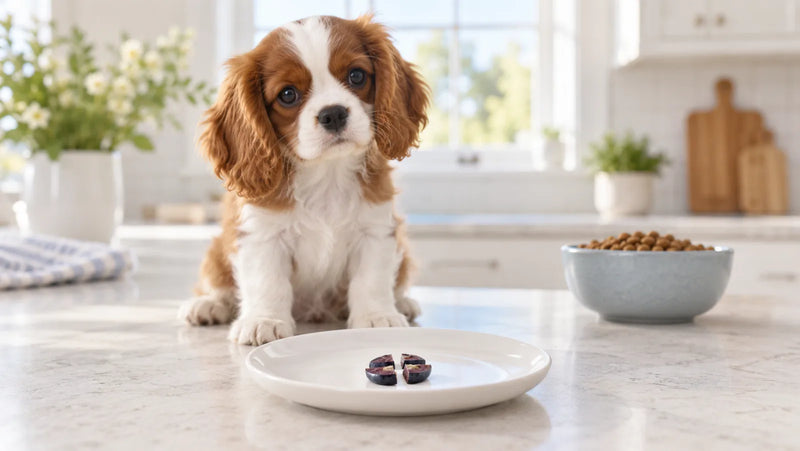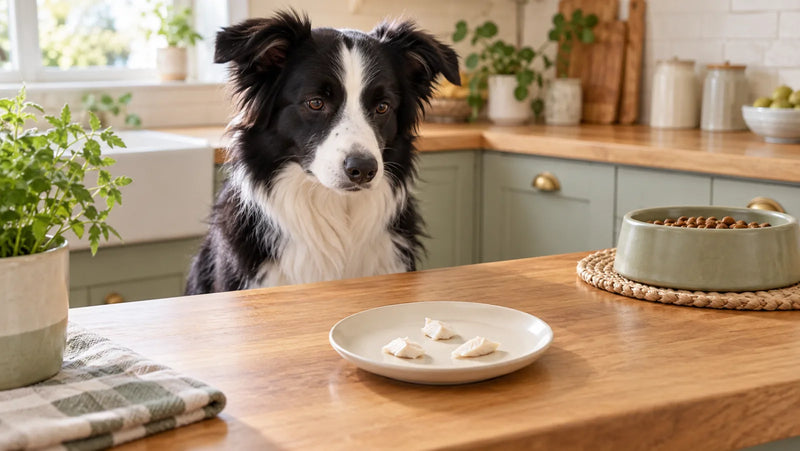

Can dogs eat olives? Yes, but only in a narrow form: most healthy dogs can have one small piece of a plain, unsalted, fully pitted olive. Olives are not toxic to dogs, but pits can crack teeth, choke, or obstruct the gut; canned and pickled olives are usually too salty; and garlic-seasoned, stuffed, marinated, or alcohol-soaked olives can add separate risks.
Dogs do not need olives. A complete and balanced diet already supplies their essential nutrients, so skipping this table food is always reasonable. If you do share a taste, use the four-part filter: plain, unsalted, pitted, and tiny.
Can Dogs Eat Olives? Use the Four-Part Filter
The American Kennel Club's olive guidance says olives themselves are not toxic to dogs and that plain, pitted olives rarely cause problems. That permission applies to a small amount of flesh—not the pit, salty brine, seasoning, filling, marinade, cocktail, or an open bowl.
- Plain: no garlic, onion, chile, herbs, cheese, meat, oil-heavy marinade, or unknown stuffing.
- Unsalted: choose a product made without brine or added salt; rinsing does not prove that a brined olive is now low-sodium.
- Pitted: remove the pit yourself and inspect the flesh before it reaches the dog.
- Tiny: cut a single first taste into a piece appropriate for the dog's mouth and count it within the daily extras budget.
Green and black olives follow the same filter. Their color reflects variety, ripeness, and processing; it does not tell you that the pit, brine, or recipe is safe. Read the entire ingredient label.
Olive Forms at a Glance
| Olive form | Default decision | Main concern |
|---|---|---|
| Plain, unsalted, fully pitted olive | One tiny piece may be offered to a healthy dog | Unnecessary calories and individual digestive tolerance |
| Green or black olive | Same four-part filter | Color does not remove the pit or reveal sodium and seasonings |
| Canned, pickled, or brined olive | Skip it | Often an avoidably high-sodium snack |
| Whole olive with pit | Never intentionally offer | Tooth fracture, choking, airway obstruction, or intestinal blockage |
| Garlic- or onion-seasoned olive | Keep inaccessible | Allium ingredients add toxic risk |
| Cheese-, meat-, or pepper-stuffed olive | Check the full recipe; generally skip | Sodium, fat, dairy, seasoning, and unknown fillings |
| Oily or spicy marinated olive | Skip it | Fat, spice, garlic/onion, salt, and recipe variation |
| Martini or cocktail olive | Never offer | Alcohol plus brine and possible stuffing or a pit |
| Plain olive oil | Not a needed treat | Concentrated fat and calories; flavored oils may add hazards |
Words such as “natural,” “Mediterranean,” “artisan,” or “premium” do not answer these questions. The actual pit status, Nutrition Facts, ingredients, marinade, and exposure amount do.
Olive Pits Are a Mechanical and Dental Hazard
Olive pits are not dog chews. AKC warns that they can create choking or breathing obstruction, lodge in the intestinal tract, or crack a tooth when a dog bites down. A large dog is not automatically protected: tooth enamel can fracture under a hard pit, and any dog can gulp unexpectedly.
Remove the pit before the dog enters the preparation area. “Pitted” products can occasionally contain pit fragments, so split the olive and check. Do not trust a dog to chew carefully or spit out the hard center, and never serve an olive on a toothpick or cocktail pick.
If a dog is choking, cannot breathe normally, has blue or gray gums, collapses, or repeatedly paws at the mouth, go to an emergency clinic immediately. A swallowed pit without airway signs is still worth a prompt veterinary call, especially for a small dog, more than one pit, an uncertain amount, vomiting, abdominal pain, appetite loss, lethargy, or trouble passing stool.
Do not induce vomiting or try to “push the pit through” with bread, pumpkin, fiber, oil, or a bulky meal. The pit's size, shape, location, dog, and timing determine the appropriate plan.
Brined and Pickled Olives Carry Too Much Sodium
Most olives in jars, cans, deli bars, and restaurant dishes have been cured or stored in salty liquid. AKC notes that canned or pickled olives can contain excessive sodium and that too much sodium can contribute to dehydration and, in rare cases, salt toxicosis. That is a good reason to choose a truly unsalted product or skip olives—not a reason to label one stolen brined olive as automatic poisoning.
The Merck Veterinary Manual's salt-toxicosis review describes an emergency caused by excessive sodium chloride, particularly when access to fresh water is limited. Gastrointestinal and neurologic signs can include vomiting, diarrhea, weakness, incoordination, tremors, and seizures. The amount consumed, sodium concentration, water access, timing, dog factors, and signs all matter.
High-sodium snacks are also a poor fit for dogs whose veterinarians are controlling sodium over time. VCA's heart-disease guidance advises limiting high-sodium treats, especially for dogs in heart failure. Its chronic kidney disease nutrition guide explains that veterinary kidney-support diets are formulated with reduced or restricted sodium as part of a coordinated plan.
If your dog has heart disease, kidney disease, hypertension, fluid-balance concerns, or any sodium-restricted prescription diet, do not add a brined snack. Ask the veterinary team before offering any table food. After a large or uncertain salty-food exposure, call rather than attempting to correct sodium at home or forcing a dog to drink a large volume quickly.

Stuffed, Marinated, and Seasoned Olives Need a Full Ingredient Check
Garlic and Onion Seasoning
Garlic- and onion-seasoned olives are not appropriate dog treats. The ASPCA's people-food safety guidance explains that onion, garlic, and chives can irritate the gastrointestinal tract and damage red blood cells. Powders, infused oils, tapenade, stuffing, and seasoning blends can hide Allium ingredients that are not obvious from looking at the olive.
If a dog ate a garlic- or onion-containing product, save the label or recipe and call for advice. Do not guess from the visible amount or provide a home threshold. Our garlic safety guide owns the concentrated Allium risk, delayed anemia signs, and response details.
Cheese, Meat, Oil, Peppers, and Unknown Fillings
Blue cheese, feta, anchovy, sausage, and cured-meat fillings can add substantial sodium and fat. Dairy may cause digestive upset, and rich fatty foods are particularly unsuitable for a dog with pancreatitis history or a veterinarian-prescribed low-fat diet. Oil-heavy marinades concentrate calories and may carry garlic, onion, or hot pepper.
Pimento pepper itself should not be mislabeled as a dog toxin. The issue is that a “pimento-stuffed olive” is still usually brined, may retain a pit fragment, and can include additional seasonings. Review the complete ingredient list and choose not to share when the recipe is uncertain.
Tapenade and olive spreads deserve special caution because finely chopped ingredients make pits, capers, garlic, onion, anchovies, salt, and oils harder to identify by sight. Homemade does not mean simple; ask what went into the recipe.
Martini Olives and Alcohol-Soaked Olives Are Never Dog Treats
An olive taken from a martini or another cocktail is not “just an olive.” It can carry alcohol and salty brine and may also be stuffed, seasoned, or served with a pick. Never intentionally feed a dog a cocktail olive, even if it looks dry or has sat in the glass for a while.
ASPCA states that alcoholic beverages and foods containing alcohol can cause vomiting, diarrhea, incoordination, depression, breathing difficulty, tremors, changes in blood chemistry, coma, or death. A small dog's exposure can be more consequential than the same amount in a large person, and the type and concentration of the drink matter.
If a dog drank from a glass or ate an alcohol-soaked olive, record the spirit or cocktail name, proof if known, ingredients, approximate amount, time, dog's weight, and symptoms. Call a veterinarian or poison professional promptly rather than trying to estimate how much alcohol evaporated. Our toxic-food safety guide gives the cross-food emergency framework when alcohol or another toxic ingredient is involved.
How to Offer a Plain Olive Safely
Olives are optional. If your healthy dog has no relevant diet restriction and your veterinarian has not limited table foods, use this conservative process:
- Choose a truly plain, unsalted product. Do not rely on rinsing a brined olive; surface rinsing cannot verify how much sodium remains.
- Read the complete ingredient list. Exclude garlic, onion, alcohol, spicy marinade, rich stuffing, and unfamiliar additives.
- Remove and verify the pit. Cut the olive open and check for fragments. Remove any toothpick or cocktail pick.
- Cut one tiny piece. Match it to the dog's mouth and swallowing style rather than serving a round, slippery whole olive.
- Offer it alone. Do not hide it in a meal or combine it with several other new foods.
- Observe. Stop sharing and contact the veterinarian for repeated vomiting or diarrhea, pain, marked lethargy, itching, facial swelling, or breathing difficulty.
Never use olives or olive oil to treat dry skin, inflammation, constipation, heart disease, or another condition without veterinary guidance. A human-food ingredient is not a substitute for diagnosis or a balanced treatment plan.
How Many Olives Can a Dog Have?
There is no nutritional reason to work toward a serving. For a healthy adult dog trying a verified plain, unsalted, pitted olive, start with one tiny cut piece—not a bowl, daily olive, or size-chart allowance. Stop if the dog does not tolerate it.
All table foods and dog treats share the same extra-calorie allowance. Our daily treat-calorie guide explains how to calculate that budget with a veterinarian. The widely used 10% ceiling for extras is not an olive target and does not make every food inside that ceiling appropriate.
Puppies, toy dogs prone to gulping, dogs with dental disease or swallowing problems, and dogs with obesity, pancreatitis, chronic digestive disease, heart or kidney disease, sodium restriction, a prescription diet, or an elimination trial should skip olives or ask their veterinary team first. The same applies during pregnancy or nursing, when nutrient balance matters more than novelty.
What to Do If Your Dog Ate Olives
- Secure the food and any serving pieces. Prevent more access and account for the jar, lid, toothpicks, skewers, and glass.
- Identify the form. Were the olives pitted, brined, pickled, stuffed, garlic- or onion-seasoned, oil-marinated, or soaked in alcohol?
- Record the facts. Note the dog's weight, number and size of olives, likely number of pits, amount of brine or drink, time, and current signs.
- Use the highest-risk component. Choking or breathing difficulty is an emergency now. A swallowed pit, broken tooth, large or uncertain salty exposure, toxic seasoning, alcohol, missing pick, or significant symptoms deserves prompt veterinary or poison guidance.
A tiny plain pitted olive and an unknown number of martini olives are different exposures. Accurate pit, brine, ingredient, alcohol, and timing information lets the professional separate them correctly.
Frequently Asked Questions
Can Dogs Eat Green Olives?
One tiny piece may be tolerated if it is truly plain, unsalted, and fully pitted. Many green olives are brined, stuffed, or seasoned, so color alone does not make them suitable.
Can Dogs Eat Black Olives?
The same four-part filter applies: plain, unsalted, pitted, and tiny. Check canned black olives for added sodium and inspect even labeled pitted olives for fragments.
Can Dogs Eat Canned or Pickled Olives?
It is better to skip them because they are commonly high in sodium. Rinsing may remove surface liquid but does not turn a cured product into a verified unsalted olive.
Can Dogs Eat Olives with Pimentos?
Pimento is not automatically toxic, but the olive is usually brined and may contain seasoning or pit fragments. Read the entire label; a plain, unsalted, fully pitted olive remains the only form considered for a tiny taste.
Can Dogs Eat Olive Oil?
Plain olive oil is not a needed dog treat. It is concentrated fat and calories, can cause digestive upset, and may be unsuitable for dogs with pancreatitis, obesity, or prescribed low-fat diets. Flavored oils may contain garlic or other hazards.
What If My Dog Swallowed an Olive Pit?
Call your veterinarian with the dog's size, pit count and size, timing, and symptoms. Go to an emergency clinic immediately for choking or breathing difficulty. Do not induce vomiting or use food, oil, or fiber to push the pit through.
Can Puppies Eat Olives?
Puppies do not need olives, and a round slippery food or hard pit creates avoidable risk. Their limited extra-calorie allowance is better used for complete growth food and appropriately sized training treats.
Can Dogs Eat Martini Olives?
No. Cocktail olives may carry alcohol, salty brine, stuffing, seasonings, a pit, or a toothpick. If a dog ate one or drank from the glass, save the details and call a veterinarian or poison service promptly.
If You Share an Olive, Keep It Plain, Pitted, and Tiny
Olive flesh is not toxic to dogs, but the ordinary forms around it often add preventable risk. Plain, unsalted, fully pitted, and tiny is the complete permission; pits, brine, seasonings, fillings, marinades, and alcohol require a different decision.
For a routine reward, a purpose-built product with a clear label and a measurable portion is easier to manage. Explore current American Paws dog treats, introduce any new treat gradually, and follow your veterinarian's advice for your dog's health and complete diet.