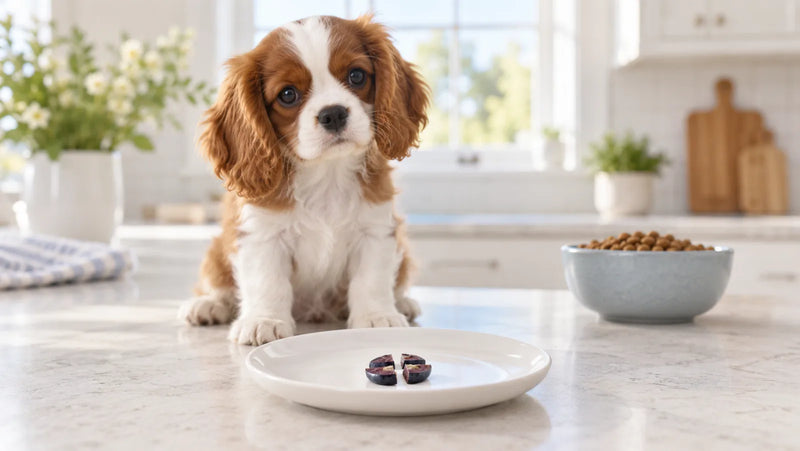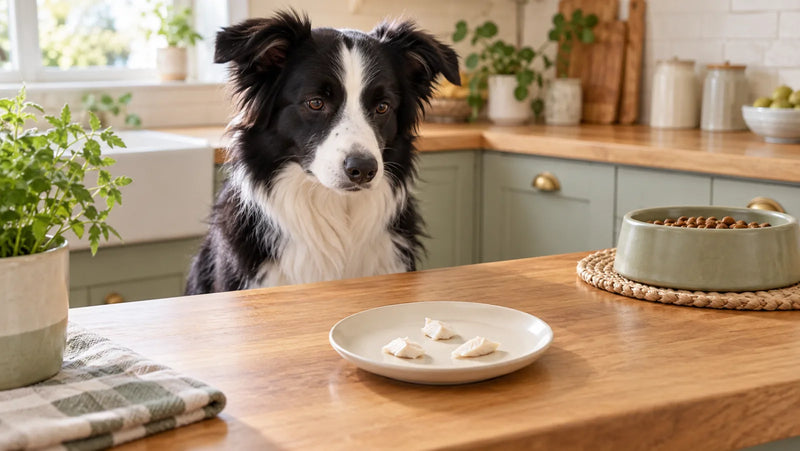

Can dogs eat pineapple? Yes. Most healthy dogs can have a few small pieces of ripe, fresh pineapple flesh as an occasional treat. Remove the leafy crown, spiny skin, every hard “eye,” and the tough central core first, then cut the flesh into pieces suited to your dog’s mouth and chewing style.
Keep the first taste very small. Pineapple contains natural sugar and fiber, and its tart acidity can be uncomfortable for a sensitive stomach. Skip syrup-packed canned fruit, sweetened dried pineapple, juice, and desserts. If a prepared piece causes soft stool, vomiting, gas, or appetite change, stop serving it.
Can Dogs Eat Pineapple? Yes, but Only the Prepared Flesh
The American Kennel Club’s pineapple guidance says raw pineapple can be offered in small amounts. It also draws the most important boundary: the spiny skin and tough core can cause obstruction, so only peeled, cored flesh belongs in the serving bowl.
The ASPCA Animal Poison Control Center’s pet-safe snack guide also lists pineapple as a shareable fruit while advising owners to remove peels, cores, stems, and similar inedible parts. “Safe fruit” therefore does not mean “hand over the whole fruit.” Preparation is part of the answer.
Our complete fruit-safety guide owns the broad question of which fruits are safe, risky, or toxic. This page keeps the pineapple-specific decisions together: which parts to remove, how much to try, which processed forms to skip, and what to do after a skin or core exposure.
Which Parts of a Pineapple Can a Dog Eat?
Ripe fresh flesh: a small optional treat
The yellow flesh is the only part to consider. It should be ripe, fresh, plain, and free of mold, fermentation, seasoning, sweetener, glaze, or alcohol. A few small pieces can provide novelty, but they are not needed to complete a dog’s diet.
A dog eating complete and balanced food already receives essential nutrition from the main diet. Pineapple should not replace a meal, prescribed food, fresh water, medication, or a veterinarian’s nutrition plan. Its vitamins and minerals do not turn a large serving into a better one.
Spiny skin, eyes, and crown: remove completely
The rough rind is fibrous, hard to chew, and covered with sharp points. The recessed brown “eyes” that remain after a shallow peel are also tough. Cut deeply enough to remove them rather than leaving hard plugs attached to the flesh.
The leafy crown is not garnish for a dog bowl. Remove it before portioning and place the crown, skin, eyes, and trimmings directly into a pet-proof compost or trash container. A counter full of scraps can be more tempting than the finished serving.
Fibrous core: not a dog chew
The central cylinder is firmer and more fibrous than the surrounding flesh. It may look like a natural chew, but it is not designed to break into predictable, digestible pieces. A swallowed section can lodge in the throat, stomach, or intestine.
Do not rely on slicing the core thinner, freezing it, boiling it, or watching closely while a dog chews it. The simplest rule is complete removal. Pineapple skin and core are not being classified here as poisons; they are physically unsuitable parts that create avoidable choking and obstruction risk.
How to Prepare Fresh Pineapple for a Dog
Wash the outside before cutting
Rinse the intact pineapple under running water before the knife passes through the rind. Use a clean cutting board and utensils, and keep the preparation area away from raw meat, household cleaners, and ingredients from a human recipe.
Choose fruit that smells fresh rather than fermented and has no leaking, moldy, or slimy areas. When spoilage is uncertain, discard the fruit instead of trimming around a questionable patch for the dog.
Remove every non-flesh part
- Cut off the leafy crown and both ends.
- Stand the fruit securely and remove the full spiny rind.
- Trim away every hard eye left in the flesh.
- Quarter the fruit lengthwise so the entire core is visible.
- Cut out the firm central core from each quarter.
- Set aside only the ripe yellow flesh, then move all scraps into inaccessible disposal.
Inspect the edible portion once more before cutting a dog-size piece. A clean visual separation between the serving side and discard side is safer than trying to remember which chunks still contain core.
Start with one very small piece
Cut a piece small enough for the individual dog to chew without gulping. “Bite-size” is not a fixed measurement: a toy dog, flat-faced dog, puppy, senior, and fast eater may need a much smaller or softer piece than a calm large dog.
Offer one piece on a quiet day when no other new food is being introduced. Supervise the bite. Stop if the dog coughs, gags, repeatedly swallows, paws at the mouth, or tries to bolt the fruit whole. Trouble breathing, blue or gray gums, or collapse is an emergency.

How Much Pineapple Can a Dog Eat?
There is no universal safe chunk count. Pineapple pieces vary widely in size, and dogs differ in body size, daily energy needs, health, chewing behavior, and tolerance. A sensible first trial is one very small piece. If that is tolerated, a future serving can remain only a few small pieces—not a slice, ring, bowl, or replacement for part of dinner.
The ASPCA’s guide uses a conservative limit of no more than 5% of daily calories for shared snacks. That is a ceiling, not a target. Pineapple, training rewards, chews, dental products, table bites, toppers, and every other extra must fit together inside the dog’s planned allowance.
Our daily dog-treat calorie guide explains how to count all extras rather than judging one food in isolation. When a veterinarian has set a lower allowance—or no extras at all—that individual plan overrides a general percentage.
Natural sugar still counts as sugar and calories. A fruit does not become unlimited because it lacks candy or frosting. If pineapple is being considered for a dog with diabetes, obesity, a weight-loss plan, pancreatitis history, or a therapeutic diet, ask the veterinarian before adding it.
Sugar, Fiber, and Acidity Can Upset a Sensitive Stomach
A safe food can still be poorly tolerated
Pineapple’s safety classification and a dog’s tolerance are different questions. AKC notes that its fiber and natural sugar can cause digestive upset when too much is served. Its tart, acidic character is another reason to keep the portion small rather than testing how much a sensitive stomach can handle.
A dog may develop soft stool, diarrhea, gas, vomiting, lip licking, reduced appetite, or abdominal discomfort after a new food. Those signs do not prove poisoning, a food allergy, “detoxification,” or beneficial enzymes at work. They mean the experiment should stop and the dog’s condition should be watched.
Know when observation is not enough
Call the veterinarian if symptoms are repeated, severe, worsening, accompanied by marked lethargy or pain, or occurring in a puppy, very small dog, senior, or dog with a medical condition. Seek urgent care for breathing difficulty, collapse, repeated unproductive retching, a swollen or painful abdomen, or inability to keep water down.
Do not keep offering pineapple to “build tolerance.” There are many ways to reward a dog, and a food that repeatedly causes trouble is not a useful treat for that individual.
Fresh, Frozen, Canned, Dried, Juiced, and Cooked Pineapple
| Form | Default decision | What matters |
|---|---|---|
| Fresh ripe flesh | Yes, in a few small pieces | Wash, peel, remove every eye and the full core, cut small, and serve plain |
| Frozen fresh flesh | Sometimes | Prepare and core it before freezing; use a small piece and thaw or soften it for dogs that gulp or struggle with hard food |
| Canned in heavy or light syrup | Skip | Syrup adds sugar and makes over-serving easy; AKC specifically recommends avoiding canned pineapple |
| Canned in water or juice | Fresh is simpler | Read the full ingredient list; no sweetener, spice, or unsafe co-ingredient; drain and keep any taste tiny if the veterinarian allows it |
| Dried or candied pineapple | Skip | Water removal concentrates sugar per bite, and pieces may be sticky, leathery, coated, or sweetened |
| Juice or smoothie | Skip | It is easy to over-serve, removes the visual portion boundary, and may contain sweeteners or other ingredients |
| Grilled or baked pineapple | Only if truly plain; fresh is easier | No butter, oil, sugar, syrup, alcohol, spices, sauce, skewers, or caramelized dessert coating |
| Pizza, salsa, cake, upside-down cake, or cocktail fruit | Do not share | Assess the complete recipe; onion, garlic, alcohol, fat, sugar, sweetener, and nonfood objects can change the risk |
“No sugar added” is not the same as “appropriate for dogs.” A label can still contain juice concentrate, a sugar alcohol, seasoning, preservatives, or other co-ingredients. Plain fresh flesh gives you the shortest and clearest ingredient list.
Frozen Pineapple Pieces as a Summer Treat
AKC suggests frozen pieces of prepared fresh pineapple as a warm-weather option. Do all cutting first: remove the rind, eyes, and core, portion the flesh into dog-size pieces, freeze them separately, and store them in a clean labeled container away from human dessert ingredients.
A hard frozen chunk is not right for every mouth. Thaw or soften the piece for a puppy, senior, small dog, fast gulper, dog with dental pain, or dog that has difficulty swallowing. Never freeze the core as a longer-lasting chew.
Frozen fruit is a treat, not heatstroke care. It cannot replace unlimited access to fresh water, shade, rest, safe indoor temperatures, or urgent veterinary treatment for weakness, confusion, heavy panting that does not settle, vomiting, collapse, or other heat-illness signs.
Watermelon is another fruit with a preparation boundary: its rind and seeds create different questions from pineapple’s skin and core. Use our watermelon preparation guide rather than carrying rules from one fruit to another.
What If a Dog Eats Pineapple Skin or Core?
Call your veterinarian promptly after a known swallowed core, a large piece of skin, repeated access to scraps, or an uncertain amount. Do not wait for a hard object to cause symptoms before asking what the individual dog needs. A tiny chewed rind fragment and a swallowed core cylinder are not the same exposure, and the veterinarian needs the details to judge the next step.
Have this information ready:
- the dog’s current weight, age, and relevant medical history;
- which part was swallowed—flesh, eye, skin, crown, or core;
- the best estimate of size or amount and the time it happened;
- whether the fruit was fresh, spoiled, canned, sweetened, cooked, or part of a recipe;
- any missing skewer, wrapper, can lid, toothpick, or other nonfood object; and
- all current signs, even if they seem mild.
Repeated vomiting or retching, heavy drooling, trouble swallowing, abdominal pain or swelling, appetite loss, marked lethargy, inability to keep water down, straining, reduced stool, breathing trouble, or collapse needs urgent veterinary attention.
Do not induce vomiting or give hydrogen peroxide, salt, oil, milk, bread, pumpkin, fiber, laxatives, charcoal, or a forced meal unless the veterinary professional handling the case gives that exact instruction. A homemade “push it through” plan can delay imaging and may make choking, aspiration, or obstruction harder to manage.
Dogs That Should Skip Pineapple or Ask Their Veterinarian First
- Dogs with diabetes, obesity, or a prescribed weight-loss plan. Natural fruit sugar and calories must fit the medical plan; there is no universal diabetic-safe piece count.
- Dogs with pancreatitis history, chronic gastrointestinal disease, or recurring diarrhea. A new acidic, sugary, fibrous food may be an unnecessary variable.
- Dogs on elimination, kidney, urinary, heart, or other therapeutic diets. Use only foods approved for that specific plan.
- Dogs with dental pain, broken teeth, swallowing disorders, megaesophagus, previous choking, or previous foreign-body obstruction. The texture may be unsuitable even after careful preparation.
- Puppies. A puppy’s complete growth diet and training plan come first. Ask the veterinarian when extras are appropriate and cut any approved taste smaller than an adult serving.
- Dogs that bolt food or guard high-value items. Choose a reward that can be delivered safely rather than testing a slippery fruit piece.
These cautions do not make pineapple generally toxic. They recognize that a food can be acceptable for many healthy adult dogs and still be a poor fit for one dog’s diagnosis, mouth, behavior, or diet.
Pineapple Compared with Other Dog-Safe Fruit
Pineapple’s defining tasks are removing the rough rind and full core, controlling a sweet and tart portion, and avoiding syrup-packed or concentrated formats. Apples require seed and core removal; watermelon has rind and seed questions; berries have their own washing, size, and spoilage decisions. “Fruit” is not one preparation method.
Use the fruit pillar for the first broad screen, then follow the dedicated page for the exact fruit and form in front of you. That keeps the decision specific and prevents a rule such as “peeled fruit is fine” from being applied to a toxic fruit or an unsafe plant part.
Frequently Asked Questions
Can dogs eat fresh pineapple?
Yes. Most healthy dogs can try one very small piece of ripe, plain pineapple flesh. Wash the fruit, remove the crown, spiny skin, eyes, and full central core, then cut the flesh for the individual dog and supervise. Keep future servings to only a few small pieces if the first taste is tolerated.
Can dogs eat pineapple skin?
No. Pineapple skin is tough, spiny, and difficult to chew and digest. It can create choking or obstruction risk and offers no reason to test it. Put the skin and eyes directly into pet-proof disposal before the dog enters the preparation area.
Can dogs eat pineapple core?
No. The dense fibrous core is not a dog chew and can become a swallowed foreign object. Remove the entire core before portioning. If your dog swallows a core section, call your veterinarian promptly and do not use a home vomiting or “push it through” remedy.
Can dogs eat canned pineapple?
Skip pineapple packed in syrup because it adds sugar and is easy to over-serve. Fresh is the clearest choice. For a water- or juice-packed product, read every ingredient and ask your veterinarian if it fits the dog’s diet; draining it does not make added ingredients disappear.
Can dogs eat frozen pineapple?
A small piece of fresh flesh may be frozen after the skin, eyes, and core are removed. Size it before freezing. Thaw or soften it for dogs that gulp, have painful teeth, or struggle with hard foods, and never use frozen core as a chew.
Can puppies eat pineapple?
A puppy does not need pineapple. Complete growth food and measured training rewards should remain the priority. Ask the puppy’s veterinarian before offering people food; if approved, use one tiny, soft, fully prepared piece and introduce no other new food that day.
Can dogs eat pineapple every day?
There is usually no reason to make it daily. Repeated extras use calories and can complicate stool tracking or a medical diet. If pineapple is being used often, ask the veterinarian to include it in the complete calorie and nutrition plan rather than treating it as free food.
Does pineapple stop dogs from eating poop?
Do not rely on pineapple as a coprophagia remedy. It is not a proven universal fix, and adding fruit does not address access to stool, hunger, learned behavior, stress, or a medical cause. Prompt cleanup, supervision, reward-based training, an appropriate complete diet, and veterinary discussion are more useful next steps.
Keep the Safe Portion Simple
The safest pineapple decision is deliberately ordinary: ripe fresh flesh, every tough part removed, one tiny first taste, and only a few small pieces if your dog tolerates it. Keep syrup, dried fruit, juice, desserts, skin, and core out of the bowl. Stop when the stomach says no, and call the veterinarian after a meaningful core or rind exposure.
If fruit is not a good fit, there is no need to force it into the routine. Browse current American Paws dog treats and choose a clearly labeled reward that matches your dog’s chewing ability, calorie plan, and veterinary guidance.