
Can dogs eat radishes? Most healthy adult dogs can try a small piece of ordinary grocery radish, but it is optional rather than a needed part of the diet. Remove the leaves, wash and peel the root, cook it plain for a softer and less sharp first taste, cool it completely, and cut it smaller than the dog can gulp. Begin with one piece.
Some dogs dislike the peppery flavor. Others may develop gas, loose stool or stomach discomfort after a new fibrous food. Do not force a second bite when the first is refused, and do not turn a tolerated sample into a large serving.
Horseradish, radish greens, pickled or spicy radish dishes, and an unidentified wild plant are different exposures. If a dog ate one of those forms, a large amount, or is showing symptoms, report the exact plant or recipe, amount, time and signs to a veterinarian.
Can Dogs Eat Radishes? The Short Answer
| Radish form | Decision | Why |
|---|---|---|
| Ordinary red radish root | One small plain piece may suit many healthy dogs | Peppery taste, fiber, piece size and individual tolerance keep the serving small |
| White or daikon radish root | Use the same small, plain first-taste rule | It is still radish root; identify the exact vegetable and avoid seasoned dishes |
| Plain cooked radish | The most predictable first form | Cooking softens the piece and can mellow the bite; it does not create a medical benefit |
| Raw radish | Only a tiny dog-sized piece for a dog that chews reliably | A firm round slice or whole root can be difficult to chew or swallow |
| Radish leaves | Do not intentionally feed | Veterinary guidance cited by AKC says the greens may cause gastroenteritis |
| Pickled radish, kimchi or seasoned salad | Skip | Salt, vinegar, sugar, chili, onion, garlic, chives, oils or sauces change the exposure |
| Horseradish or horseradish sauce | Do not offer | Horseradish is not ordinary radish and may cause gastrointestinal upset; sauces add more ingredients |
| Wild or unidentified plant | Do not feed; identify and call for guidance | A name resemblance is not a plant identification or a dog-safety assessment |
The American Kennel Club's radish guidance, which quotes its chief veterinarian, supports modest amounts of ordinary red and white radish root, chopped into small pieces. It separately advises against feeding the greens, horseradish and wild radish.
Ordinary Grocery Radish Root Is an Optional Treat
A familiar red globe radish or a white grocery-store radish can be an occasional taste when it is fresh, plain and correctly sized. “Can eat” does not mean “should eat,” and it does not make radish a replacement for complete dog food. A dog that turns away from the sharp aroma or flavor has already given a useful answer.
The complete vegetable-safety overview for dogs handles the broader question of which roots, greens, nightshades and prepared vegetables belong in different risk groups. Radish has its own narrower decision because the root, leaves, horseradish and wild plant should not be treated as interchangeable.
Radish is also a poor place to make large nutrition promises. A bite may contribute a little water or fiber, but a properly selected complete diet supplies the dog's essential nutrients. Do not use radish to treat constipation, weight problems, inflammation or another health condition. A veterinarian should direct dietary changes for a dog with a medical diagnosis or prescribed diet.
Why Radishes Taste Spicy and May Cause Gas
The peppery bite that makes radish interesting to a person can make it unpleasant to a dog. Taste varies among radish varieties and individual roots, so a dog may accept one tiny cooked piece and reject a sharper raw slice. Refusal is not a training problem. Remove the piece and choose another reward.
Fiber and any unfamiliar food can also change stool or fermentation in an individual dog's gut. The AKC overview of gas in dogs explains that excessive gas can reflect intolerance to part of the diet and that poorly digested material may be fermented in the colon. That is general digestive guidance, not proof that every radish will cause gas.
After a first piece, watch for unusual flatulence, repeated swallowing, lip licking, vomiting, loose stool, straining, loss of appetite or abdominal discomfort. Stop the experiment rather than adding more food, supplements or medication. A mild one-time change and repeated or severe signs are not the same situation; the latter needs veterinary guidance.
Cook Radish Plain for the Most Predictable First Taste
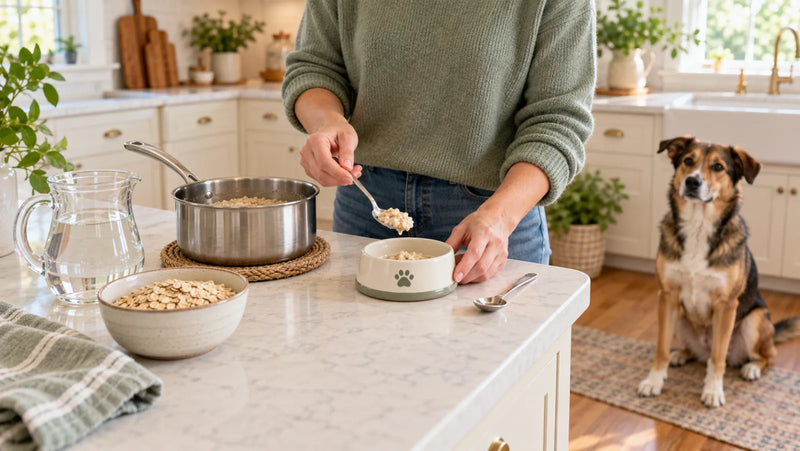
Plain cooking gives the owner better control over texture and can mellow the sharp flavor. It is not a detoxification step. Begin with an ordinary grocery radish whose identity is certain.
- Remove every leaf and stem. Keep the root separate from the discarded tops.
- Wash and peel the root. Remove soil, damaged areas and any tough outer surface.
- Steam or boil in water only. Do not add salt, broth, butter, oil, garlic, onion, spice or sauce.
- Cook until easily pierced. The goal is a soft, controllable bite rather than a crunchy round piece.
- Cool completely. Test the center, not only the outside.
- Cut one dog-sized piece. Make it smaller than the dog's normal quick-swallow mouthful.

A raw radish is not automatically forbidden, but it is firmer and sharper. Never hand over a whole radish or a large round slice. If a healthy dog that chews reliably is going to taste raw radish, use one much smaller piece and supervise the entire bite. Cooking plain is the more predictable first choice.
How Much Radish Can a Dog Try?
There is no evidence-based radish serving chart that converts a dog's body weight into teaspoons or cubes. Inventing one would create false precision. For a first exposure, offer one piece smaller than the dog's usual bite-sized reward and then stop. Observe the dog before deciding on another tiny taste on a different day.
The WSAVA Nutrition Committee's treat guidance says treats should supply no more than 10% of a dog's daily calories and advises veterinary input when a dog has a medical condition, dietary sensitivity or prescribed diet. That 10% is a ceiling for all extras combined, not a radish target.
Count radish alongside every training reward, table taste and chew in the same daily extras budget. The daily dog-treat calorie planning resource explains how the shared allowance works. Because a homemade radish piece has no package calorie statement, keeping the sample extremely small is more reliable than trying to fill the entire allowance with it.
Puppies, dogs on elimination trials, dogs with chronic digestive signs, and dogs receiving a veterinary therapeutic diet should not receive a new food merely because the amount sounds small. Ask the veterinary team whether any outside food fits the purpose of the current diet.
Remove Radish Leaves Instead of Feeding Them
Radish tops are not the same feeding decision as the root. The AKC radish resource cites veterinary advice that the greens may cause gastroenteritis. Discard them rather than chopping them into the dog's bowl or treating them as interchangeable with other leafy vegetables.
If a dog nibbled one leaf and remains normal, remove access, note the amount and time, and watch closely. If more than a trivial amount is missing or the dog develops vomiting, diarrhea, marked drooling, repeated swallowing, loss of appetite, lethargy or abdominal discomfort, call the veterinarian. Do not diagnose the cause from the plant name alone.
Horseradish Is Not the Same as a Red Radish
Horseradish belongs to the same broad plant family but is not the ordinary red radish root discussed here. Its strong preparation can irritate the gastrointestinal tract, and the AKC source advises not feeding it to dogs. A prepared horseradish sauce may also contain vinegar, salt, dairy, mustard, sugar or other seasonings.
If a dog licked a condiment, read the complete ingredient label. The response depends on the product, concentration, amount, dog and symptoms—not only the word “horseradish.” Call the veterinarian promptly when the sauce includes onion, garlic, chives, leeks, xylitol, alcohol or another concerning ingredient, or when the dog is symptomatic.
Wild Radish and Unknown Plants Need Identification
A plant growing along a trail, roadside or yard should not be classified by resemblance to a grocery radish. The ASPCA wild-radish entry identifies wild radish as Raphanus raphanistrum and lists isothiocyanates, gastrointestinal irritation and toxicity to horses. It does not list dogs as the affected species, so it should not be misquoted as proof of dog-specific toxicity.
The safe conclusion is narrower: do not feed an unknown outdoor plant under ordinary grocery-radish rules. Photograph the entire plant, leaves, flowers, seed pods and growing location when it is safe to do so. Prevent further access, preserve a sample away from the dog, and call the veterinarian or ASPCA Animal Poison Control at (888) 426-4435. A consultation fee may apply.
Skip Pickled Radish, Kimchi, Salads and Seasoned Sides
A mixed dish must be judged by its complete recipe. Pickled radish can bring substantial salt, vinegar and sugar. Kimchi commonly adds chili and Allium ingredients. Salads may include onion, chives, garlic dressing, cheese, mayonnaise, oil or sweetener. Roasted radishes may be coated with butter, salt or seasoning blends.
The WSAVA treat resource lists onions, leeks, shallots, garlic and chives among toxic food ingredients for dogs. When a dog ate a prepared dish, collect the package or recipe, estimate the amount and time, and report every ingredient. Do not scrape off visible seasoning and assume the radish underneath has become plain.
Compare Radish With Beets, Turnips and Eggplant
Root vegetables and purple produce can look interchangeable on a cutting board, but each needs its own decision. The beetroot safety resource addresses oxalate-stone history, sugar, canned or pickled versions and red pigment in urine or stool. Those issues should not be transferred automatically to radish.
The turnip root and greens resource covers cooked versus raw texture, gas, greens and the proportional thyroid caveat. The eggplant fruit and plant-part resource separates ripe cooked flesh from leaves, stems, unripe fruit and mixed recipes. Use the resource for the ingredient actually eaten instead of applying one vegetable's warnings to another.
What to Do if a Dog Ate Radish
First identify the exposure. Was it ordinary red or daikon root, raw or cooked, a leaf, horseradish, a seasoned dish, or a wild plant? Then record the approximate amount, time, dog’s size and age, medical conditions, current diet and every sign observed.
- One tiny plain-root piece and no symptoms: remove the rest, offer normal access to water, keep the regular diet unchanged and monitor.
- A large root piece or active gagging: choking and obstruction are physical concerns; seek urgent veterinary help when breathing, swallowing or repeated retching is affected.
- Leaves, horseradish or a mixed dish: call with the exact product or recipe, amount and symptoms rather than waiting for the ingredient name to decide the outcome.
- A wild or unidentified plant: photograph and identify it with professional help; do not rely on a grocery-radish comparison.
- Repeated vomiting, severe abdominal swelling or pain, blood, collapse, profound weakness, pale or blue gums, or trouble breathing: contact an emergency veterinary hospital immediately.
Do not induce vomiting or give salt, hydrogen peroxide, oil, milk, bread, charcoal, medication or another food unless a veterinarian gives case-specific instructions. Different plant parts, recipes, timing and symptoms require different responses.
Frequently Asked Questions
Can dogs eat raw radishes?
Many healthy dogs can tolerate one tiny piece of ordinary raw radish root, but raw radish is firm and peppery. Cut it much smaller than a gulpable round slice and supervise. Plain cooked radish is a softer, less sharp first test.
Can dogs eat cooked radishes?
A healthy dog may try one small piece that was steamed or boiled in water only, cooled completely and cut to the dog. Cooking improves texture and may mellow the flavor; it does not turn radish into a necessary food or treatment.
Can dogs eat radish leaves?
Do not intentionally offer the leaves. Veterinary guidance cited by AKC says radish greens may cause gastroenteritis. Remove the tops before preparation and call the veterinarian if a meaningful amount was eaten or symptoms develop.
Can dogs eat daikon radish?
Ordinary grocery-store daikon is a radish root. Apply the same rules: identify it with certainty, remove greens, prepare it plain, use a soft dog-sized piece, begin with one taste and stop if the dog dislikes it or develops digestive signs.
Can dogs eat horseradish?
Do not intentionally feed horseradish. It is not the ordinary radish root discussed here and may cause gastrointestinal upset. Prepared sauce can add salt, vinegar, dairy, mustard, sugar or other ingredients, so check the complete label after an exposure.
Can radishes make dogs gassy?
Yes. A new fibrous food may cause gas or loose stool in an individual dog, especially when the portion is too large. Start with one small piece and stop if it does not agree; sudden, persistent or painful gas needs veterinary evaluation.
What if my dog ate a wild radish plant?
Do not use ordinary grocery-radish advice. Photograph the plant, prevent more access and call the veterinarian or animal poison-control service with the plant, amount, timing and symptoms. The ASPCA entry for wild radish specifically lists horses, so it should not be stretched into a dog diagnosis.
Keep Radish Small, Plain and Optional
The useful answer is modest: an identified grocery radish root can be one tiny optional taste for many healthy dogs. Remove the leaves, cook it plain for a softer first bite, cool it, cut it small and stop when the dog refuses or reacts poorly. Horseradish, seasoned dishes and wild plants need their own assessment.
For a repeatable reward with a complete label, compare the current American Paws dog treats by exact ingredients, texture, package directions and the individual dog's diet. Keep every extra—including a radish taste—inside the dog's veterinarian-informed daily plan.