Can puppies eat oatmeal? A fully weaned puppy that is reliably eating complete-and-balanced growth food may try a tiny amount of plain oatmeal cooked completely in water and cooled. Start with one lick or about 1/4 teaspoon. Even for an eligible puppy, stop at one level teaspoon and count it with every other treat and topper.
Do not add milk, cream, sugar, salt, butter, syrup, fruit, sweeteners, or a flavored packet. Oatmeal is an optional taste, not puppy food, a daily supplement, or a home remedy for diarrhea, constipation, itching, or another problem. If the puppy is not fully weaned, is unwell, follows a veterinary diet, or is in a food trial, skip the experiment and ask the veterinary team.
Can Puppies Eat Oatmeal? The Five-Gate Answer
Use five gates before putting oatmeal in a puppy's dish:
- Fully weaned: the puppy no longer depends on milk or formula and can comfortably eat its normal growth food.
- Stable complete diet: the puppy is reliably eating a food labeled complete and balanced for growth or for the appropriate life stage.
- No current conflict: the puppy is well, has no previous oat reaction, and is not under an elimination, prescription, or restricted feeding plan that excludes the test.
- One plain ingredient: the oats are cooked fully in water, with no flavor packet or added food.
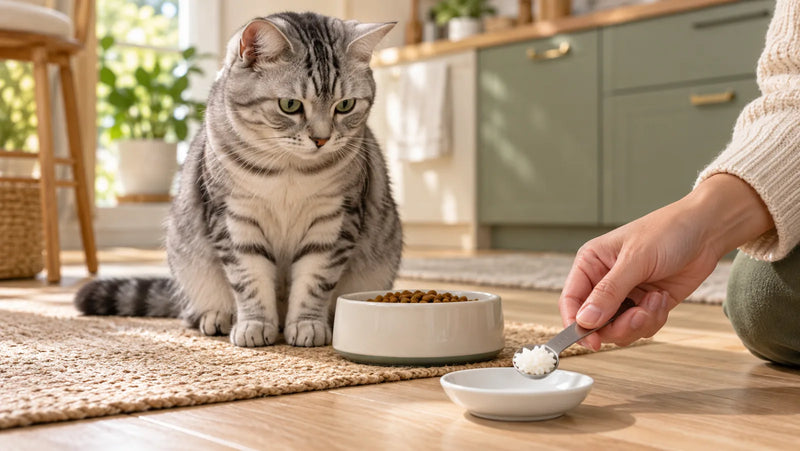
- Tiny measured serving: the oatmeal is cooled, soft, and offered first as one lick or about 1/4 teaspoon, never more than one level teaspoon under this conservative guide.
A “no” at any gate means wait. A “yes” at every gate only makes a tiny trial reasonable; it does not make oatmeal necessary. The broader adult-dog oatmeal safety guide covers general ingredient suitability, while this page deliberately applies a narrower puppy-readiness test.
Wait Until the Puppy Is Fully Weaned
Puppies have a growth diet to protect. VCA's growing-puppy feeding guidance explains that puppies are generally weaned by about eight weeks and should eat a diet formulated for growth with the appropriate nutritional adequacy statement. Age is only a rough marker, however. A young puppy's actual development, health, size, chewing and swallowing ability, and veterinary plan matter more than a date on the calendar.
Do not use oatmeal to help a nursing or partly weaned puppy transition away from milk. Do not pour cow's milk over oats as a substitute for formula. A puppy who is not taking normal food, has trouble swallowing, seems weak, or has vomiting or diarrhea needs veterinary guidance, not a new breakfast ingredient.
Once the puppy is fully weaned, keep the complete growth food in charge. Feed that regular meal first and assess appetite and stool on the normal diet. A new extra is easiest to evaluate when the puppy's routine is stable and no other unfamiliar food is introduced at the same time.
Choose Plain Oats and Cook Them in Water
Use plain rolled oats or plain quick oats with a one-ingredient label. Cook them thoroughly in water until soft, following the package directions. Cool the oatmeal before measuring the puppy's portion. Steel-cut oats can also become soft, but they take longer; the short puppy test does not benefit from choosing a chewier format.
Do not serve dry oats. A spoonful of dry flakes and a spoonful of cooked oatmeal are not the same volume or texture. Dry flakes are also easier to scatter, inhale during fast eating, or swallow without comfortable hydration. Cook first, cool, then measure the finished oatmeal.
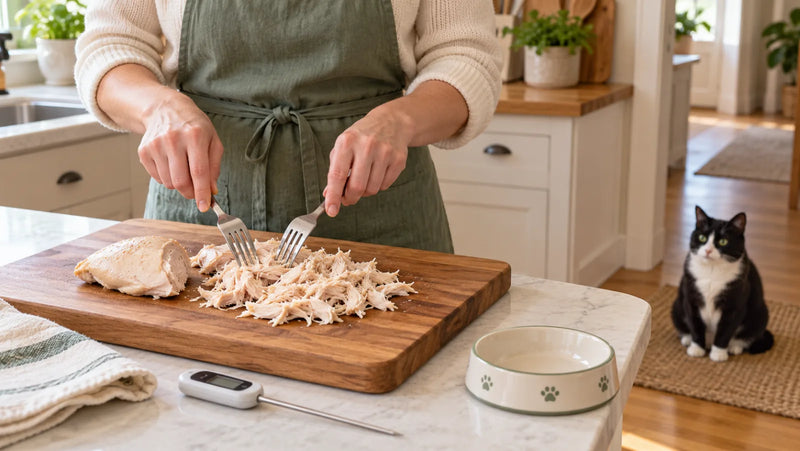
Keep the puppy's tasting dish separate from the family pot. If the household batch has already received milk, sweetener, salt, fruit, or another topping, do not take a “plain-looking” spoonful from one edge. Make a tiny separate water-only batch instead. Use a clean utensil, allow the center to cool, and test the temperature before the dish reaches the floor.
For a detailed kitchen workflow, ratios, cooling, and storage, use the separate plain oatmeal cooking guide for dogs. That page owns the method. The puppy decision remains stricter: being able to cook an ingredient safely does not mean a puppy is ready for it or needs it.

One Level Teaspoon Is the Ceiling, Not the Starting Point
For this article, one level teaspoon of fully cooked oatmeal is a conservative occasional ceiling. It is not a daily allowance, a veterinary prescription, or a promise that every puppy should receive that much. Begin with one lick or about 1/4 teaspoon. A very small puppy, a puppy with a restricted feeding plan, or one whose normal training rewards already use the extras budget may receive none.
Measure the oatmeal before the puppy sees it. A regular eating spoon can hold very different amounts depending on its shape and whether the food is heaped. Use a measuring teaspoon, level the surface, then take only the smaller first taste from that amount. Discard or refrigerate the remainder rather than letting the puppy finish the preparation bowl.
The puppy's complete diet supplies the nutrition for growth. VCA advises keeping treats and table food to no more than 10% of daily calories, but that is a combined upper limit, not a target. Oatmeal, training treats, chews, toppers, table tastes, and food used to give medicine all share the same allowance. The puppy's veterinarian may set a lower limit.
The companion guide to counting a puppy's full daily treat budget helps prevent several individually small extras from becoming a large part of the day. Do not create a separate “healthy food” budget for oatmeal.
Oatmeal Does Not Replace Complete Puppy Food
Plain oatmeal does not provide every nutrient a growing puppy needs in the right amount and proportion. It cannot replace a meal, repair an incomplete homemade diet, or turn a snack into complete growth nutrition. A bowl can make a puppy feel full while displacing the food designed to support development.
Check the puppy-food package for a nutritional adequacy statement appropriate to growth and follow the feeding plan agreed with the veterinary team. Large-breed puppies may have especially specific energy and mineral needs. Adding a human-food breakfast because it seems wholesome can make careful intake harder to manage.
Oatmeal also is not required for fiber. If a puppy has constipation, loose stool, straining, repeated accidents, poor appetite, or a sudden stool change, ask the veterinarian what is causing it and what diet is appropriate. Adding oats can delay the right assessment and introduce another variable.
Skip Milk, Sugar, Flavored Packets, and Breakfast Toppings
A puppy trial has only two components: oats and water. Human oatmeal becomes a different food when it contains milk, cream, butter, salt, brown sugar, maple syrup, honey, sweetener, chocolate, raisins, grapes, nuts, protein powder, fruit, spice blends, or a flavored packet. Do not scrape toppings off and serve what remains; mixed ingredients and residues are still present.
Milk is unnecessary and can upset some puppies. Sugar and syrup add sweetness without making the test more useful. Butter and cream add fat. Flavored packets can combine sweeteners, sodium, dairy ingredients, fruit pieces, spices, and other additives behind a simple front label. Read the complete ingredient statement, not just the flavor name.
Some sugar-free products contain xylitol. FDA warns that xylitol is toxic to dogs and may appear under names such as wood sugar, birch sugar, or birch bark extract. If a puppy may have eaten xylitol, contact a veterinarian, emergency veterinary hospital, or animal poison-control service immediately. Do not wait for signs, calculate a safe dose, or induce vomiting unless a veterinary professional specifically directs it.
Oats Are Not Wheat, but Allergy Diets Still Control
Oats and wheat are different grains. A confirmed wheat allergy does not automatically prove an oat allergy. It also does not authorize an oatmeal experiment. The veterinarian who diagnosed or is investigating the reaction should decide which exact ingredients and products are allowed.
Human oat packages can also be processed around other grains. FDA's gluten-free labeling guidance distinguishes oats from wheat, rye, and barley while recognizing that cross-contact can occur. That labeling context matters when a veterinary plan requires tight ingredient control; it is not a way to diagnose a puppy at home.
During a veterinary elimination trial, every unapproved bite can cloud the result. Merck Veterinary Manual describes food trials as controlled diets that exclude other foods, treats, and flavored items. If a puppy is on such a trial, do not add oatmeal because it seems simple or unrelated. Use only items the veterinary team approves.
Itching, ear problems, vomiting, or diarrhea after food can have more than one cause. Do not label the puppy “allergic to oats” from one observation, and do not repeat-feed to prove a theory. Stop the new food, record the exact product and amount, and ask the veterinarian how to proceed.
Watch the Puppy After the First Taste
Offer the first tiny taste when the puppy is otherwise normal and someone can observe it. Keep the package or photograph the ingredient statement. Note the time and amount. Do not add another new food that day; changing one variable at a time makes any follow-up conversation more useful.
Stop offering oatmeal if the puppy develops vomiting, diarrhea, marked gas, discomfort, unusual itching, facial swelling, hives, coughing, gagging, or a behavior change. Trouble breathing, collapse, repeated vomiting, severe weakness, facial swelling, or suspected toxic-ingredient exposure warrants urgent veterinary help. This list cannot distinguish an allergy from intolerance, infection, obstruction, or another condition.
A normal first taste is not permission to increase the amount. Keep any future use small and occasional, and continue counting it with all other extras. If stool becomes softer after repeated servings, stop rather than trying to “build tolerance.”
Keep Oatmeal Separate From Other First Foods
Puppy socialization and training can create many reward opportunities, so introduce foods deliberately. Use pieces of the puppy's measured complete food for most repetitions. If trying oatmeal, do not also test cheese, a chew, and a new topper in the same window. One-food-at-a-time records are easier to interpret.
The separate guide to cheese for puppies explains its own dairy, fat, sodium, ingredient, and portion questions. Cheese and oatmeal do not validate each other, and combining them makes the plain-oat test meaningless.
For a broader selection process, the puppy treat guide prioritizes label fit, texture, ingredient simplicity, training size, and the whole-day feeding plan. “Puppy-safe” is not one permanent category; the exact product, puppy, amount, purpose, and timing all matter.
A Separate Chicken Option When It Fits the Puppy
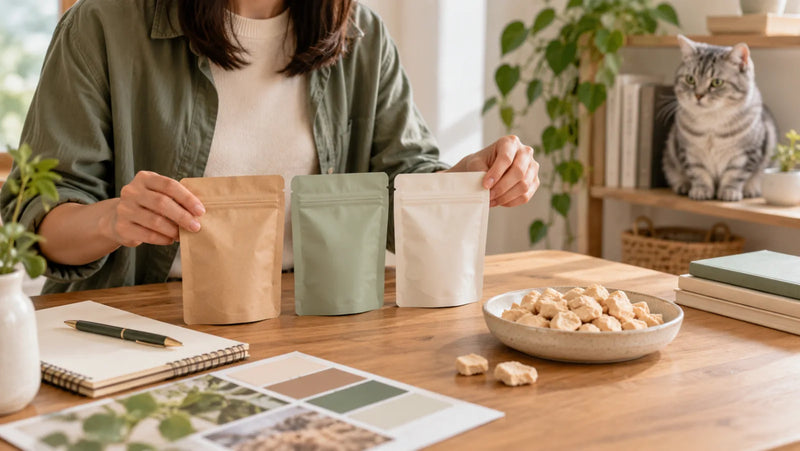
If the puppy needs a more practical high-value training reward and already tolerates chicken, review the exact American Paws freeze-dried chicken meal topper. It is a dog-labeled chicken product with its own ingredient statement, feeding directions, storage information, and package facts. Confirm that chicken and that exact label fit the puppy's plan before use.
The topper is not an oatmeal ingredient, a complete puppy meal, an allergy solution, or a treatment. Reserve its measured amount before training, break natural pieces to an appropriate size when needed, and count every piece within the same shared extras allowance. Do not add it on top of oatmeal as a second unmeasured bonus.
You can also browse the current American Paws collection by exact product label. Check species, ingredients, format, and directions item by item rather than transferring a statement from one product to the whole catalog.
Frequently Asked Questions
At what age can puppies eat oatmeal?
There is no calendar age that makes oatmeal automatically appropriate. Wait until the puppy is fully weaned, reliably eating complete growth food, able to handle the soft texture, healthy enough for a new food, and free of a veterinary-diet conflict. Many puppies are weaned around eight weeks, but readiness and the individual plan control.
How much oatmeal can a puppy eat?
Start with one lick or about 1/4 teaspoon of fully cooked, cooled, plain oatmeal. Under this conservative guide, do not exceed one level teaspoon, and remember that even that ceiling may be too much for a small or restricted puppy. Count it with all treats and toppers, not in addition to them.
Can puppies eat raw oats?
Do not use dry raw flakes for this test. Cook plain oats fully in water until soft, cool them, and measure the cooked portion. The cooking and puppy-suitability decisions are separate; a cooked product still needs to pass all five gates.
Can puppies eat oatmeal with milk?
No milk is needed. Prepare the oats with water only. Milk and cream add another ingredient and can cause digestive upset in some puppies, making the first-food test harder to interpret.
Can puppies eat instant oatmeal?
Plain one-ingredient quick oats can be cooked in water, but avoid flavored instant packets and cups. Those products can include sweeteners, dairy, salt, fruit, spices, chocolate, or other additives. Check the full ingredient statement every time.
Is oatmeal good for puppy diarrhea?
Do not use oatmeal as a home treatment for diarrhea. Puppies can dehydrate and decline quickly, and diarrhea has many possible causes. Contact the veterinary team for persistent, repeated, bloody, or severe diarrhea, or whenever the puppy also seems weak, painful, vomits, or will not eat or drink.
Can a puppy with a wheat allergy eat oatmeal?
Oats are not wheat, but that distinction is not enough to approve a product. The puppy may have another sensitivity, the package may have grain cross-contact, and an elimination plan may prohibit all unapproved foods. Ask the treating veterinarian about the exact oat product before offering it.
Can puppies eat oatmeal every day?
Oatmeal is unnecessary as a daily puppy food. Keep any approved use tiny and occasional so it does not displace complete growth nutrition or consume the shared treat budget. If someone recommends daily oats for a symptom, ask the veterinarian to assess the reason first.
After Weaning, Keep the Test Plain and Tiny
The careful answer is narrow: a fully weaned, healthy puppy with a stable complete growth diet may try one lick or about 1/4 teaspoon of plain oatmeal cooked in water and cooled. One level teaspoon is the ceiling in this guide, not the starting amount or a daily entitlement. Stop when the puppy's diet, health, reaction, or veterinary plan says stop.
For most training, the simplest reward is still part of the puppy's measured complete food. If a separate chicken reward is useful and already fits the individual plan, check the exact dog-labeled freeze-dried chicken meal topper, reserve a measured amount, and keep it inside the same extras budget. Oatmeal and topper are optional tools; neither replaces complete-and-balanced puppy food.