
Freeze-dried raw dog treats are uncooked animal-protein treats that have been frozen and dried under vacuum to remove moisture. They can be aromatic, light, and convenient, but freeze-drying does not reliably make raw ingredients germ-free. The word “raw” also does not mean a treat is complete and balanced, safer, or automatically more nutritious than a cooked option.
The useful shopping question is not “Is raw better?” It is “What exactly is this product, how was it handled, what does the label say it is for, and does it fit this dog and household?” This guide separates the process from the marketing, explains the current FDA and CDC safety position, and gives you a practical label-and-handling checklist.
What are freeze-dried raw dog treats?
“Freeze-dried” describes a process
Freeze-drying starts by freezing food. Under a vacuum, much of its frozen water moves out of the food as vapor, leaving a dry, porous structure. The CDC's pet-food safety guidance describes freeze-dried raw food as food that has been frozen and then dried in a vacuum.
Removing water changes weight, texture, and storage behavior. It can preserve much of the ingredient's aroma and recognizable structure without the high heat used in some cooking or dehydration methods. It does not prove that every nutrient remains unchanged, that the food is sterile, or that all freeze-dried products were made with the same temperature, pressure, or pathogen-control steps.
“Raw” describes the starting protein and heat treatment
CDC defines raw pet food as food containing uncooked animal protein that has not been heated to a temperature high enough to kill germs. Raw products can be fresh, frozen, freeze-dried, or dehydrated. In other words, “raw” and “freeze-dried” answer different questions: one describes heat treatment; the other describes moisture removal.
Do not assume every freeze-dried treat is raw. Some makers freeze-dry raw ingredients, while others may freeze-dry ingredients that received a cooking or other kill step. If the package does not use the word “raw,” do not add that claim yourself. Ask the manufacturer how the product is processed when the distinction matters.
Freeze-dried raw dog treats are not the same as complete dog food
Look for the product's purpose first
A package identified as a “treat” or “snack” is generally intended as an occasional reward, not a meal. A topper may also be intended only for intermittent or supplemental feeding. Those products can be useful, but a bag of meat cubes does not become a complete diet because the ingredient sounds wholesome.
The FDA's explanation of complete-and-balanced pet food says treats, snacks, and supplements are typically not intended as a pet's sole diet. A main food that is nutritionally complete should carry a nutritional adequacy statement identifying the species and life stage it supports.
Find the nutritional adequacy statement
For a main diet, look for a statement saying the food is “complete and balanced” for adult maintenance, growth, reproduction, or all life stages and that the claim is supported by an AAFCO nutrient profile or feeding trial. A product labeled only as a treat does not need to meet that job.
This distinction is especially important when search results mix “freeze-dried raw dog treats” with “freeze-dried raw dog food.” Treats supplement a complete diet. A complete food is formulated to supply all required nutrients in suitable amounts and ratios for the stated life stage. Never replace a dog's regular food with treats unless a veterinarian has selected a product specifically labeled and used as a complete diet.
Does freeze-drying preserve nutrients and flavor?
Low-temperature moisture removal can help retain aroma, shape, and many heat-sensitive qualities. That often creates a strong-smelling, crumbly reward that dogs notice and that owners can divide into small pieces. It is reasonable to describe those format qualities; it is not reasonable to promise that freeze-drying preserves “100% of nutrients” or makes the food nutritionally superior to every cooked product.
Finished nutrition depends on the starting ingredient, trimming, recipe, process, oxidation, moisture, packaging, and storage. Drying also makes food more concentrated by weight because much of the water is gone. Compare calories per piece or per gram rather than assuming an airy cube has negligible calories.
For the broader process comparison—including texture and storage differences—read our format pillar on freeze-dried vs dehydrated dog treats. That page owns the general method comparison; this article stays focused on what the added word “raw” means for treats.
Are freeze-dried raw dog treats safe?
Freeze-drying does not reliably kill all pathogens
The honest answer is that raw treats carry a microbial risk that the dry appearance does not erase. CDC says freezing, dehydrating, or freeze-drying raw animal protein can reduce germs but does not kill all of them. It currently does not recommend feeding raw pet food or treats to dogs or cats because products may carry germs such as Salmonella and Listeria.
FDA reached a similar conclusion in a two-year pet-food study. Of 196 commercial raw dog- and cat-food samples, 15 tested positive for Salmonella and 32 for Listeria monocytogenes. FDA reported that raw pet food was more likely than the other tested pet-food types to contain disease-causing bacteria. The FDA raw pet-food fact page explains the study and the risk to both pets and people handling the food.
Those findings do not prove that every bag is contaminated. They do mean that “dry,” “frozen,” “natural,” and “premium” are not pathogen guarantees. Check recalls, keep the original package and lot code, follow the maker's handling directions, and stop using a product if the seal is damaged or the contents look or smell abnormal.
Some pets and households need extra caution
Ask a veterinarian before considering a raw treat for puppies, pregnant or nursing dogs, seniors with health problems, immunocompromised dogs, dogs with chronic gastrointestinal disease, or dogs eating a prescribed diet. A dog's normal appearance is not proof that it cannot carry and shed germs.
Households with young children, adults 65 or older, pregnant people, or anyone with a weakened immune system should be especially conservative about raw animal products and cross-contamination. If the household cannot reliably separate the treat from human food areas and clean every hand, bowl, scoop, mat, and surface, a non-raw option is the clearer practical choice.
How to read a freeze-dried raw dog-treat label
Start with purpose, species, and life stage
Confirm that the front identifies the product as a dog treat or snack. Do not infer that a product is a meal from a feeding photograph or words such as whole food, ancestral, prey-inspired, or nutrient-rich. If you are shopping for a main diet, find the nutritional adequacy statement and the life stage—not just a raw claim.
Name every ingredient
Look for a specific animal source such as chicken breast or beef liver, then read the entire list for fat, broth, flavor, glycerin, salt, vitamins, minerals, or other proteins. One named ingredient is easy to understand, but “single ingredient” still does not mean sterile, complete, hypoallergenic, or suitable for a veterinary elimination diet.
If a dog has a confirmed food allergy or is in a diet trial, ask the veterinarian whether the exact product is allowed. Shared equipment and cross-contact cannot be ruled out from a short ingredient list alone.
Check calories, guaranteed analysis, lot, and date
Find calories per piece, ounce, or gram; crude protein, fat, fiber, and moisture; net weight; company contact details; lot code; best-by or use-by date; and storage instructions. These facts let you portion the treat, compare similar formats, and identify a batch if a quality problem or recall occurs.
Do not compare crude-protein percentages across foods with very different moisture levels as though the numbers describe the same basis. For an everyday treat choice, calorie density, serving size, ingredient clarity, and the dog's actual needs are more useful than chasing the highest percentage on the bag.
Ask what the raw claim actually covers
If “raw” matters to the purchase, ask the maker:
- Was the animal protein uncooked when freeze-dried?
- Does the process include a validated pathogen-reduction or kill step?
- Does the company test finished lots for relevant pathogens?
- What storage and handling steps are required after opening?
- Should rehydrated leftovers be refrigerated or discarded, and after how long?
- Where can current recall and lot information be found?
A vague answer such as “freeze-drying makes it safe naturally” is not the same as a documented food-safety program.

Freeze-dried raw vs regular freeze-dried treats
| Label question | Freeze-dried raw treat | Freeze-dried treat not labeled raw |
|---|---|---|
| Starting protein | Uncooked animal protein | May be cooked or otherwise processed; ask the maker |
| What freeze-drying proves | Moisture was removed under freeze-drying conditions | The same—freeze-dried describes the moisture-removal format |
| Pathogen assumption | Do not assume the process killed all germs | Do not infer a kill step from silence; verify processing if needed |
| Complete diet? | Usually no when labeled as a treat | Usually no when labeled as a treat |
| Best decision tools | Purpose, ingredients, process, testing, calories, storage, dog and household | Purpose, ingredients, process, calories, storage, dog and household |
The key point is that freeze-dried does not automatically mean raw, and raw does not automatically mean complete, balanced, pathogen-free, or better. Judge the finished product and the maker's evidence.
How to handle and serve freeze-dried raw treats
Prevent cross-contamination
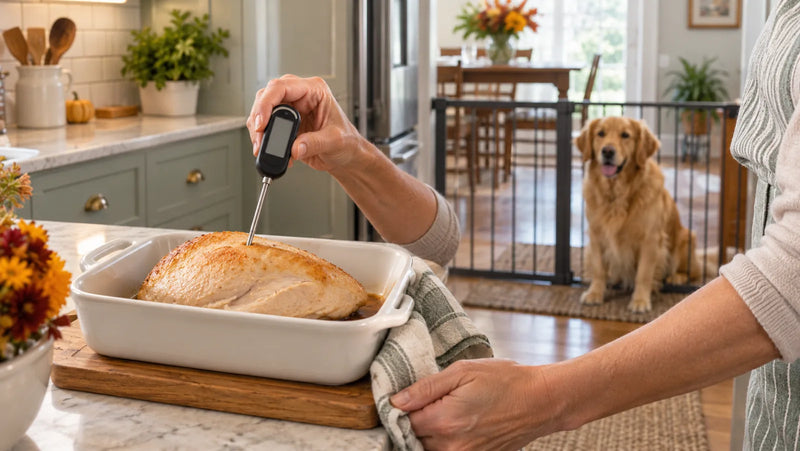
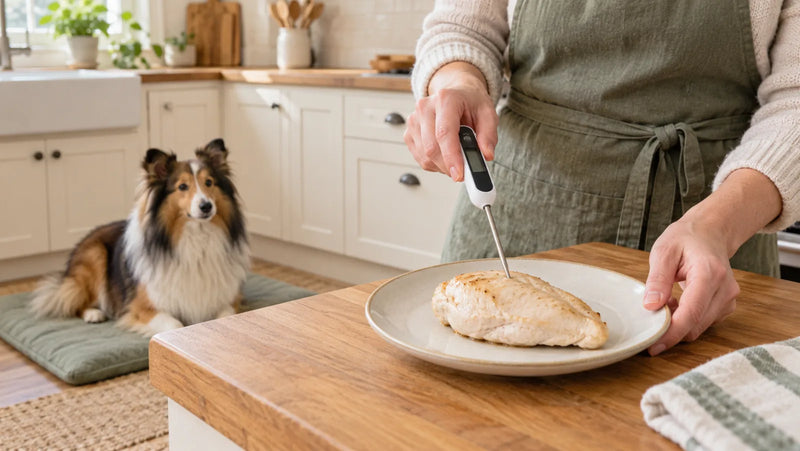
The FDA's pet-food and treat handling guidance recommends washing hands before and after handling treats and washing bowls and utensils with soap and hot water after use. Keep raw treats away from human food, counters, cutting boards, and utensils. Do not let a dog lick faces immediately after eating raw products.
Use a dedicated scoop instead of the dog's bowl to measure from the bag. Keep the food in its original package or keep that package with any secondary container so the lot, date, and directions are not lost. Store it cool and dry unless the label says otherwise, close the package immediately, and do not combine new cubes with crumbs from an older lot.
If you add water, treat the food as perishable and follow the maker's time and refrigeration directions. Discard leftovers when the label requires it; do not leave damp meat sitting at room temperature.
Start small and count every treat calorie
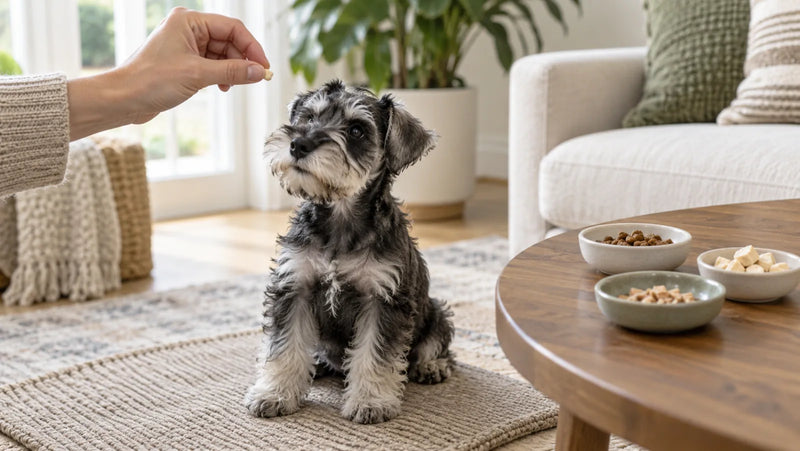
Offer one small piece on the first day and keep the rest of the diet familiar. Watch for vomiting, diarrhea, appetite change, unusual lethargy, itching, hives, or facial swelling. Severe signs, repeated vomiting or diarrhea, breathing trouble, collapse, or illness in a medically fragile dog needs prompt veterinary guidance.
Keep all treats and toppers together near 10% or less of daily calories unless the veterinary team sets a different limit. Ten percent is a ceiling, not a target. Our daily dog-treat portion guide explains how to count mixed rewards without displacing complete food.
When a non-raw freeze-dried treat may be the clearer choice
A shopper may want the light texture, aroma, portability, and single-ingredient clarity of freeze-drying without deliberately choosing a raw product. In that case, select a treat whose manufacturer clearly explains its process and never add the word raw when the label does not.
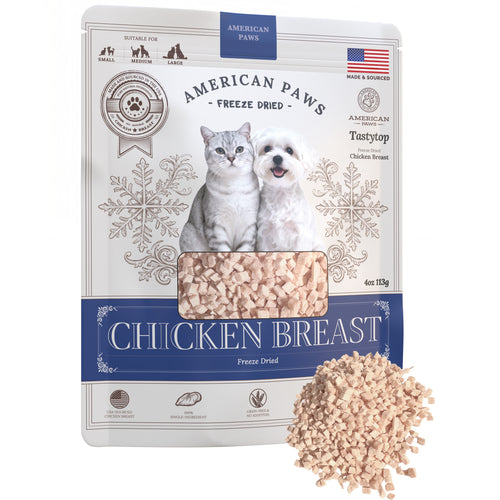
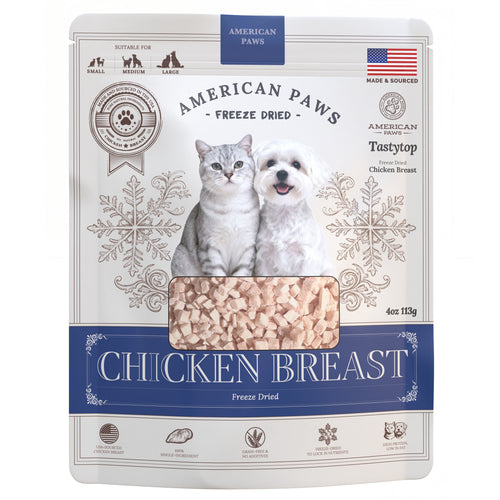
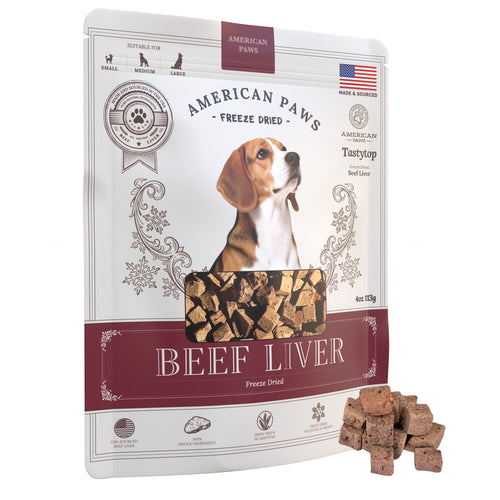
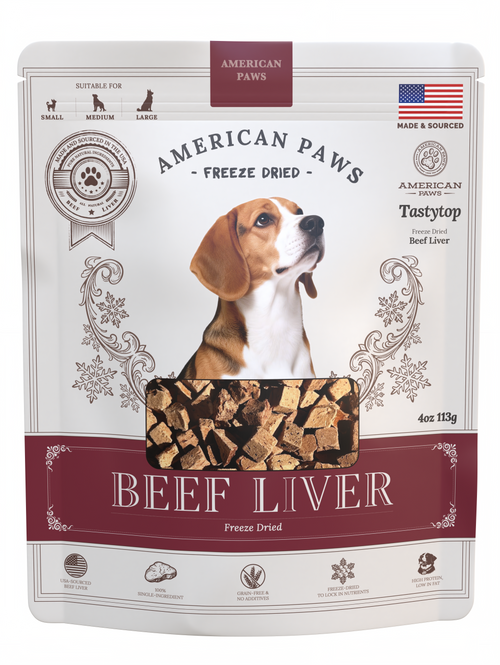
American Paws' linked products are real freeze-dried treats, not complete dog foods. Our single-ingredient freeze-dried chicken treats and freeze-dried beef liver training treats are made in the USA and sold as treats. We do not present either one here as raw, and neither should replace a complete diet.
Whichever brand you choose, the safest claim is the one the actual package and manufacturer can support. A careful non-raw product is not “less natural” by default, and a raw product is not “better” by default.
Frequently asked questions
Does freeze-drying kill Salmonella?
Do not assume it does. CDC says freeze-drying raw animal protein can reduce germs but does not kill all of them. A manufacturer may use additional validated controls, but shoppers need evidence for the actual process and finished product rather than relying on the dry texture.
Do freeze-dried raw dog treats need refrigeration?
Follow the package. Many unopened dry products are designed for cool, dry storage, but directions vary. Reseal promptly and protect the food from heat and moisture. Once rehydrated, use the maker's refrigeration and discard timeline because added water changes storage risk.
Can puppies eat freeze-dried raw treats?
Ask the puppy's veterinarian first. Puppies have small calorie allowances and developing immune systems, and growth food must remain the nutritional foundation. If the veterinarian approves a specific treat, use tiny pieces, introduce one product at a time, and handle it carefully.
Can freeze-dried raw treats replace kibble?
Not when the package identifies them only as treats or supplemental food. A replacement main diet must carry an appropriate complete-and-balanced nutritional adequacy statement for the dog's life stage. Ingredient quality alone does not fill every vitamin, mineral, fatty-acid, and amino-acid requirement in the correct ratio.
How long do freeze-dried treats last after opening?
There is no universal number. Packaging, remaining moisture, oxygen exposure, recipe, and storage differ. Use the product's after-opening directions and best-by date, keep it sealed and dry, and discard it for moisture, mold, insects, package damage, or a new rancid or abnormal odor. See our full guide on how to store freeze-dried dog treats.
Choose the label, not the buzzword
Freeze-dried raw dog treats combine two separate ideas: a low-temperature drying format and uncooked animal protein. That can make a convenient, motivating treat, but it does not remove the need for pathogen awareness, clean handling, calorie control, and a complete main diet.
Read the purpose statement first, then the ingredients, process, calories, lot information, and storage directions. If a non-raw freeze-dried reward better fits the dog or household, browse all current American Paws dog treats and compare only the products that actually exist. The best choice is the label you can verify and the treat you can serve responsibly—not the biggest front-of-bag promise.