To learn how to cook chicken thighs for dogs, start with boneless, skinless thighs and use either a gentle simmer or a plain bake. Add no oil, salt, onion, garlic, sauce, or seasoning. Cook every thick piece to 165°F on a food thermometer, cool it, trim visible fat, inspect for bone or cartilage, and chop only the amount that fits the dog's treat or topper budget.
Chicken thighs are darker and usually fattier than breast meat. A healthy dog that already tolerates chicken may handle a small plain portion, while skin, rendered fat, and the dog's medical history still shape the decision. Dogs with pancreatitis, high blood fat, a prescription diet, chronic digestive disease, or a known chicken reaction need a veterinarian-led plan rather than a kitchen experiment.
How to Cook Chicken Thighs for Dogs Safely
Five gates matter more than a clock: choose boneless and skinless meat, keep raw poultry separate from ready-to-eat food, cook it completely plain, verify 165°F in the thickest pieces, then cool and inspect before portioning. Color and texture cannot replace the thermometer.
| Gate | Pass condition | Do not substitute |
|---|---|---|
| Cut | Boneless, skinless thigh with loose fat and cartilage trimmed. | Do not plan to feed skin or a cooked bone. |
| Kitchen safety | Raw board, plate, knife, and hands are separated from cooked food and cleaned. | Do not rinse raw chicken in the sink. |
| Recipe | Chicken plus plain water for simmering, or chicken alone for baking. | Do not add oil, butter, broth, garlic, onion, salt, rubs, or sauce. |
| Doneness | Several thick pieces reach 165°F in the center. | Do not rely on cooking time, browned edges, or clear juices. |
| Serving | Meat is cooled, rechecked, chopped small, and counted with all extras. | Do not replace a complete diet with unbalanced thigh meat. |
Breasts, mixed chicken pieces, whole birds, and general topper decisions belong with the broader plain chicken cooking and portion guide. Thigh meat needs extra attention to skin, fat pockets, uneven thickness, and the spaces where a bone may have been removed.
Start With Boneless, Skinless Thighs and a Clean Work Area
Thaw frozen thighs in the refrigerator in a covered container. Keep raw juices below produce and cooked foods. The CDC's chicken safety guidance explains that raw chicken does not need to be washed; rinsing can spread germs to the sink, counter, utensils, and nearby food. Move the meat directly from its package to a dedicated raw-poultry board or plate.
Trim any remaining skin, loose yellow fat, hard cartilage, and obvious bone fragment. Commercial “boneless” thighs can have irregular pockets where the bone was removed, so open folded areas and look with clean hands. Do not dice raw thigh into tiny pieces unless the cooking method requires it; whole boneless pieces are easier to probe accurately and keep separate from cooked portions.
Set out a clean cooked-food plate and clean tongs before heat begins. Wash hands with soap after raw handling, and clean the knife, board, counter, sink area, and raw plate with hot soapy water. The thermometer probe also needs cleaning before and after each use according to its instructions.
Method 1: Simmer Plain Chicken Thighs
- Place trimmed boneless, skinless thighs in one layer in a clean pot.
- Add enough plain water to cover the meat. Do not use ordinary stock or bouillon; those products may contain salt, onion, garlic, fat, or other ingredients that do not belong in this preparation.
- Bring the water just to a boil, then lower the heat to a gentle simmer. A hard rolling boil can tighten the outside while the thick center still needs time.
- Turn thick pieces with clean tongs for even heating. Begin checking around 15 minutes, but treat time only as a reminder to use the thermometer.
- Insert the probe from the side into the thickest center without touching the pot. Check several pieces and continue cooking until every checked piece reads at least 165°F.
- Move the cooked thighs to the clean plate. Let them cool enough to handle, then trim visible fat and chop the serving portion into small, easy-to-swallow pieces.
Discard the cooking liquid for routine dog use. Even plain water can collect rendered thigh fat, and its calorie content is difficult to measure. That unmeasured fat makes the liquid a poor routine topper unless a veterinarian has designed a specific measured plan for the dog.
Method 2: Bake Plain Chicken Thighs
- Heat the oven to 375°F. Line a shallow tray with parchment or use an ungreased rack set over a tray.
- Arrange trimmed boneless, skinless thighs in one layer with space between them. Do not brush them with oil or butter.
- Bake until the centers approach doneness. Begin checking around 20 minutes; thick or tightly folded pieces may need longer.
- Probe the thickest center of several pieces from the side. Return any piece below 165°F to the oven and check again with a cleaned probe.
- Move fully cooked thighs to a clean surface. Cool, blot or trim visible rendered fat, unfold each piece, and inspect before chopping.
The federal safe-temperature chart lists 165°F for poultry, including legs and thighs. An oven temperature or a typical minute range cannot guarantee that the center reached that temperature; thickness, starting temperature, pan material, and oven accuracy all change the timing.

Remove Skin, Bones, Cartilage, and Rendered Fat Before Serving
Buying boneless, skinless thighs removes two avoidable problems before cooking begins. Skin carries concentrated fat and can hold seasoning or pan drippings. Cooked bones can splinter, lodge in the mouth or esophagus, choke a dog, or injure and obstruct the digestive tract. The WSAVA Nutrition Committee warns that both cooked and raw bones can cause serious harm.
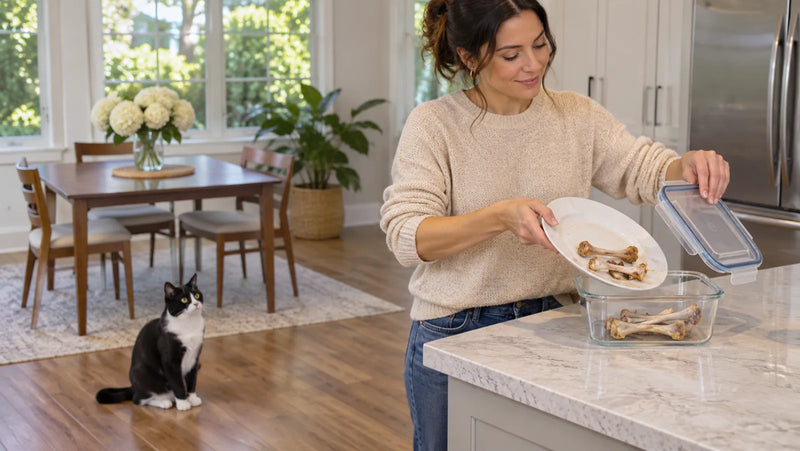
If bone-in thighs were prepared for people, keep the dog away from the pan and trash. Remove meat at the counter, discard every bone in a secured container, and inspect the meat for fragments under good light. Do not hand over the bone, even if most meat has been removed. The separate chicken-bone safety guide explains the warning signs and the information a veterinary clinic will need after a suspected swallow.
Do not induce vomiting or push food, oil, bread, or another home remedy after a bone exposure unless a veterinary professional gives that instruction for the specific dog. Choking, repeated gagging, trouble breathing, severe pain, repeated vomiting, a swollen abdomen, collapse, or bloody stool needs urgent veterinary attention.
Chicken Thighs Have More Fat Than Chicken Breast
Thigh is dark meat and ordinarily contains more fat than skinless breast. Removing skin and trimming visible fat reduces the load, but it does not make the cuts nutritionally identical. That difference matters when the meat is used repeatedly, when the dog is small, or when other rich extras are already in the day.
The Merck Veterinary Manual's dog-owner pancreatitis overview notes that dietary indiscretion is a common risk context and that mild cases are generally managed with low-fat food and treats under veterinary care. A dog with prior pancreatitis, high triglycerides, vomiting, abdominal pain, appetite loss, weakness, or diarrhea should not be “tested” with chicken thigh. Call the veterinary team.
For a healthy dog that already tolerates chicken, a tiny plain thigh portion may be an occasional extra. For a lower-fat home-cooked chicken choice, skinless breast may fit more easily, but the dog's total diet still matters. For breast or mixed chicken pieces, follow the broader plain chicken cooking guide for the matching preparation and portion steps.
Portion Chicken Thigh by the Dog's Extras Budget
After the meat is fully cooked and cooled, start with one tiny chopped piece—about half a teaspoon—for a dog that has not eaten plain chicken thigh before. Give it by hand or mix it into the regular complete food. Do not introduce several new foods on the same day, because that makes a reaction harder to trace.
For ongoing use, calculate instead of copying a universal spoon count:
- Ask the veterinary team for the dog's current daily calorie target, especially for a puppy, senior, underweight or overweight dog, or any dog with disease.
- Keep all treats, toppers, chews, table tastes, and foods used for medication under the agreed extras ceiling.
- Subtract every other extra already planned for the day.
- Use a reliable nutrient value for the exact cooked, skinless preparation and weigh the chopped thigh on a kitchen scale.
- Divide the remaining extras calories by that preparation's calories per gram to find the maximum gram amount; use less for a first exposure.
The current WSAVA dog-treat guide advises keeping treats below 10% of daily calories so complete and balanced food remains primary. Treat that figure as a ceiling; the individual dog may need a smaller allowance or no thigh at all. The daily dog-treat allowance guide shows how to count mixed extras without letting small bites disappear from the total.
Cool, Store, and Freeze Small Portions
Divide cooked thigh into shallow containers and refrigerate it within two hours of cooking. The FoodSafety.gov cold-storage chart gives cooked meat or poultry leftovers three to four days in a refrigerator held at 40°F or below. Label the container with the cooking date instead of relying on memory.
Freeze amounts the dog can use in one sitting or one day. Thaw a portion in the refrigerator, keep it covered, and do not repeatedly warm and cool the same container. Discard meat with an uncertain date, off odor, slime, mold, a broken cold chain, or contact with raw-poultry tools. Freezing pauses growth but does not repair unsafe handling.
Keep Other Meat Questions in Their Own Lanes
Each protein needs its own doneness and hazard check. The plain pork cooking method distinguishes intact pork cuts from ground pork and uses the correct temperature for each. Do not carry the chicken-thigh temperature or timing over to pork by assumption.
Likewise, the question of whether a dog can have a tiny plain piece of home-cooked beef differs from preparing poultry. The roast beef safety guide separates lean home-cooked meat from deli slices, seasoned roasts, gravy, fat, and bones. Keeping those decisions separate prevents one “plain meat” rule from flattening meaningful differences.
Choose a Labeled Chicken Reward When Cooking Is Impractical
Home-cooked thigh has no package calorie statement, so it asks the owner to weigh and calculate. When a labeled reward is more practical and the dog tolerates chicken, the current American Paws single-ingredient chicken breast jerky page lists 100% USA chicken breast, about 15 kcal per treat, All Life Stages, and intermittent or supplemental feeding. Those facts apply to that product, not to homemade thigh or the whole catalog.
Compare the exact labels in the American Paws chicken-jerky collection and break a suitable piece smaller when the product directions and the dog's plan allow. Other textures and proteins are available across current American Paws dog treats; ingredient lists, calorie statements, life-stage guidance, and feeding directions should be checked item by item.
Frequently Asked Questions
Can dogs eat cooked chicken thigh skin?
Leave the skin out. It concentrates fat and may carry oil, salt, or seasoning from a family recipe. Starting with skinless thigh is easier than trying to remove every fatty surface after cooking.
Can I boil bone-in thighs and remove the bones later?
Starting with boneless thighs is safer and easier. If bone-in chicken was cooked for people, remove the meat away from the dog, secure all bones in the trash, and inspect for fragments. Never serve the cooked bones.
How long should chicken thighs cook for a dog?
Thickness and method change the time. Begin checking simmered thighs around 15 minutes and baked thighs around 20 minutes, but continue until several thick centers reach 165°F. The thermometer, not the timer, is the safety gate.
Can dogs drink the cooking liquid from chicken thighs?
Routine use is not recommended because plain cooking water can collect rendered fat and has no reliable calorie measure. Ordinary broth can also contain onion, garlic, salt, and seasoning. Use water for cooking and discard the liquid unless the dog's veterinarian gives a measured plan.
Is chicken thigh or chicken breast better for dogs?
Neither cut is universally “better.” Thigh is usually fattier and breast is generally leaner. The dog's calorie target, medical history, current diet, and tolerance should decide whether either cut fits as an occasional extra.
How much cooked chicken thigh can a dog eat?
Start with one tiny chopped piece. For repeat use, weigh the cooked meat and fit its calories inside the remaining treat allowance after every other extra is counted. A veterinarian should set the amount for dogs with health conditions or therapeutic diets.
Can cooked chicken thigh replace complete dog food?
No. Plain thigh meat is not a complete and balanced diet. Use it only as a measured treat or topper unless a veterinary nutrition professional has formulated a complete recipe for the individual dog.
Cook Plain, Verify 165°F, Then Portion
Boneless, skinless thigh plus plain heat is enough. Simmer or bake, probe several thick centers to 165°F, cool, trim fat, inspect for bone or cartilage, chop small, and count the amount with every other extra. Store what remains promptly and let the dog's medical plan outrank a generic kitchen portion.
For days when cooking and calorie lookup are impractical, compare the current label on American Paws whole-cut chicken breast jerky or browse the chicken-jerky collection. Choose by the exact ingredient list, calorie statement, life-stage guidance, texture, and the amount that fits the dog's day.