
How to store dog treats depends on the package label and the treat’s moisture level. Keep dry commercial treats in their original bag, reseal them after every use, and protect them from heat and humidity. Refrigerate or freeze homemade treats that lack a validated shelf-stable process. Never let a printed date overrule mold, an off odor, new stickiness, insects, or damaged packaging.
One glass jar is not the answer for every format. Dehydrated jerky, porous freeze-dried pieces, soft commercial rewards, partly used chews, and homemade meat or biscuit recipes each reach the discard line differently. A reliable system keeps every batch dry or cold as required, traceable to its label, and separate from saliva, wet hands, old crumbs, and other products.
How to Store Dog Treats: The Quick Answer
- Unopened commercial treats: follow the printed storage directions and best-by date; inspect the seal before opening.
- Opened dry treats: use clean dry hands or a scoop, take a small portion, close the full zipper, and return the original bag to a cool, dry, pet-proof cabinet.
- Soft, moist, or refrigerated treats: obey the exact after-opening temperature and time window. Do not borrow a pantry rule from a dry product.
- Homemade treats without tested storage directions: refrigerate promptly and use within three days, or freeze dated portions for later.
- A treat that entered a dog’s mouth: never return it to the clean bag or jar. Follow the maker’s reuse rule for a chew and discard anything wet, dirty, damaged, or swallowably small.
The FDA’s pet-food and treat storage guidance supplies the foundation: keep the original package when possible, preserve the lot and best-by information, store dry products in a cool dry location below 80°F, use a clean dry snug-lid container when transferring, and keep the supply where the pet cannot raid it.
Start with the Label, Lot Code, and Best-By Date
Before choosing a cabinet, jar, refrigerator shelf, or freezer bin, read four parts of the package:
- Storage statement: “cool and dry,” “refrigerate after opening,” “keep frozen,” and “use within X days” are different instructions.
- Best-by or use-by date: record the date, but also inspect the actual package and product each time.
- Lot or batch code: keep it attached to the treats so a manufacturer or regulator can identify the production run.
- Product description: confirm whether the food is dry, semi-moist, raw-labeled, refrigerated, frozen, or intended to be rehydrated.
A best-by date is not permission to feed a visibly changed treat. It also does not become a universal “unsafe the next morning” cutoff. The date assumes the product remained in the conditions its maker specified. Heat, water, a torn seal, pests, cross-contamination, or an unknown storage history can end the decision sooner.
Keep the product name, manufacturer, UPC, lot number, date, and directions until the last piece is gone. If you need help interpreting calories, ingredients, guaranteed analysis, or purpose statements alongside those instructions, use our dog-treat label guide.
Dog Treat Storage by Type
| Treat type | Best default | Main mistake to avoid |
|---|---|---|
| Dehydrated meat or jerky | Original bag, tightly resealed, cool and dry | Wet hands, steam, hot cars, or assuming every jerky has the same opening window |
| Freeze-dried pieces or topper | Original moisture-barrier bag, closed immediately | Leaving porous pieces in humid air or refrigerating against the label |
| Soft or semi-moist commercial treats | Exact label temperature and after-opening window | Assuming soft means refrigerated—or shelf-stable |
| Long chews | Unopened package directions; supervised single session or maker-approved reuse | Returning a saliva-wet or damaged chew to the clean supply |
| Homemade treats | Conservative refrigerator or freezer plan unless the recipe provides a tested shorter rule | Calling a firm, dry surface proof of room-temperature shelf stability |
Dehydrated meat and jerky
Dried jerky primarily needs protection from moisture, heat, and handling contamination. Keep the original resealable bag because its barrier and directions belong to that product. If the zipper closes poorly, put the closed bag inside a clean, dry outer bin rather than pouring every strip into an unlabeled jar.
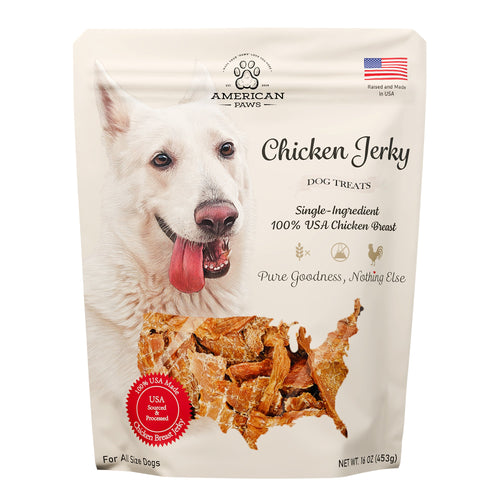
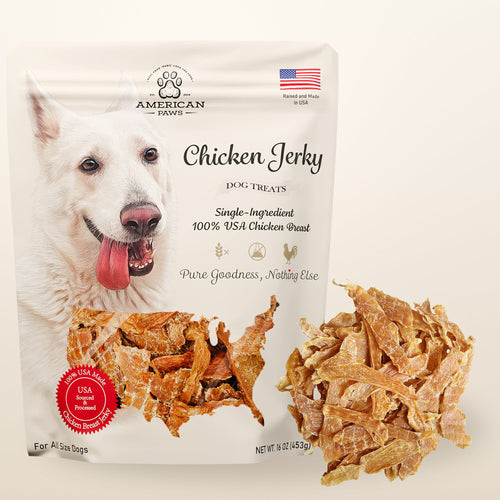
Jerky formulas, thicknesses, fat levels, and packaging vary, so this parent guide does not invent one opening deadline. For the detailed opened-bag routine, mold checks, refrigeration question, bulk handling, and travel setup, use our dedicated chicken-jerky storage guide. The current chicken-jerky collection lets you open the exact product page and follow the label attached to the product you own.
Freeze-dried treats and toppers
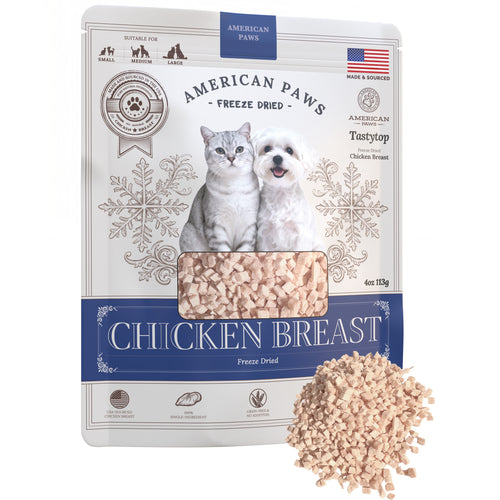
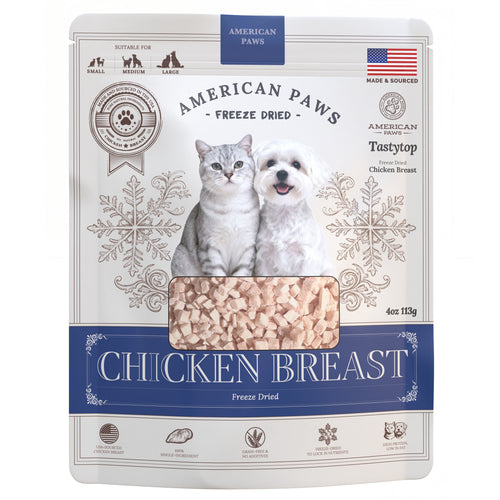
Freeze-dried pieces are often porous and quick to absorb moisture after the bag stays open. A cube may lose crunch; a powder or topper may form new damp clumps. Seal the original package immediately with clean dry hands and keep it away from sinks, stove steam, open windows, and wet training gear.
The Utah State University Extension guide to dried-food packaging explains the broader principle: dried meats and other dried foods need airtight, moisture-resistant packaging, and absorbed moisture can lead to mold or spoilage. Our dedicated freeze-dried storage guide owns the format-specific refrigeration, condensation, product-window, topper, and travel questions.
Soft and semi-moist commercial treats
Texture alone cannot tell you whether a commercial soft treat belongs in the pantry or refrigerator. Some formulas remain shelf-stable because the manufacturer controls water activity, ingredients, processing, and packaging. Others require refrigeration after opening. Read the actual statement rather than judging by how easily the piece bends.
Keep the package closed between portions, use the stated opening window, and do not combine several soft products in one container. Oils and aromas can transfer, dates and lots become impossible to trace, and a moist product can change the environment around a drier one.
Long chews and partly used chews
An unopened chew follows its label. Once chewed, it is a different object: saliva, floor contact, hair, dirt, cracks, and sharp edges may now matter. Never return a partly eaten chew to the original package with untouched pieces.
If the manufacturer permits reuse, remove debris, store the chew separately in the exact way directed, and inspect it before the next session. Discard it when it is wet or foul-smelling, cannot be cleaned as directed, has splintered or developed sharp edges, or has become small enough for the dog to swallow. A refrigerator does not reverse saliva contamination or repair physical damage.
Homemade baked, meat, dairy, and no-bake treats
A home oven, dehydrator, or freezer does not automatically create a validated commercial shelf life. Moisture can remain inside a biscuit that feels firm outside, and recipes containing meat, egg, dairy, pumpkin, banana, broth, or other moist ingredients can differ substantially by thickness and process.
When the recipe does not give a specific tested storage instruction, use a conservative cold-storage rule: refrigerate promptly and use within three days, or freeze the rest in measured portions. A shorter recipe-specific rule always wins.
The Five-Step Routine After Opening Any Dry Bag
- Start dry. Wash your hands, dry them completely, and use a dedicated clean dry scoop when practical.
- Take one session’s amount. Do not leave the main bag open on the counter during a walk, class, or grooming session.
- Inspect before serving. Compare odor, color, surface, texture, and package condition with the product when it was first opened.
- Close the full seal. Clear crumbs from the zipper with a clean dry cloth, press out excess air gently when appropriate, and run fingers across the complete closure.
- Return it high and cool. Put the bag in its dry outer bin or cabinet away from sunlight, steam, appliances, children, pests, and the dog.
Do not pour unused training pieces back automatically. A reward that stayed in a clean dry container may be suitable for later use, but a piece exposed to saliva, rain, a damp hand, soil, lint, or a leaking bottle is discarded. Protect the main supply from a questionable handful.
Airtight Container or Original Bag?
The strongest everyday setup for many dry commercial treats is original bag inside a clean lidded bin. The bag preserves the intended moisture barrier and traceability. The bin adds protection from punctures, humidity, pantry spills, insects, and determined pets.
If transfer is necessary, use a food-safe, odor-free container that is fully dry, including the lid groove and gasket. Move only one product and one lot at a time. Tape the original label or a clear photo of the product name, manufacturer, lot, date, ingredients, calories, and storage directions to the container.
Never “top off” old crumbs with a new bag. Finish or discard the old batch, wash the container, remove oily residue from corners and seals, and let every part dry completely before adding the next bag. Mixing creates an untraceable blend and can carry old fat, moisture, pests, or spoilage into the fresh product.
Do not add a household desiccant, oxygen absorber, rice, silica packet, or other drying material. Leave a manufacturer-supplied packet intact only as directed, keep it away from pets and children, and never feed or cut it open.
Do Dog Treats Need Refrigeration or Freezing?
There is no format-wide yes. A dry commercial bag that says “store in a cool, dry place” usually belongs in a stable cabinet, not a refrigerator. A refrigerated roll, moist pouch, fresh bakery treat, homemade batch, or label that says “refrigerate after opening” belongs at 40°F or below.
Refrigeration can be unhelpful for a shelf-stable dry product if a cold bag is repeatedly opened in warm humid air and condensation forms. That is a practical risk, not a claim that every refrigerator always creates water. Follow the label, keep the package sealed until it reaches the condition the maker specifies, and contact the manufacturer when directions are unclear.
Freezing is also product-specific. It can preserve homemade portions, but it may alter the texture of a soft commercial treat, damage a package seal, or invite condensation during thawing. Never freeze a commercial product merely to outrun its best-by date or rescue a bag that already got wet, hot, moldy, or contaminated.
A dried or freeze-dried meat product may still be raw-labeled. The Cornell Riney Canine Health Center’s raw-food guidance warns that raw meat can appear in dried and freeze-dried treat forms and should be handled like raw meat. Do not assume every dry meat treat is raw—or that drying proves a kill step. Read the label and apply the handling program for the product in hand.
Homemade Dog Treat Storage: Use a Conservative Clock
Recipe instructions come first. When a recipe offers no validated storage window, American Paws uses this conservative household rule for homemade dog treats:
| Stage | Operational limit | What to do |
|---|---|---|
| Cooling and packing | Refrigerate within 2 hours; within 1 hour above 90°F | Cool in a clean shallow layer, avoid sealing while visibly steaming, then move promptly into closed shallow containers |
| Refrigerator | Use within 3 days at 40°F or below | Date the batch, keep portions small, and discard sooner after any change |
| Freezer | Use within 2–3 months for best quality at 0°F | Freeze measured portions on day one rather than waiting for day three |
| Thawing | One small portion at a time | Thaw in the refrigerator, not on the counter, and never refreeze a portion with uncertain handling |
The University of Georgia College of Veterinary Medicine’s homemade pet-treat examples tell owners to freeze leftovers after three days and refrigerate a turkey-and-egg treat. USDA FSIS says cooked leftovers generally keep three to four days refrigerated and three to four months frozen. This guide deliberately uses the shorter three-day refrigerator and two-to-three-month freezer quality windows because homemade dog-treat recipes vary and may contain meat, egg, dairy, fruit, vegetables, or substantial moisture.
The FDA’s refrigerator guidance supplies the temperature boundary and two-hour rule for perishable foods, shortened to one hour above 90°F. These times are for homemade or otherwise perishable treats—not a command to refrigerate an unopened shelf-stable commercial bag.

Do not use firmness, a dark crust, or “baked until done” as proof of room-temperature stability. Commercial shelf-stable products rely on controlled formulation, validated processing, water activity, packaging, and quality systems that a home kitchen usually has not measured. A tested recipe may specify a different—and sometimes shorter—window; follow it exactly.
Signs Dog Treats Have Gone Bad
Discard the entire affected bag, container, or homemade batch when you find:
- Visible mold: fuzzy growth or unexplained green, blue, gray, black, or wet spots.
- Changed odor: sour, rancid, rotten, paint-like, chemical, fermented, or otherwise abnormal smell.
- New moisture: condensation, dampness, slime, tackiness, wet clumps, or unexpected softness in a previously dry product.
- Unexpected color change: off-color areas that do not match normal batch variation or the product’s original appearance.
- Pests or foreign material: insects, larvae, webbing, droppings, hair, glass, plastic, metal, or another object.
- Package failure: a broken seal, puncture, tear, swelling, leak, water damage, or chew marks.
- Unknown contamination: a wet scoop, dirty hand, saliva, floor contact, household cleaner, or mixed batch whose source cannot be reconstructed.
Do not scrape away mold, cut off the bad end, rinse, rebake, microwave, re-dry, freeze, or taste-test the remainder. A visible problem may not stop at the area you can see, and no dog treat is worth a salvage experiment.
Travel and Training-Pouch Storage
For shelf-stable dry treats, pack only the day or session amount in a clean dry latch container or clean pouch. Keep the main labeled bag sealed at home or protected inside luggage. Store the travel portion away from direct sun, rain, wet towels, ice, and leaking water bottles, and never leave it in a parked car.
A training pouch is a serving tool, not long-term storage. Empty crumbs, follow its cleaning directions, and let it dry completely. Discard pieces that became wet, dirty, or slobbered; do not send them back into the original supply.
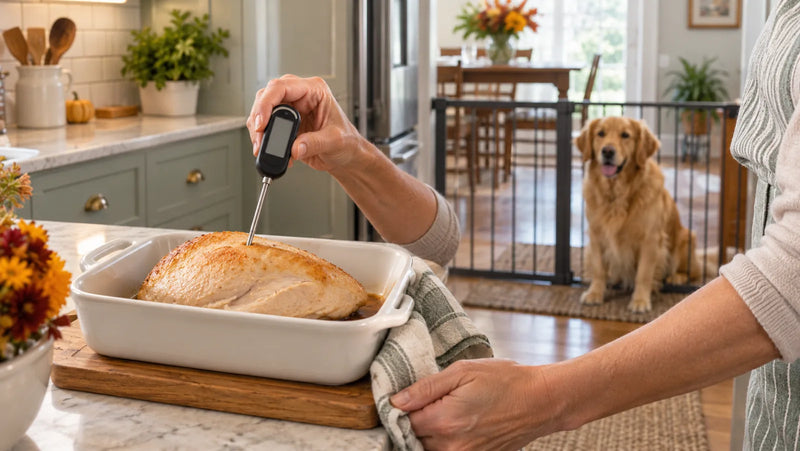
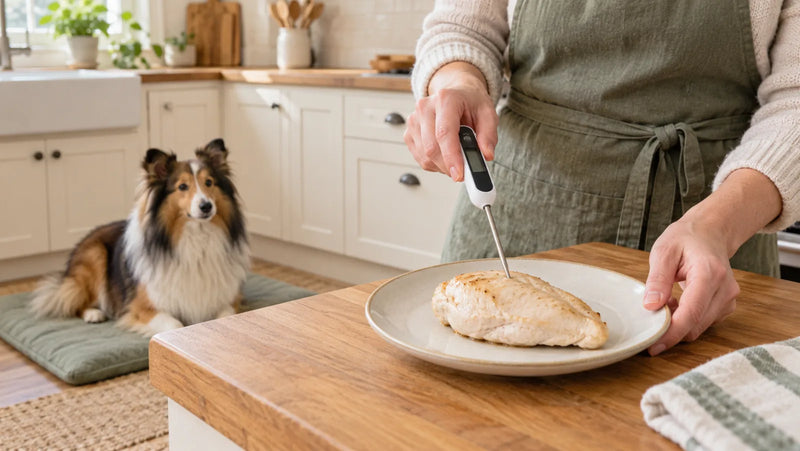
Homemade meat, egg, dairy, broth, fruit, or other perishable treats need a cold chain. Use an insulated cooler with enough frozen gel packs to hold 40°F or below, check with a thermometer, and keep the food in a closed leak-resistant container. The FDA two-hour rule still applies when the treat warms above refrigerator conditions, reduced to one hour when the air is above 90°F. If the time or temperature is unknown, discard it.
Carry a photo of the original label and lot code for commercial products. For homemade treats, carry the preparation date and ingredient list. If a dog reacts during travel, those details are more useful than “brown cube from the mixed jar.”
What to Do When a Treat or Package Seems Wrong
- Stop feeding the product. Separate it from the dog and other treats.
- Preserve evidence safely. Keep the original package, lot code, date, receipt when available, photos, storage history, and a securely isolated sample.
- Record what happened. Note the amount fed, time, dog’s weight, symptoms, and whether other pets ate the same batch.
- Call the veterinarian if the dog is unwell. Vomiting, diarrhea, marked lethargy, pain, collapse, breathing trouble, or another sudden change needs professional advice.
- Contact the manufacturer. Give the exact product and lot details; do not accept a replacement as proof the remaining bag was safe.
- Report a suspected product problem when appropriate. The FDA pet-food complaint guide specifically asks about foul odor, off color, swollen or leaking packaging, foreign objects, storage history, product codes, amount eaten, and animal symptoms.
Do not feed another piece to “see if it happens again.” A veterinarian evaluates the dog; the maker and FDA evaluate the product information. Those are separate jobs.
Frequently Asked Questions
Can I mix several dog treats in one jar?
No. Keep products and lots separate. Mixed ingredients, moisture levels, oils, dates, and storage directions become impossible to track, and one damp or contaminated format can affect the rest. Separate containers also make a reaction easier to investigate.
Can I store dog treats in the refrigerator?
Yes when the label or homemade recipe requires refrigeration. Do not assume a refrigerator improves a shelf-stable dry treat; repeated cold-to-humid opening can introduce condensation. The package statement decides.
Can I freeze commercial dog treats?
Only when the manufacturer permits it. Freezing may change texture or packaging and does not rescue heat-damaged, wet, moldy, expired, or contaminated treats. Freeze homemade portions under the conservative plan above unless their tested recipe gives different instructions.
Can I put a half-chewed treat back in the bag?
No. Saliva and environmental contact can contaminate untouched pieces. Follow the maker’s directions for any reusable chew and store it separately only when allowed; discard a wet, dirty, cracked, sharp, foul-smelling, or swallowably small remainder.
Is a best-by date the same as an expiration date?
Not necessarily. Read the wording the manufacturer uses and ask it to explain an unclear date. In every case, proper storage and the product’s actual condition still matter; mold, odor, moisture, pests, or package damage can make the decision earlier.
Match the Storage Method to the Treat in Your Hand
A dependable dog-treat system is boring in the best way: one product and lot per container, original directions preserved, dry bags closed after every portion, homemade batches dated and chilled, travel amounts kept small, and changed food discarded without bargaining. That routine protects freshness and leaves a clear record when something goes wrong.
American Paws carries several treat formats, and no single storage statement applies to the whole catalog. Browse all current American Paws dog treats, choose the texture and ingredient list that fit your dog, then keep that product’s label, lot code, best-by date, opening directions, and discard signals attached to the batch from first piece to last.