Pet industry trade shows for buyers work best when every dog-treat booth is measured against the same written buying brief. Define the shelf job first, then record the exact item, sample and lot identity, label status, manufacturing and ingredient origin, minimum order, lead time, price basis, and follow-up owner. The booth starts the conversation; the identified product and commercial file support the buying decision.
A show floor compresses many suppliers, formats, claims, and samples into a few hours. That access is valuable, but memory becomes unreliable after the tenth pouch and the fifth conversation. A repeatable scorecard lets a buyer compare like with like, preserve open questions, and leave each meeting with one specific next step.
This workflow applies whether the intended path is finished branded wholesale, bulk product, or private label. Buyers who already know which path they need can review the private-label dog-treat manufacturer overview, the live American Paws wholesale program, and the private-label inquiry path before requesting item-specific terms.
Pet Industry Trade Shows for Buyers: Begin With One Buying Brief
Write the buying brief before walking the floor. Name the intended species, shelf or online role, treat format, target package size, destination, expected pilot volume, sales window, and decision date. If the store needs a compact training reward, a large chew and a private-label jerky line, treat those as three separate buying jobs. One attractive product should not quietly redefine the assignment.
Choose the commercial path as early as possible. Finished wholesale means the supplier's branded retail unit reaches the shelf. Bulk means the buyer receives unpackaged product under an agreed business and regulatory plan. Private label adds an approved brand-owned package, label responsibilities, fill scope, and version control. Asking “What is your minimum?” without naming the path can produce an answer that belongs to a different program.
Give every booth the same opening statement: the business type, sales channel, destination, product format, estimated quantity, and target timing. Then ask which exact item and program the representative recommends. This short context prevents a sample intended for one channel from being mistaken for a quote or specification for another.
Use the Same Dog-Treat Booth Checklist Every Time
Capture answers while the supplier is present. A blank cell becomes a dated follow-up item, not a fact reconstructed later.
| Check | Record on the floor | Evidence to request |
|---|---|---|
| Supplier identity | Legal company, brand, representative, contact, and the facility or partner performing each step | Current business and facility details tied to the proposed item |
| Exact item | Product name, intended species, format, ingredient statement, net weight, case pack, and package status | Current specification and label proof |
| Sample identity | Item name, sample status, lot or sample code, date marking, and differences from production | Matching sample sheet and any relevant item-specific results |
| Label and claims | Responsible company, ingredient list, net quantity, feeding or use language, origin and marketing claims | Reviewable artwork revision plus support for material claims |
| Traceability | Where the lot/date code appears and who can connect it to receipt, production or packing, and shipment records | Code example, complaint contact, and recall contact |
| Origin | Manufacturing, packing, and principal-ingredient origin for the exact item | Product-specific substantiation for the claim that will appear on the package or listing |
| Minimum and pack-out | Minimum per product, flavor, size, case, or total order; units per case or bulk pounds | Current program sheet or written item-level confirmation |
| Timing and capacity | What is available, what must be made or packed, and which input controls timing | Written lead-time basis for the defined quantity and package |
| Commercial scope | Price basis, freight basis, payment point, packaging responsibility, samples, and services included | Written quote or application step with exclusions stated |
| Next action | Owner, due date, requested files, next decision, and meeting or pilot step | One follow-up thread that names the exact item |
Use a separate row or card for each product. Combining several proteins, sizes, or programs under one note creates false certainty: the minimum may differ, the label may be at another revision, the sample may come from another lot, or one item may be available while another needs scheduling.
Evaluate the Sample as a Commercial SKU
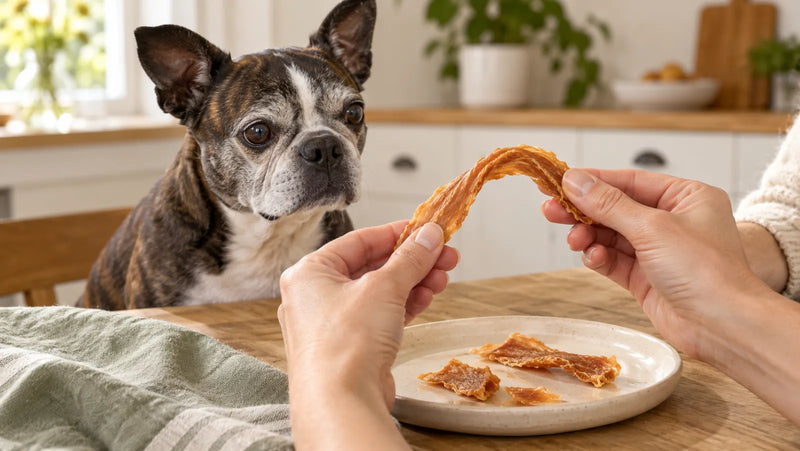
A bowl of loose treats can show color, aroma, texture, size variation, break pattern, and dust or crumbs. It cannot establish the final ingredient statement, package, fill weight, shelf-life basis, lot controls, delivered price, or availability. Ask whether the piece came from the proposed commercial item and whether the show sample differs from routine production in recipe, dimensions, moisture target, packaging, or age.
Photograph the sample beside its identifying card, then write the item and lot or sample code in the notes. If the supplier provides a take-home pouch, keep its label and date marking with the buyer file rather than pouring several samples into one bag. Record whether the package is a production unit, a blank mockup, or a hand-filled show sample.
Test against the shelf job. A training reward may need controlled pieces and easy handling; a larger chew serves a different use; a retailer-ready pouch must fit the intended fixture and protect the product through handling. The dog-treat sample evaluation guide for retailers provides the deeper protocol for consistent appearance, aroma, texture, packaging, label, handling, and trial-order review.
Read the Label and Claims on the Floor
The FDA's animal-food labeling overview identifies federal basics including proper product identification, a net quantity statement, the name and place of the manufacturer or distributor, and all ingredients. It also explains that animal foods remain subject to individual state laws. A booth label can begin the review, while the exact product, target states, responsible company, and current artwork determine the work still required.
Compare the front, back, sample sheet, line sheet, and representative's explanation. The product name, species, ingredient statement, package size, responsible company, and origin language should describe the same item. Save the artwork revision or document date. A new pouch proof after the show may require a fresh review even when the product inside is unchanged.
Pay close attention to claims. Language that implies diagnosing, curing, treating, preventing, or mitigating disease can move beyond ordinary food claims. Ask what evidence supports ingredient, process, origin, shelf-life, or performance statements, and route regulatory questions through the responsible agency or qualified counsel for the actual markets. The buyer's review helps catch gaps; the brand and supplier still need clearly assigned approval responsibilities.
Ask for Lot, Date, and Traceability Evidence
FDA's pet-food lot-number resource explains that a lot code identifies a specific batch and helps a company and FDA trace complaints or recalls. A UPC identifies a company and product, but it does not identify the manufacturing plant or batch. For a buyer, the useful question is therefore broader than “Does the pouch have a barcode?”
Ask the representative to point to the lot or date code on the sample or a production-package example. Then ask what records it connects: incoming materials, processing or packing, finished inventory, shipment, and direct customers. Record the complaint and recall contacts. The answer may be supplied after the show, but the request should name the exact item and sample so a generic traceability brochure cannot be substituted silently.
Review public recall history in context. Match the company, date, product, reason, and status; similar names and unrelated products can mislead. A clear history check becomes one due-diligence input alongside current records, rather than a permanent verdict about every product a company has made.
Separate Product Origin From Booth Location
A domestic trade-show booth, U.S. mailing address, American-sounding brand, or local sales representative does not answer where the exact dog treat was manufactured, packed, or sourced. Ask each question separately and write the response beside the item. If manufacturing and packing occur at different locations, identify both roles.
The FTC's Made in USA business guidance states that an unqualified Made in USA claim requires the product to be “all or virtually all” made in the United States. The final processing, significant processing, and ingredients or components all matter to that standard. Request a reasonable product-specific basis for the claim that will appear on the pouch, catalog, or product page.
Apply the claim to its actual scope. One qualifying item does not automatically establish a whole assortment, and a manufacturing claim does not by itself answer ingredient origin. The USA-made dog-treat manufacturer vetting guide carries the deeper facility, sourcing, process, traceability, sample, insurance, and compliance-history review once a show lead reaches the shortlist.
Turn Minimums and Lead Times Into Shelf Math
Minimums need units. Record whether the number applies to each product, protein, flavor, size, printed pouch, master case, or whole purchase order. For bulk or private label, confirm pounds per product and planned net fill. For finished wholesale, confirm units per case and required case multiples. Then identify samples, testing, setup, packaging, freight, and other costs that sit outside the quoted product price.
Build the pilot from confirmed inputs:
- Available retail units: confirmed cases multiplied by current units per case.
- Planned private-label units: confirmed usable pounds multiplied by 16, divided by approved net ounces per pouch, then adjusted for the written packing scope and real process allowance.
- Landed unit cost: product, packaging, packing, freight, testing, setup, and other confirmed charges divided by saleable units.
- Reorder trigger: expected demand during the confirmed replenishment window plus chosen safety stock, less usable inventory and inbound supply.
These formulas organize inputs; they do not replace a written quote or create a margin. Ask which materials are in stock, which require an order, when the lead-time clock starts, and what approval or deposit activates work. Use a range until the item, quantity, pouch, destination, and freight basis are fixed.

Write the Follow-Up Before Leaving the Booth
End each useful conversation by naming the next decision. It may be “send the current specification and label,” “quote this item at 10 and 50 lb,” “review the customer-supplied pouch,” or “schedule a sample comparison.” Assign the supplier contact and buyer owner, choose a due date, and note what happens after the information arrives.
A strong follow-up message includes:
- the event conversation, representative, and exact item or sample;
- the buyer's business, channel, destination, expected quantity, and target timing;
- the intended program: finished wholesale, bulk, or private label;
- the requested specification, label revision, ingredient and origin information, sample lot, minimum, lead time, and price or freight basis;
- any open traceability, testing, packaging, insurance, or market questions; and
- the next call, sample review, application, quote, or pilot decision.
Keep the exchange in one item-named thread. When supplier fit is established, the wholesale dog-treat account guide shows how to prepare the application, confirm the 10 lb-per-product starting minimum for the American Paws program, put commercial terms in writing, and plan a measured reorder.
American Paws: A Buyer Starting Point After the Show
American Paws is based in Highland, California and lists FDA Food Facility Registration No. 13526766664. The current B2B program starts at 10 lb per product, with pricing from $14/lb in the current catalog. Exact item availability, price, sample scope, lead time, capacity, freight, packaging, and project terms require written confirmation for the proposed order.
For the established private-label path, the customer supplies the approved printed pouch. American Paws fills the confirmed product and net weight, adds an oxygen absorber where specified, and heat-seals. The customer remains responsible for its brand, artwork, claims, target-market review, and the information it authorizes for print. Buyers who want finished American Paws-branded product can compare the current labels of the American Paws dog treats and then confirm the current wholesale assortment.
FDA food-facility registration is one facility fact. FDA's registration guidance explains that FDA does not issue a food-facility registration certificate or product-status certificate. Buyers should keep registration, exact-product evidence, label review, target-market requirements, and commercial fit as separate checks.
This page does not announce American Paws attendance at a particular event. After any pet-industry show, use the wholesale page to apply or contact the team, or submit the defined customer-supplied-pouch project through the private-label page. Include the exact product, pounds per item, destination, sales channel, sample need, packaging status, and target timing.
Frequently Asked Questions
What should a dog-treat buyer bring to a pet industry trade show?
Bring one buying brief per shelf job, a consistent booth checklist, a phone or camera, a way to label samples, the store or channel profile, estimated pilot volume, destination, target timing, and a calendar for assigning follow-up. Add a tape measure or ruler when package and shelf fit matter.
Can I choose a supplier from a show sample alone?
A sample can support sensory, texture, handling, and package-fit evaluation when its identity is clear. A purchase decision also needs the current specification, label, lot and date controls, origin basis, minimum, lead time, commercial scope, and evidence required for the actual item and markets.
Which pet-treat label details should I check at the booth?
Begin with product identity, net quantity, responsible company name and place, and the full ingredient list. Then record the intended species, package revision, lot/date position, use or feeding language, guaranteed and calorie information where applicable, storage, origin, and marketing claims. Complete the product- and state-specific review after the show.
How can I verify a Made in USA claim?
Ask what the exact item claim means, where final and significant processing occurs, where ingredients or components originate, and what current records support the statement. Apply the FTC standard to that item and wording; a U.S. address, booth, brand name, or another qualifying product is not product-specific substantiation.
What should I ask about minimum orders and lead times?
Ask what unit the minimum uses, whether it applies per product or across the order, which pack-out it assumes, what packaging and services are included, what inputs are currently available, when the clock starts, and which item, quantity, destination, and approvals the timing assumes.
Does an FDA food-facility registration number mean a product is approved?
No. Facility registration is a regulatory requirement for covered facilities and identifies a registered facility. FDA does not issue a food-facility registration certificate or use the number as approval, endorsement, label clearance, or product certification. Review the exact item and applicable requirements separately.
How should I follow up with a dog-treat supplier after the show?
Reference the representative, exact item, and identified sample; restate the channel, destination, quantity, packaging path, and timing; list the files and answers still needed; and assign the next decision. One precise item thread is easier to audit than a generic “send more information” request.
Leave the Floor With a Decision File
The most useful show result is a comparable decision file: one buying brief, one booth card per item, identified samples, the current label and origin questions, lot and traceability notes, commercial math, and one owned next action. That record lets a buyer shortlist suppliers after the noise of the floor has passed.
Ready to turn a show-floor lead into a defined dog-treat request? Send American Paws the exact product, pounds per item, destination, sales channel, packaging path, sample need, and target timing through the wholesale program or private-label inquiry.