
Are beef tendons safe for dogs? Sometimes—but only when the chew fits the individual dog's teeth, size, and chewing style and an adult supervises from start to finish. A tendon is edible connective tissue, not a risk-free toy. A hard piece can fracture a tooth, a large chunk can choke or obstruct, and the final remnant can become swallowable in seconds.
The safest decision is made before the package opens. Check the dog's mouth and history, inspect the actual tendon's size and hardness, plan how to trade it away, and be willing to choose a softer activity. “Natural,” “single ingredient,” “high protein,” and “collagen rich” describe features; none of them guarantees safe chewing.
Are beef tendons safe for dogs? The conditional answer
Beef tendons can be an appropriate edible chew for some calm, methodical chewers. The American Kennel Club's edible-chew guidance says the right chew depends on the dog's age, preferences, chewing style, and the product's hardness, durability, size, and ingredients. It specifically notes that edible does not automatically mean safe.
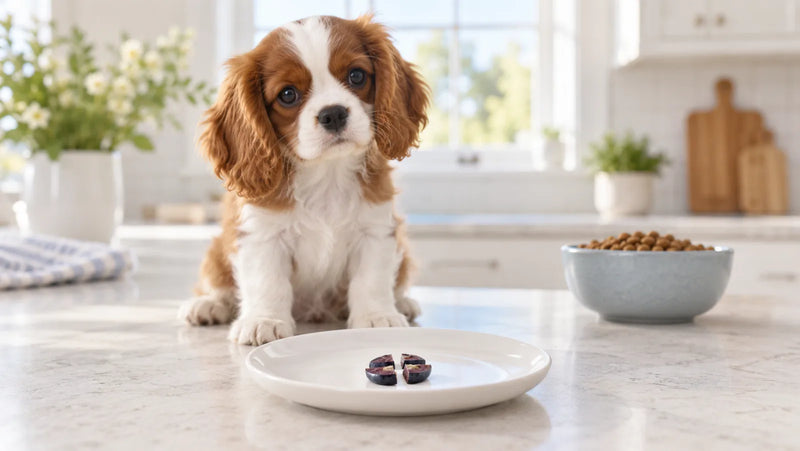
A reasonable tendon candidate is a dog with a healthy, veterinarian-checked mouth that gnaws gradually, keeps the chew between the paws, and does not clamp through or swallow large pieces. The tendon should be longer and broader than the dog's mouth, have slight give, show a clear ingredient and calorie label, and soften or fray gradually without creating hard shards.
A poor candidate is a dog that tries to fit the whole chew in the mouth, crushes and shears sections off, gulps food, guards objects, has painful or damaged teeth, or has a history of obstruction or rich-food upset. For the broader benefits and selection intent, use our complete beef-tendon selection and serving guide. This article stays focused on deciding whether the chew is safe enough for a particular session.
Why an edible tendon can still be dangerous
Choking from chunks or the final remnant
Choking happens when material blocks the airway. A tendon can become a choking hazard when the starting piece is too small, the dog bites off a large chunk, or the remaining stub is short enough to gulp. The last portion is especially risky because a dog can no longer brace it well with the paws and may tip the whole remnant backward.
The AKC's choking-prevention guidance recommends supervising dogs with chews and retiring the final remnant. Supervision does not mean being in the same house or looking up occasionally. It means staying close enough to see the mouth, hear a change, and remove the chew before swallowing becomes possible.
Stomach or intestinal obstruction
A swallowed tendon piece may soften and pass, but no one can promise that. Size, thickness, dehydration, chewing, the dog's anatomy, and digestive movement all affect the outcome. A chunk can lodge in the esophagus, stomach, or intestine even though the source material is food.
The American College of Veterinary Surgeons lists vomiting, appetite loss, abdominal pain, dehydration, and diarrhea among obstruction signs. Lodged material can damage or perforate tissue and may require endoscopic or surgical removal. “Digestible” on marketing copy is not permission to let a dog swallow an intact section.
Tooth fractures and mouth injury
Tendon batches vary. One strip may be flexible; another may be dried into a rigid bar. A dog can fracture a premolar or large upper cheek tooth by biting down on a chew that does not yield. Edibility and collagen content do not protect enamel.
According to VCA's veterinary dental guidance on fractured teeth, hard, non-bending objects are a common cause. A fracture can expose sensitive inner tooth tissue and may need dental radiographs, root-canal treatment, or extraction. Never test a questionable chew with the dog's teeth.
Sharp dried edges can also scrape gums, tongue, lips, or the roof of the mouth. Reject pieces with needle-like ends, hard corners, plastic-like rigidity, or splintered projections. If blood appears or the dog suddenly flinches, stop the session and examine only if it is safe to do so.
Digestive upset, calories, and product contamination
Even a well-chewed tendon can cause vomiting, gas, soft stool, diarrhea, or abdominal discomfort in a dog that is not accustomed to it. Coatings, smoke flavor, glycerin, salt, oil, and other added ingredients may change tolerance. Beef itself is also incompatible with a beef-free diagnostic diet.
Tendon is often described as lean, but finished fat and calorie levels vary with trimming, attached tissue, moisture, coating, and serving size. A long chew may supply far more food than a small training reward. Count consumed material inside the daily treat allowance rather than treating chewing time as calorie-free enrichment.
Animal-part chews can also be contaminated or spoiled. Buy sealed, traceable products with a responsible company, lot code, best-by date, storage directions, and intact packaging. Discard mold, dampness, slime, a rancid or sour odor, heavy unknown coating, insect activity, or a product connected to a recall.
Which dogs should skip beef tendon chews?
Power chewers and chunk swallowers
“Power chewer” describes behavior, not just body size or breed. A small dog that clamps and snaps pieces off can be a higher-risk tendon user than a large dog that slowly scrapes fibers. Skip tendons if the dog:
- tries to fit the whole object behind the canine teeth;
- bites across the middle to sever sections;
- swallows food or chew fragments without grinding;
- breaks other edible chews into large chunks;
- becomes frantic, over-aroused, or impossible to interrupt;
- guards the chew so it cannot be retired safely.
A lick mat, food-stuffed rubber toy, scent game, or small hand-delivered reward may provide safer enrichment for a chunk swallower. Choose an activity the dog cannot convert into a large edible projectile.
Dogs with dental disease, damaged teeth, or painful mouths
Do not offer a tendon to a dog with loose, broken, worn, discolored, or missing teeth; periodontal disease; oral swelling; recent dental work; a crown; mouth pain; or an unknown dental condition. Puppies have developing teeth, and seniors are more likely to have hidden dental disease. Both need veterinarian approval and often a softer option.
A dog may keep chewing despite pain. Watch for dropping food, chewing on one side, pawing at the mouth, drooling, sudden reluctance to eat hard food, facial swelling, or a new reaction when the face is touched. Those are reasons for a veterinary dental examination, not a reason to test another chew.
Puppies, seniors, and dogs with health-sensitive diets
A puppy's calorie budget belongs mainly to complete growth food, and an enthusiastic puppy may lack a reliable trade cue. A senior may have worn teeth, reduced chewing strength, swallowing changes, or a medical diet. Age alone does not decide, but it raises the value of a professional mouth and diet check.
Ask the veterinarian first for dogs with a previous gastrointestinal obstruction, pancreatitis, hyperlipidemia, chronic stomach or intestinal disease, food allergy, obesity treatment, a prescription or elimination diet, or a calorie/fat restriction. A product advertised as low-fat can still be wrong for a diet that requires an exact nutrient ceiling.
A six-point beef tendon safety check before serving
1. Confirm product identity and label
The ingredient should say what the chew actually is. “Beef chew” can describe several tissues and processes. Look for a clear beef-tendon or backstrap identity, complete ingredient list, country or responsible company information, lot code, best-by date, calorie statement when available, and storage and feeding directions.
Use our dog-treat label-reading guide to separate regulated label facts from front-of-bag language. Avoid anonymous loose chews, damaged packages, unclear coatings, and products whose manufacturer cannot answer basic sourcing or processing questions.
2. Choose a size the dog cannot fit fully in the mouth
The starting chew should be longer than the muzzle and broader than the mouth, with enough surface for the paws to hold. There is no universal safe inch measurement because muzzle shape and chewing behavior vary. If the dog can tuck the entire tendon behind the canine teeth or close the mouth around the whole width, choose a larger piece or another activity.
Size changes throughout the session. A safe-enough starting piece becomes unsafe once chewed down. Decide the retirement point before you hand it over.
3. Test hardness, bend, edges, and integrity
AAHA's chew-safety guidance recommends a thumbnail and bending test: a suitable chew should allow some indentation and have slight give. If the tendon feels like hard plastic, cannot be marked at all, or has rigid glassy ends, do not offer it.
Bend along several parts because thickness can vary. Inspect both faces for cracks, sharp fibers, hard knobs, embedded debris, or sections likely to shear. Do not microwave, soak, hammer, or otherwise modify a questionable product unless the manufacturer specifically provides a validated method; improvised changes can create new textures and contamination.
4. Inspect freshness and storage history
Confirm the package was sealed, dry, and within date. Follow after-opening instructions and retain the original bag so the lot remains available. Do not combine different lots in one jar. Discard anything moldy, slimy, unexpectedly damp, unusually brittle, insect-damaged, rancid, sour, or chemically coated.
5. Screen the dog and environment
Check the mouth history, recent digestive health, diet restrictions, and previous chew behavior. Choose a quiet area without another pet competing for the tendon. Keep children away from the session and remove objects that make the dog hide, bolt, or guard.
6. Prepare the exit before the entry
Have a known higher-value, bite-size trade reward ready and use a practiced “drop” or “trade” cue. Know where the used chew will go: a closed discard container or the storage method permitted by the label. Do not begin if you cannot safely end the session.
How to supervise a beef tendon session
Start with a short trial in a quiet place
For a first exposure, offer the tendon after the dog is calm, not ravenous or competing. Stay within arm's reach and keep the opening trial brief. The goal is to observe technique, not to maximize chew time.
Watch what happens in the first minute: Does the dog settle and scrape, or clamp and twist? Does the tendon flex and fray, or crack? Does the dog pause for a trade cue? Stop immediately if the answer is concerning.
Watch the chewing method, not the clock
There is no universally safe number of minutes. A slow chewer may work predictably for a while; a power chewer can create a swallowable piece almost at once. Keep eyes on the chew and dog rather than relying on a timer from a blog or package.
End the session for repeated hard clamping, large chunk release, rapid shortening, gagging, coughing, gulp attempts, bleeding, tooth contact that sounds like hard snapping, frantic arousal, guarding, or any sign of pain.
Trade, do not chase or grab
Present the prepared reward, cue the dog to drop the tendon, and move the chew away only after the dog disengages. Chasing can turn removal into a swallowing game. Reaching into the mouth can push a remnant deeper, trigger guarding, or cause a bite.
If the dog guards valuable items, do not improvise a confrontation. Use a qualified positive-reinforcement trainer or veterinary behavior professional to build a safe exchange routine before offering edible chews.
Remove it at the first retire-now trigger
Take the tendon away when it becomes small enough to swallow, can no longer be held securely with the paws, releases a large chunk, develops sharp or very hard edges, becomes slimy enough to gulp, smells abnormal, picks up dirt, or causes a change in chewing behavior. Do not wait for the dog to finish “just one more inch.”
Refrigerating, washing, or re-drying a saliva-soaked leftover is not automatically safe. Follow the manufacturer's storage instructions; if they do not address reuse, discard the used chew.
Are beef tendons high in protein and low in fat?
Protein and collagen are food, not joint treatment
Tendon is collagen-dense connective tissue and is commonly protein-rich. AKC describes tendon and backstrap chews as often high in protein and collagen and low in fat. That can make a clearly labeled plain tendon appealing compared with a heavily coated chew.
It does not make tendon a treatment for arthritis, a source that rebuilds cartilage, or a complete meal. Digestion breaks dietary proteins into amino acids and peptides; the body decides how to use them. A dog with joint pain needs a veterinary diagnosis and treatment plan, not a collagen marketing promise.
The actual label controls calories and fat
“Often low in fat” is a category tendency, not a guarantee for every strip. Attached tissue, trimming, dehydration, coating, and portion size change the finished product. Compare the guaranteed analysis and calories on the actual package, and ask the manufacturer when key facts are missing.
All consumed tendon counts as a treat. The complete diet should still supply at least about 90% of daily calories for most healthy dogs, and veterinarian-set medical diets may allow less or exclude the chew entirely. Do not subtract only the visible remnant; estimate what the dog actually ate.
What to do if something goes wrong
Signs of choking
A dog that cannot move air, makes silent panicked attempts to breathe, has blue or gray gums, collapses, or becomes severely distressed has an airway emergency. Call the nearest emergency veterinary hospital immediately and follow professional instructions while traveling. A veterinary first-aid course is the right place to learn dog-specific choking techniques; do not perform a blind finger sweep that can push material deeper or cause a bite.
Coughing and gagging can also require urgent evaluation even when some air moves. Remove other pets and food, keep the dog as calm as possible, and do not offer water or another treat to “push it down.”
A swallowed chunk or missing remnant
Call your veterinarian with the dog's weight, the estimated piece dimensions and thickness, the time, the product name and package, and current symptoms. A professional may recommend examination, imaging, or monitored observation based on those facts. Do not induce vomiting unless specifically directed; a piece can lodge or injure on the way back up.
Seek prompt care for repeated vomiting or retching, appetite loss, abdominal pain or swelling, lethargy, dehydration, diarrhea or blood, straining, little or no stool, or inability to keep water down. Do not wait for every sign to appear.
A cracked or painful tooth
Stop chewing and arrange a veterinary dental examination for a visible chip or crack, exposed pink/red center, bleeding, sudden yelp, drooling, pawing, face swelling, dropping food, one-sided chewing, or refusal of hard food. Teeth can fracture below the gumline, so a normal glance does not rule out injury.
Do not probe the crack, give human pain medicine, or resume chews because the dog seems better later. Dental radiographs are often needed to evaluate the full tooth and root.

Beef tendons do not replace dental care
Chewing can create friction against tooth surfaces, but that does not prove a tendon prevents periodontal disease or safely cleans every tooth. A hard chew may damage the very teeth it is supposed to “clean,” and no animal-part chew reaches below the gumline where periodontal disease develops.
Use our dog-treat dental-health guide to separate mechanical chewing from evidence-based oral care. Regular home brushing, veterinary oral examinations, professional cleaning when indicated, and appropriately selected products—often those carrying Veterinary Oral Health Council acceptance for a specific claim—are more reliable than assuming any natural chew is a toothbrush.
Frequently asked questions
Are beef tendons safe for puppies?
Not by default. Developing teeth, small mouths, little calorie room, and inexperienced chewing raise risk. Ask the puppy's veterinarian, and prefer a softer age-appropriate enrichment option unless the professional approves a particular product and supervision plan.
Are beef tendons safe for aggressive chewers?
Often no. A dog that crushes, shears, or swallows chunks can turn even a large tendon into a choking, obstruction, or dental hazard. “Long lasting” is not a challenge to test maximum bite force. Choose a non-edible enrichment activity matched to the dog's behavior.
Can a dog digest a beef tendon?
Dogs can digest chewed tendon tissue, but that does not guarantee an intact chunk will break down before it lodges. Never use “digestible” as permission to swallow the remnant. Call a veterinarian after a large or unknown piece is swallowed.
How long should a dog chew a beef tendon?
There is no universal safe time. Begin with a brief observed trial and stop based on chewing style, product change, dog arousal, tooth comfort, and remnant size. A timer cannot see a chunk break off.
When should I take a beef tendon away?
Remove it before it can fit fully in the mouth; when the dog can no longer hold it safely; or at the first large chunk, sharp edge, rigid crack, blood, gag, gulp attempt, guarding, pain sign, abnormal odor, dirt, or major texture change. Early retirement is cheaper than an emergency.
Safety is a dog-and-product match, not a label claim
Beef tendons can work for a dog that has healthy teeth, gnaws methodically, accepts a trade, and receives a large, slightly flexible, traceable product under continuous supervision. They are a poor fit for dogs that crush, gulp, guard, have dental disease, or follow a health-sensitive diet. Remove the chew before the final remnant becomes a problem. For safer alternatives by chewing style, see our guide to the best natural chews for dogs.
American Paws does not currently sell beef tendons, so there is no house tendon to recommend. To compare the products actually available, browse all current American Paws dog treats by ingredient, texture, and serving size. For any chew, the safest choice is the one your dog can use without betting teeth, airway, or intestines on a marketing word.