
Dog treats for dental health can help as part of a good oral-care routine, but they are not a replacement for brushing or veterinary dental care. The best choice is a treat or chew that fits your dog's size, encourages safe chewing, uses clear ingredients, and does not make bigger dental claims than it can prove.
That is the honest middle ground. Some treats can give dogs something useful to chew, and some dental products have testing behind plaque or tartar claims. But if your dog has bad breath, bleeding gums, loose teeth, swelling, or trouble eating, that is not a treat-shopping problem. It is time to call your veterinarian.
Can dog treats actually help dental health?
Dog treats can help dental health in limited ways. Chewing may lightly scrape the tooth surface, slow down boredom chewing, and make an oral-care routine easier to maintain. Small rewards can also help you teach your dog to accept a toothbrush, lip lifts, or quick mouth handling.
What treats cannot do is clean under the gumline, diagnose dental disease, remove established tartar safely, or replace a professional exam. That matters because dental disease is often uncomfortable before owners can see obvious signs.
The American Veterinary Medical Association's pet dental care guidance emphasizes regular veterinary dental care and home care, including brushing when possible. Treats belong around that foundation, not instead of it.
What to look for in dog treats for dental health
When you compare dog treats for dental health, do not start with the biggest promise on the front of the package. Start with fit. A safer dental treat is appropriate for your dog's mouth, chewing style, calorie budget, and current dental condition.
Safe chewing texture
A dental chew should be firm enough to invite chewing but not so hard that it risks cracking teeth. A practical rule many veterinarians use is simple: if a chew is so hard you would not want to press it into your own kneecap, it may be too hard for some dogs' teeth.
Watch your dog the first few times. A calm chewer who works slowly can handle different formats than a dog who tries to swallow large pieces. If a treat breaks into sharp shards, becomes a slippery choking size, or causes bleeding, take it away and choose another format.
The right size for your dog
Size is not just about calories. A treat that is too small may be swallowed whole. A treat that is too large may encourage frustrated biting or awkward jaw pressure. Small dogs, senior dogs, flat-faced breeds, and dogs with known dental issues need extra caution.
If you are using a chew format such as a chicken foot, match it to the dog's size and chewing style. If you are rewarding toothbrushing practice, use tiny real-meat pieces instead of a long-lasting chew.
Cleaner ingredients and clear labels
Dental health is not only about teeth. Your dog still has to digest the treat. Look for named ingredients and avoid vague flavor blends, heavy sweeteners, artificial colors, and unnecessary filler when a simple option will do.
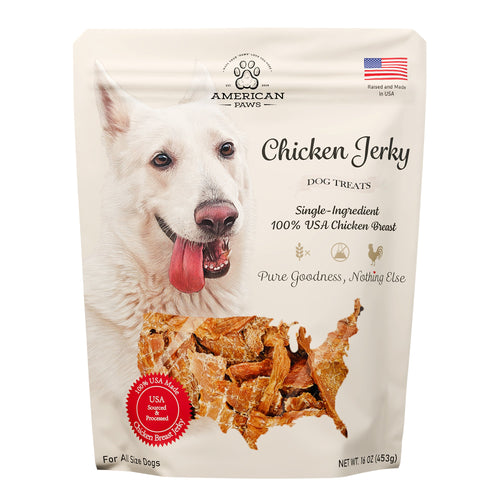
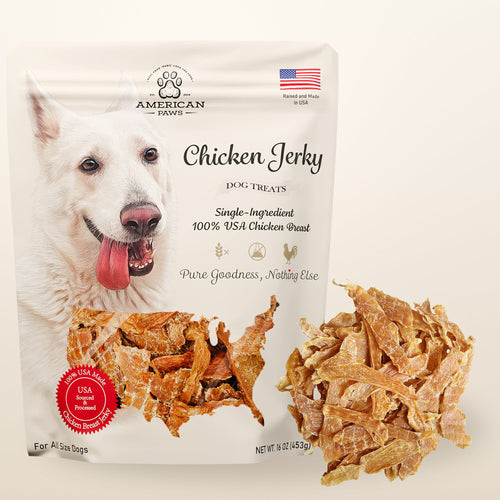
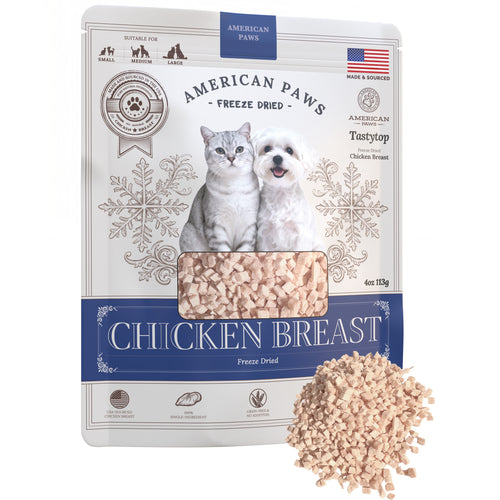
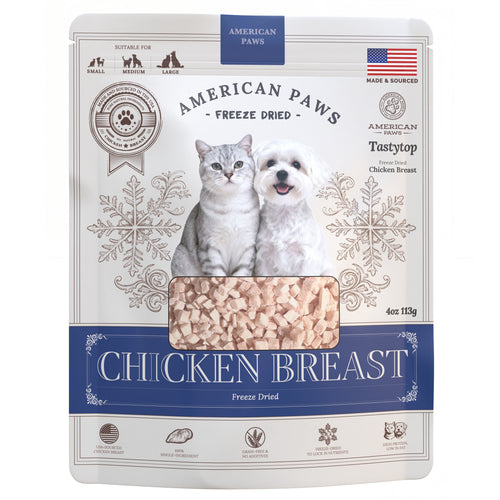
American Paws treats are made in the USA, and the company is based in Highland, California. For pet parents who want a clear chicken option, the American Paws chicken collection includes different textures for different jobs: small rewards, chewy jerky, topper formats, and supervised chews.
Calories that fit the treat budget
A dental routine can accidentally add a lot of calories. If a dog gets a chew after dinner, training rewards during the day, and extra snacks from the family, the treat budget can disappear quickly.
Keep treats around 10% or less of daily calories unless your veterinarian gives different guidance. For dogs who need weight control, break rewards smaller and reserve longer chews for planned moments instead of automatic daily extras.
Evidence for plaque or tartar claims
If a product claims to reduce plaque or tartar, look for evidence. The Veterinary Oral Health Council accepted products list is a useful place to check products that have met VOHC standards for specific dental claims.
That does not mean every non-VOHC treat is useless. It means you should separate general chewing support from proven plaque or tartar control. American Paws does not need inflated dental claims to be useful. A chicken foot can be a supervised chew, and small real-meat treats can reward brushing practice, but they should not be described as a dental treatment.

Where chicken feet fit in a dental routine
Chicken feet are not a toothbrush, but they can fit into a dental routine for the right dog. The texture gives many dogs a reason to chew, and chewing can provide light mechanical action on the teeth. The key words are "right dog" and "supervised."
American Paws dehydrated chicken feet for supervised chewing are a single-ingredient option for dogs that chew steadily and can handle the size. They are not ideal for dogs who gulp, dogs with painful teeth, dogs on chew restrictions, or dogs who try to swallow large pieces without working them down.
For a deeper benefits article, read our guide on whether chicken feet are good for dogs. If your main worry is swallowing risk, start with the chicken feet choking hazard guide before feeding them.
When to choose small training treats instead
Sometimes the best dental treat is not a dental chew at all. If your goal is to teach your dog to accept brushing, small rewards are often more useful than a long chew. You can reward one second of touching the toothbrush, then two seconds, then a gentle lip lift, then a short brush on the outside teeth.
Use tiny pieces so your dog can quickly return attention to you. Real-meat rewards can make the process feel less like a fight and more like a simple daily habit. This is especially helpful for puppies, newly adopted dogs, and sensitive dogs that need oral handling introduced slowly.
Small rewards are also a better choice for dogs that should avoid hard or chewy items because of dental disease, missing teeth, prior oral surgery, or veterinarian instructions.
Dog treats and chews to avoid for teeth
A treat does not become safe because it is sold for dogs. Be careful with anything that is extremely hard, easy to splinter, too small for your dog, or likely to be swallowed whole. Also avoid seasoned human foods, cooked bones, and chews your veterinarian has told you to skip.
Dogs with existing dental pain need special care. If a dog drops food, chews on one side, paws at the mouth, has bleeding gums, or suddenly rejects a favorite chew, do not try to solve it with a different treat. Stop hard chews and ask your veterinarian what is safe.
For a broader treat-safety framework, use our safe dog treats guide alongside your vet's advice.
How often should dogs get dental treats?
The right frequency depends on the product, your dog's diet, chewing style, calories, and dental condition. Some VOHC-accepted dental products are designed for daily use according to their package directions. A richer chew, such as a chicken foot, may make more sense as an occasional supervised chew rather than an automatic daily habit.
If chicken feet are appropriate for your dog, portion matters. Our guide to how many chicken feet a dog can have gives a practical way to think about size, frequency, and the 10% treat rule.
As with any new treat, start slow. Feed one new format at a time, watch stool and appetite, and stop if your dog seems uncomfortable.
A simple weekly dental treat routine
A practical routine does not need to be complicated. Aim for brushing as the core habit, then use treats to make the habit easier and more enjoyable.
- Most days: practice toothbrushing or mouth handling, even if it is brief.
- During practice: reward calm cooperation with tiny real-meat pieces.
- Planned chew moments: offer an appropriate supervised chew when your dog is relaxed and you can watch.
- Weekly check: look for bad breath, gum redness, broken teeth, swelling, or changes in chewing.
This keeps treats in the role where they work best: support, motivation, and safe chewing enrichment.
Frequently asked questions
Do dog treats clean dogs' teeth?
Some treats can help through chewing, and some dental products have evidence for plaque or tartar claims. But treats do not replace brushing, veterinary exams, or professional dental care when needed.
Are chicken feet good for dogs' teeth?
Chicken feet may support chewing activity for dogs that can handle them safely, but they are not a dental treatment. Supervise your dog, choose the right size, and avoid them for gulpers or dogs with dental problems unless your veterinarian approves.
Are dental treats enough without brushing?
Usually no. Dental treats can be helpful, but brushing and veterinary dental care are the foundation. If brushing is difficult, start with short practice sessions and tiny rewards.
What are the safest dog treats for teeth?
The safest choice depends on your dog. Look for the right size, a chewable but not rock-hard texture, clear ingredients, calorie control, and evidence for any plaque or tartar claim. Dogs with dental disease need veterinary guidance.
Can puppies have dental treats?
Puppies should only have treats that match their age, size, chewing stage, and diet. Use tiny soft rewards for brushing practice, avoid hard chews during sensitive teething stages, and ask your veterinarian before offering longer-lasting chews.
Choose dental treats as support, not a shortcut
The best dog treats for dental health are chosen with realistic expectations. Use brushing and veterinary care as the foundation. Add safe, size-appropriate treats to reward cooperation, provide supervised chewing, and keep the routine consistent.
If your dog is a steady chewer and chicken feet are a good fit, start with American Paws dehydrated chicken feet for a simple supervised chew. For dogs that need smaller rewards, browse the USA-made chicken dog treats and choose a texture that fits your dog's mouth, habits, and daily calorie budget.