
A freeze dried dog food topper is a dry, lightweight ingredient sprinkled over a dog's regular complete meal for extra aroma, texture, and variety. It is easy to measure, travel with, crumble, or moisten, which can make it practical for selective eaters and changing routines. It is still an extra, though: start small, follow the label, and do not let a topper replace a complete-and-balanced diet.
The useful question is not whether every dog needs a topper. Most do not. The useful question is which format fits your goal without making the bowl harder to portion or understand. This guide compares the everyday tradeoffs so you can make that choice deliberately.
What is a freeze dried dog food topper?
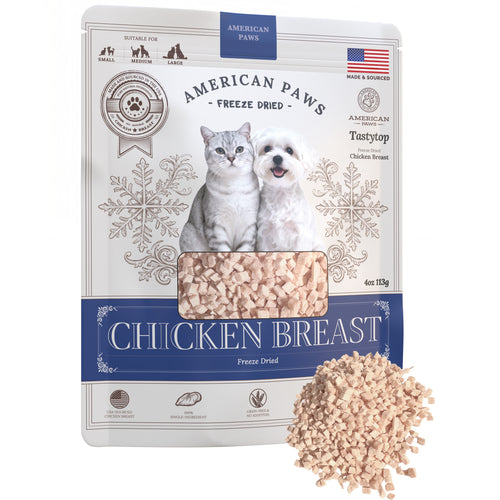
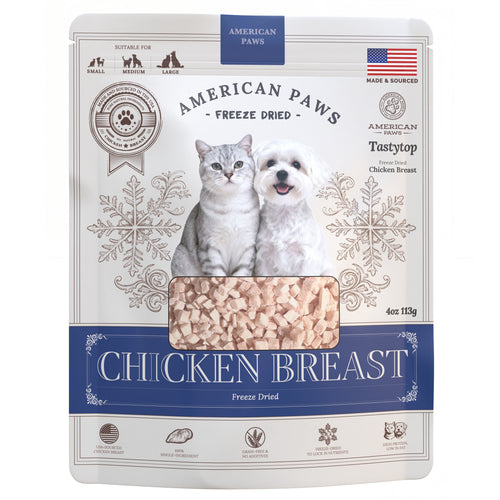
A freeze-dried topper is food that has had most of its moisture removed through a low-temperature drying process. For pet toppers, the finished ingredient may be sold as whole pieces, small crumbles, or powder. You add a modest amount over a dog's usual food rather than serving it as the whole meal.
That last point matters. A product called a topper is usually intended for supplemental feeding. It does not automatically contain every nutrient a dog needs in the right proportions. If you want the broader definition first, read what a dog food topper is and how it fits around a complete diet.
Why pet parents choose freeze-dried toppers
Freeze-drying is a format, not a promise that one product is right for every dog. Its practical advantages come from the low-moisture form: it is generally tidy, portable, and flexible at serving time.
Easy to measure and crumble
Dry crumbles can be portioned with a spoon instead of poured like gravy. They can also be mixed through the upper layer of kibble, which helps prevent a dog from lifting off one exciting piece and leaving the meal behind. A fine topper spreads aroma across more of the bowl while still allowing you to see how much was added.
Dry storage and travel convenience
A resealable dry topper can be simpler to pack than an opened can or pouch. There is no liquid to leak, and an unopened or properly resealed product does not take up refrigerator space. Storage instructions still matter: keep it dry, close the package tightly, and follow the label after opening.
Flexible texture: dry or rehydrated
You can sprinkle a freeze-dried topper as-is for a dry texture or stir in a small amount of warm water to soften it and release more aroma. That makes one product adaptable without requiring seasoned broth or human gravy. Once water is added, remove leftovers after the meal and wash the bowl rather than leaving moistened food out for hours.

Freeze-dried topper vs wet topper, broth, and treats
No format wins every category. Use the comparison below to match the topper to the routine instead of assuming the richest-looking option is best.
| Format | Practical strength | Best fit | Watch for |
|---|---|---|---|
| Freeze-dried crumbles | Dry, light, and easy to measure | Travel, kibble, controlled sprinkling | Moisture exposure and oversized portions |
| Wet topper | Adds moisture and soft texture | Dogs that prefer soft mixed meals | Refrigeration, leftovers, and a longer ingredient list |
| Plain dog-safe broth | Spreads through a bowl easily | Light moistening and aroma | Salt plus unsafe onion or garlic in human broths |
| Freeze-dried treat pieces | Can double as individual rewards | Training plus occasional bowl use | A dog picking out pieces and ignoring the base meal |
If your goal is simply to make dry food smell more interesting while keeping portions visible, crumbles are a direct solution. If moisture is the main goal, warm water or an appropriate wet format may fit better. Do not add a complex product when a simpler change meets the need.
How to choose a freeze dried topper for dogs
Read the ingredient list, not just the front label
Terms such as natural, premium, and meal enhancer do not tell you what is inside. Turn the package over and read the actual ingredient list. A short, specific list makes it easier to identify the protein and notice added salt, sweeteners, flavor systems, or vague animal ingredients. Our guide to reading a dog treat label explains how to separate marketing language from useful facts.
Single-ingredient and single-protein also mean different things. A chicken-only topper can be both. A recipe with chicken plus other ingredients may use one animal protein without being single-ingredient. Choose based on the real label rather than assuming every topper in a brand's catalog follows the same formula.
Match the protein and texture to the dog
Use a protein your dog already handles well when possible, especially if you are trying to learn what causes a reaction. Fine crumbles distribute differently from large chunks, and lightly moistened topper feels different from a dry powder. Small dogs and dogs with chewing limitations may need a finer or softened texture.
A sudden change in chewing, appetite, or interest in food is not merely a preference issue. Dental pain, illness, and other problems can look like pickiness, so contact your veterinarian when the change is new or persistent.
Check whether it is supplemental or complete-and-balanced
Look for the feeding statement. Most toppers are supplemental and should sit on top of a complete-and-balanced base food. Freeze-dried dog food formulated as a complete diet is a separate category. Similar appearance does not make the products nutritionally interchangeable.
How to use freeze dried dog food topper
- Keep the regular meal as the base. Put the normal measured portion of complete food in the bowl first.
- Start below the full serving. For a new ingredient, use a small amount and increase only if your dog handles it well.
- Sprinkle or mix. Leave crumbles on top for aroma, or stir them through the upper layer if your dog tends to pick them off.
- Add water only when useful. A small splash of warm water can soften the topper. Avoid seasoned sauces and human broths containing onion, garlic, or excess salt.
- Watch the response. Monitor stool, appetite, skin, and weight. Stop and speak with your veterinarian if concerning symptoms appear.
For a more detailed serving routine, see how to use a dog food topper. Introduce one change at a time so you can tell whether the new ingredient agrees with your dog.
How much should you add?
Use the package directions as the starting point because density and calories vary. A teaspoon of fine powder is not equivalent to a teaspoon of large pieces. Count the topper together with treats, chews, table scraps, and other extras rather than treating it as nutritionally invisible.
More is rarely necessary. A small amount can distribute plenty of aroma. If a dog starts waiting for increasingly rich additions, reduce the amount, mix it more evenly, and keep the routine consistent. Pet parents managing weight, pancreatitis history, kidney disease, allergies, or a prescription diet should ask their veterinarian before making toppers a regular habit.
When a topper is not the answer
A topper can help with ordinary preference, routine changes, or variety. It should not be used to cover up sudden appetite loss. Call your veterinarian if your dog skips repeated meals, loses weight, vomits, has diarrhea, appears painful, has difficulty chewing, or becomes unusually tired.
Picky behavior also has multiple causes. Before adding more food, check freshness, bowl cleanliness, feeding schedule, dental comfort, and the number of snacks offered during the day. Our guide to the best dog treats for picky eaters helps separate mealtime aroma from training rewards and other feeding strategies.
A simple chicken topper option
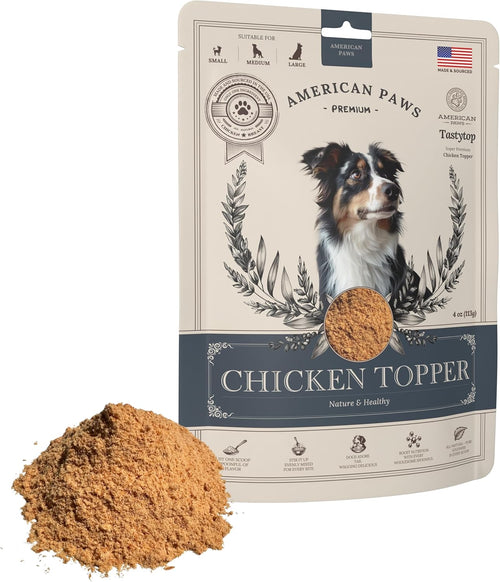
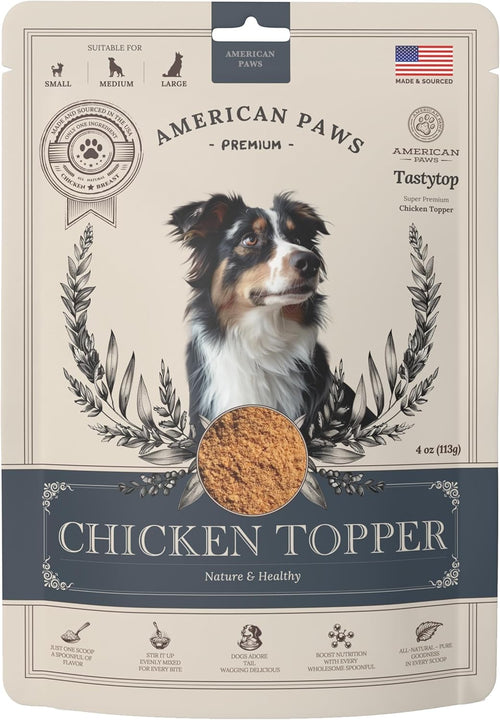
American Paws Chicken Meal Topper is made from one ingredient: USA chicken breast that is freeze-dried and ground into crumbles. The 4-ounce dry format is designed to be sprinkled over regular food, and the resealable package should be kept in a cool, dry place.
Use it as a supplemental topper, not a replacement for a complete meal. It may fit dogs that already do well with chicken and households that want a clearly named protein without fillers or artificial preservatives in this specific product. You can also browse the American Paws chicken collection, but always check each product's own label because formulas and formats can differ.
Frequently asked questions
Do freeze dried dog food toppers need water?
No. Most can be sprinkled dry. A little warm water is optional when you want a softer texture or stronger aroma. Once moistened, remove leftovers promptly.
Can dogs have a freeze-dried topper every day?
They can when the specific ingredient suits the dog, the portion follows the label, and all extras remain modest. Dogs with medical conditions or prescription diets need veterinary guidance.
Is a freeze-dried topper the same as freeze-dried dog food?
No. A topper is generally supplemental. A complete freeze-dried dog food must be formulated and labeled to provide balanced nutrition when fed as directed.
How should a freeze-dried topper be stored?
Keep it tightly sealed in a cool, dry place and follow the package instructions. Use a clean, dry scoop and discard it if moisture, mold, insects, or an unusual odor appear.
Can cats eat a chicken dog food topper?
Check the individual product label and feeding directions. A plain chicken-only product may use an ingredient cats can eat, but cats have species-specific nutritional needs, and a supplemental topper cannot replace complete cat food.
Make the bowl more appealing without taking it over
The best freeze dried dog food topper is the one that adds a useful amount of aroma or texture while leaving the main meal in charge. Read the ingredient list, verify the feeding statement, measure a small portion, and adjust based on your dog's response. For a straightforward chicken option, try American Paws Chicken Meal Topper as a measured, single-ingredient addition to a familiar complete meal.