
A cat food topper for picky cats can add aroma and texture to a familiar meal, but it should stay a small supplement—not replace complete-and-balanced cat food. For an otherwise healthy cat with ordinary preferences, start with a light dusting of a simple, familiar protein and increase only if the cat tolerates it.
If the appetite change is sudden, persistent, or paired with weight loss, vomiting, pain, or low energy, call your veterinarian instead of trying to cover it with a richer topper. A topper can make a normal meal more interesting; it cannot tell you why a cat feels unwell. If you are new to the format, start with what a food topper actually is.
Cat food topper for picky cats: the quick answer
The best topper is easy to identify, easy to measure, and compatible with food your cat already handles well. A few freeze-dried chicken crumbs, a small spoonful of an appropriate wet topper, or a little pet-safe broth may add enough smell or texture to encourage interest.
Keep the regular complete food as the foundation. Check the topper label for its ingredients, calorie information, feeding directions, and a statement such as “for intermittent or supplemental feeding only.” Similar-looking products can have very different nutritional roles.
- Choose one clear purpose: more aroma, a different texture, or a little moisture.
- Start with less than you think: cats have small calorie budgets, and a light coating may be enough.
- Use a familiar protein: especially when your cat has a sensitive stomach or you are watching for reactions.
- Keep it supplemental: the topper should not crowd out the balanced meal underneath.
- Stop when something changes: vomiting, diarrhea, itching, appetite loss, or unusual behavior deserves attention.
First decide whether your cat is picky or not feeling well
“Picky” describes a preference, not a diagnosis. Before changing the bowl, look at the pattern. A cat that eagerly eats one texture but ignores another, stays at a stable weight, and acts normally may simply have strong preferences. A cat that suddenly eats less, approaches food and backs away, drops pieces, or seems quiet may be dealing with pain or illness.
Ordinary preference and feeding-environment clues
Start with the basics. Is the food fresh? Is the bowl clean and wide enough that it does not press on the whiskers? Is the feeding area quiet, away from the litter box and other pets? Has the recipe, bag, storage method, or meal schedule changed?
Temperature and texture also matter. Some cats prefer food closer to room temperature, while others like dry crunch or soft food. A small amount of topper may help you test aroma and texture without replacing the entire diet. Change one variable at a time so the result means something.
Appetite red flags that need a veterinarian
The Cornell Feline Health Center feeding guide notes that a cat refusing food can develop serious problems and should be examined when refusal is paired with weight loss. Veterinary guidance on feeding feline picky eaters likewise recommends ruling out medical causes before treating the behavior as mere fussiness.
Contact your veterinarian promptly for a sudden or sustained drop in appetite, weight loss, repeated vomiting or diarrhea, drooling, bad breath with chewing difficulty, hiding, low energy, increased thirst, or a cat that appears hungry but cannot eat comfortably. Kittens, seniors, diabetic cats, overweight cats that stop eating, and cats with chronic disease need especially cautious handling. Do not wait for a topper to solve those signs.
What makes a good food topper for cats?
A clear, familiar animal protein
A short ingredient list makes the topper easier to evaluate. If your cat already does well with chicken, a chicken-only option lets you add interest without introducing several proteins, gums, sweeteners, or flavor systems at once. “Natural” on the front is less informative than the actual ingredient panel on the back.
Single-ingredient and complete-and-balanced are different claims. Plain chicken can be a single-ingredient treat or topper, but chicken alone does not provide a complete cat diet. The base food still has to supply nutrients in the correct proportions for the cat’s life stage.
A texture and aroma your cat accepts
Topper format should match the problem you are trying to solve. Crumbs spread smell over dry food. A small amount of wet topper changes softness and moisture. Whole freeze-dried pieces may work better as rewards than bowl additions because some cats lift them out and leave the meal behind.
For a selective cat, fine crumbs are useful because they are difficult to separate from the regular food. You can leave them on top for maximum aroma or gently mix them through the upper layer. Avoid burying the meal under a thick layer that teaches the cat to wait for more.
A label that says how the product should be fed
Look for a nutritional adequacy statement and feeding directions. Most treats and toppers are supplemental. A product formulated as complete-and-balanced cat food is a separate category, even if both products are freeze-dried or come in similar pieces. For treats specifically, our best cat treats guide walks through the same label checks.
Check calories too. A spoonful of dense powder and a spoonful of airy crumbs are not automatically equivalent. Follow the specific label rather than borrowing a serving size from another product.

Cat food topper formats compared
| Format | Useful for | Watch for |
|---|---|---|
| Freeze-dried crumbles | Dry food, travel, visible portions, concentrated aroma | Moisture exposure and adding too many calories |
| Wet cat-food topper | Soft texture and added moisture | Refrigeration, leftovers, and longer ingredient lists |
| Plain pet-safe broth | Light moistening and aroma | Human broth may contain onion, garlic, or excess salt |
| Freeze-dried treat pieces | Training plus occasional crumbling over meals | Cats may pick out pieces and ignore the base food |
No format is automatically best. Use the simplest one that addresses the actual preference. If aroma is the goal, a few dry crumbs may be enough. If texture or moisture is the issue, an appropriate wet format or plain warm water may fit better.
Why freeze-dried chicken works as a controlled topper
Freeze-dried chicken is dry, aromatic, and easy to break. One piece can become many small crumbs, which lets you distribute interest across a bowl without serving a separate chicken meal. The low-mess format is also convenient for sealing, storing, and using at more than one meal.
It can do two jobs, but keep them distinct. Whole tiny pieces can be rewards during short sessions; our guide to training treats for cats explains that use. Crumbs over a bowl are a meal topper. Counting both uses together prevents extras from quietly growing through the day.
For more detail on label simplicity, portions, and serving ideas, read the benefits of freeze-dried chicken for cats. Format convenience does not make chicken right for cats with a known chicken allergy or a prescription diet.
How to use a cat food topper without replacing the meal
- Measure the normal meal first. Put the usual portion of complete-and-balanced food in the bowl before adding anything.
- Start with a few crumbs. The first serving is a tolerance test, not a full recommendation.
- Sprinkle or mix lightly. Leave crumbs on top for stronger aroma, or stir them through the top layer if your cat only picks off additions.
- Change one thing at a time. Do not introduce a topper, new main food, and new treat together.
- Observe the whole cat. Track appetite, stool, vomiting, scratching, energy, and weight rather than judging only whether the bowl was empty.
You may add a small splash of warm water if your cat prefers a softer texture. Serve the moistened meal promptly, discard leftovers, and wash the bowl. Keep dry topper pieces and crumbs away from moisture inside the storage bag.
How much topper should a picky cat get?
There is no universal spoon measurement because products differ in size, density, and calories. Start below the package serving direction, especially with a new ingredient, and use only enough to meet the goal. A thin dusting that changes aroma may work better than visible chunks.
Count the topper with treats, rewards, table samples, and supplements. Cornell advises that treats remain a small share of daily calories; the exact allowance depends on the cat’s size, body condition, life stage, main diet, and health. Your veterinarian can help with calorie targets when weight or a medical condition is involved.
Kittens need food formulated for growth, so extras must be particularly modest. Our guide to the best treats for kittens covers small pieces and age-specific safeguards. Senior cats and cats on therapeutic diets also need individualized advice.
How to avoid training a cat to hold out for toppers
Constant upgrades can teach a healthy cat that ignoring the bowl produces something richer. Keep the topper routine predictable: use the same small amount, add it at the start of the meal, and avoid returning repeatedly with better options.
Mixing crumbs into the top layer makes selective picking harder. Scheduled meals can also help you see what the cat actually eats, but any feeding-schedule change should fit the cat’s age and medical needs. Never use prolonged food withholding to force compliance.
If the cat demands larger amounts, step back. Confirm that the base food is fresh and appropriate, reduce competing treats, and review the pattern with your veterinarian. The goal is reliable eating, not an escalating topping contest.
What not to put on cat food
Avoid onion, garlic, chives, seasoned gravy, salty human broth, butter, sauces, deli meat, and sweetened products. Do not casually add raw meat; it can expose cats and household members to foodborne pathogens. Milk is not a necessary topper and can upset cats that do not tolerate lactose.
Do not assume a dog product is automatically suitable for cats. Read the individual label and feeding statement. Likewise, do not add supplements, vitamins, or minerals to a balanced diet unless your veterinarian recommends them; more is not automatically better.
A simple chicken topper option from American Paws
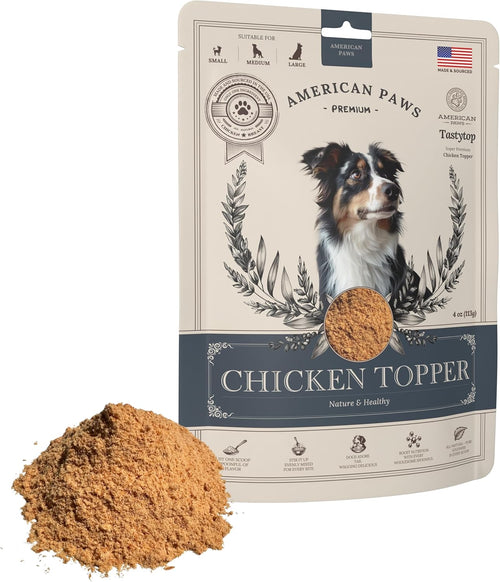
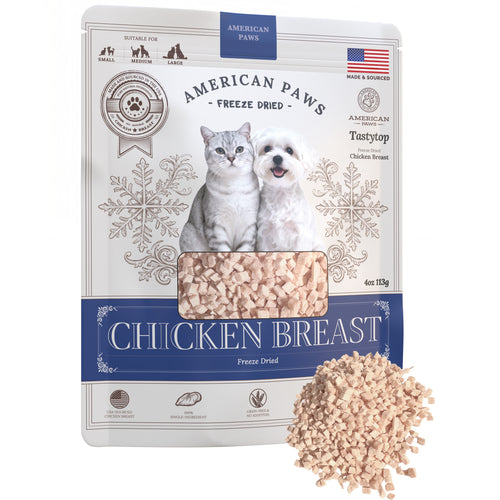
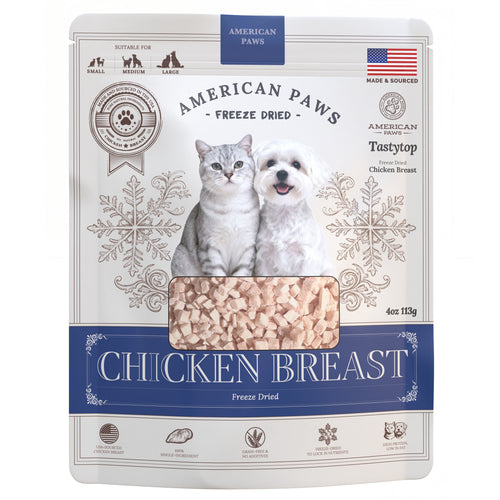
American Paws single-ingredient freeze-dried chicken for cats is made with 100% USA chicken breast. It is freeze-dried in a USDA-inspected facility in Highland, California, and the dry pieces are easy to crumble into a light topper for cats that already tolerate chicken.
This product is a treat or supplemental topper, not complete cat food. Start with a few crumbs, keep the regular meal underneath, and reseal the bag after use. The single-ingredient claim applies to this specific chicken product, not automatically to every item in the American Paws catalog.
You can browse other freeze-dried treats, but compare each label and protein against your cat’s needs before changing the bowl.
Frequently asked questions
Can I put a topper on my cat’s food every day?
A suitable topper may be used regularly in a measured amount when the label allows it and your cat tolerates it. Keep all extras modest and make sure complete-and-balanced cat food remains the nutritional foundation.
Is freeze-dried chicken a complete cat food?
No. Plain freeze-dried chicken is a single-ingredient treat or topper. It does not supply every nutrient a cat needs in the correct proportions.
Can I add water to a freeze-dried cat food topper?
Yes, a little warm water can soften crumbs and increase aroma. Serve the moistened food promptly, remove leftovers, clean the bowl, and keep the remaining dry product sealed away from moisture.
What is the best topper for a cat that will not eat?
A cat that refuses food needs veterinary attention, especially when the change is sudden or paired with weight loss, vomiting, pain, or low energy. A topper may help ordinary preference after medical causes are ruled out, but it should not delay care.
How should I store freeze-dried chicken topper?
Keep it tightly sealed in a cool, dry place and follow the package instructions. Use dry hands or a clean dry scoop, and discard the product if it becomes damp, moldy, infested, or develops an unusual odor.
Add interest without letting the topper take over
A useful cat food topper makes the existing meal more appealing while keeping its role small and clear. Rule out appetite red flags, choose a familiar protein, read the feeding statement, start with crumbs, and monitor the result.
If your healthy picky cat already does well with chicken, crumble a measured amount of American Paws freeze-dried chicken over the regular complete meal. Seal the bag, keep the portion consistent, and let the balanced food remain the center of the bowl.