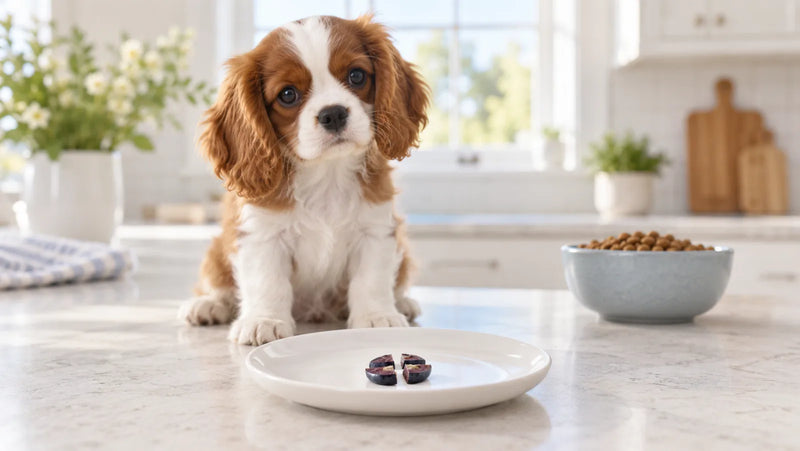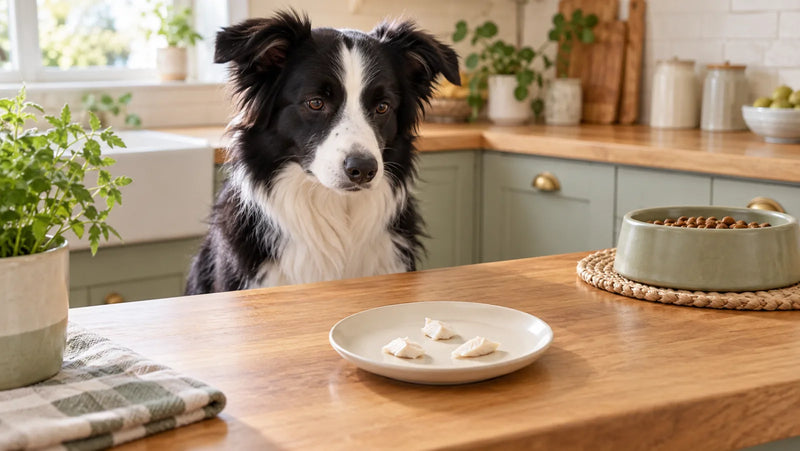

The best dog treats for small dogs are easy to break into tiny portions, appropriate for the dog's chewing style, and modest enough to fit a smaller daily calorie budget. A package that says "small breed" may be convenient, but the label alone cannot tell you whether the treat fits your individual dog. For the wider checklist, see our guide to choosing safe dog treats.
Look at the actual piece size, texture, calories, ingredients, and feeding directions. Prepare bite-size rewards before training, introduce one new treat slowly, and supervise every chew. A Chihuahua with missing teeth, an eager terrier that gulps, and a careful-chewing dachshund may all need different formats even if their weights are similar.
Dog treats for small dogs: the quick checklist
A useful small-dog treat should pass three practical tests before it reaches the treat jar.
Small enough for the individual dog
The piece should be easy for your dog to take, reposition, chew, and swallow. Size the reward for the dog in front of you, not for a breed stereotype. If a piece looks awkward in the dog's mouth, prepare a smaller one before offering it.
Easy to portion without crumbling into waste
A treat that breaks cleanly lets you reward several behaviors without turning each reward into a full snack. Test breakability with dry hands at home. Pre-portion the amount you plan to use so you are not guessing during a walk or training session.
Clear calories and a short, understandable label
Compare calories per piece or per measured serving when the package provides them. Then read the ingredient list and feeding statement. A recognizable label makes it easier to know what you are introducing, especially when a dog already has a known protein sensitivity or follows a veterinarian-directed diet.
Why small dogs need smaller treat decisions
Small dogs have less room for extras than large dogs because their total daily calorie needs are generally lower. A reward that looks tiny to a person can still take a meaningful share of a toy breed's treat allowance. That does not mean small dogs cannot enjoy treats; it means every piece should have a clear purpose.
The general guideline is to keep all treats and extras under about 10% of daily calories while complete-and-balanced food supplies the nutritional foundation. The American Kennel Club's treat-calorie guidance also emphasizes that the percentage refers to calories, not the number or volume of pieces. Training rewards, chews, table samples, toppers, and snacks all count together.
There is no universal calorie target for every small dog. Age, body condition, activity, neuter status, main diet, and health all matter. Use your food label and veterinarian's advice rather than copying another dog's piece count.
How small should a treat be for a small dog?
There is no single safe dimension that fits every mouth. As a starting principle, use the smallest reward that still motivates your dog and can be handled comfortably. For rapid training, many owners prepare pea-size or smaller pieces, but that comparison is a visual cue rather than a medical rule.
Watch the first few repetitions. A well-sized training reward should be accepted and finished quickly without repeated dropping, hard gulping, coughing, or a long chewing delay. Stop if your dog struggles. Dogs with dental disease, missing teeth, swallowing problems, or a history of choking need guidance from a veterinarian.
Training reward versus recreational chew
A training treat is designed for quick delivery, so tiny pieces work well. A recreational chew serves a different purpose and should not be reduced to a swallowable nub. When a chew becomes small enough to gulp, remove it. Never treat a chew and a quick reward as interchangeable simply because both come from the same ingredient.
Break first, reward second
Do not wait until your dog is jumping at your hand to tear a strip apart. Cut or break the planned serving on a clean surface, place it in a pouch, and put the rest of the bag away. This improves consistency and makes the session's total amount visible.
For a more detailed method, use our dog training treat size guide. It explains how reward speed, repetition count, and the dog's chewing behavior affect the right training size.
Which texture is best for a small dog?
The best texture is the one your dog can manage comfortably and that fits the job. Age and size alone do not settle the question. Observe chewing, check teeth regularly, and change formats if the dog starts dropping pieces or avoiding a texture that used to be easy.
Crisp freeze-dried pieces
Freeze-dried treats are light and often easy to split into smaller rewards. They can be useful for training because a prepared piece is quick to deliver and does not require a long chew. Crisp does not mean risk-free: break oversized pieces first and supervise.
Soft or chewy treats
Soft treats for small dogs may suit individuals that prefer a flexible texture, but "soft" is not automatically safer or lower in calories. Some products use additional ingredients to create that texture. Read the full label and choose a piece that does not become a large sticky mouthful.
Firm chews and supervision
Hard or long-lasting items can be too challenging for some small dogs, especially those with dental problems. A chew should not be so hard that it risks a tooth or so small that it can be swallowed whole. Ask your veterinarian what is appropriate if your dog has a dental history, and remove damaged or gulp-size remnants.

Compare calories per piece, not the size of the bag
Package size tells you how much product you are buying, not how much one reward contributes. Two pieces that look similar can differ in density and calories. Check the calorie statement when available, follow the individual product's feeding directions, and account for every piece offered by every person in the home.
Breaking one treat into four rewards changes the number of rewarding moments, not the treat's total calories. That is still useful: small pieces can stretch a limited allowance across a training session without increasing the amount eaten. Keep a daily tally if several family members give treats.
Our guide to how many treats a dog can have per day shows how to move from a daily calorie estimate to a practical treat budget. Ask your veterinarian for an individualized plan if your dog is underweight, overweight, growing, pregnant, highly active, or managing a medical condition.
What ingredients should you look for?
Start with an ingredient your dog already tolerates. A short label is easy to understand, but it is not a guarantee that every dog will tolerate the protein. Chicken is not right for a dog with a known chicken allergy, and a rich organ-meat treat may need particularly small servings.
Avoid choosing by front-of-bag language alone. Read the ingredient list, calorie statement, feeding guide, intended-use statement, storage directions, and best-by information. Treats labeled for intermittent or supplemental feeding are not complete meals.
When you try something new, offer one tiny piece and keep the rest of the diet stable. Watch appetite, stool, skin, and behavior. Stop the new item and contact your veterinarian if your dog has persistent vomiting, diarrhea, swelling, breathing trouble, marked itching, or unusual lethargy.
Three practical treat formats for small dogs
No format wins for every small dog. These three options show how to match the physical treat to the moment.
Freeze-dried chicken for a light, breakable reward
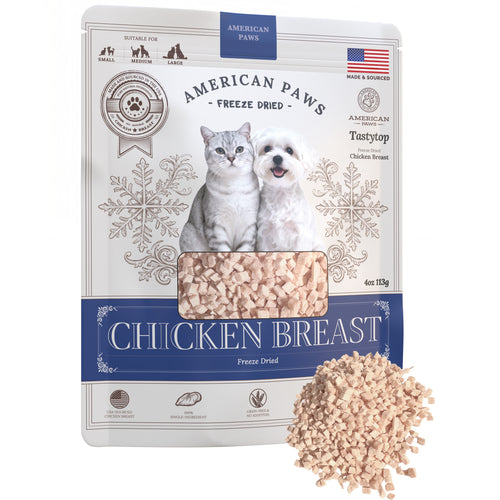
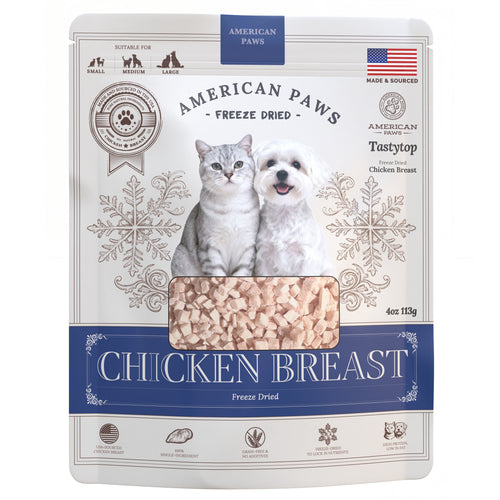
American Paws single-ingredient freeze-dried chicken is made with 100% USA chicken breast. The product page lists a light, crunchy texture and tells owners to break pieces smaller for training. That makes it practical when you want a familiar-protein reward that can be prepared in tiny pieces.
Use the package feeding guide as a starting point, then account for the size of each actual piece and the rest of the day's extras. Freeze-dried pieces naturally vary, so do not assume every cube is identical.
Freeze-dried beef liver for high-value training
For moments that need a stronger aroma, freeze-dried beef liver training treats can be divided into tiny rewards. This specific American Paws product is single-ingredient USA beef liver. Liver is nutrient-dense, so use small portions rather than handfuls and count them within the daily treat budget.
Chicken jerky cut into purpose-sized pieces
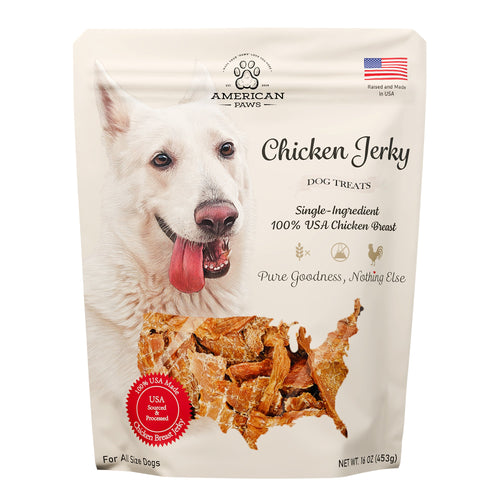
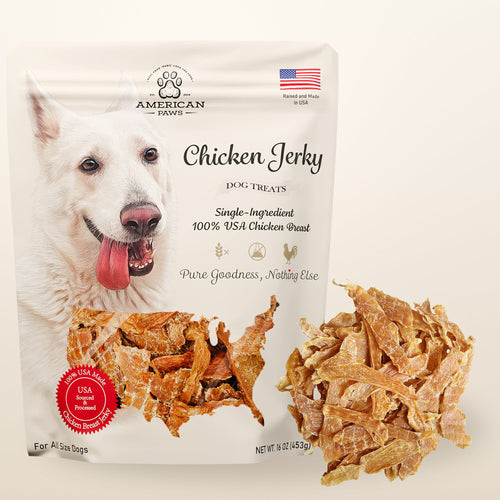
Chewy jerky can work when the dog enjoys more texture, but a full strip is not a small-dog training portion. American Paws single-ingredient chicken breast jerky is made with 100% USA chicken breast and can be broken or cut before use. Prepare narrow, short pieces while your hands are clean and dry, then reseal the bag.
Because jerky pieces vary in shape, inspect each one. Offer a prepared reward, not an entire strip, for rapid repetitions. If your dog tries to swallow chewy pieces without working them, choose a different format.
How to use small dog training treats without overfeeding
- Set the session amount first. Measure or count the planned serving and put the main package away.
- Make every piece tiny. Prepare enough repetitions by dividing treats instead of adding more full-size pieces.
- Use lower-value rewards for easy work. Save aromatic liver or chicken for distractions, recall, grooming, or a difficult new behavior.
- Reward with life, too. Praise, play, sniff breaks, access to a favorite spot, or a tossed toy can reduce the number of food rewards once a behavior is learned.
- Count the whole day. Combine training food with chews, toppers, and treats from other people when reviewing the daily allowance.
Frequent reinforcement is useful when teaching a new skill. The solution is not to stop rewarding; it is to make each food reward appropriately small and plan it as part of the dog's daily intake.
Treat safety for toy breeds and small dogs
- Supervise treats and chews, especially the first time you offer a new size or texture.
- Provide fresh water and use clean, dry hands or utensils.
- Keep bags sealed in a cool, dry place according to the package directions.
- Do not offer damp, moldy, unusually odorous, or damaged product.
- Keep the original bag or record its best-by and lot information instead of moving unidentified treats into a jar.
- Separate pets while treating if competition makes one dog gulp.
- Choose another product when an ingredient conflicts with a known allergy or prescription diet.
Small pieces reduce reward size, but they do not eliminate choking risk. Your dog's chewing style and health history matter. Contact a veterinarian promptly if your dog coughs repeatedly, struggles to breathe, cannot swallow, collapses, or shows another acute problem.
Frequently asked questions
What are the best treats for small dogs?
The best treats are easy to divide, comfortable for the individual dog to chew, clearly labeled, and modest enough to fit the daily calorie budget. Freeze-dried chicken, tiny liver pieces, or carefully cut jerky may work depending on the dog's preferences and health.
Are soft treats better for small dogs?
Not automatically. A soft texture may help some dogs, while others handle crisp pieces well. Check ingredients and calories, and ask your veterinarian about texture if your dog has dental pain, missing teeth, or swallowing difficulty.
How many treats can a small dog have per day?
There is no safe universal count because piece calories and each dog's needs differ. Keep all extras within the general treat-calorie guideline, follow product directions, and ask your veterinarian to calculate a specific allowance when needed.
Can small dogs eat chicken jerky?
Many can eat plain dog-formulated chicken jerky when they tolerate chicken. Cut the strip into suitable pieces, supervise, and follow the label. Do not use chicken products for a dog with a known chicken allergy.
What size should small dog training treats be?
Use the smallest piece that motivates the dog and is easy to take and finish. Prepare pieces before the session, observe chewing, and stop if the dog coughs, drops food repeatedly, or struggles.
Choose the format your small dog can enjoy safely
Good treats for toy breeds and small dogs are not defined by a cute package or a breed label. They are selected by actual size, texture, ingredients, calories, and the way one particular dog eats. Start small, prepare portions in advance, count every extra, and supervise.
Explore American Paws freeze-dried treats if a light, breakable format fits your dog. Choose one familiar protein, make the first serving tiny, and let complete-and-balanced food remain the center of the diet.