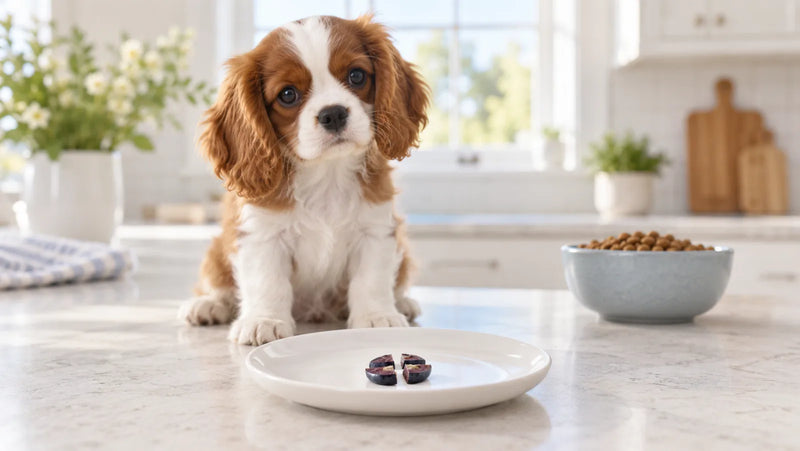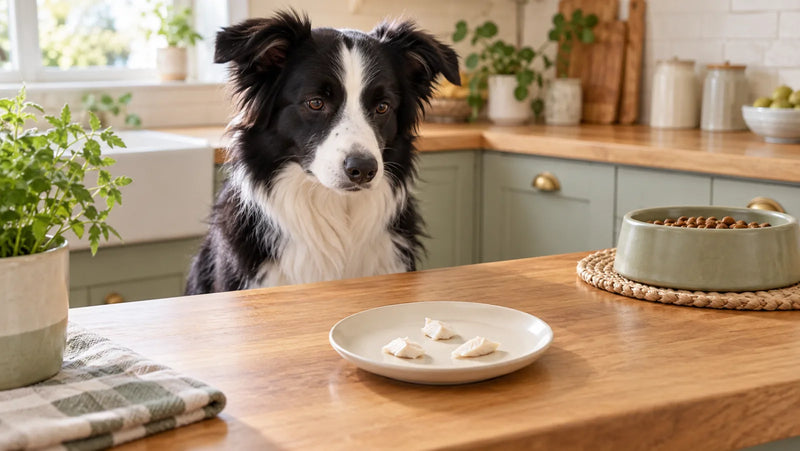

Can dogs eat mashed potatoes? A healthy adult dog may have a very small taste of a sound potato that was peeled, cooked completely soft, cooled, and mashed only with water. Skip ordinary Thanksgiving, boxed, or restaurant mashed potatoes: butter, cream, milk, cheese, salt, broth, garlic, onion, chives, gravy, bacon, and other add-ins change the decision.
If the recipe contains onion or garlic, the amount is large or unknown, your dog swallowed packaging, or symptoms appear, call a veterinarian or animal poison service promptly. Plain potato is an optional starchy extra, not something a dog needs for a balanced diet.
Can Dogs Eat Mashed Potatoes? The Short Answer
The word mashed does not make a potato dog-safe or unsafe. The full recipe matters. A tiny spoonful may be considered only when every ingredient and preparation step passes the check below:
| Mashed-potato form | Planned feeding decision | Why |
|---|---|---|
| Sound peeled potato, fully cooked, cooled, mashed only with water | A tiny occasional taste may fit some healthy adult dogs | No seasoning or rich add-in, but it still adds starch and calories |
| Butter, cream, sour cream, cheese, or lots of oil | Skip | Unnecessary fat and possible digestive upset; especially unsuitable for dogs with pancreatitis history or a prescribed low-fat diet |
| Milk | Skip | Some dogs digest lactose poorly, and milk is not needed to make a dog portion |
| Salt, seasoned broth, stock cube, or gravy | Skip | Recipe and sodium vary; these may also hide onion or garlic |
| Garlic, onion, chives, leeks, or their powders | Do not feed; call after a known exposure | Allium ingredients can damage canine red blood cells, and signs may be delayed |
| Loaded mash with bacon, fried onions, or rich toppings | Skip | Multiple fat, salt, seasoning, and ingredient questions stack together |
| Instant, deli, restaurant, or unknown recipe | Do not assume it is plain | The complete ingredient list and amount may be unavailable |
A dog with diabetes, kidney or heart disease, food sensitivity, obesity, previous pancreatitis, or a prescription diet may need to skip even plain potato. Ask the veterinary team before introducing it.
Why Typical Mashed Potatoes Are Not Plain
Human mashed potatoes are usually designed for richness. A home recipe may begin with potatoes and water, then add butter, warm milk or cream, salt, roasted garlic, onion powder, cheese, sour cream, broth, drippings, gravy, bacon, or chives. Boxed flakes can include milk ingredients, oils, salt, emulsifiers, flavors, and seasonings. Restaurant mash may have no ingredient panel available at the table.
That is why "just one spoonful" is not a complete risk description. The spoonful carries the whole recipe. Scraping visible gravy, butter, or chives from the surface does not remove ingredients mixed into or absorbed by the mash.
If you want to share a potato taste, reserve a small piece during preparation—before dairy, fat, salt, broth, seasoning, or toppings enter the bowl. Peel a sound non-green potato, cook it fully until fork-soft, mash the reserved piece with a little water, let it cool, and measure a tiny amount. Do not season a large family batch and try to turn it back into a dog portion later.
Butter, Milk, Salt, and Garlic Change the Risk
Butter, cream, cheese, and fat
A single lick of buttery potato does not guarantee pancreatitis, but rich table food is a poor planned reward. Fat can cause vomiting or diarrhea, and dogs with previous pancreatitis or a low-fat medical plan should not receive an improvised holiday exception. The Merck Veterinary Manual's pancreatitis review identifies dietary indiscretion as a common risk factor in dogs and emphasizes fat restriction in canine treatment.
Call the veterinary clinic if a dog eats a large amount of rich mash or develops repeated vomiting, loss of appetite, abdominal pain, a tense or hunched posture, diarrhea, marked lethargy, or inability to keep water down. Do not diagnose pancreatitis from one symptom or wait for every sign before asking for help.
Milk and lactose
Milk is not a poison in the same category as onion or garlic, but many adult dogs do not digest a meaningful lactose load comfortably. Gas, loose stool, abdominal discomfort, or vomiting can follow, and cream or cheese brings more fat. Tolerance also varies, so one dog appearing fine does not make dairy mash a good default for another.
Water is enough for the tiny plain portion described here. Plant-based milks do not automatically solve the problem: they may contain sweeteners, flavorings, gums, chocolate, macadamia, or other ingredients that need their own label review.
Salt, broth, and gravy
Salted butter, stock cubes, broth, drippings, packaged seasoning, and gravy can raise sodium and turn one simple ingredient into a complex formula. The ASPCA people-food safety guide warns against feeding pets excessive salt and fatty foods. Dogs with heart, kidney, fluid-balance, or other medically managed conditions may have even less room for an unmeasured salty extra.
Broth and gravy frequently contain onion or garlic in fresh, powdered, dehydrated, or flavor-base form. "Chicken flavor" or "savory gravy" on the front is not enough information. Read the full recipe or leave it out.
Garlic, onion, chives, and powders
Do not feed mashed potatoes containing garlic, onion, chives, or leeks. Cooking does not make these allium ingredients safe. The Merck Veterinary Manual's allium toxicosis review documents risk from raw, cooked, dehydrated, and granulated forms in dogs and cats.
Concentrated garlic or onion powder can be easy to miss in instant flakes, broth, gravy, seasoning blends, or restaurant mash. Red-blood-cell damage and anemia signs may take days to become obvious. After a known allium exposure, call promptly with the recipe, product label, amount, time, and dog's weight rather than using a homemade dose chart or waiting for pale gums, weakness, fast breathing, dark urine, or collapse.

What About Raw, Green, Sprouted, or Skin-On Potatoes?
Do not intentionally feed raw, green, sprouted, bitter, or questionable potato material. A cooked family dish can also be the wrong place to discover that a potato had green skin or sprouts before preparation. Peeling and complete cooking are the conservative starting point for the tiny plain taste considered in this article.
Our separate guide to whether dogs can eat potatoes owns the full raw-versus-cooked decision, glycoalkaloid context, green and sprouted parts, skins, preparation, and potato-exposure response. Use that page if the dog ate the raw ingredient, peel pile, garden plant, sprout, or a green tuber; this article stays with the finished mashed-potato recipe.
How Much Plain Mashed Potato Can a Dog Have?
If the dog is a healthy adult, the potato is sound and fully cooked, and the mash contains only potato and water, start smaller than a human spoonful. These are conservative one-time first-taste examples, not daily servings, toxic thresholds, or veterinary prescriptions:
| Dog's approximate size | First plain taste | How to serve |
|---|---|---|
| Under 20 lb | Up to 1/2 teaspoon | Cooled, smooth, and offered slowly |
| 20-50 lb | Up to 1 teaspoon | Cooled and separate from the family dish |
| Over 50 lb | Up to 2 teaspoons | Cooled and counted with all other extras |
Smaller is appropriate for a first exposure, and serving none is also reasonable. Stop if the dog develops vomiting, diarrhea, itching, swelling, or another unusual sign. Puppies, very small dogs, and dogs with medical or dietary restrictions need individualized veterinary guidance rather than this adult first-taste table.
All treats and table tastes share one calorie budget. Keep extras below 10% of daily calories unless the veterinary team has set a different plan, and leave at least 90% for complete-and-balanced food. The daily dog-treat allowance guide explains why a visual spoon size cannot replace calorie information.
My Dog Ate Mashed Potatoes: What Should I Do?
- Remove the dish. Prevent a second serving and keep other pets away.
- Reconstruct the recipe. List butter, milk, cream, cheese, salt, broth, gravy, onion, garlic, chives, bacon, seasonings, sweeteners, raisins, alcohol, and every topping or garnish.
- Estimate the amount and time. Note the dog's weight, the bowl or spoon size, the largest possible amount, and whether foil, plastic wrap, a utensil, or other packaging is missing.
- Check the dog. Watch breathing, swallowing, appetite, energy, gum color, abdomen, vomiting, diarrhea, urine color, tremors, and coordination.
- Call when uncertain or concerned. Known onion or garlic, a large or unknown quantity, a very rich recipe, missing packaging, a high-risk medical history, or any symptom deserves professional advice.
Contact your veterinarian or emergency clinic. The ASPCA Animal Poison Control Center is available at 888-426-4435; a consultation fee may apply. Do not induce vomiting or give salt, milk, oil, hydrogen peroxide, or another home remedy unless a veterinary professional specifically directs it for this dog and exposure.
A tiny lick of plain mash and a bowl of garlic-and-butter potatoes are not the same event. Give the professional the complete recipe so the response matches the actual exposure.
Build a Dog-Safe Thanksgiving Plate Before Seasoning
The safest holiday strategy is portioning before recipes are assembled. Set aside any approved plain taste while ingredients are still recognizable, cool it, size it for the dog, and have one adult control the day's extras. Guests should not feed from their plates.
Use our overview of Thanksgiving foods dogs can and cannot eat to screen the whole table, and keep the toxic foods for dogs reference available for higher-risk ingredients. If you want to compare plain produce options outside the holiday recipe, the guide to which vegetables dogs can eat keeps preparation and portions product-specific.
A dog does not need a miniature copy of every human dish. One familiar measured reward, extra attention, or a food-free activity can be a safer way to include the dog without stacking turkey, potato, vegetables, gravy, dessert, and dropped scraps into one oversized calorie load.
A Simpler Savory Topper Than Table Mash
If the goal is making the dog's normal meal smell more appealing, use a dog-specific product with a clear label instead of seasoned mashed potatoes or gravy. American Paws' freeze-dried chicken meal topper lists 100% USA chicken breast, finely ground and freeze-dried. It is intended for intermittent or supplemental feeding.
Use the current label directions and count the topper with every other extra. It is not a complete meal, a low-fat treatment, or a solution for unexplained appetite loss. Do not use it when chicken is excluded by an allergy plan, elimination trial, prescription diet, or veterinary instruction. Persistent refusal to eat needs a veterinary conversation, not progressively richer toppings.
Frequently Asked Questions
Can dogs eat mashed potatoes with butter?
Do not plan to feed buttery mashed potatoes. One small lick does not guarantee illness, but butter adds unnecessary fat and can cause digestive upset; a larger amount is more concerning, especially for a dog with previous pancreatitis or a prescribed low-fat diet.
Can dogs eat mashed potatoes with milk?
Skip them. Some dogs tolerate a trace of milk while others develop gas, diarrhea, discomfort, or vomiting, and the recipe may also contain butter, salt, garlic, or onion. Mash a separate tiny piece with water if a veterinarian-approved taste is desired.
Can dogs eat instant mashed potatoes?
Do not assume instant potatoes are plain. Read the complete ingredient panel for milk ingredients, oils, salt, flavors, onion, garlic, cheese, and seasoning packets. An unknown prepared product is not a good planned dog treat.
Can dogs eat mashed potatoes with gravy?
No as a planned serving. Gravy can add fat, sodium, onion, garlic, broth concentrates, drippings, and other recipe-specific ingredients. Scraping it off does not remove what soaked into the mash.
Can puppies eat mashed potatoes?
A growing puppy has little room for starchy extras that displace complete growth food. Ask the veterinarian first. If approved, use less than the smallest adult-table example and only a smooth, cooled, water-only mash with no seasoning.
Can dogs eat sweet-potato mash?
Sweet potatoes are a different plant and need their own preparation check. A small amount of fully cooked plain sweet potato may fit some dogs, but butter, sugar, syrup, marshmallows, salt, spices, and casserole ingredients change the decision just as they do with white potatoes.
Are leftover mashed potatoes safe for dogs?
Only if the original batch was truly potato and water, cooled and refrigerated promptly, stored safely, and still fresh. Most family leftovers contain rich or seasoned ingredients. When the recipe or storage history is uncertain, discard rather than share.
Plain Means Prepared Separately
The clean answer is not "potatoes are good" or "potatoes are poison." A tiny amount of sound, peeled, fully cooked, cooled, water-only mash may be an occasional taste for some healthy adult dogs. The buttered, creamy, salty, garlicky, gravy-covered holiday dish is a different food and should stay on the human table.
Reserve plain food before seasoning, or choose a clearly labeled dog-specific topper when it fits the dog. You can browse the current American Paws dog treats and toppers, then verify the exact ingredients, calories, feeding directions, and individual dietary fit before serving.